Visual answer
What Happens When You Yawn
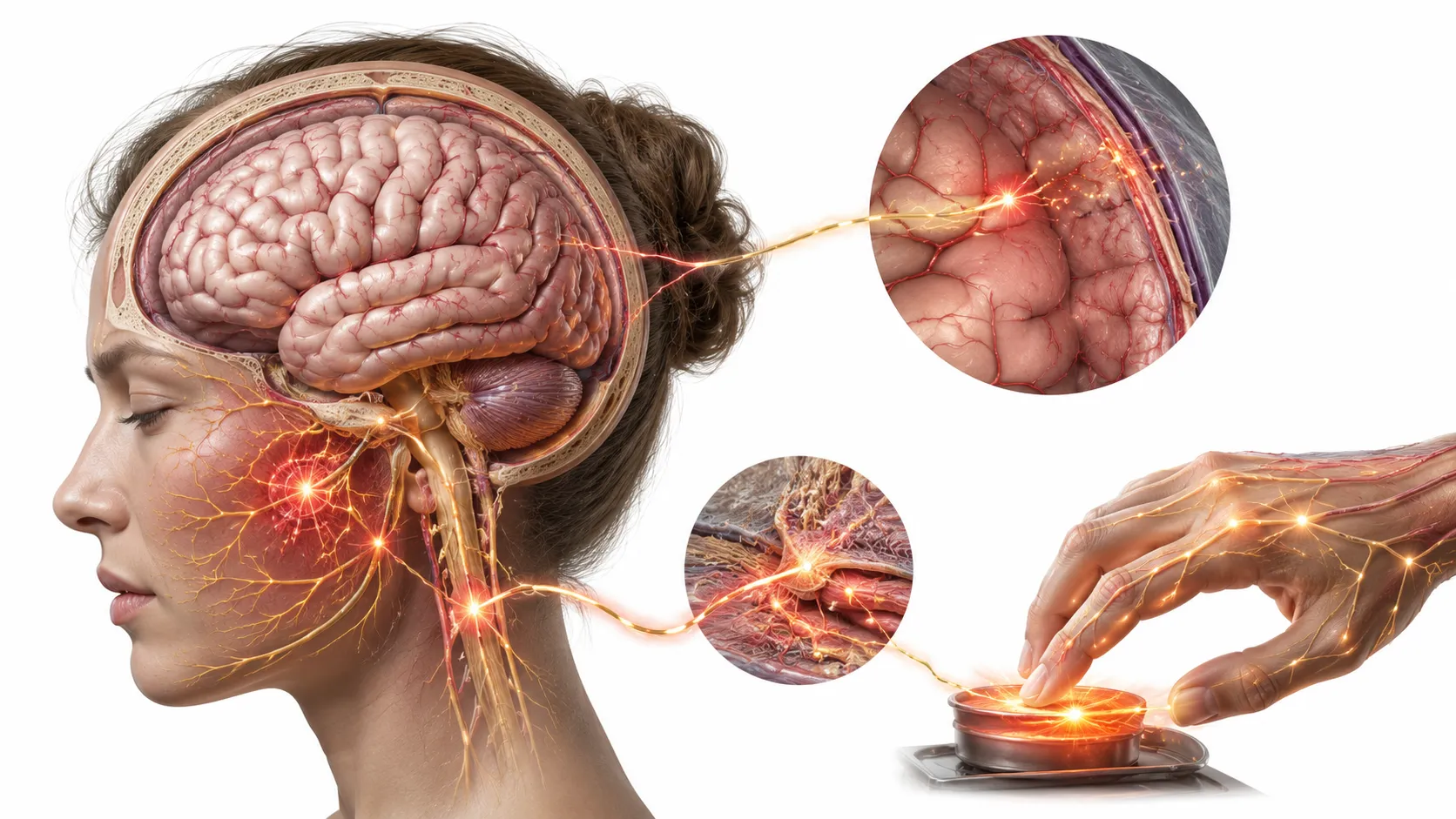
A yawn is a coordinated whole-body event, not just a mouth movement.
Jaw drops wide open
The mouth opens wide, stretching jaw muscles and increasing blood flow to the skull and face.
Deep breath drawn in
You inhale deeply, pulling cooler air into the body. Blood flow in veins in the brain temporarily increases.
Brief breath hold
There's a longer-than-normal pause before exhaling, the lungs are fully stretched at this point.
Slow exhale and often a stretch
Air releases, eyes close, and many people extend into a full body stretch, flexing muscles and joints at the same time.
Real reason
Scientists Are Genuinely Not Sure, But Here's the Leading Theory
The oxygen theory, that yawning pulls in extra oxygen when your blood CO2 is too high, has been tested and mostly doesn't hold up. Breathing higher-oxygen air doesn't stop yawning. Breathing CO2-rich air doesn't make you yawn more.
The stronger theory right now is brain temperature regulation. Your brain runs warm when active and cooler when at rest. Yawning may help cool a warming brain by drawing in cooler air and stretching the jaw to increase blood flow. Some research found that yawning happens more in moderate temperatures, not when it's already too hot outside to cool down that way.
There's also a timing pattern: most yawns cluster around waking up and falling asleep, and around transitions from low-alert to high-alert states. This has led researchers to think yawning is your brain's way of shifting gears, signaling or enabling a change in alertness level.
Myth vs reality
Myth vs Reality
What people think
You yawn because your brain needs more oxygen
This was the go-to explanation for a long time. It feels intuitive, yawn, deep breath, more oxygen. But studies that tested this by giving people different concentrations of oxygen or carbon dioxide found it didn't change how often they yawned.
What actually happens
It's probably about brain temperature and state transitions
The best-supported theories point to cooling the brain and signaling a shift in alertness. Every vertebrate yawns, from fish to dogs to humans, which suggests it evolved for something real. We just haven't locked it down completely yet.
Common triggers
What Actually Makes You Yawn
Tiredness or waking up
Most yawns happen near sleep transitions, falling asleep or coming out of sleep
Boredom or low stimulation
Low-activity states seem to prime the brain to shift gears, triggering a yawn
Seeing or thinking about yawning
Contagious yawning, seeing, hearing, or even reading about yawning can trigger one
Quick answers
Common questions
Is yawning a sign of low oxygen? +
Probably not. Research that adjusted oxygen and CO2 levels in people didn't change how much they yawned. The oxygen theory has mostly been set aside.
Why do I yawn when I'm stressed? +
Stress is a state-change trigger. Your brain may use yawning to help shift between different levels of alertness, from calm to tense, or trying to come down from tension.
Why do I yawn so much in the morning? +
Morning is a major state transition, from deep sleep to wakefulness. Most yawning is clustered around exactly these kinds of transitions, which fits the theory that yawning helps your brain shift gears.
Is yawning the same as being bored? +
They often go together, but yawning isn't caused by boredom directly. Boredom is a low-stimulation state, and low-stimulation states seem to prompt the brain to shift, which may trigger a yawn.
Why does yawning feel satisfying? +
Many people feel more alert or relaxed after a yawn. It may reflect the brief physiological reset, the deep breath, the jaw stretch, the slight increase in blood flow, doing its job.
Do animals yawn for the same reason humans do? +
Possibly, but social yawning, catching someone else's yawn, seems more developed in social mammals. Fish and reptiles yawn but don't seem to 'catch' yawns the way chimps, dogs, and humans do.