Lip skin is only three to five cell layers thick in its outer barrier, compared to up to sixteen layers on most other parts of the body.
Body & Brain
Why do lips get chapped so easily?
Why Do Lips Get Chapped?
Your lips are the only exposed skin on your entire body with no oil glands, no sweat glands, and only a handful of protective layers standing between them and the outside world.
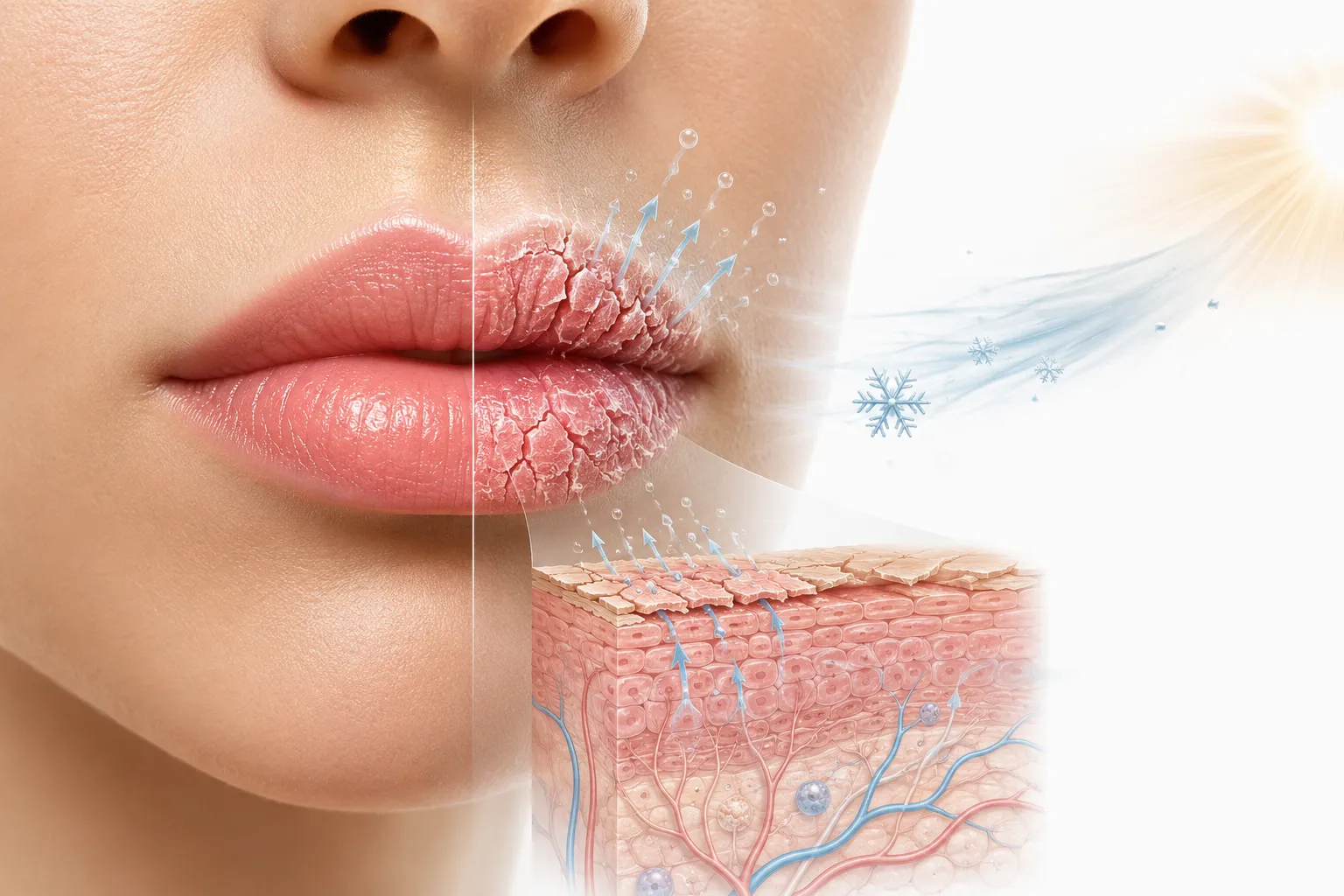
On this page
The short answer
Lips get chapped because they lack oil glands and sweat glands, and their outer skin layer is extremely thin, so they can't retain moisture the way the rest of your skin does. Dry air, wind, cold, sun, and licking your lips all strip away what little moisture is there, causing cracking.
Most skin on your body is covered by the stratum corneum, a thick outer layer packed with dead skin cells and natural oils that lock in moisture, plus sebaceous glands that continuously produce oil to keep the surface supple. Lips have a stratum corneum that's only a few cell layers thick, none of the oil-producing sebaceous glands found elsewhere, and no sweat glands to regulate hydration. That makes the skin on your lips almost entirely dependent on external moisture and saliva to stay hydrated, which is a fragile system easily disrupted by wind, cold, dry indoor heating, or excessive licking, all of which pull moisture out faster than it can be replaced.
At a glance
Lips begin at a structural disadvantage compared to almost all other skin.
Drinking more water is the main fix for chapped lips.
Compare the skin on the back of your hand to the skin on your lips under a microscope and you'll find one of the biggest structural differences anywhere on the human body.
Imagine most of your skin as a raincoat with a built-in sprinkler system, constantly relubricating itself. Your lips are the one patch of exposed skin wearing a tank top in that same rainstorm.
Diagram
Why Do Lips Get Chapped: the idea in one diagram
Chapping happens because lip skin's thin barrier and total lack of oil glands leave it unable to independently retain moisture against evaporation from environmental exposure.
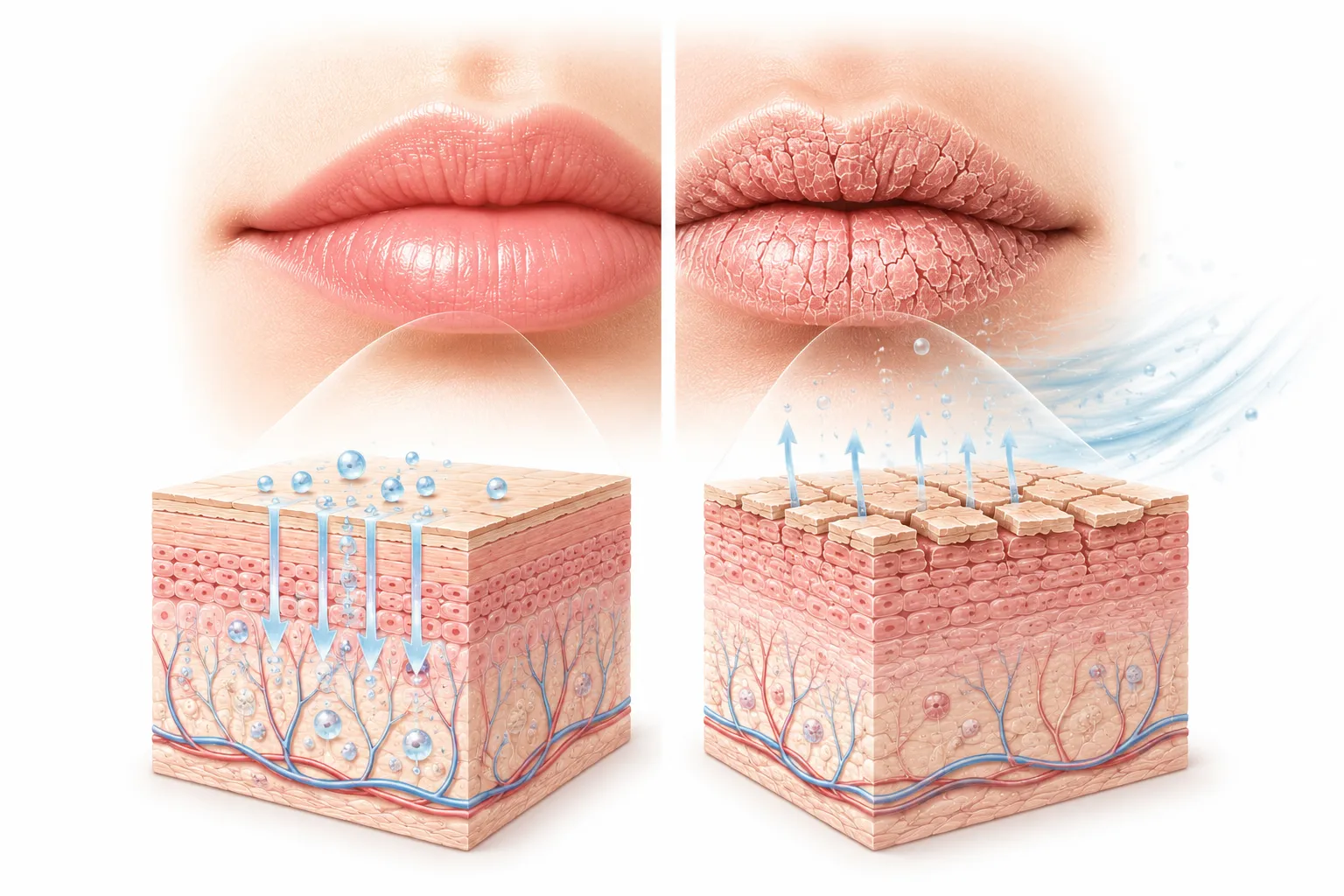
- 1Lip skin starts thin and undersupplied
Lips begin at a structural disadvantage compared to almost all other skin.
- 2Environmental exposure pulls moisture out
Chapping accelerates dramatically whenever the surrounding air is dry or moving.
- 3Licking compounds the moisture loss
A natural instinct to relieve dryness often accelerates it instead.
- 4The surface cracks under normal movement
Cracking is a mechanical failure caused by moisture loss, not a separate condition.
How it works
The mechanism
Chapping happens because lip skin's thin barrier and total lack of oil glands leave it unable to independently retain moisture against evaporation from environmental exposure.
- Step 01
Lip skin starts thin and undersupplied
The outer barrier layer of lip skin is only a few cells thick, and there are no sebaceous glands producing protective oil the way there are elsewhere on the face.
Like wearing the thinnest possible layer of protection on the most exposed part of your body.
Lips begin at a structural disadvantage compared to almost all other skin.
- Step 02
Environmental exposure pulls moisture out
Wind, cold air, low indoor humidity, and sun exposure all accelerate water evaporation from the thin lip barrier faster than it can naturally replenish.
Like a puddle evaporating faster in wind than in still air.
Chapping accelerates dramatically whenever the surrounding air is dry or moving.
- Step 03
Licking compounds the moisture loss
Saliva briefly wets the lips but evaporates faster than water alone, and enzymes in saliva can further irritate already-thin skin, worsening dryness within minutes.
Like trying to fix a drought with a five-second rain shower that makes the ground hotter afterward.
A natural instinct to relieve dryness often accelerates it instead.
- Step 04
The surface cracks under normal movement
Once moisture drops low enough, the thin skin loses flexibility, and everyday movements like talking, smiling, or eating cause it to split at the surface.
Like dry leather cracking when bent.
Cracking is a mechanical failure caused by moisture loss, not a separate condition.
Surprises
Facts worth sitting with
Lip skin is only three to five cell layers thick in its outer barrier, compared to up to sixteen layers on most other parts of the body.
Surprising facts
What seems backwards
Worth comparing
In everyday life
Easy to get wrong
Pressure points
Where the simple answer gets interesting
Why do lips feel like they need lip balm constantly once you start using it?
Because most lip balms work by sealing moisture rather than restoring the skin's natural barrier function, lips can become reliant on repeated application, especially if the balm contains ingredients like menthol or camphor that create a cooling sensation but slightly irritate the skin, prompting more frequent reapplication.
A product designed to solve chapping can, in certain formulations, create a low-level cycle that makes lips feel worse without it.
Why are lips more prone to sunburn than nearby skin?
The thin outer layer of lip skin offers far less natural protection against ultraviolet radiation than the thicker skin surrounding the mouth, and lips are frequently left uncovered by sunscreen routines.
The same structural fragility that causes everyday chapping also makes lips one of the most sun-vulnerable areas on the entire face.
Why does cold weather chapping feel different from summer sun chapping?
Cold weather chapping is driven primarily by dry air and wind pulling moisture out rapidly, while summer chapping often combines sun damage with dehydration from heat, producing similar cracking through different mechanisms.
Two completely different seasonal conditions converge on the exact same vulnerable structure, just by different routes.
Behind the science
The story behind it
The rise of lip balm as a consumer product
Commercial lip balm products emerged in the late 1800s and grew into a massive industry by the twentieth century, driven by a universal, low-grade discomfort that had no dedicated solution before.
A structural quirk of human anatomy, the total absence of oil glands on the lips, created sustained demand for one of the most habitually repurchased personal care products in history.
An entire consumer category can be built around solving a small, permanent anatomical gap rather than an occasional problem.
Comparative transepidermal water loss studies on lip versus facial skin
Researchers measured how quickly water evaporates from lip skin compared to nearby cheek and forehead skin under identical environmental conditions.
Lip skin consistently showed dramatically higher rates of water loss, providing direct physiological evidence for why lips dry out faster than virtually any other exposed skin.
Clarify
Myth and reality
Myth
Drinking more water is the main fix for chapped lips.
Reality
While systemic dehydration can contribute in some cases, most everyday chapping is driven by direct environmental moisture loss through the thin lip barrier, not overall body hydration.
Evidence
Chapping often persists even in well-hydrated people during cold, windy, or low-humidity conditions, and improves primarily with barrier-sealing products rather than increased water intake alone.
Looking closer
The deeper pattern
Lips are chronically vulnerable not because something goes wrong with them, but because they were never built with the same defenses as the rest of your skin in the first place.
One way to think about it
Some fragility isn't a malfunction to fix but a structural feature to manage continuously, and mistaking one for the other leads to constant frustration with a problem that was never actually solvable, only manageable.
Not every recurring problem is broken. Some are just permanently exposed.
Limits
Where the explanation bends
Chronic lip licking and lip lick dermatitis.
In some people, especially children, habitual lip licking creates a visible ring of irritated, chapped skin extending beyond the lip border itself, a condition dermatologists specifically diagnose and treat.
A single repeated habit is powerful enough to produce a distinct, named medical condition on its own.
In daily life
What this helps you notice
Applying a barrier-sealing balm before exposure to wind or cold is far more effective at preventing chapping than trying to treat it after cracking has already started.
Skiers and outdoor workers routinely apply thick occlusive lip balm before heading into cold, dry, windy conditions specifically because prevention works better than repair once the skin barrier has already broken down.
Remember
Key takeaways
- 1
Lips have no oil glands and no sweat glands, unlike virtually all other exposed skin on the body.
- 2
The outer protective layer of lip skin is only a few cells thick, far thinner than skin elsewhere on the face.
- 3
Chapping is driven mainly by environmental moisture loss, not simply by not drinking enough water.
- 4
Licking your lips worsens chapping because saliva evaporates quickly and can irritate the thin skin.
- 5
Lip balm mostly works by sealing in existing moisture rather than adding new hydration.
Chapped lips aren't a sign anything went wrong. They're the predictable result of exposing the one patch of skin on your body that was never given the tools to defend itself.
Every other inch of your skin has its own quiet moisturizing system running in the background. Your lips never got one, and every winter, they remind you exactly what that oversight costs.
Read around the idea
More questions with the same curious pull
Nearby doors from the TinyThat archive, chosen by topic, intent, and reader curiosity.
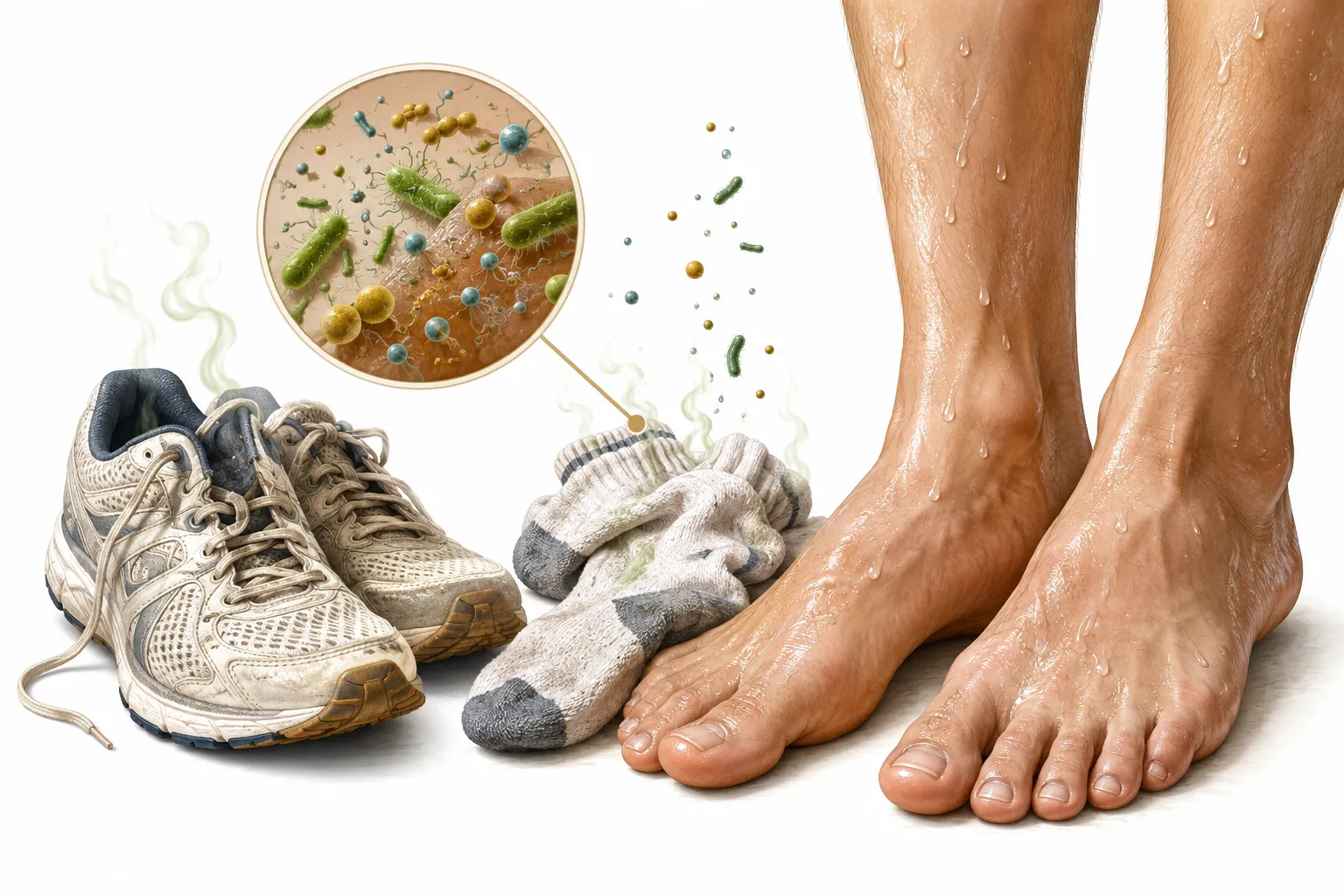
Body & Brain
Why Do Feet Smell?
Sweat combined with bacteria on the skin produces the odor commonly associated with foot smell.
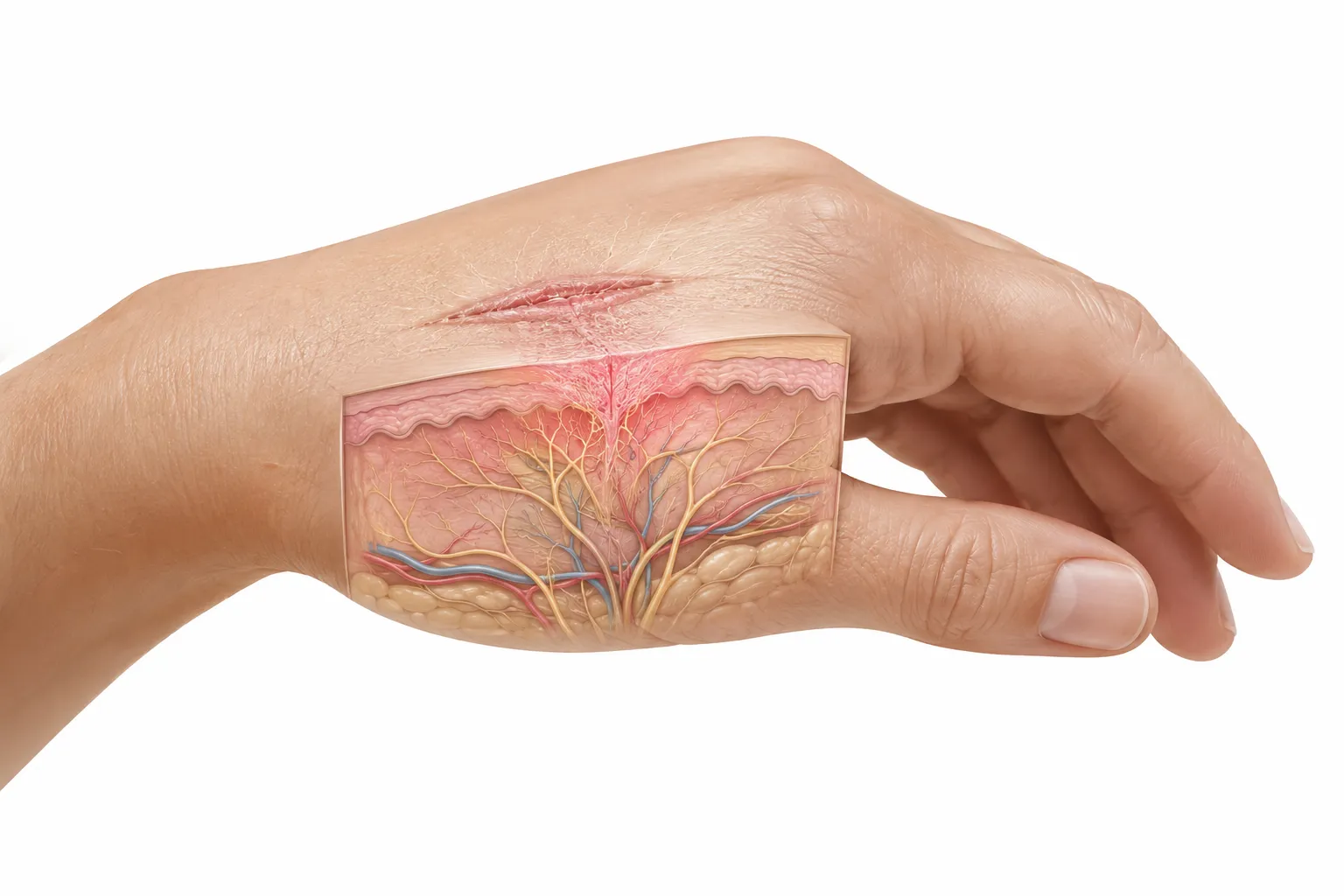
Body & Brain
Why Do Cuts Itch When Healing?
Histamine released during the healing process stimulates nerve endings, producing an itching sensation.
Body & Brain
Can the Brain Feel Pain?
The brain controls all pain in your body, yet it cannot feel pain itself. Discover why, and what this strange fact re...