Documented video footage exists of people sneezing with their eyes fully open, showing no discomfort, injury, or dislodgement of the eye whatsoever.
Body & Brain
Is it possible to sneeze with your eyes open?
Can You Sneeze With Your Eyes Open?
Try it right now, next time you feel a sneeze coming on: keep your eyes open. It's harder than it sounds, and not for the reason you probably think.

On this page
The short answer
Yes, it's physically possible to sneeze with your eyes open, and it causes no harm. The reason it's difficult is that eyelid closure is wired into the same automatic brainstem reflex arc that controls the rest of the sneeze, not because your eyes need protecting from any physical danger.
The sneeze reflex is coordinated by a network of neurons in the brainstem that trigger a rapid, simultaneous contraction of muscles across the diaphragm, chest, throat, and face, including the muscles that close the eyelids. This entire sequence happens involuntarily and extremely quickly, which is why it feels impossible to interrupt any single part of it, including eye closure, through conscious effort alone. There's no anatomical reason keeping your eyes open during a sneeze would cause injury, since the eyes aren't mechanically connected to the sinus pressure generated during a sneeze. With deliberate practice and conscious effort, some people can override the eye-closing portion of the reflex while still sneezing normally, proving the difficulty is neurological, not protective.
At a glance
The eye closure is scheduled as part of the same automatic sequence as everything else.
Sneezing with your eyes open is dangerous and could cause them to pop out.
People have done it. It's on video. Nothing bad happens to their eyes. And yet almost everyone who tries it fails on the first attempt.
Picture trying to hold back one gear in a machine while every other gear around it keeps turning at full speed, all of them locked together on the same drive shaft.
Diagram
Can You Sneeze With Your Eyes Open: the idea in one diagram
Sneezing with eyes open is difficult because eyelid closure is bundled into the same rapid, involuntary brainstem reflex arc that coordinates the rest of the sneeze, not because of any protective necessity.
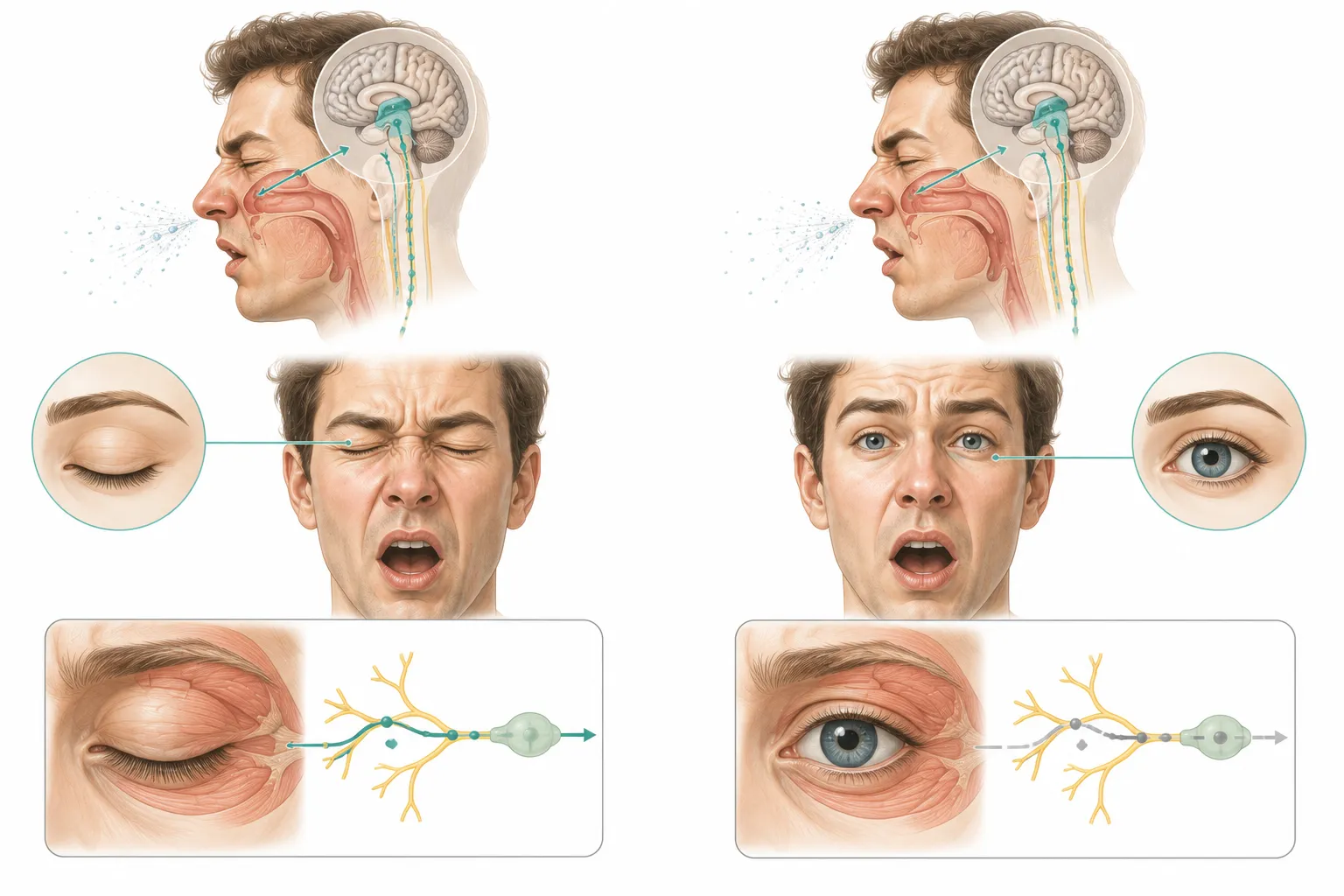
- 1The sneeze reflex initiates in the brainstem
The eye closure is scheduled as part of the same automatic sequence as everything else.
- 2Conscious control arrives too late
By the time you'd consciously decide to keep your eyes open, the reflex has usually already fired.
- 3Practice can partially retrain the response
The reflex is strong by default, but not entirely beyond influence with practice.
How it works
The mechanism
Sneezing with eyes open is difficult because eyelid closure is bundled into the same rapid, involuntary brainstem reflex arc that coordinates the rest of the sneeze, not because of any protective necessity.
- Step 01
The sneeze reflex initiates in the brainstem
A cluster of neurons in the brainstem coordinates the entire sneeze sequence the moment a nasal irritant is detected, triggering multiple muscle groups simultaneously.
Like a control panel firing several outputs from a single input signal.
The eye closure is scheduled as part of the same automatic sequence as everything else.
- Step 02
Conscious control arrives too late
The entire reflex, including eyelid closure, unfolds within a fraction of a second, faster than the conscious brain can typically intervene to stop just one component of it.
Like trying to catch a single frame out of a video playing at full speed.
By the time you'd consciously decide to keep your eyes open, the reflex has usually already fired.
- Step 03
Practice can partially retrain the response
With repeated, deliberate effort, some people can build enough anticipatory control to resist the eye-closing portion specifically, even though the rest of the sneeze remains fully automatic.
Like training yourself to keep one finger still while the rest of your hand claps automatically.
The reflex is strong by default, but not entirely beyond influence with practice.
Surprises
Facts worth sitting with
Documented video footage exists of people sneezing with their eyes fully open, showing no discomfort, injury, or dislodgement of the eye whatsoever.
Surprising facts
What seems backwards
Worth comparing
In everyday life
Easy to get wrong
Pressure points
Where the simple answer gets interesting
Why can some people learn to sneeze with their eyes open while most people can't on the first try?
The strength of the automatic eye-closing reflex likely varies slightly between individuals, and with repeated conscious effort and practice, some people appear able to partially override or desensitize this particular part of the reflex arc, even though the rest of the sneeze remains fully involuntary.
It suggests a small degree of trainable flexibility exists even within one of the body's fastest, most automatic reflexes.
Is there any actual risk to sneezing with your eyes open?
No documented medical risk exists; the eyes are not mechanically connected to the pressure generated in the sinuses and airway during a sneeze, and no case of eye injury from open-eyed sneezing has been recorded in medical literature.
A behavior widely assumed to be dangerous turns out to be something people have already tested, on camera, with zero consequences.
Does closing your eyes during a sneeze serve any real purpose at all?
It likely offers minor protection from droplets and particles expelled during the sneeze landing directly on the eye's surface, even though this probably isn't the original evolutionary reason the eye-closing reflex became linked to sneezing in the first place.
A reflex that likely began as an incidental side effect of shared nerve wiring may have picked up a small, genuinely useful benefit along the way.
Behind the science
The story behind it
Documented open-eyed sneeze footage
Several instances of people sneezing with their eyes fully open have been captured on video and shared publicly, showing complete safety and no visible discomfort or injury.
This footage has served as some of the clearest direct evidence debunking the popular eyeball-popping myth associated with sneezing.
Sometimes a widely repeated myth can be settled simply by someone being willing to try the thing everyone assumed was dangerous.
High-speed video analysis of the full sneeze sequence
Researchers filmed the sneeze reflex using high-speed cameras to break down the precise timing of muscle contractions across the face, throat, and chest.
Eyelid closure was shown to occur essentially simultaneously with the earliest stages of the sneeze, confirming just how tightly integrated the reflex truly is.
Clarify
Myth and reality
Myth
Sneezing with your eyes open is dangerous and could cause them to pop out.
Reality
There is no anatomical connection between the pressure generated during a sneeze and the structures holding the eye in place; keeping your eyes open during a sneeze is completely safe.
Evidence
Multiple documented cases of people sneezing with eyes open on camera show no injury, discomfort, or structural issue with the eyes whatsoever.
Looking closer
The deeper pattern
The difficulty of sneezing with your eyes open isn't a failure of willpower; it's evidence that some processes in your body were never designed to be negotiated with piece by piece.
One way to think about it
Certain systems are built as indivisible packages rather than a collection of separately controllable parts, and trying to pull just one component out through effort alone reveals how tightly bundled the whole system really is.
You can't always negotiate with a system one piece at a time. Some things only come as a complete package.
Limits
Where the explanation bends
People who can partially keep their eyes open during a sneeze.
A small number of people report being able to keep their eyes open, sometimes only partially or on one side, through deliberate, repeated practice, without any negative effect.
It shows the reflex, while strong and default, isn't universally unbreakable for every individual.
In daily life
What this helps you notice
Knowing the eye-closing reflex is safe to override, if difficult, removes unnecessary anxiety for people who occasionally sneeze with their eyes partly open, such as while driving or during physical activity.
Drivers who briefly sneeze with eyes open, whether intentionally or by accident, can be reassured there's no physical risk to their eyes, even though a brief loss of visual focus is still a valid safety concern on the road.
Remember
Key takeaways
- 1
It is physically possible and completely safe to sneeze with your eyes open.
- 2
The difficulty comes from eyelid closure being wired into the same automatic brainstem reflex as the rest of the sneeze, not from any protective necessity.
- 3
Documented footage of people sneezing with eyes open shows no injury or discomfort whatsoever.
- 4
The entire sneeze reflex, including eye closure, unfolds within a fraction of a second, faster than conscious control can typically intervene.
- 5
Some people can partially override the eye-closing reflex through deliberate, repeated practice.
The one thing standing between you and sneezing with your eyes open isn't your eyes at all. It's a brainstem reflex that never learned how to do anything halfway.
Next time it happens, you're not watching your body protect itself. You're watching a machine execute a bundled command it's run the exact same way since before you had any say in the matter.
Read around the idea
More questions with the same curious pull
Nearby doors from the TinyThat archive, chosen by topic, intent, and reader curiosity.
Body & Brain
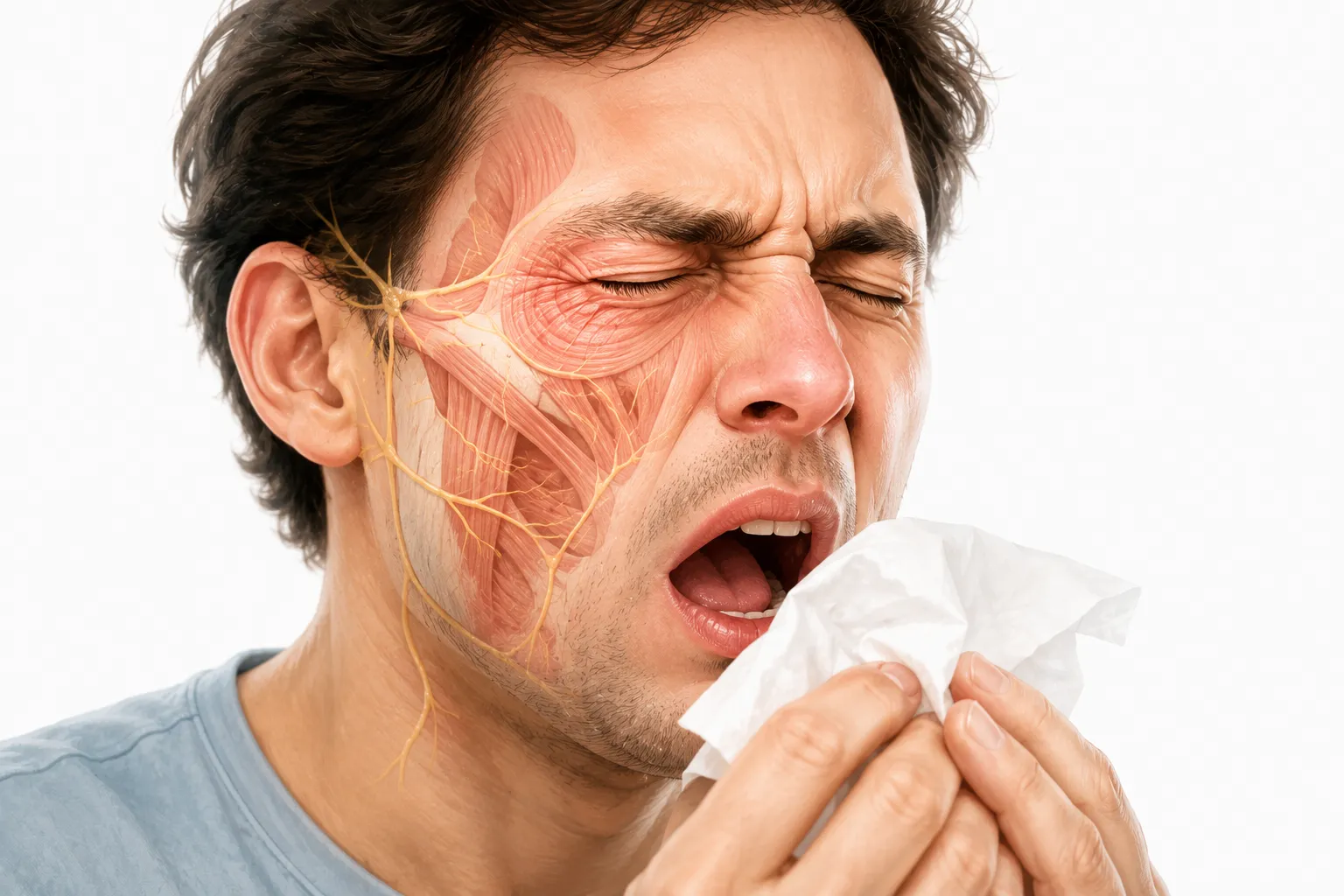
Why Do We Close Our Eyes When We Sneeze?
Eyelid closure is triggered by the same shared brainstem reflex pathway that coordinates the entire sneeze.
Body & Brain
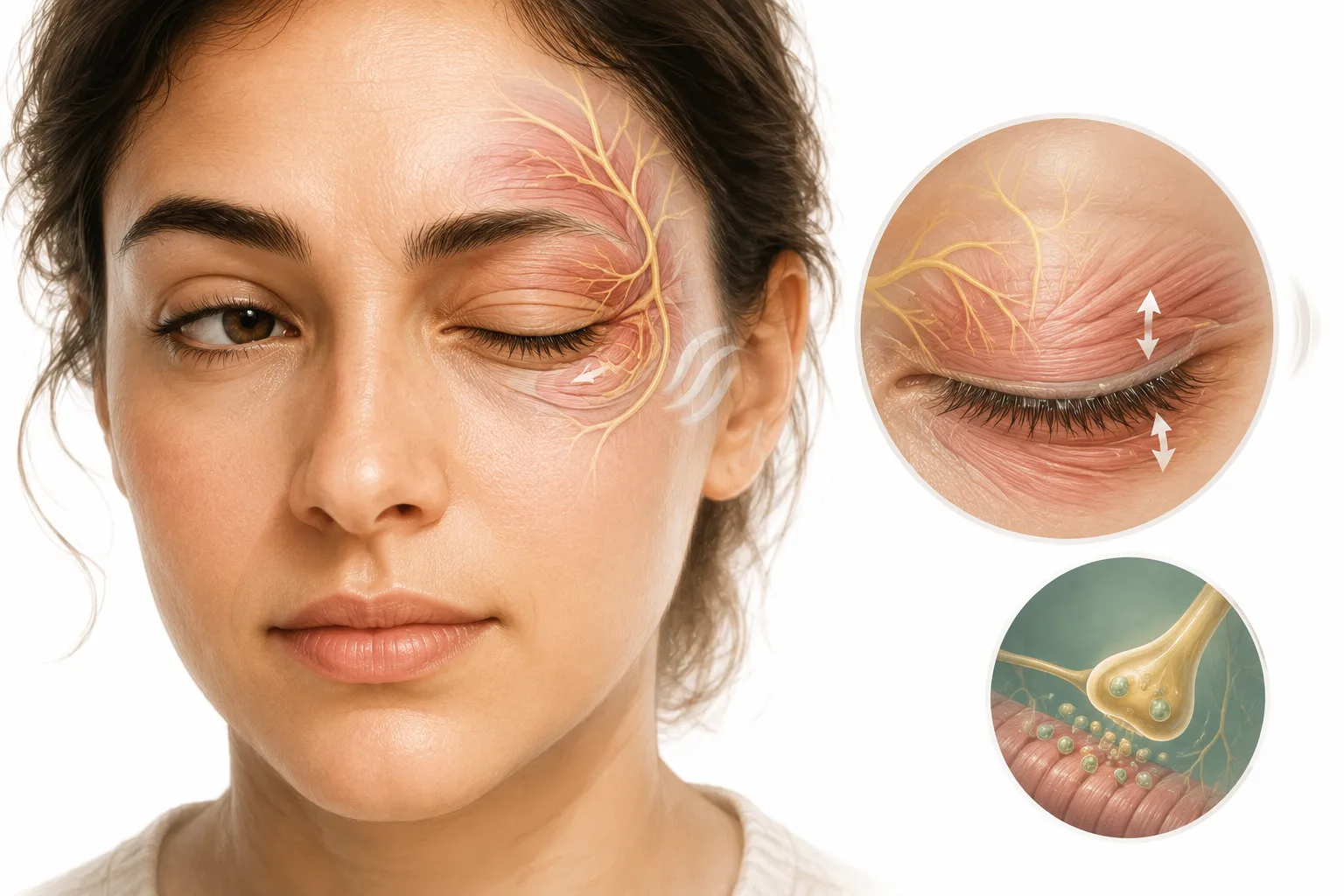
Why Do My Eyes Twitch?
Eye twitching results from an overexcited nerve triggering small, involuntary contractions in the thin eyelid muscle.
Body & Brain
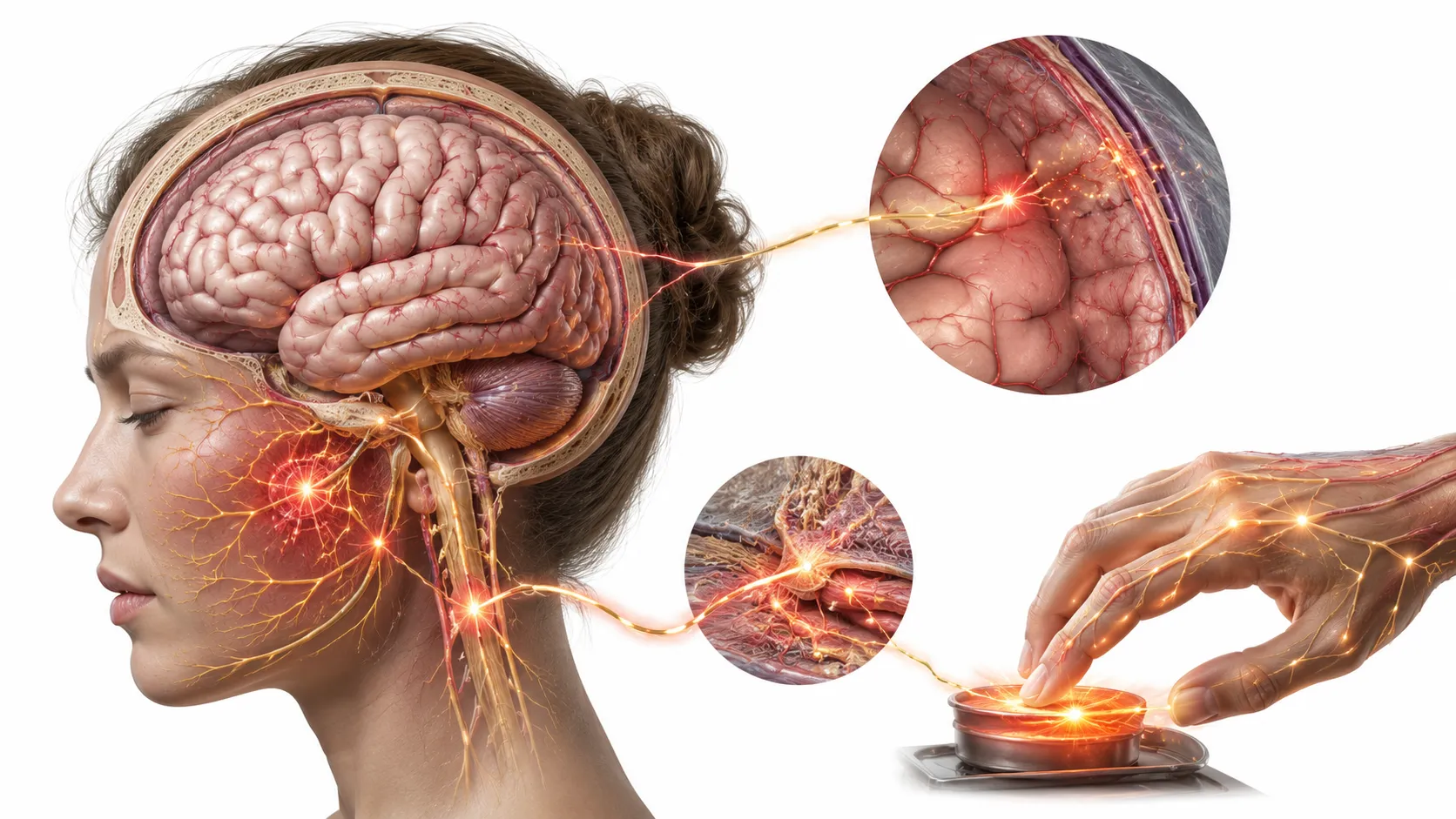
Can the Brain Feel Pain?
The brain controls all pain in your body, yet it cannot feel pain itself. Discover why, and what this strange fact re...