Visual answer
Why Attention Makes Waiting Stretch
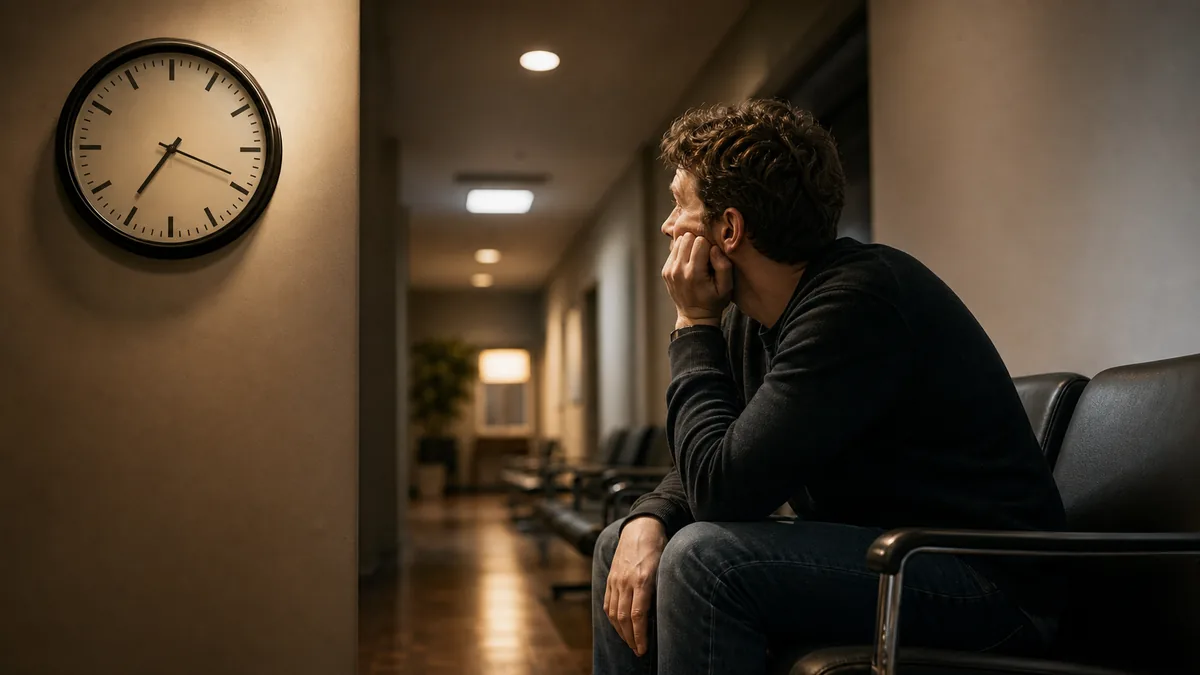
Waiting feels longer because your attention is often stuck on time itself.
Notice the pattern
The visible detail hints at a practical reason behind the everyday design or behavior.
Identify the mechanism
The core cause is shown with simple arrows so the relationship is easy to follow.
See the effect
The diagram connects the cause to what you actually notice in real life.
Remember the takeaway
The final step reduces the idea to the simple answer behind the article.
Time perception is
Time perception is not a clock
Your brain does not experience time the way a clock measures it. Instead, your sense of how much time has passed is constructed from memory and attention. When you are doing something absorbing, you encode fewer time-markers, so the period feels shorter in retrospect. When you are waiting and bored, you are actively aware of every moment, so the same amount of time feels stretched.
The role of
The role of attention
Attention is the key variable. Studies on time perception consistently show that when people focus on a task, they underestimate how much time has passed. When people are told to monitor time, or have nothing else to focus on, they overestimate how long they have been waiting.
Emotion amplifies this
Emotion amplifies this effect
Anxiety and frustration make waiting feel even longer. If you are annoyed by a delay or anxious about an outcome, your focus on time increases and your tolerance for it shrinks. Positive anticipation, like waiting for something exciting, can have the opposite effect.
Why long tasks
Why long tasks feel shorter in hindsight
Memory plays a role too. A day full of activity feels long when you reflect on it because many distinct memories were formed. A day of passive waiting or boredom may feel long while it is happening but surprisingly short in memory, because so few distinct experiences were recorded.
Misconception
Common Misconception
What people think
Time feels slow when you are bored simply because nothing is happening.
Time feels slow when you are bored simply because nothing is happening.
What actually happens
Reality
Time feels slow when you are bored because your attention shifts to monitoring time itself. The act of watching time is what makes it drag.
Quick answers
Common questions
Why does waiting in a queue feel worse than expected wait times suggest? +
Unoccupied waiting and uncertain waiting both feel longer. If you do not know how long the queue will take, or have nothing to do, your sense of duration stretches further than the actual time elapsed.
Does distraction really help with waiting? +
Yes. Research and everyday experience both confirm that giving people something to do during a wait, even something trivial like a screen or music, significantly reduces how long the wait feels.
Is there a physical reason time perception changes? +
Your body temperature, heart rate, and arousal level all slightly affect time perception. Higher physiological arousal can make time feel faster, while sedation or boredom slows it. But attention remains the dominant factor.