Visual answer
Why Safe Fear Can Feel Fun
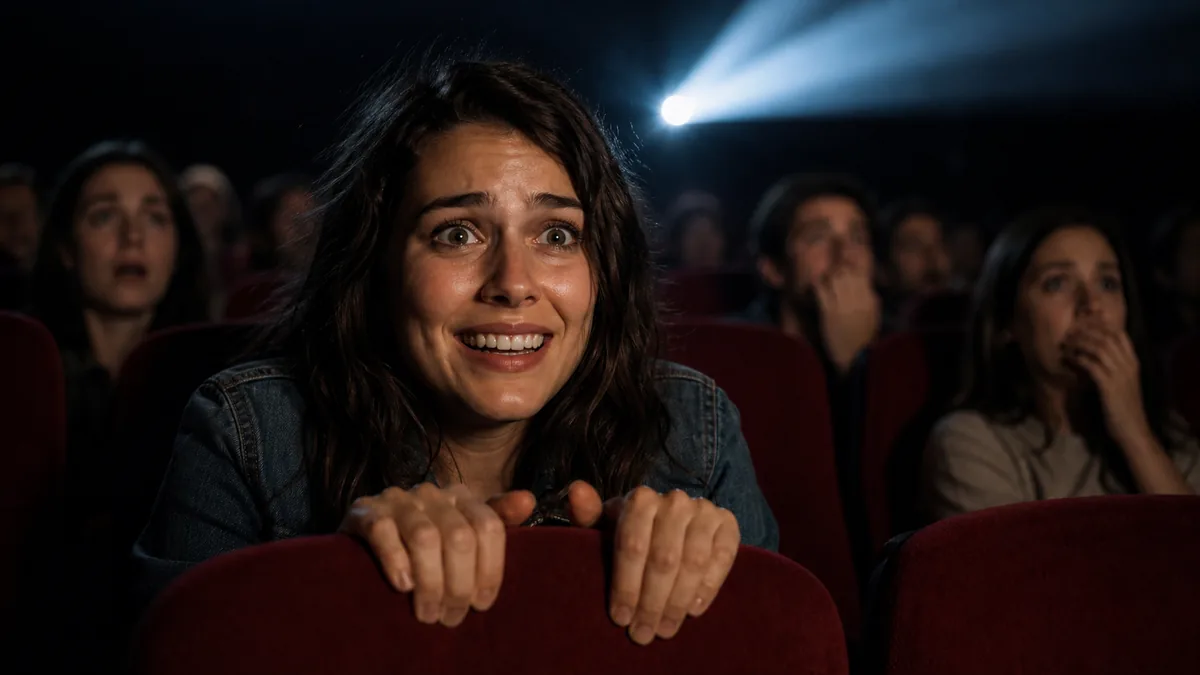
Scary movies trigger a real fear response while your brain still knows you are safe.
Notice the pattern
The visible detail hints at a practical reason behind the everyday design or behavior.
Identify the mechanism
The core cause is shown with simple arrows so the relationship is easy to follow.
See the effect
The diagram connects the cause to what you actually notice in real life.
Remember the takeaway
The final step reduces the idea to the simple answer behind the article.
Fear that feels
Fear that feels safe
When you watch a horror film, your brain partially processes the threat as real. Your heart rate rises, your muscles tense, and stress hormones release. But another part of your brain knows you are sitting in a chair watching a screen. This combination produces a fear response without genuine danger, which many people experience as excitement rather than distress.
The role of
The role of adrenaline and dopamine
Fear triggers adrenaline, which sharpens your senses and gives you a burst of energy. After the scary moment passes, dopamine can follow as part of the relief response. Together, these chemicals create a natural high that some people actively seek out.
Not everyone enjoys
Not everyone enjoys horror
Some people find horror films genuinely unpleasant rather than thrilling. Research suggests that people high in sensation-seeking traits, those who enjoy novelty and intensity, are more likely to enjoy horror. People who are more sensitive to anxiety or have experienced real trauma may find little appeal in it.
The social side
The social side of horror
Watching a scary film with others adds a social dimension. Shared fear creates bonding. Screaming together, grabbing someone's arm, and discussing what just happened all make the experience more enjoyable. Horror is partly a collective activity.
Horror as a
Horror as a safe space to rehearse fear
Some psychologists suggest horror films let people rehearse emotional responses to danger in a controlled setting. Processing fictional threats may, in a small way, make people feel more prepared or less afraid of real-world risks.
Misconception
Common Misconception
What people think
People who like horror films enjoy being genuinely scared.
People who like horror films enjoy being genuinely scared.
What actually happens
Reality
Fans of horror generally enjoy the controlled version of fear, the rush of the stress response in a setting where they know they are safe. Real fear is rarely enjoyable; simulated fear often is.
Quick answers
Common questions
Is watching horror bad for you? +
For most people, watching horror occasionally has no lasting negative effects. However, for people with anxiety disorders or trauma histories, graphic horror content may be more distressing than enjoyable.
Why do horror films make some people laugh? +
Laughter can be a release valve for the tension horror creates. When a scare moment passes, some people laugh to discharge the built-up nervous energy rather than scream.
Do children process horror differently than adults? +
Yes. Children are still developing the ability to distinguish fiction from reality and to regulate emotional responses, so horror content that adults find thrilling can be genuinely frightening and distressing for younger viewers.