Quick Facts
Quick Facts
Whispering actually takes more breath energy than normal speaking because you are pushing air through a smaller gap.
It dries out your throat faster because you don't use the lubricating moisture created when vocal cords vibrate.
Some people suffer from 'whispering syndrome' after a vocal injury and struggle to regain their normal voice.
You can still whisper if your vocal cords are surgically removed.
Visual answer
How whispering changes your voice
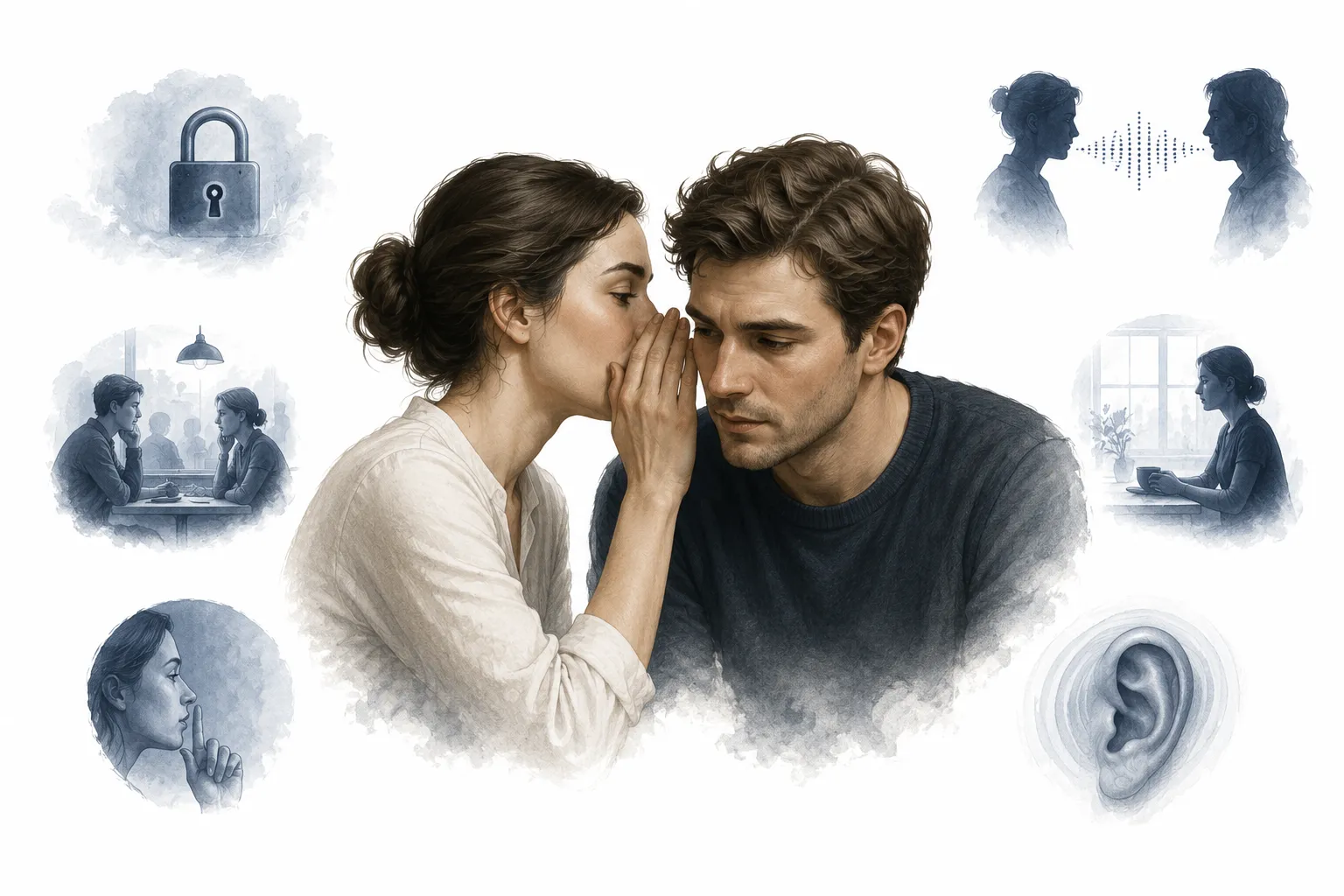
The diagram shows air moving through partially open vocal folds to create a quieter, breathier sound.
Airflow
Air still moves from the lungs through the throat.
No full vibration
The vocal folds do not vibrate the way they do during normal speech.
Quiet sound
The mouth shapes the breathy noise into recognizable words.
The Mechanics
How to Speak Without a Voice
When you talk normally, your lungs push air up, and it hits your vocal cords. The cords snap together and pull apart hundreds of times a second. That vibration creates sound waves, which your mouth and tongue shape into words.
When you whisper, you stop the vibration. You pull your vocal cords apart so they don't touch. But you still push air from your lungs. That air is forced through the tiny, rigid gap between your arytenoid cartilages (the bits that move the cords).
This creates turbulence. It’s the exact same physics as the hiss of a tire leak or a teakettle. Your mouth and tongue still do the work of shaping the words, but the 'instrument' making the noise isn't a vibrating string anymore; it's just noisy air.
Curiosity Notes
Details Most People Miss
Why this still matters
Why This Still Matters
It highlights the incredible flexibility of the human body. We didn't just evolve a way to make loud noises; we figured out how to hack our own respiratory system to make silent, turbulent air carry complex social information.
Key Findings
- ✓Core findingWe whisper to share information without being overheard.
- ✓Strong evidenceWhispering bypasses the vocal cords completely.
- ⚠Main consequenceThe sound comes from turbulent air squeezing through a gap in the throat.
- ✓Wider legacyIt takes more effort and dries out the throat faster than normal talking.
Final insight
A Last Thought
Whispering is proof that humans will do whatever it takes to share information. We will literally disable our primary speaking organs and force raw, hissing air through our throats, just to tell someone a secret without the lion hearing. It is clumsy, it hurts your throat, and it is deeply, wonderfully human.
Quick answers
Common questions
Is whispering bad for your voice? +
It can be. It forces the muscles in your larynx to work harder without the protective lubrication of vocal cord vibration.
Can deaf people whisper? +
Yes. Because whispering relies on air flow and mouth shapes, not hearing, deaf individuals can produce a whisper.