Visual answer
How raised plate letters helped records
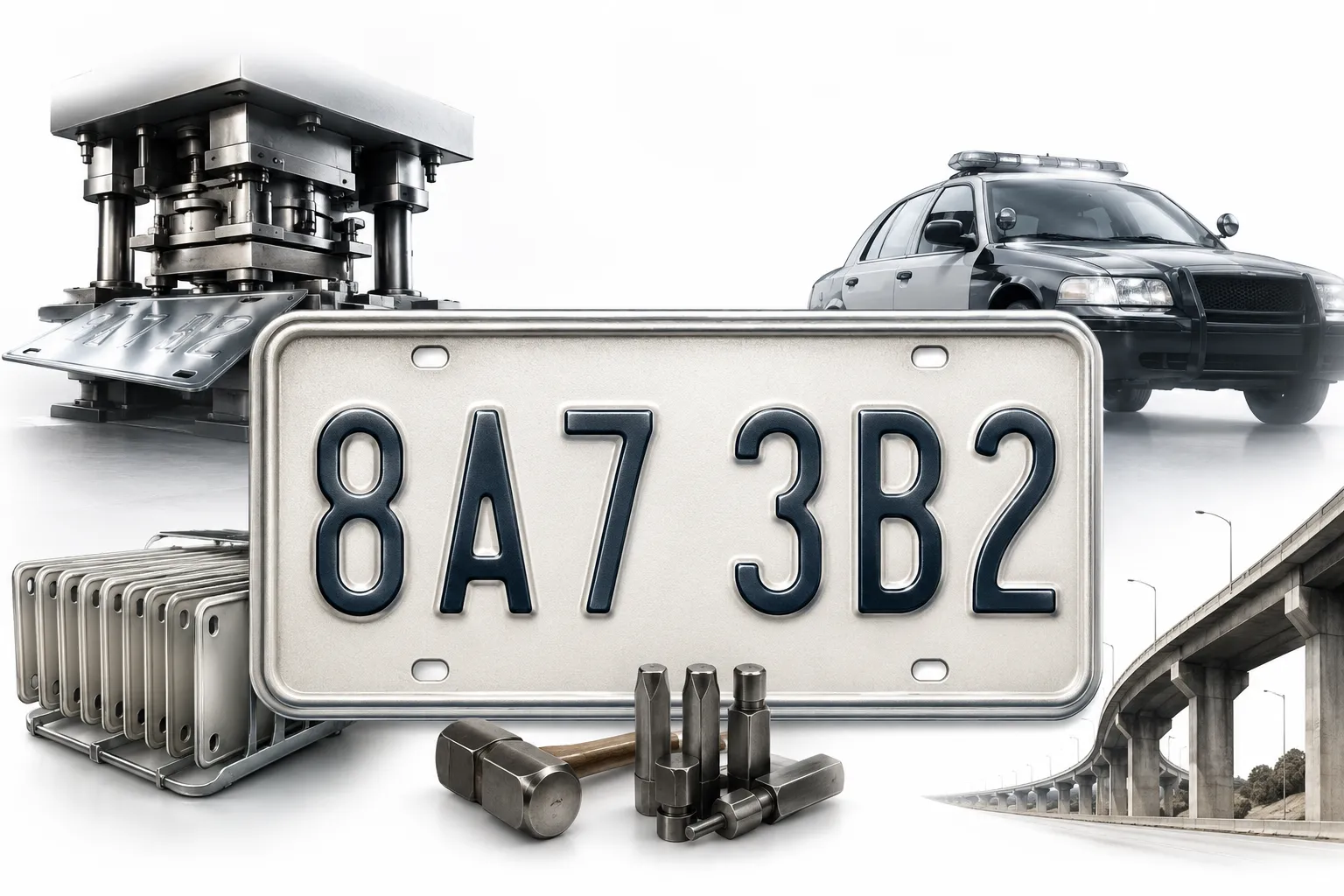
The diagram shows how embossed metal letters made quick paper impressions possible and why the shape stayed useful for visibility and recognition.
Embossed metal
The letters are pressed upward so they stand proud of the plate surface.
Paper impression
Older systems could press the plate into ink or paper to capture the number.
Readable shape
Raised reflective characters can be easier to read in difficult light.
The Story
From Ink Stamps to Automatic Cameras
Current state
The raised, embossed letters on licence plates were originally a practical technology. Parking facilities, toll roads and traffic officials needed a quick way to record which vehicles had passed through. An embossed plate could be pressed against an inked pad and then onto paper, essentially a rubber stamp made of metal, giving an instant record of the plate number.
What supports this
The method was widely used through most of the 20th century. Even as technology advanced, embossing persisted because raised letters also tend to be more reflective under light, making them easier for both human eyes and early camera systems to read at night or in poor conditions. Many jurisdictions kept embossing as a legal requirement simply because it was the established standard and changing it required updating both manufacturing lines and official recognition systems.
What could change this
Some US states have begun experimenting with flat, digitally printed plates that are cheaper to produce. A handful of countries have already moved to fully flat plates. The real question is whether automatic number plate recognition cameras, now standard on most motorways, work equally well with flat plates. Evidence suggests they do, which means embossing may slowly disappear.
The Simple Version
Think of It Like a Credit Card
The familiar part
Old credit cards had raised numbers so that shop owners could run them through a manual imprinter, a little clamp device that pressed the card against carbon paper to capture the number. Even after electronic readers arrived, raised numbers stayed around for years.
How it applies
Licence plates work on the same principle. The raised letters solved a specific old problem. The problem is largely gone, but the solution became standard, familiar, and in many places legally mandated.
Where the analogy breaks
Unlike credit cards, which have almost entirely moved to flat chip-and-pin designs, licence plates have changed more slowly, partly because they're regulated by governments rather than private companies, and governments tend not to rush these things.
Final insight
The Answer That Lived Past the Question
Raised letters on licence plates are a solution that outlasted the problem they were designed to solve. The ink-stamp readers are gone. But the raised letters are still here, mostly because nobody had a strong enough reason to change them.
Quick answers
Common questions
Are raised letters actually required by law? +
In many jurisdictions, yes, specifications for licence plates include embossing requirements. But this varies by country and state, and some places have updated their rules to allow flat plates.
Do cameras read raised plates better than flat ones? +
Modern ANPR cameras are designed to handle both. However, the reflective properties of embossed plates can give slightly better readability in challenging lighting conditions.