1
Reward circuits crave
The VTA and nucleus accumbens respond to ex-partner cues because the brain is seeking a reward it learned to expect. This resembles withdrawal.
Body & Brain
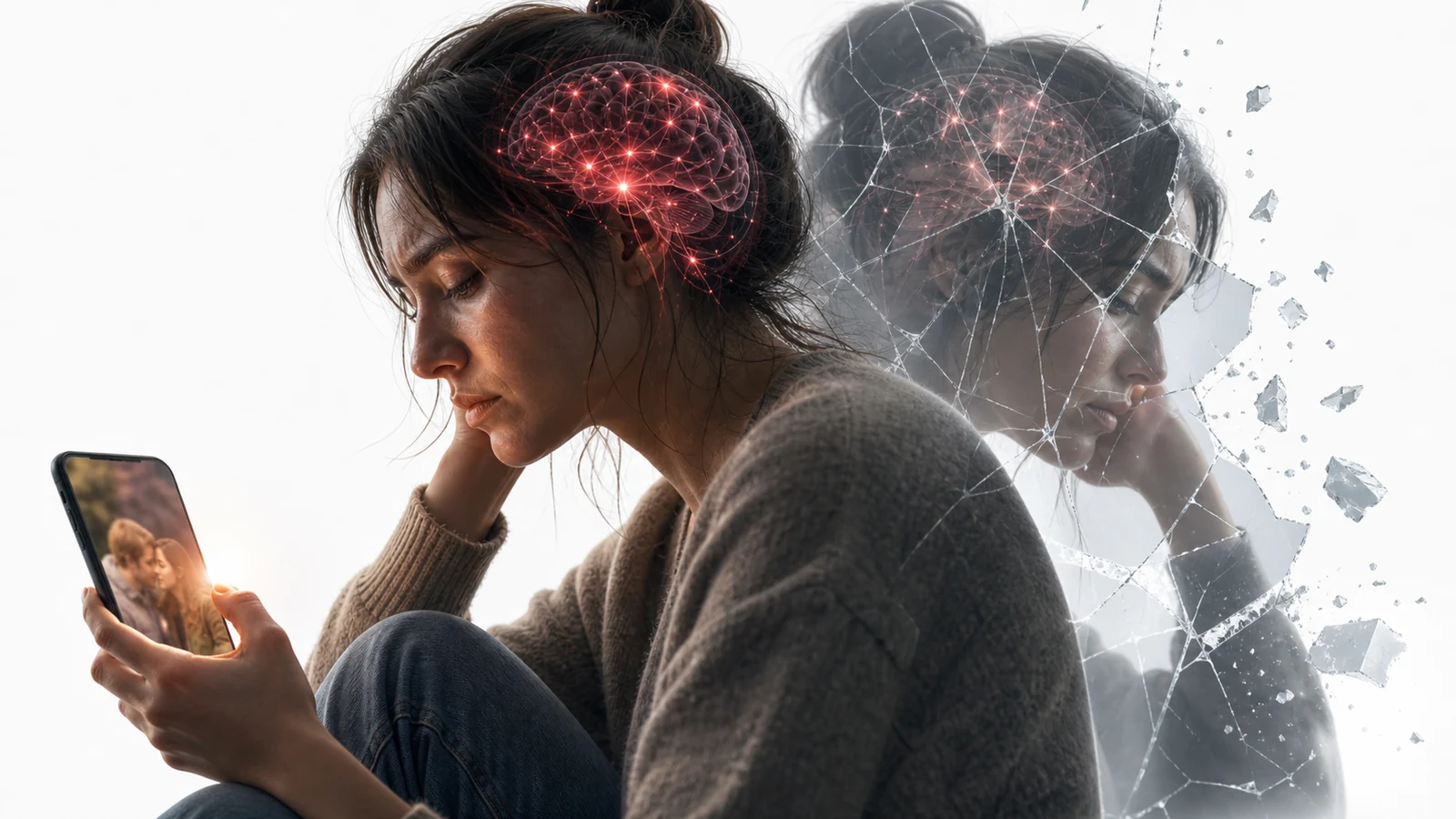
A breakup is not an emotional event that affects the brain. It is a brain event that produces emotional consequences. In brain scans, people looking at photos of a recent ex show activity in regions associated with pain, craving, and reward. They are not taking drugs and they are not physically injured. Their brain is processing romantic loss like withdrawal and social pain. The pain of a breakup is a measurable neurological state governed by mechanisms related to addiction, stress, and physical pain.
Quick answer
After a romantic breakup, the brain experiences dopamine and oxytocin withdrawal, pain-circuit activation, heightened reward craving in response to reminders, elevated stress hormones, and temporary cognitive impairment. Social pain and physical pain share neural machinery, and studies suggest acetaminophen can reduce some neural responses to social rejection.
The short answer
After a romantic breakup, the brain experiences dopamine and oxytocin withdrawal, pain-circuit activation, heightened reward craving in response to reminders, elevated stress hormones, and temporary cognitive impairment.
Reward circuits crave
The VTA and nucleus accumbens respond to ex-partner cues because the brain is seeking a reward it learned to expect.
Curiosity twist
Social pain and physical pain share neural machinery, and studies suggest acetaminophen can reduce some neural responses to social rejection.
Common mistake
Distraction and avoidance are the fastest way to recover.
Body & Brain
It varies, but many people begin feeling substantially better around three months; full recovery depends on attachment, relationship length, and context.
Breakups and health
Spousal loss is associated with elevated cardiovascular risk in the following weeks and months, showing that social bonds affect physical survival.
Should you suppress the pain or feel it?
Short-term distraction can help, but long-term recovery often requires processing and reappraisal. Passive rumination is harmful; active meaning-making is useful. Why people think this: Avoidance feels effective because it reduces immediate distress.