1
Dopamine surges
Reward circuits activate, producing pleasure and craving associated with one specific person. This overlaps with addiction circuitry.
Body & Brain
Love is not a feeling. It's a neurochemical state. And it's disturbingly similar to mental illness. In 1999, Donatella Marazziti compared people newly in love with people diagnosed with obsessive-compulsive disorder and healthy controls. The newly-in-love group showed serotonin patterns strikingly similar to the OCD group. Falling in love shares measurable features with obsession. The experience of falling in love is produced by a specific cocktail of neurotransmitters and hormones, and neuroscience has mapped much of it.
Quick answer
Falling in love activates dopamine, norepinephrine, lowered serotonin, cortisol, oxytocin, and vasopressin. Early romantic love strongly activates reward circuits also involved in addiction, while later attachment relies more on bonding chemistry. Brain scans of romantic rejection activate regions associated with physical pain, so heartbreak is not just a metaphor.
The short answer
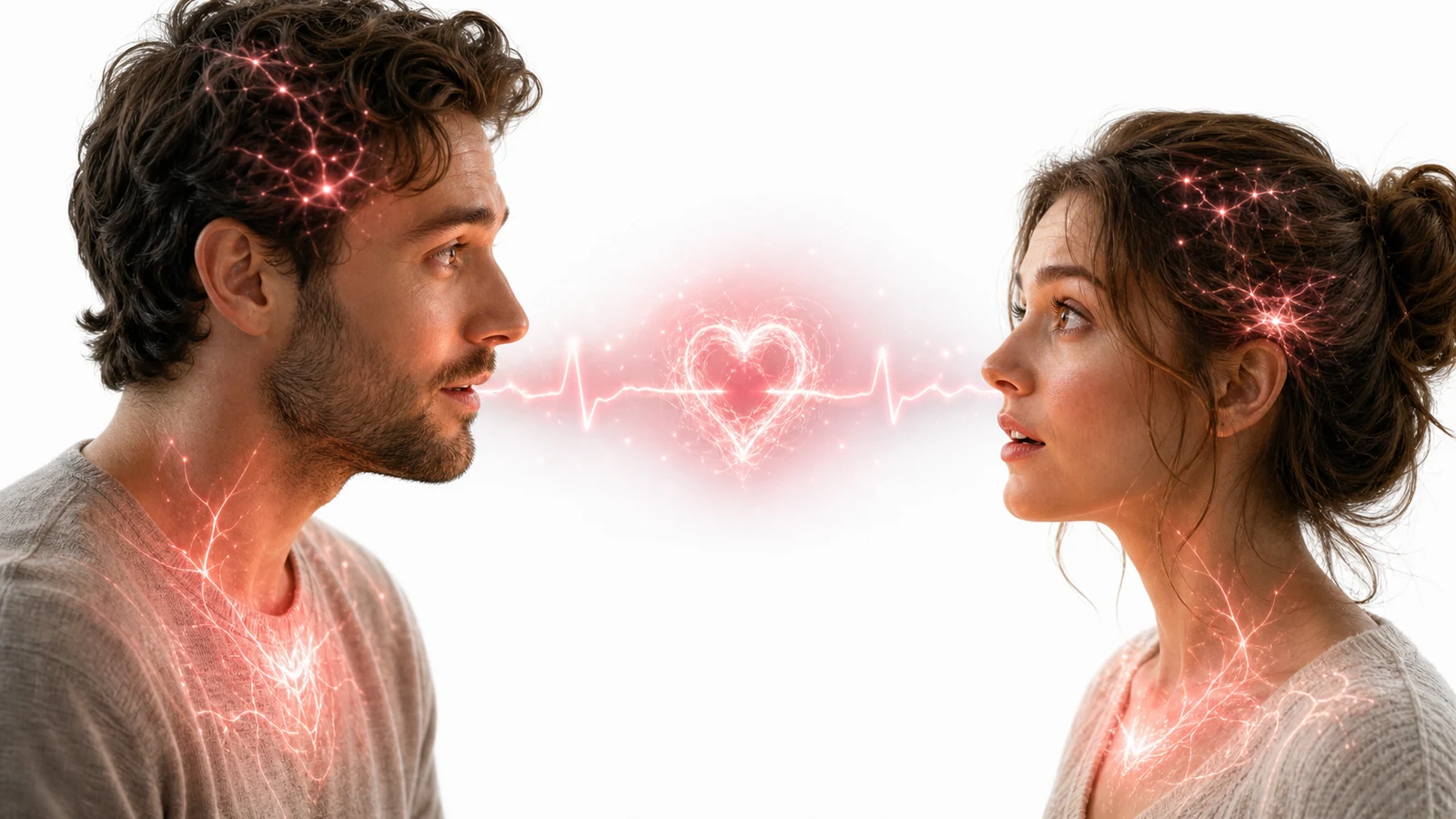
Falling in love activates dopamine, norepinephrine, lowered serotonin, cortisol, oxytocin, and vasopressin.
Dopamine surges
Reward circuits activate, producing pleasure and craving associated with one specific person.
Curiosity twist
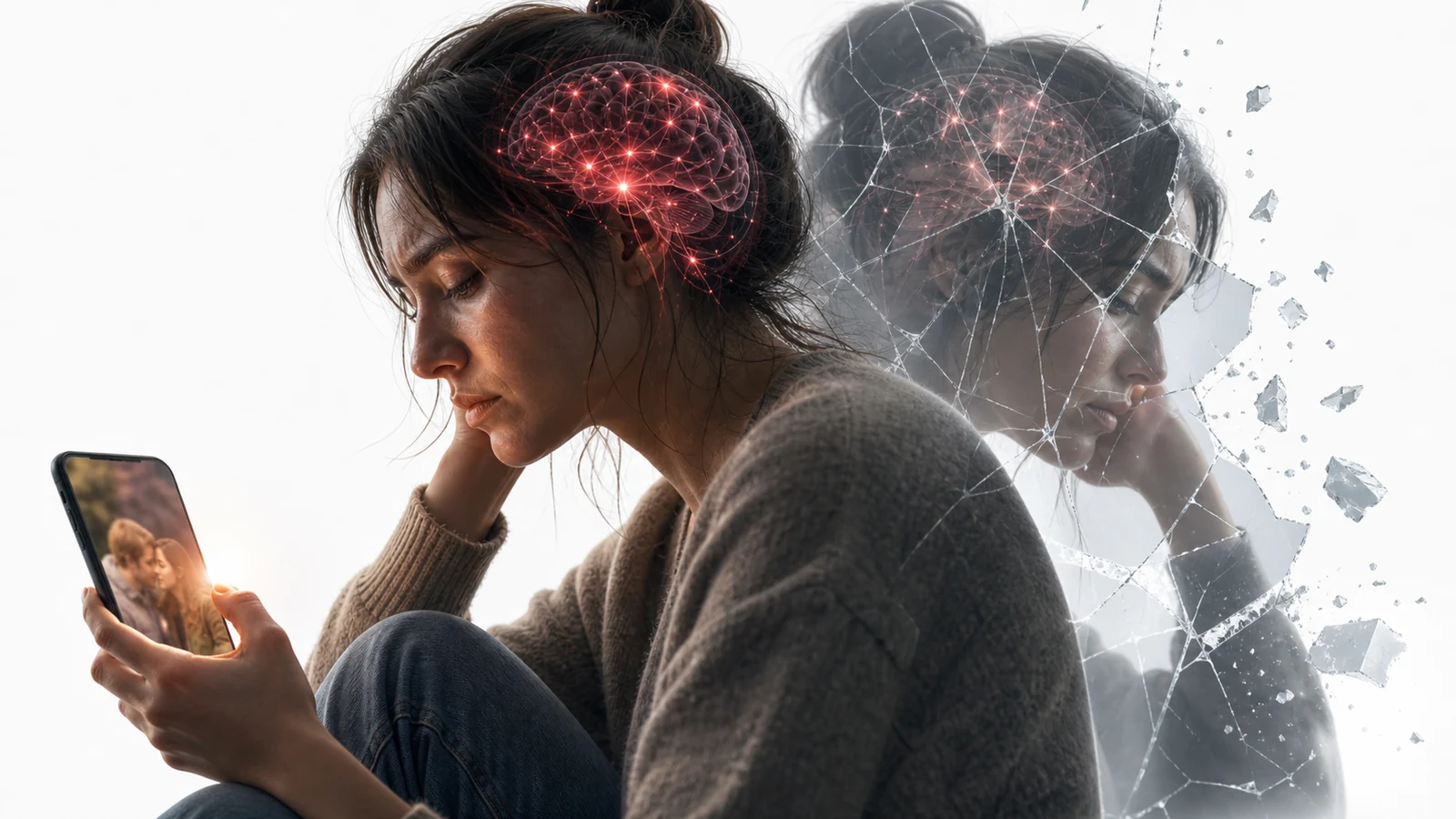
Brain scans of romantic rejection activate regions associated with physical pain, so heartbreak is not just a metaphor.
Common mistake
The excitement of early love inevitably becomes dull companionship.
Body & Brain
The underlying systems appear broadly human, but the expression, norms, and language of love vary widely across cultures.
Love in the lab
Arthur Aron's vulnerability questions increase reported intimacy by combining escalating disclosure and sustained attention.
Does the 'spark' fade in long-term love?
The dopamine flood usually calms, but satisfied long-term couples can still show reward activation in response to their partner. The chemistry becomes quieter and more selective. Why people think this: Quieter attachment can be mistaken for diminished love.