Quick Facts
Quick Facts
Pythagoras believed that human souls could be reborn in animals.
Eating meat was therefore a form of cannibalism.
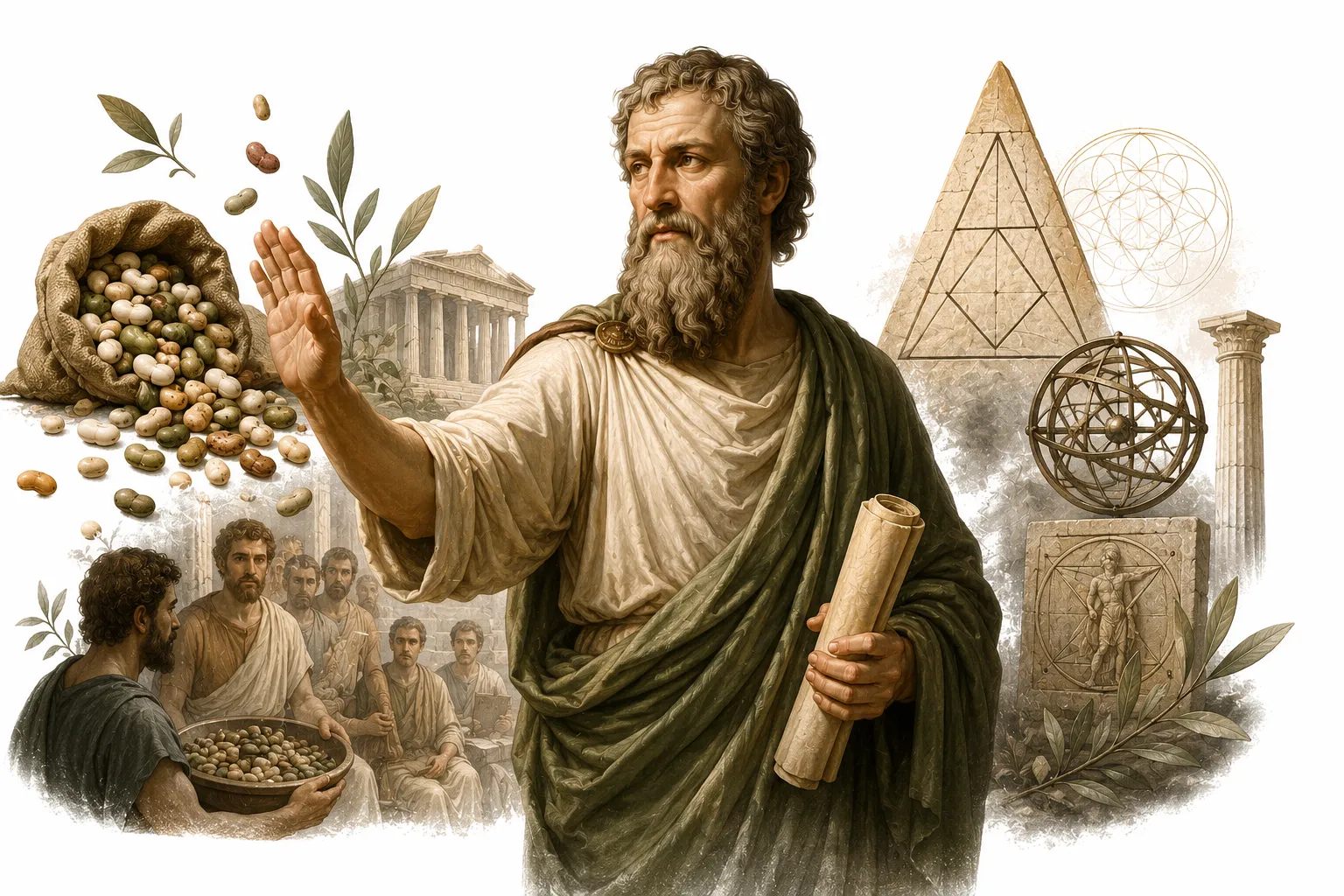
He also banned beans, which he believed contained human souls.
The term 'Pythagorean diet' was used for vegetarianism for centuries.
The word 'vegetarian' was not coined until the 19th century.
Visual answer
The Pythagorean Diet
What Pythagoras ate and what he avoided.
Allowed
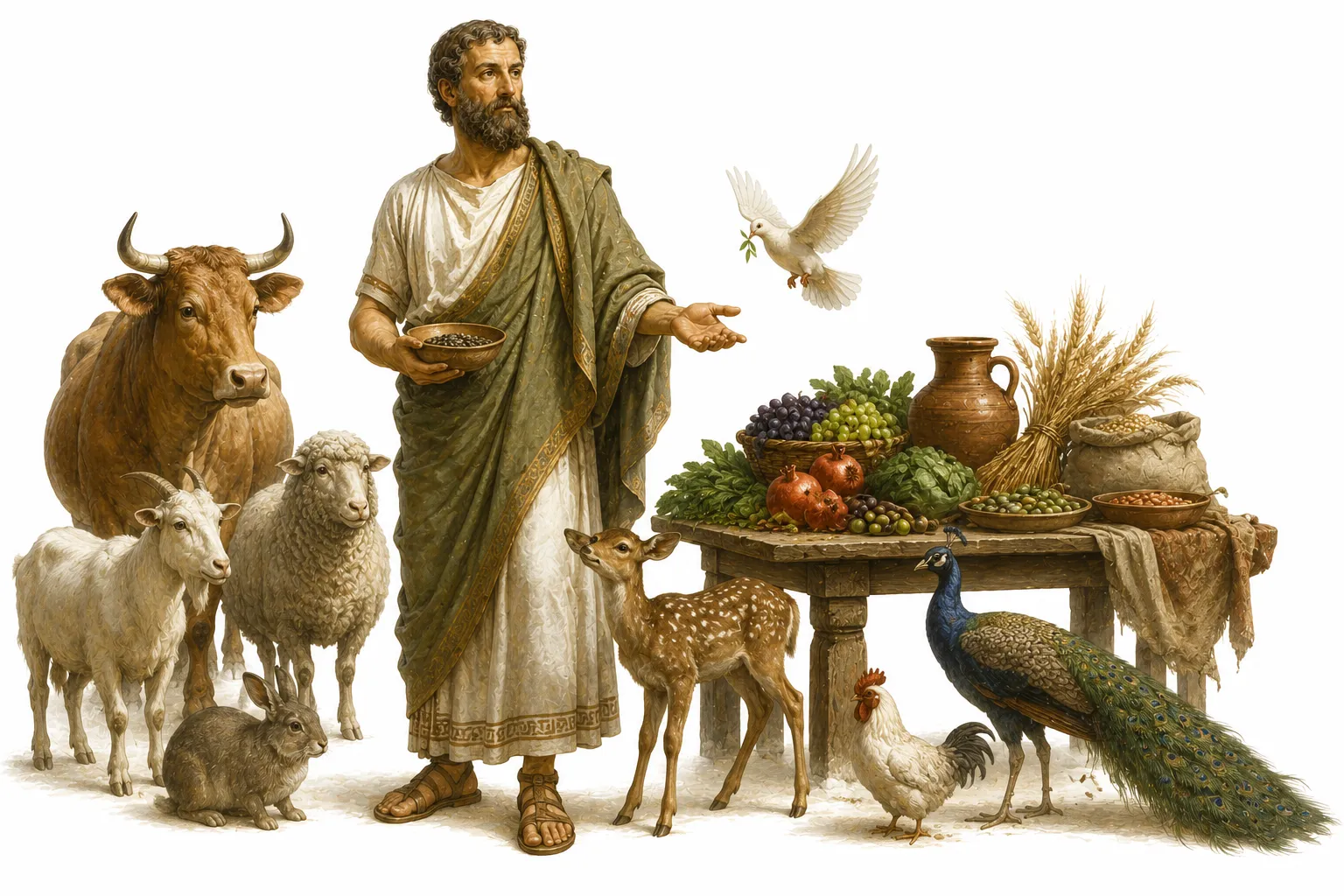
Bread, fruits, vegetables, honey, milk, cheese.
Forbidden: Meat
All animal flesh. Reason: souls of the dead might be inside.
Forbidden: Beans
No beans. Reason: they contain human souls. Also cause flatulence.
Forbidden: Some Fish
Certain fish were banned. Others were allowed. The rules were complicated.
Forbidden: Animal Products
Wool was banned. Pythagoreans wore linen.
Story in brief
Story in Brief
c. 6th century BCE
Pythagoras teaches that souls are immortal and can be reborn in animals.
This leads to the prohibition on eating meat.
c. 4th century BCE
Plato adopts Pythagorean vegetarianism. He writes that eating meat is 'polluting.'
Pythagorean ideas enter the mainstream of Greek philosophy.
Later centuries
Vegetarianism becomes known as 'the Pythagorean diet.' Roman writers use the term.
Pythagoras becomes synonymous with meatless eating.
19th century
The word 'vegetarian' is coined. The term 'Pythagorean diet' falls out of use.
Pythagoras is still remembered as the original vegetarian.
The Story
Why Pythagoras Refused to Eat Meat
Pythagoras believed in reincarnation. He thought that when a person died, their soul could be reborn in another body. That body could be human. It could also be an animal. It could even be a bean.
If souls can be reborn in animals, then eating an animal is potentially eating a relative. You might be eating your grandmother. You might be eating your child. You cannot know. The only safe option is to avoid meat entirely.
This is why Pythagoras was a vegetarian. He did not avoid meat for health reasons. The ancient Greeks did not know about cholesterol. He avoided meat for spiritual reasons. He did not want to commit accidental cannibalism.
For centuries, vegetarianism was called 'the Pythagorean diet.' The word 'vegetarian' was not invented until the 19th century. Before that, people who avoided meat were called Pythagoreans. That is how closely Pythagoras was associated with meatless eating.
From Ovid
"Alas, what wickedness to swallow flesh into our own flesh, to fatten our greedy bodies by cramming in other bodies."
, Ovid, Metamorphoses
Ovid was a Roman poet influenced by Pythagorean ideas. He wrote this passage as if Pythagoras himself were speaking.
Evidence
Was He Really a Vegetarian?
Ancient sources report that Pythagoras abstained from meat.
StrongHis belief in reincarnation logically leads to vegetarianism.
StrongPlato, influenced by Pythagoras, was also a vegetarian.
StrongThe term 'Pythagorean diet' was used for vegetarianism.
StrongKey Points
Key Points So Far
Pythagoras was a vegetarian. He believed in reincarnation and did not want to eat animal souls.
He also banned beans, which he believed contained human souls.
For centuries, vegetarianism was called 'the Pythagorean diet.'
His reasons were spiritual, not health related.
Analogy
Like a Modern Vegan Who Refuses Meat for Moral Reasons
The familiar part
Modern vegans refuse to eat meat because they believe it is wrong to kill animals. They are motivated by ethics, not health.
How it applies
Pythagoras was a vegan for similar reasons. He believed it was wrong to kill animals because they might contain human souls. The reasoning is different. The result is the same.
Where the analogy breaks
Modern vegans do not usually believe that beans contain souls. Pythagoras did.
Curiosity Notes
Details Most People Miss
Why this still matters
Why This Still Matters
Pythagoras is still relevant to vegetarians because he was the first famous one. He gave vegetarianism a philosophical foundation. He argued that eating meat was morally wrong. That argument is still made today. The reasons have changed. The conclusion is the same. Pythagoras would fit right in at a modern vegan potluck. He might even bring a bean-free salad.
Key Findings
- ✓Core findingPythagoras was a vegetarian. He believed in reincarnation and did not want to eat animal souls.
- ✓Strong evidenceHe also banned beans, which he believed contained human souls.
- ⚠Main consequenceFor centuries, vegetarianism was called 'the Pythagorean diet.'
- ✓Wider legacyHis reasons were spiritual, not health related.
- ★Bottom lineHe influenced Plato and later vegetarians.
Final insight
A Last Thought
Pythagoras was a vegetarian because he thought animals might contain the souls of his relatives. He did not want to eat his grandmother. That is a strange reason by modern standards. But the conclusion is familiar. Avoid meat. It is better for the soul. It is better for the planet. It is better for the animals. Pythagoras did not know about factory farming. He did not know about climate change. But he knew one thing: you should not eat something that might be your cousin. That is a good enough reason to start.
Quick answers
Common questions
Did Pythagoras eat fish? +
The sources are unclear. Some say he banned all meat, including fish. Others say he allowed some fish but banned others. The rules were complicated.
Why did Pythagoras ban beans but not other plants? +
He believed beans were special. They resembled testicles. They caused flatulence. They contained souls. Beans were uniquely problematic. Other plants were fine.