History & Mythology

Why Is the Lion the King of the Jungle?

An animal that does not live in jungles, ruling a kingdom it never visits. The lion is famously the King of the Jungle. This would carry more weight if lions actually lived in jungles. They do not. Lions are animals of open grassland and savanna, and the nearest most of them ever get to a jungle is the edge of a woodland. And yet the crown has been theirs, uncontested, for thousands of years. The answer involves ancient symbolism, colonial-era misunderstanding, the actual animals that dominate dense forest ecosystems, and a title that turned out to be more about majesty than geography.

Quick answer

The lion became symbolically "king of the jungle" not because it lives in jungles but because ancient and medieval cultures used it to represent power, courage, and royalty, and European colonists applied the same symbolism globally before anyone closely examined lions' actual habitat preferences. If "king of the jungle" were determined by who actually rules dense jungle ecosystems, a far stronger case could be made for the jaguar, tiger, or even certain large constrictors - none of which carry the same cultural weight.
Why Is the Lion the King of the Jungle? hero image

The mystery

The answer involves ancient symbolism, colonial-era misunderstanding, the actual animals that dominate dense forest ecosystems, and a title that turned out to be more about majesty than geography.

The short answer

The lion became symbolically "king of the jungle" not because it lives in jungles but because ancient and medieval cultures used it to represent power, courage, and royalty, and European colonists applied the same symbolism globally before anyone closely examined lions' actual habitat preferences.

The twist

If "king of the jungle" were determined by who actually rules dense jungle ecosystems, a far stronger case could be made for the jaguar, tiger, or even certain large constrictors - none of which carry the same cultural weight.

Common mistake

The lion's royal title implies ecological supremacy over all other African predators.

A title built on symbolism, not zoology

The lion's royal status is a cultural invention with a remarkably long history, assembled from symbolism, appearance, and ancient human reverence.

Ancient cultures chose the lion for its appearance and behavior

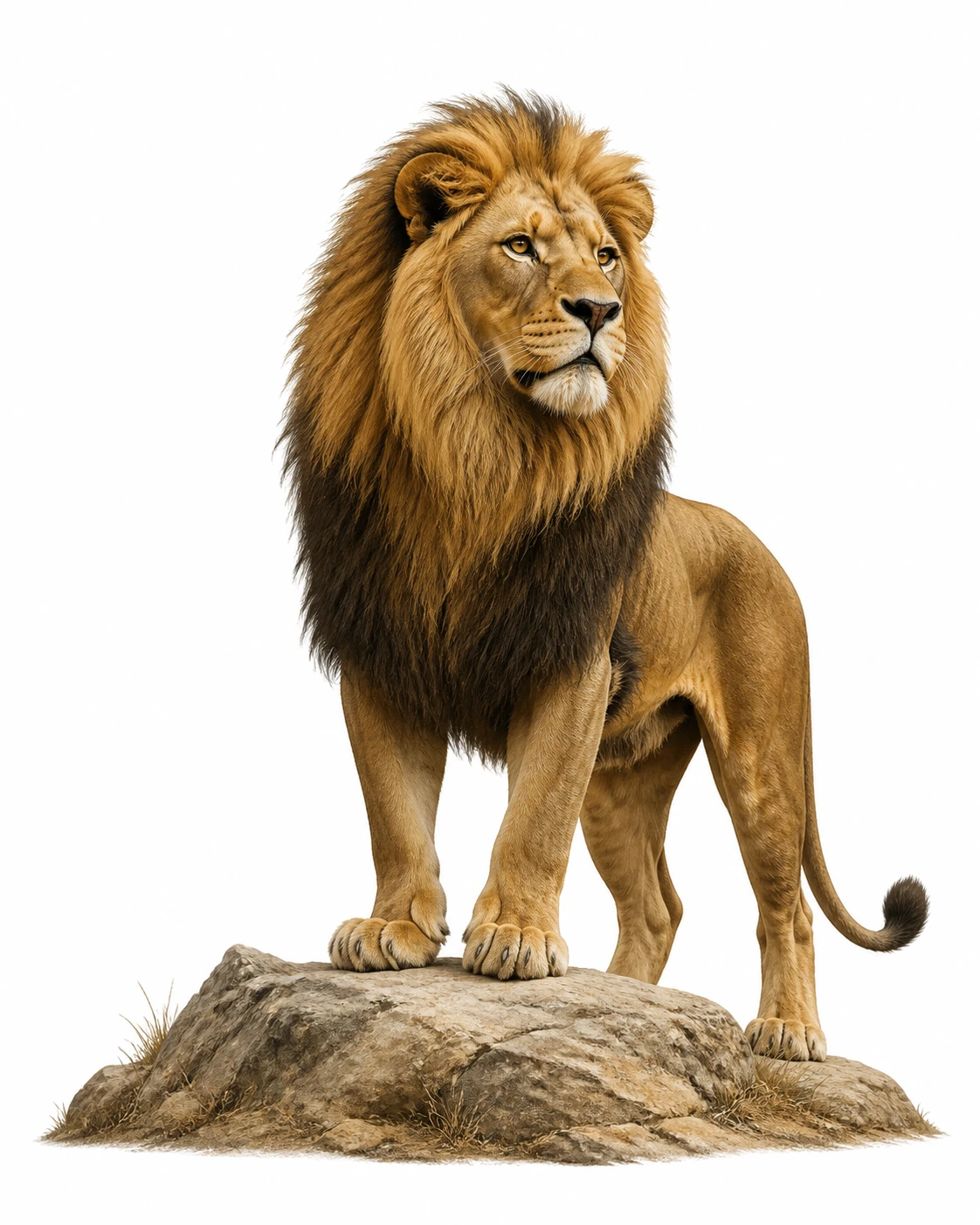
Lions were well known to ancient Egyptians, Greeks, Romans, and Middle Eastern civilizations, who encountered them regularly and were impressed by their size, mane, roar, and group social structure.

The mane in particular made male lions look magnificently imposing, and the social hierarchy of a lion pride mapped conveniently onto human ideas of monarchy.

The lion got the crown largely because it was the most impressively theatrical large predator that ancient Mediterranean civilization happened to know personally.

Medieval heraldry locked in the symbolism permanently

The lion became the dominant symbol of royal power across European heraldry, appearing on coats of arms, battle standards, and royal seals from England to Ethiopia.

By the time European powers colonized much of Africa and Asia, the lion's symbolic status was so culturally entrenched that it was simply applied globally, habitat accuracy notwithstanding.

Medieval coat-of-arms designers were not particularly worried about accurate wildlife biology.

The jungle part is more cultural than geographical

In many historical European usages, the word "jungle" carried a looser meaning closer to "wild nature" or "the untamed world" rather than the specific biome of dense tropical forest.

Understood this way, "king of the jungle" simply meant king of the wild, which was a title available regardless of specific habitat.

The jungle in "king of the jungle" was never really a specific place; it was a metaphor for anywhere that humans feared to go.

How a title was built over centuries

Several historical and cultural forces combined to give the lion its improbable crown.

1

01. Ancient civilizations encountered lions and were impressed

Size, mane, roar, and social hierarchy made lions natural candidates for royal symbolism.

2

02. Medieval heraldry institutionalized lion-as-royalty

Widespread use on royal symbols cemented the association across cultures.

3

03. Colonialism spread the symbolism globally

European cultural frameworks, including lion symbolism, were exported alongside imperial expansion.

4

04. Popular culture reinforced it without question

Stories, fables, and eventually films like The Lion King baked the title into global consciousness.

Who actually rules dense jungle ecosystems?

In actual dense tropical forests, the apex predators are animals like jaguars in the Americas, tigers in South and Southeast Asia, and leopards in parts of Africa - all of which dominate their ecosystems at least as completely as lions dominate savannas.

The jaguar, in particular, is considered the apex predator of the Amazon basin, but its cultural symbolism never had the benefit of 3,000 years of Mediterranean endorsement.

Surprising facts about lions and their reputation

Lionesses do most of the hunting
Female lions conduct the majority of the pride's hunting, while male lions' primary role involves defending territory.
Lions once lived across Europe
The European cave lion was one of the largest lions known, ranging widely across the continent during the Ice Age.
Lions avoid dense forest
Lions actively prefer open habitat because their hunting strategy depends on sight lines and cooperative pursuit across open ground.

Is the lion actually the most powerful predator in Africa?

Myth

The lion's royal title implies ecological supremacy over all other African predators.

Cultural symbolism projects a clean hierarchy onto an ecology that is actually messier, more competitive, and more egalitarian than any royal court.

Reality

The Nile crocodile, spotted hyena, and African wild dog all compete with, scavenge from, and sometimes intimidate lion prides in the wild.

The Nile crocodile, spotted hyena, and African wild dog all compete with, scavenge from, and sometimes intimidate lion prides in the wild.

Where lion symbolism has shaped culture

British royal heraldry
The three lions on England's coat of arms date back to the reign of Richard I in the 12th century.
The Lion King franchise
Disney's globally successful franchise both drew from and further entrenched the lion-as-royalty cultural narrative.

Why the distinction between fact and symbol matters

The gap between the lion's real ecological role and its cultural status illustrates how human symbolism can persist long after its factual basis has been examined and found wanting.

It is a reminder that many cultural certainties survive not because they are accurate, but because they arrived early and stayed compelling.

Worth noting

A king who never visited his kingdom

The lion rules a jungle it has never entered, by virtue of symbolism accumulated over three thousand years of human storytelling. No animal has ever earned a title through better marketing and worse geography.

Quick answers

Common questions

Where did the phrase 'king of the jungle' actually originate?

The phrase evolved gradually through European literary and heraldic tradition and does not have a single clear origin point.

Why do lions have manes if they are not useful for hunting?

Manes serve primarily as signaling devices for social competition and mate attraction within pride dynamics, not for hunting effectiveness.

History & Mythology

Related questions

It depends on the jungle - jaguars in South America, tigers in Asia, and leopards across much of Africa hold apex predator status in forested environments.

The lion that shaped heraldry

Richard I of England

Known as Richard the Lionheart, his adoption of the three-lion crest helped cement the lion as the preeminent symbol of royal power in medieval Europe.

Related questions

Do lions ever enter dense forest habitat?

Occasionally, particularly in Ethiopia's Bale Mountains, but dense jungle is strongly avoided by most lion populations.

Where lion symbolism has shaped culture

British royal heraldry

The three lions on England's coat of arms date back to the reign of Richard I in the 12th century.

Where lion symbolism has shaped culture

The Lion King franchise

Disney's globally successful franchise both drew from and further entrenched the lion-as-royalty cultural narrative.

Is the lion actually the most powerful predator in Africa?

The Nile crocodile, spotted hyena, and African wild dog all compete with, scavenge from, and sometimes intimidate lion prides in the wild.

The Nile crocodile, spotted hyena, and African wild dog all compete with, scavenge from, and sometimes intimidate lion prides in the wild.