American History

Why Is the Liberty Bell Important?

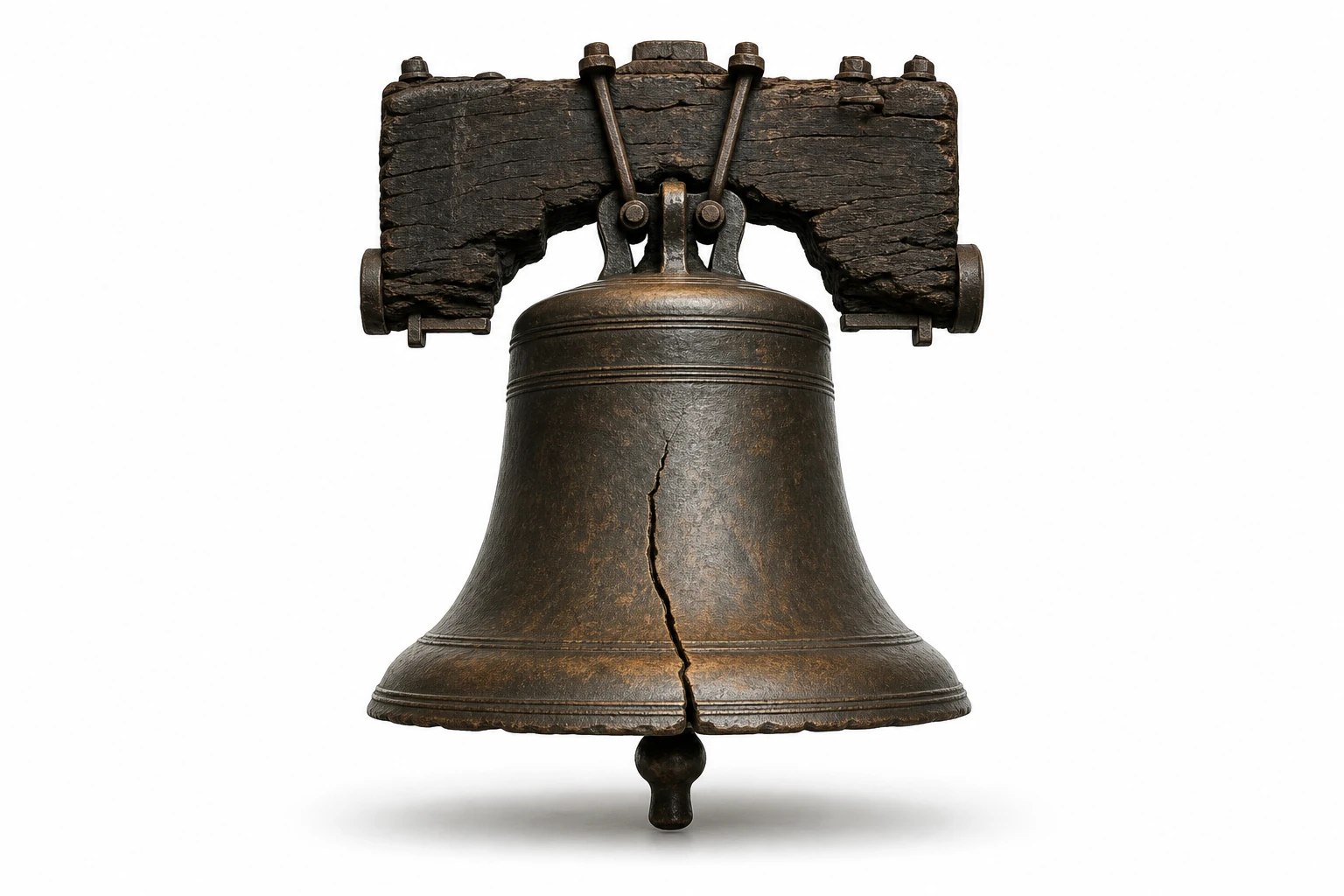
A cracked piece of metal that became a symbol powerful enough to outlive the cause that made it famous. The Liberty Bell weighs about 2,080 pounds, hangs in a glass pavilion in Philadelphia, and has not produced a proper ring since 1846. Yet millions of people visit it every year, and it appears on everything from postage stamps to law school logos. For a cracked, silent, technically unsuccessful bell, it has enjoyed a remarkable career. The answer involves abolitionism, the 19th century's talent for retrofitting symbols, and how a piece of civic equipment became a vessel for the nation's conscience.

Quick answer

The Liberty Bell is important because abolitionists in the 1830s adopted it as a symbol of the gap between America's stated ideals and the reality of slavery, and subsequent movements have continued to invoke it as a symbol of the ongoing struggle to extend liberty - making it less a trophy of freedom achieved than a reminder of freedom not yet complete. The bell's importance has almost nothing to do with the Revolutionary War - a connection invented largely in the 19th century - and almost everything to do with the abolitionist movement.
Why Is the Liberty Bell Important? hero image

The mystery

The answer involves abolitionism, the 19th century's talent for retrofitting symbols, and how a piece of civic equipment became a vessel for the nation's conscience.

The short answer

The Liberty Bell is important because abolitionists in the 1830s adopted it as a symbol of the gap between America's stated ideals and the reality of slavery, and subsequent movements have continued to invoke it as a symbol of the ongoing struggle to extend liberty - making it less a trophy of freedom achieved than a reminder of freedom not yet complete.

The twist

The bell's importance has almost nothing to do with the Revolutionary War - a connection invented largely in the 19th century - and almost everything to do with the abolitionist movement.

Common mistake

Most Americans assume the bell's symbolic status dates directly from July 4, 1776, or similar Revolutionary War events.

The bell mattered because of what it stood for, not what it did

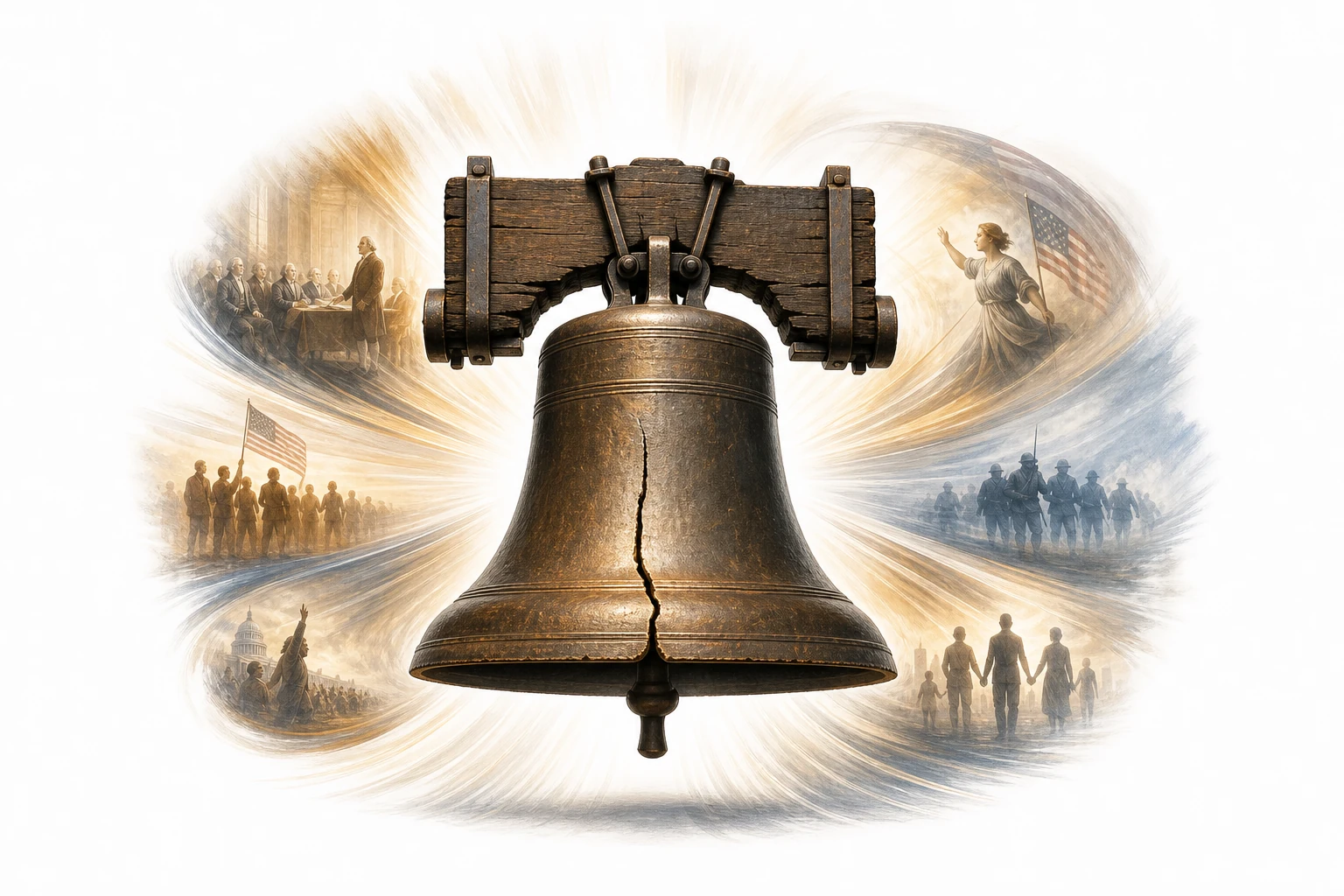
The Liberty Bell's significance is almost entirely symbolic, and that symbolism was assigned after the fact, by people fighting for a freedom it had not yet delivered.

Abolitionists saw the inscription as an accusation

The bell's inscription, 'Proclaim Liberty Throughout All the Land Unto All the Inhabitants Thereof,' seemed to anti-slavery activists to indict the nation it claimed to represent.

Publishing the image of the bell alongside that inscription in abolitionist literature in the 1830s was a deliberate act of irony, using America's own stated ideals against its practiced reality.

The Liberty Bell became politically useful not as a celebration of American liberty, but as evidence of how far the country still had to go.

Its imperfection became part of the meaning

A cracked bell that could not ring felt to many subsequent movements like an honest symbol for a democracy that had not yet fully delivered on its founding promises.

Civil rights leaders, suffragists, and labor organizers all invoked the bell for similar reasons across different eras.

No perfectly functional bell could have become this powerful a symbol of something incomplete.

National myth-making reinforced and expanded it

Through the 19th century, popular fiction, civic education, and touring exhibitions built the Liberty Bell's association with July 4, 1776, and the Revolution, regardless of historical accuracy.

By the time historians challenged these stories, the symbolism was too deeply embedded in national identity to be significantly dislodged.

The Liberty Bell's historical accuracy matters considerably less than the work it has been called to do across generations.

How a bell became a national symbol

A short sequence explains how political adoption transformed a piece of civic hardware into an icon.

1

01. Abolitionists name and adopt the bell

In the 1830s, anti-slavery publications first call it the Liberty Bell and use its inscription polemically.

2

02. Fictional and mythological history attaches to it

Stories of it ringing on July 4, 1776, spread through popular culture and education.

3

03. Subsequent movements invoke it for their own causes

Suffragists, civil rights activists, and others continue to use the bell's imagery.

4

04. National and international exposure cements it globally

Tours, exhibitions, and modern media spread the bell's symbolic status worldwide.

What the bell says about symbolic power

The Liberty Bell's career illustrates that objects can acquire symbolic power entirely disconnected from their original function or even their accurate historical role.

It was a functional bell, then a broken bell, then a symbol of abolitionism, then a symbol of patriotism, and it has served each role without anyone formally reassigning it. Symbols, it turns out, are remarkably flexible containers.

Surprising facts about the bell's symbolism

The bell toured the country extensively in the 1880s-1900s
It was transported by rail to various world's fairs and expositions, drawing enormous crowds who treated it as a relic.
Suffragists cast their own replica
The women's suffrage movement created a cracked version they called the Justice Bell, which would only ring when women received the vote.
It appeared on World War II savings bonds
The federal government used the bell extensively in World War II propaganda to link the war effort with American founding ideals.

Doesn't the bell's importance come from the Revolutionary War?

Myth

Most Americans assume the bell's symbolic status dates directly from July 4, 1776, or similar Revolutionary War events.

Civic education has consistently conflated the bell with Independence since the 19th century, making the Revolutionary War origin feel self-evident.

Reality

The bell's symbolic importance was largely constructed in the 19th century by the abolitionist movement and subsequently reinforced by myth-making, not established by Revolutionary-era events.

The bell's symbolic importance was largely constructed in the 19th century by the abolitionist movement and subsequently reinforced by myth-making, not established by Revolutionary-era events.

Where the Liberty Bell's symbolism continues

Philadelphia 4th of July ceremonies
The bell is symbolically tapped thirteen times each July 4th in a ceremony watched by thousands.
Immigration advocacy
Modern movements for immigrant rights have repeatedly used the bell's imagery and inscription in their campaigns.

Why the bell's constructed symbolism is itself historically significant

Understanding that the Liberty Bell's importance was largely created by specific political movements at specific moments of crisis reveals how national symbols are made, not found.

It offers a useful lens for understanding how other national and cultural symbols acquire their meaning and power over time.

Worth noting

A symbol that grew larger than the object

The Liberty Bell is important because Americans decided it was, over and over again, across different eras and different causes, until the decision became too deeply embedded to revisit. No bell has ever done more work by saying absolutely nothing.

Quick answers

Common questions

Is the Liberty Bell actually a national monument?

It is managed by the National Park Service as part of Independence National Historical Park, though not formally designated a national monument.

Does the crack in the bell affect its tone?

Yes, the crack changed and eventually eliminated the bell's ability to produce a clean, resonant tone, which is why it has not been properly rung since 1846.

American History

Related questions

They explicitly modeled it on the Liberty Bell to connect their cause to the existing language of American liberty.

The writer who put the bell on the map

George Lippard

A Philadelphia author whose 1847 short story invented the popular tale of an old bell ringer joyfully ringing the bell upon news of the Declaration of Independence - a story presented as fact and widely reprinted.

Related questions

Has the Liberty Bell ever left the United States?

No, though it traveled extensively across the United States in the late 19th and early 20th centuries.

Where the Liberty Bell's symbolism continues

Philadelphia 4th of July ceremonies

The bell is symbolically tapped thirteen times each July 4th in a ceremony watched by thousands.

Where the Liberty Bell's symbolism continues

Immigration advocacy

Modern movements for immigrant rights have repeatedly used the bell's imagery and inscription in their campaigns.

Doesn't the bell's importance come from the Revolutionary War?

The bell's symbolic importance was largely constructed in the 19th century by the abolitionist movement and subsequently reinforced by myth-making, not established by Revolutionary-era events.

The bell's symbolic importance was largely constructed in the 19th century by the abolitionist movement and subsequently reinforced by myth-making, not established by Revolutionary-era events.