History & Symbolism

Why Are Crowns Associated With Kings?

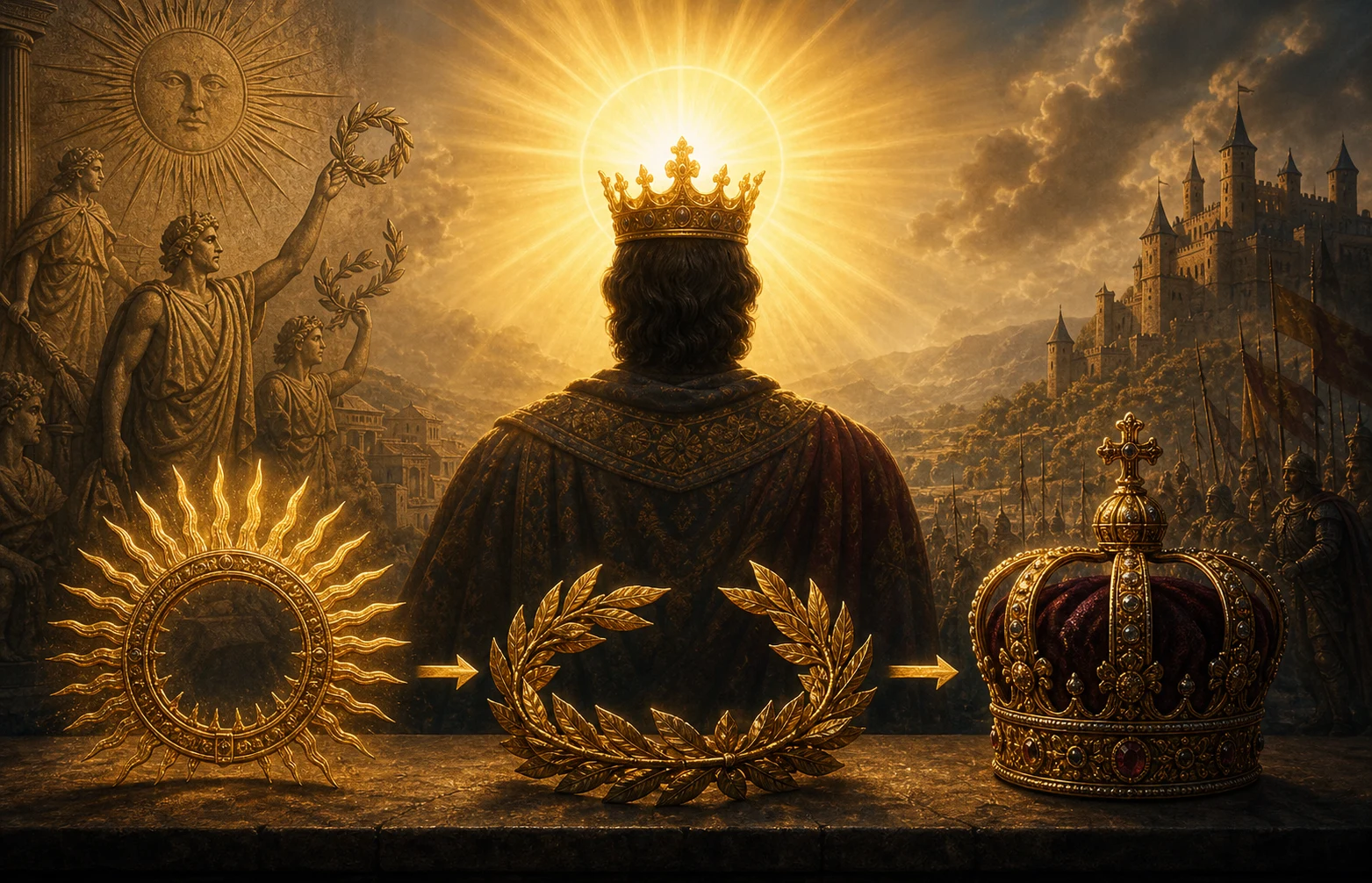
The answer goes back much further than medieval Europe - all the way to the sun. Before crowns were made of gold and jewels, they were made of leaves. Before they were leaves, they were made of light - or the idea of it. The ring of gold around a head appears across cultures because something deep in human cognition is doing the work. The crown represents power because it mimics something humans instinctively understood: the halo of the sun.

Quick answer

Crowns became royal symbols because they evoke solar radiance, vertical status, circular eternity, and divine sanction. Corona literally means crown in Latin, which is why the sun's outer atmosphere is called the corona.
Why Are Crowns Associated With Kings? hero image

The mystery

The crown represents power because it mimics something humans instinctively understood: the halo of the sun.

The short answer

Crowns became royal symbols because they evoke solar radiance, vertical status, circular eternity, and divine sanction.

The twist

Corona literally means crown in Latin, which is why the sun's outer atmosphere is called the corona.

Common mistake

Crowns are often understood primarily as displays of riches.

From light to gold

Crown forms vary, but the logic stays constant: the wearer is closer to the divine than anyone else in the room.

The solar halo: divinity's original crown

In strong backlighting, human heads can appear surrounded by light. Ancient cultures treated that visual effect as theological meaning.

Egyptian pharaohs wore solar discs and divine headdresses. Similar solar logic appears in Mesopotamia and India.

The crown is the sun's halo, captured in gold and placed on a human head.

The Greek wreath: victory as the first crown

Greek victors received wreaths of olive or laurel. The wreath said this person had been separated from the ordinary by achievement.

Rome turned the laurel into an imperial symbol. Julius Caesar may also have liked it because it hid his baldness.

Julius Caesar may have popularized the laurel crown of imperial authority primarily because he was going bald.

The medieval crown: making power visible

In a world without mass media, crowns made monarchs instantly identifiable. Gold, arches, jewels, and crosses announced divine and political authority at a glance.

Coronation made that symbolism official.

The crown was medieval Europe's mass communication technology.

Why elevation plus circle equals power

Crowns work through layered visual psychology.

1

01. Vertical elevation signals status

Thrones, altars, judges, and crowns all use height to mark authority.

2

02. The circle signals completeness

A crown is a circle placed at the body's highest point, suggesting continuity and eternity.

3

03. Precious material signals power

Gold and gems show surplus resources spent on pure symbolism.

The universal halo

Crowns and halos say the same thing in different languages: this person has a special relationship to the highest available power.

In ancient cultures, divine and political authority were rarely separate.

Surprising things about crowns

The British crown was nearly lost twice
King John lost royal treasure in The Wash, and Cromwell later melted down earlier crown jewels.
Napoleon crowned himself
He took the crown from the Pope and placed it on his own head.
Monarchs rarely wear crowns
The British coronation crown is used rarely and is heavy enough to require practice.

Isn't the crown just about wealth?

Myth

Crowns are often understood primarily as displays of riches.

The surviving crowns are treasure-encrusted later versions; leaf and flower crowns rarely survive.

Reality

Wealth matters, but the older symbolism is solar, sacred, circular, and status-based.

Wealth matters, but the older symbolism is solar, sacred, circular, and status-based.

Crowns in the modern world

Sports championships
Garlands, jackets, medals, and jerseys are displaced crowns marking distinction.
Graduation caps
The distinctive academic hat marks a transition in a secular coronation.

Symbols that still run the world

Crowns are one of humanity's oldest political technologies: objects that transform a person into a representative of something larger.

The psychology is thousands of years old even when the politics change.

Worth noting

The golden circle

A crown still makes the brain register elevation, authority, and specialness before conscious thought catches up. Every crown is a small sun, placed on a human head.

Quick answers

Common questions

Why is the Pope's crown called a tiara?

The papal tiara developed as a distinct triple crown for papal authority and has not been worn since 1964.

What happened to fallen empires' crowns?

They were often melted, stolen, hidden, lost, or repurposed.