Geography

Why Is the Gobi Desert So Cold?

Proof that a desert doesn't need heat to qualify — it just needs a serious shortage of rain. Mention the word desert, and most people picture heat: shimmering sand, relentless sun, a landscape that could fry an egg on a rock. The Gobi Desert quietly breaks that image, with winter temperatures that regularly plunge well below freezing. It is, by every technical definition, a desert. It is also, for a large part of the year, bitterly cold. The explanation involves altitude, latitude, and a mountain range tall enough to block moisture from ever arriving.

Quick answer

The Gobi Desert is cold because of its high elevation, high northern latitude, and distance from any ocean, combined with the Himalayas and Tibetan Plateau blocking moist air from reaching it. What makes a desert a desert isn't temperature at all — it's rainfall. The Gobi qualifies purely on dryness, regardless of how cold it gets.
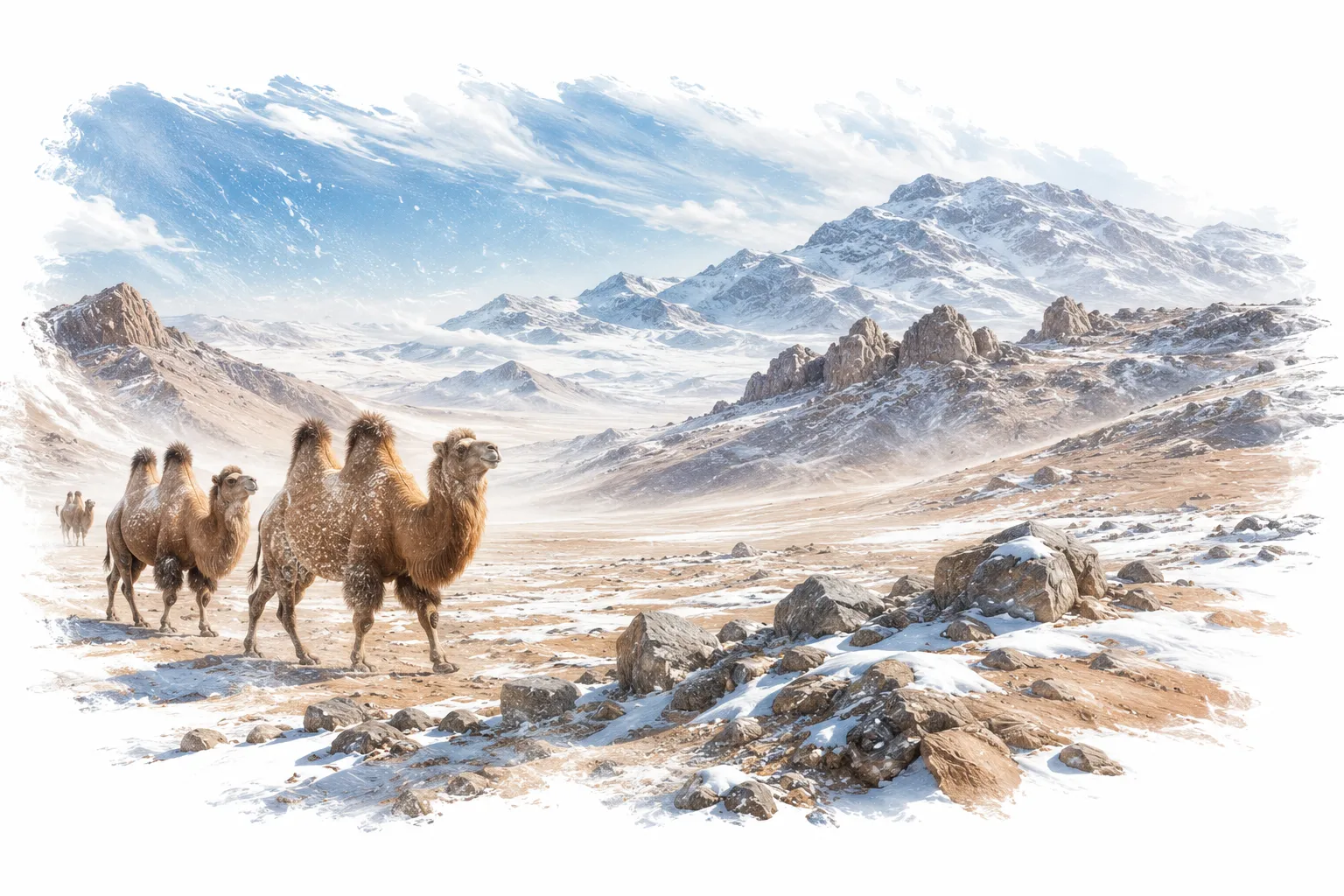
Why Is the Gobi Desert So Cold? hero image

The mystery

The explanation involves altitude, latitude, and a mountain range tall enough to block moisture from ever arriving.

The short answer

The Gobi Desert is cold because of its high elevation, high northern latitude, and distance from any ocean, combined with the Himalayas and Tibetan Plateau blocking moist air from reaching it.

The twist

What makes a desert a desert isn't temperature at all — it's rainfall. The Gobi qualifies purely on dryness, regardless of how cold it gets.

Common mistake

Because it's called a desert, many assume the Gobi shares a climate similar to hot deserts like the Sahara or Arabian Desert.

A desert defined by dryness, not heat

Deserts are classified by how little precipitation they receive, not by temperature, which is why frigid places like the Gobi and scorching places like the Sahara can share the same label.

High and far from the ocean

Much of the Gobi sits at elevations between 3,000 and 5,000 feet, and higher elevation generally means colder average temperatures, since air thins and holds less heat the further it sits from sea level.

It also lies deep in the interior of the Asian continent, far from any ocean, which matters enormously: oceans moderate nearby land temperatures, and without that buffering influence, the Gobi swings to temperature extremes in both directions.

The Gobi is cold partly because it's landlocked in the truest sense — nowhere near an ocean to soften its temper.

Blocked by the world's tallest wall

The Himalayas and the Tibetan Plateau sit just south of the Gobi, forming a massive barrier that intercepts moist air traveling north from the Indian Ocean, wringing out its moisture as rain and snow before it ever reaches the desert beyond.

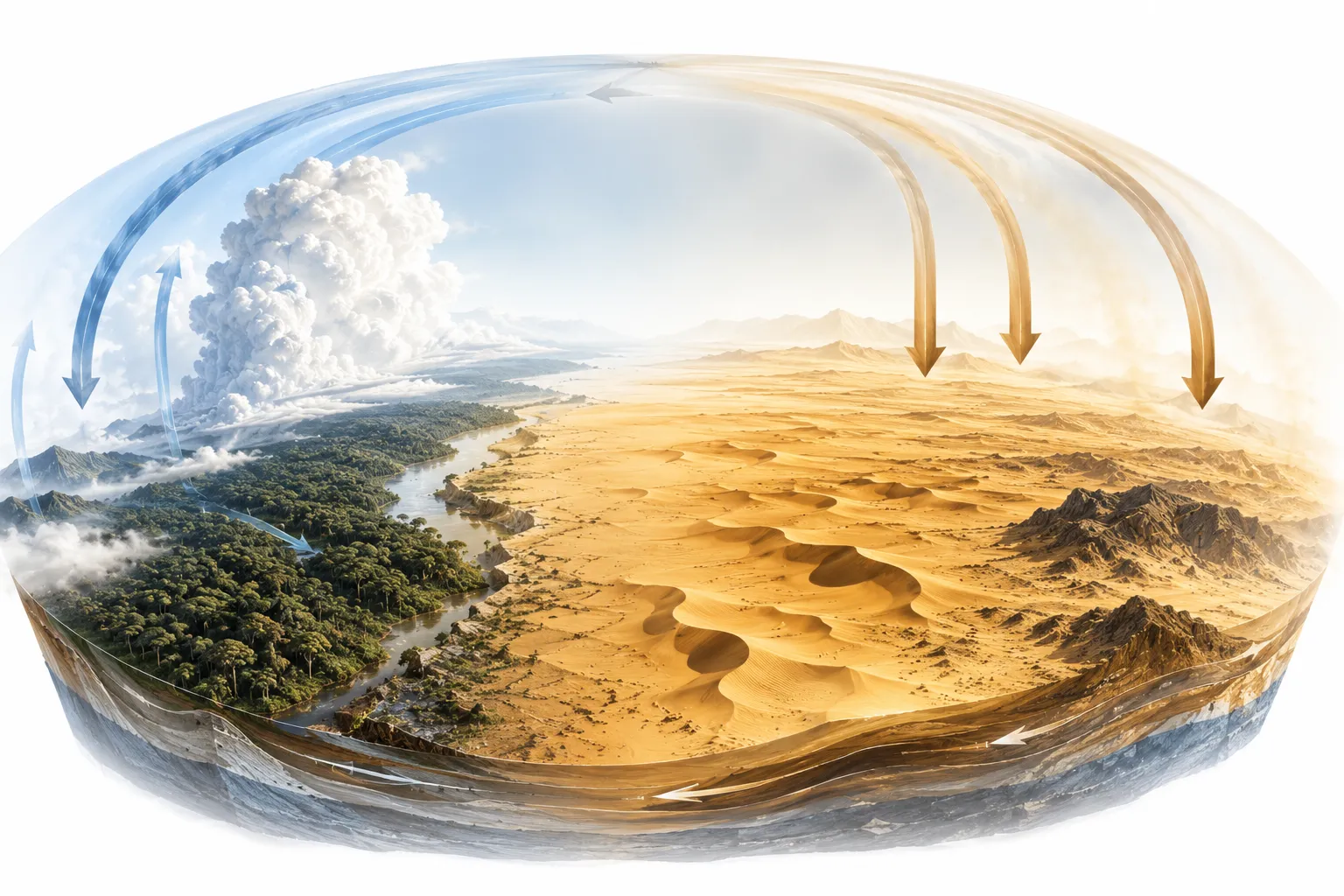
By the time air crosses this barrier, it's largely dried out, creating what geographers call a rain shadow — the same mechanism, on a much larger scale, that makes the lee side of any mountain range drier than the windward side.

The Gobi is dry because the world's tallest mountains stole all the rain before it could get there.

Northern latitude seals the deal

Sitting at a relatively high northern latitude, the Gobi receives less direct sunlight during winter months than deserts closer to the equator, contributing to genuinely frigid winters that can drop below negative 40 degrees Fahrenheit.

Summers, by contrast, can still climb into the 100s, giving the Gobi one of the widest temperature swings of any desert on Earth — a place that punishes both winter coats and summer shirts equally.

The Gobi doesn't pick a temperature extreme and stick with it. It commits fully to both, several months apart.

How these factors combine to create Gobi's cold

No single factor explains the Gobi on its own — it's the combination that produces such an extreme climate.

1

01. Elevation reduces the baseline temperature

Starting from a higher elevation than most deserts, the Gobi begins with a colder baseline temperature before any other factor is even considered.

2

02. The rain shadow removes moisture, not warmth

The Himalayan rain shadow explains the dryness that technically defines the Gobi as a desert, but it does nothing to add heat, unlike the mechanisms that keep deserts like the Sahara warm.

3

03. Continental isolation amplifies the extremes

Distance from any ocean removes the moderating effect that coastal regions enjoy, letting temperatures swing further in both directions across the seasons.

A desert classification based on a simple rule

Geographers define deserts primarily by precipitation — generally less than about 10 inches of rain per year — rather than by temperature, which is why cold deserts like the Gobi and Antarctica's dry valleys sit comfortably in the same category as the Sahara.

This definition matters because it separates the concept of 'desert' from the popular image of endless heat, revealing just how much of Earth's driest land is actually quite cold.

Surprising Gobi Desert facts

It's one of the world's richest dinosaur fossil sites
The Gobi's dry, sediment-preserving conditions have made it one of the most productive locations on Earth for discovering well-preserved dinosaur fossils, including entire nesting sites.
Parts of it receive snow, not rain
Given its cold climate, much of the Gobi's already limited precipitation falls as snow rather than rain, particularly during winter months.

Is the Gobi Desert located mostly in a hot, tropical region?

Myth

Because it's called a desert, many assume the Gobi shares a climate similar to hot deserts like the Sahara or Arabian Desert.

The word 'desert' is so strongly associated with heat in popular culture that people often assume it as a default, without realizing the classification is based on rainfall rather than temperature.

Reality

The Gobi is a cold desert located across northern China and southern Mongolia, at a latitude and elevation that produce winters as harsh as many temperate or subarctic regions.

The Gobi is a cold desert located across northern China and southern Mongolia, at a latitude and elevation that produce winters as harsh as many temperate or subarctic regions.

Where the Gobi's cold climate matters

Nomadic herding traditions in Mongolia
Traditional Mongolian herding practices are specifically adapted to the Gobi's extreme seasonal temperature swings, including specialized livestock breeds suited to harsh winters.
Paleontological expeditions
Researchers studying the Gobi's rich fossil beds must plan expeditions carefully around its brutal winter cold and summer heat, limiting practical fieldwork to narrow seasonal windows.

Why the Gobi challenges the typical idea of a desert

The Gobi serves as a useful reminder that 'desert' is a description of dryness, not heat, correcting a common misconception with real consequences for how people understand climate and geography.

This distinction matters for climate science and geography education, helping clarify that cold, dry regions face many of the same water-scarcity challenges as their hot desert counterparts.

Worth noting

A desert wearing a winter coat

The Gobi's biting cold doesn't disqualify it from being a desert — it just proves that dryness, not heat, is the trait that actually defines one. The Gobi is a desert that never got the memo about deserts being warm.

Quick answers

Common questions

How much of the Gobi Desert receives snowfall each year?

Much of the Gobi receives at least some snowfall during winter, though total precipitation, whether rain or snow, remains extremely low year-round.

Geography

Related questions

The Sahara sits near the equator under a warm, dry air mass, while the Gobi sits at a much higher latitude and elevation, resulting in vastly different temperature profiles despite both being classified as deserts.

The explorer who helped map the Gobi's fossil riches

Roy Chapman Andrews

An early 20th-century American explorer and naturalist whose Central Asiatic Expeditions into the Gobi uncovered some of the first known dinosaur egg fossils, drawing global attention to the region.

Where the Gobi's cold climate matters

Nomadic herding traditions in Mongolia

Traditional Mongolian herding practices are specifically adapted to the Gobi's extreme seasonal temperature swings, including specialized livestock breeds suited to harsh winters.

Where the Gobi's cold climate matters

Paleontological expeditions

Researchers studying the Gobi's rich fossil beds must plan expeditions carefully around its brutal winter cold and summer heat, limiting practical fieldwork to narrow seasonal windows.

Is the Gobi Desert located mostly in a hot, tropical region?

The Gobi is a cold desert located across northern China and southern Mongolia, at a latitude and elevation that produce winters as harsh as many temperate or subarctic regions.

The Gobi is a cold desert located across northern China and southern Mongolia, at a latitude and elevation that produce winters as harsh as many temperate or subarctic regions.