Everyday Objects
Why Do Utility Knives Have Snap-Off Blades?
One blade that gives you a dozen fresh cutting edges — no sharpening, no downtime, no separate tools required.
Quick answer
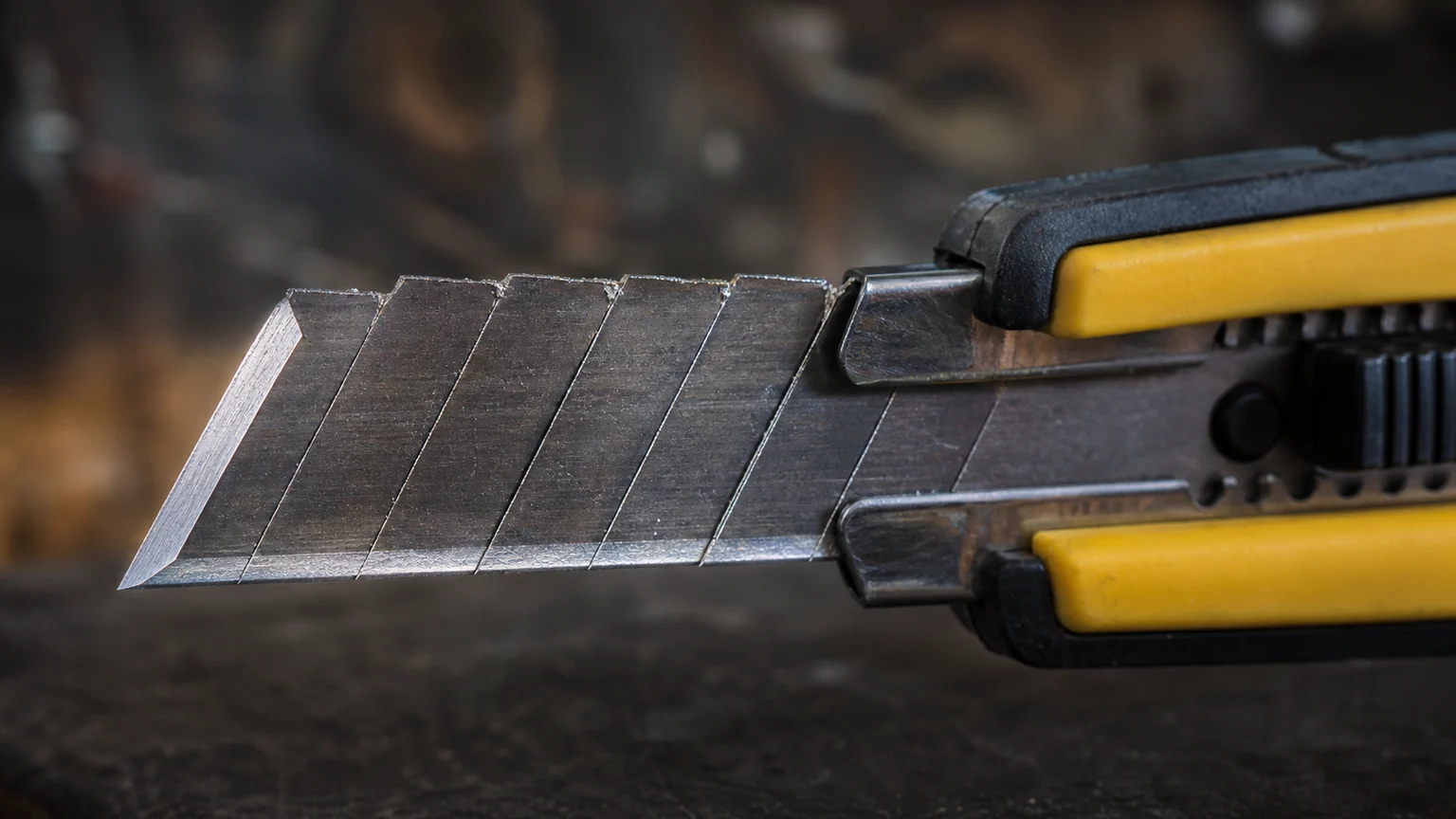
The snap-off blade solves a simple problem: cutting edges dull with use. Rather than stopping to sharpen or discard the whole blade, the segmented design lets you snap off just the dulled tip and expose a factory-sharp edge underneath. The blade is pre-scored with evenly spaced grooves. Each segment is a complete, sharp edge. When the front section dulls, you break it off at the nearest score line using the plastic cap at the back of the knife. The next segment is immediately ready. The design was invented in Japan in 1956 by Yoshio Okada, a box factory worker who observed that chocolate and glass snap cleanly and predictably along pre-cut lines — and realised steel could do the same.

Each segment is a complete cutting edge
Score lines divide the blade into identical sharp sections — snapping removes only the dulled tip.
The idea came from chocolate and glass
Yoshio Okada noticed both materials snap cleanly along pre-cut lines and applied the same logic to steel in 1956.
Blades are hard and brittle by design
Snap-off blades are hardened to hold an edge but made brittle enough to break cleanly at the score lines.
Myth: snapping off segments is wasteful
Each snapped segment is a tiny fraction of the blade. Sharpening takes minutes; snapping takes two seconds and gives a factory-fresh edge.
Next tiny mystery
More things hiding in plain sight

Everyday Objects
Why Do Tape Measures Have a Loose Metal Hook?
Both explain clever design choices in common hand tools.

Everyday Objects
Why Do Whiteboards Stain Over Time?
Both involve tools designed around the reality that working surfaces degrade with use.

Everyday Objects
Why Do Keys Have Jagged Edges?
Both reveal functional engineering hidden in everyday metal objects.