Those mysterious holes at the exact same spot

Why Do Shirts Get Tiny Holes Near the Belly Button?

Tiny shirt holes near your waist usually are not moth damage. They often come from repeated rubbing against jeans buttons, rivets, belts, and counters.

Quick answer

It's friction — specifically the metal hardware on your jeans and belt rubbing against thin shirt fabric at the waist. Every time you sit, lean, or move, your shirt is pressed between your body and the rivet, button, or buckle of your pants. Repeat that thousands of times and the fabric wears through in tiny pinpricks, always in the same spot. Kitchen countertop edges at waist height do the same thing. It has nothing to do with moths, the washing machine, or cheap fabric alone — though cheap thin fabric makes it happen faster.

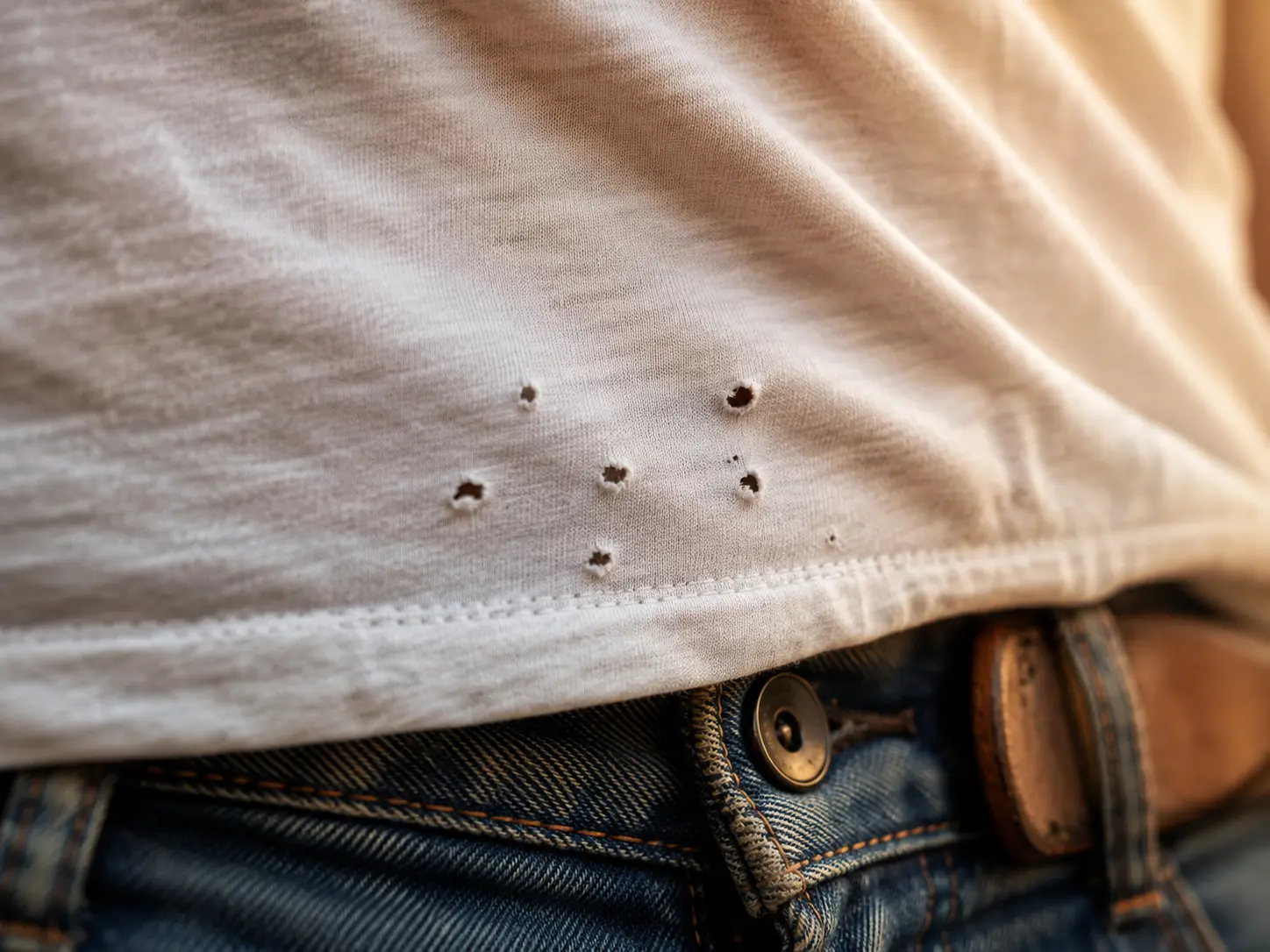
Close-up of tiny pinholes in the lower front of a T-shirt near the waist area

Technical name

Pinholes

Main cause

Jeans hardware friction

Why same spot?

That's where metal meets fabric

Moths?

No — moths eat indiscriminately

Your jeans are slowly cutting your shirt. Every day.

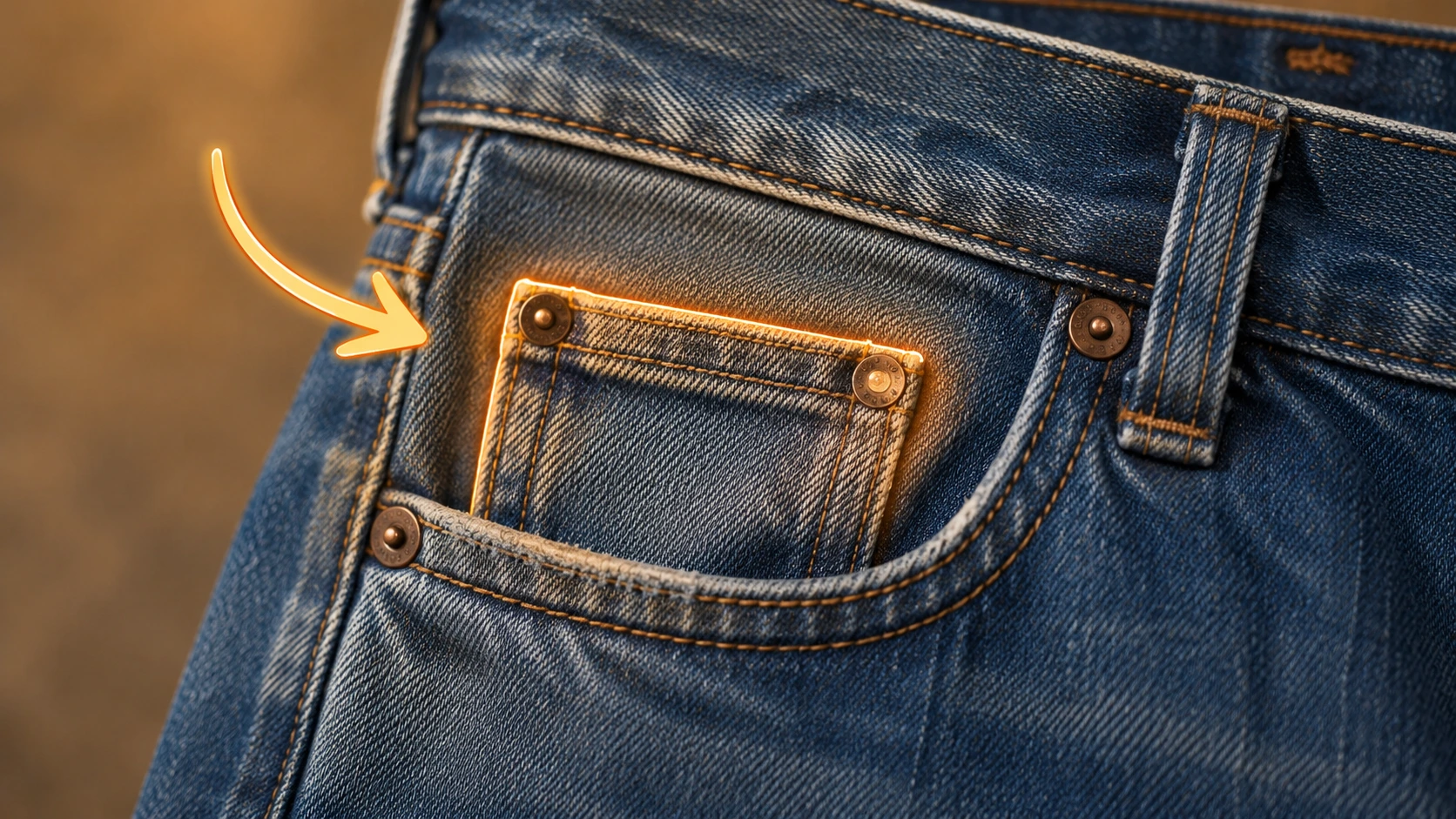
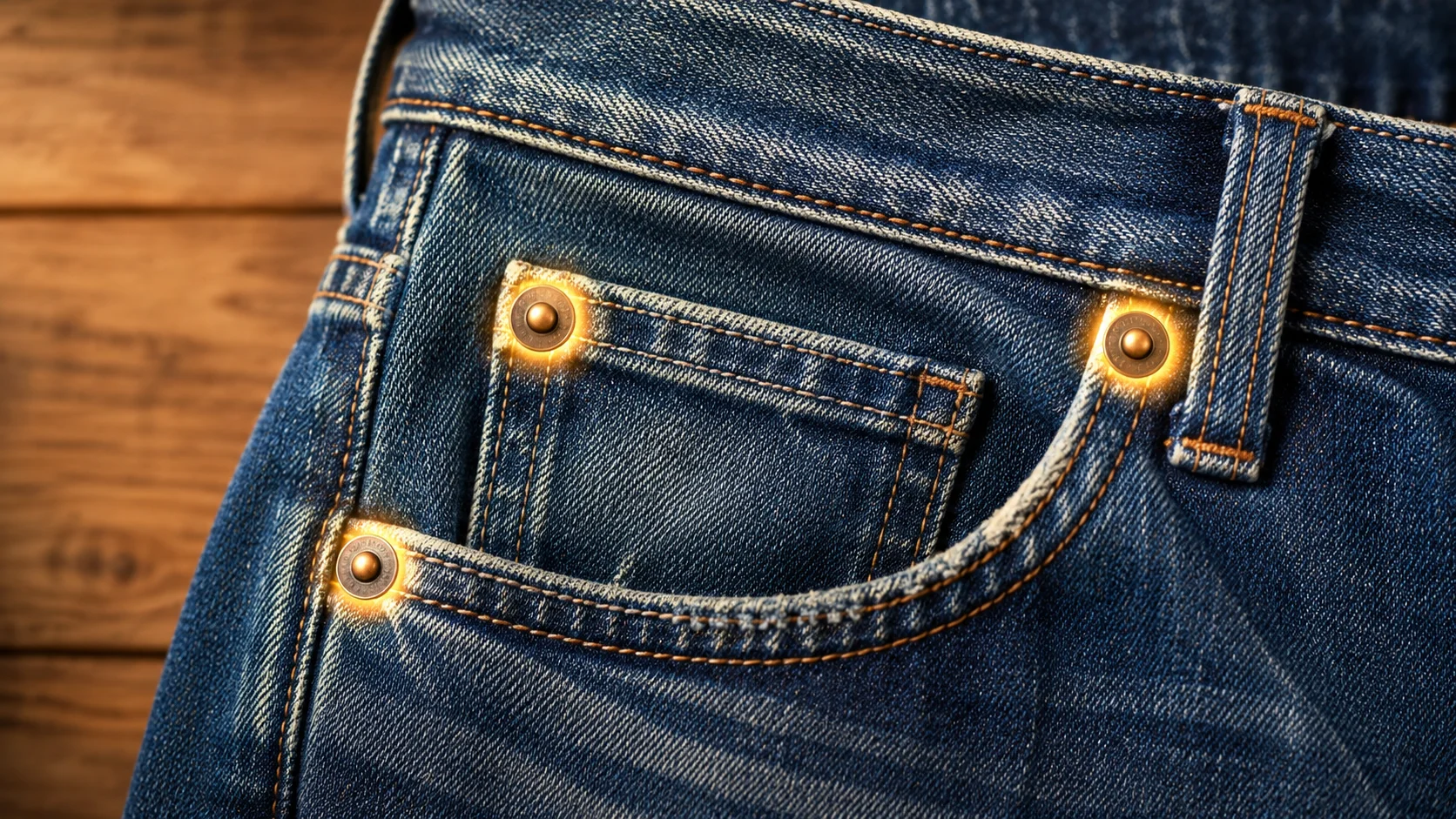
The hole always appears at the same spot because the abrasion always comes from the same source. The metal button or rivet at the top of your jeans sits right where the shirt fabric rests against your body.

Every time you sit down, lean forward, or move, the fabric is pressed between your skin and that piece of metal. It's a small amount of friction per movement — but you make that movement thousands of times a day.

Cheap or thin fabric speeds it up dramatically. A 100% cotton jersey T-shirt gets worn through much faster than a heavier or woven shirt. But even quality shirts will eventually get pinholes in the same spot if the friction source is there.

Myth vs Reality

Myth

Moths are eating the same spot on every shirt.

Moths are a common first guess. People assume insects are targeting the belly button area specifically.

Reality

Moths eat indiscriminately — they don't make identical holes in the same spot.

If moths were the cause, the holes would appear randomly across the garment, not always at the exact waist level. The consistent location is the tell — it's mechanical friction, not insects.
Three main causes and how to reduce each one

Jeans button or rivet
Wear an undershirt or camisole to create a layer between the hardware and the shirt. Tuck shirts in. Or switch to elasticated-waist pants for casual wear.
Belt hardware
Tuck the shirt in so the belt hardware is on the outside. A fabric-covered buckle causes far less damage than bare metal.
Kitchen or desk counter edge
Notice where you habitually lean. Counter edges at waist height are a major cause, especially in kitchens. Wearing an apron protects the shirt fabric.

Note

The washing machine isn't causing them — but it does make them worse

Washing machines don't create pinholes, but agitation can enlarge existing microscopic damage from friction. If you want to extend the life of thin shirts, turn them inside out before washing and use a delicate bag.

Quick answers

Common questions

Why do shirts get tiny holes near the belly button?

Friction from the metal button or rivet at the top of your jeans. The hardware rubs against the shirt fabric at that exact spot thousands of times and eventually wears tiny holes through it.

Why are the holes always in the same spot?

Because the cause is always in the same place. Your jeans hardware sits at a fixed position against your body. The friction is localized to that zone.

Could it be moths?

No. Moths eat fabric indiscriminately. If moths were responsible, the holes would appear randomly across the garment, not always in the same spot at waist level.

Does the washing machine cause pinholes?

Not directly. The machine can enlarge existing damage, but the initial holes come from friction during wear.

How do I stop pinholes from forming?

The most effective fix is wearing an undershirt or camisole between your shirt and the jeans hardware. Tucking the shirt in also helps. Switching to elastic-waist pants eliminates the problem entirely.

Does fabric quality matter?

Yes. Thin, cheap jersey cotton deteriorates faster under friction. A heavier-weight shirt with denser weave resists pinholing for longer — but the friction source will eventually win on any fabric.

Could it be my countertop?

Yes. Leaning against granite, stone, or hard laminate counter edges at waist height is a frequently overlooked cause, especially for people who cook a lot. The edge acts like sandpaper on thin fabric over time.