That little hole in every prong

Why Do Electrical Plugs Have Holes in the Prongs?

The holes in plug prongs look like they should lock into something. They once helped outlets grip better, and today they mostly help manufacturing.

Quick answer

Originally, the holes lined up with small bumps inside the outlet, gripping the plug and stopping it from sliding out. Old outlets had those bumps — modern ones don't. Today the holes survive mainly because manufacturers use them to hold prongs in place during molding, and because you can thread a safety tag or lockout clip through them to prevent a device from being plugged in until it's safe. The holes look vestigial. They're mostly not.
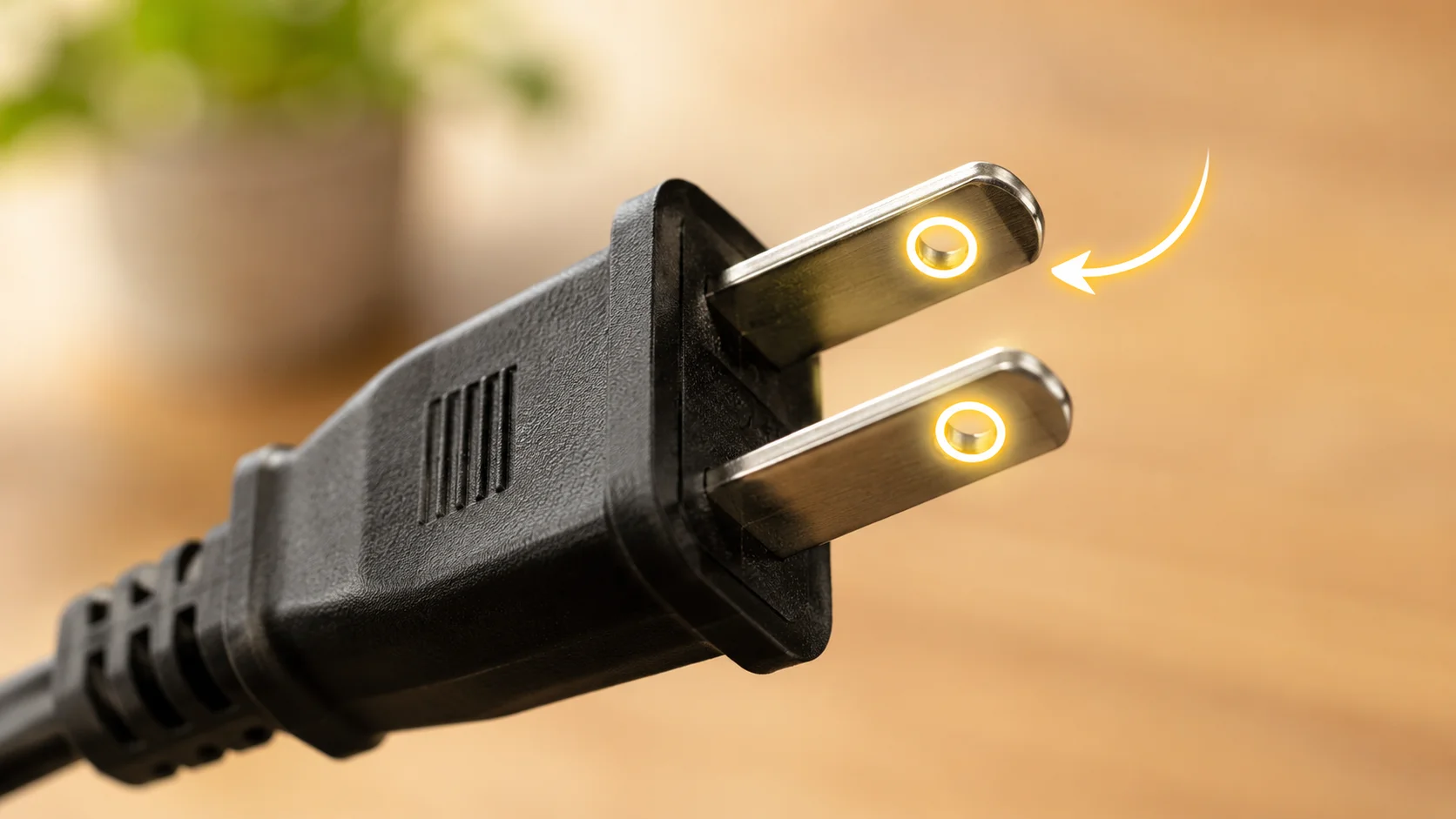
Close-up of two flat plug prongs with small holes near the tips

Original purpose

Lock into outlet bumps

Modern outlets

No bumps — friction holds it

Current use

Manufacturing + lockout tags

Required by code?

Not mandated — manufacturer choice

The original reason no longer applies — but the holes stayed

When Harvey Hubbell patented the first detachable electrical plug in the early 1900s, the holes in the prongs matched small bumps or ball bearings inside the outlet. Push the plug in, the bumps snapped into the holes, and the plug stayed put.

Modern outlets don't have those bumps. They hold plugs in place with friction and pressure alone. So the original locking function is gone.

The holes survived because they turned out to be useful in two new ways: manufacturers insert a rod through them to align prongs during plastic molding, and industrial users can thread a tag or lockout clip through them to prevent a machine from being powered on during maintenance.

Myth vs Reality

Myth

The holes grip bumps inside the outlet to hold the plug in.

This gets repeated a lot online, and it was true a long time ago. Many people assume modern outlets still work this way.

Reality

Modern outlets don't have those bumps.

Check the inside of any standard US outlet and you won't find bumps or ball bearings. Today, friction does the gripping. The holes exist for other reasons now.

What the prong holes were for vs what they're for now

1900s–mid century
Locked into bumps or ball bearings inside the outlet socket to prevent the plug from sliding out.
Manufacturing today
A rod is threaded through the holes in a line of prongs to hold them in the correct position while plastic is molded around them.
Industrial safety
A lockout tag, zip tie, or padlock hasp is inserted through the hole to physically prevent a device from being plugged in during servicing.
Consumer shipping
Some manufacturers thread a warning tag through the hole so the user must remove it — and read it — before plugging the device in.
Material saving
A minor theory: removing that small amount of metal saves a tiny cost at mass scale. Not confirmed as a deliberate design driver.

Note

The lockout use is the most practical one today

If you see a plug with a plastic tag or tie through the prong holes labeled 'Do Not Plug In' or with a service warning — that's the modern real-world function in action. It's common in construction sites and factory equipment. The hole makes it simple to attach a hard-to-miss physical warning.

Quick answers

Common questions

Why do electrical plugs have holes in the prongs?

Originally to lock into bumps inside outlets. Modern outlets don't have those bumps, so today the holes are mainly used during manufacturing and as safety lockout points.

Do modern outlets grip those holes?

No. Most modern US outlets hold plugs using friction and pressure between the prong and the metal contacts inside, not a bump-and-hole lock.

What is the manufacturing use for prong holes?

During production, a rod is inserted through the aligned holes in a row of prongs to hold them in position while plastic is molded around the plug body.

Can I put something through the holes to hold my plug in?

No. Don't insert anything into the prong holes while the plug is in or near an outlet. The holes are on the non-live part of the prong, but improvising a grip mechanism is unsafe.

Do all electrical plugs have holes?

No. NEMA standards don't require them. Some plugs are made without holes, and they work exactly the same way.

Who invented the plug prong holes?

The design traces back to Harvey Hubbell's patents in the early 1900s. His designs included indents that evolved into holes as manufacturing changed.

What is a plug lockout?

A safety device — often a clip or hasp — inserted through the prong holes to prevent a machine from being plugged in while it's being repaired or serviced.