That hole you've been using as a hook

Why Do Pans Have Holes in the Handle?

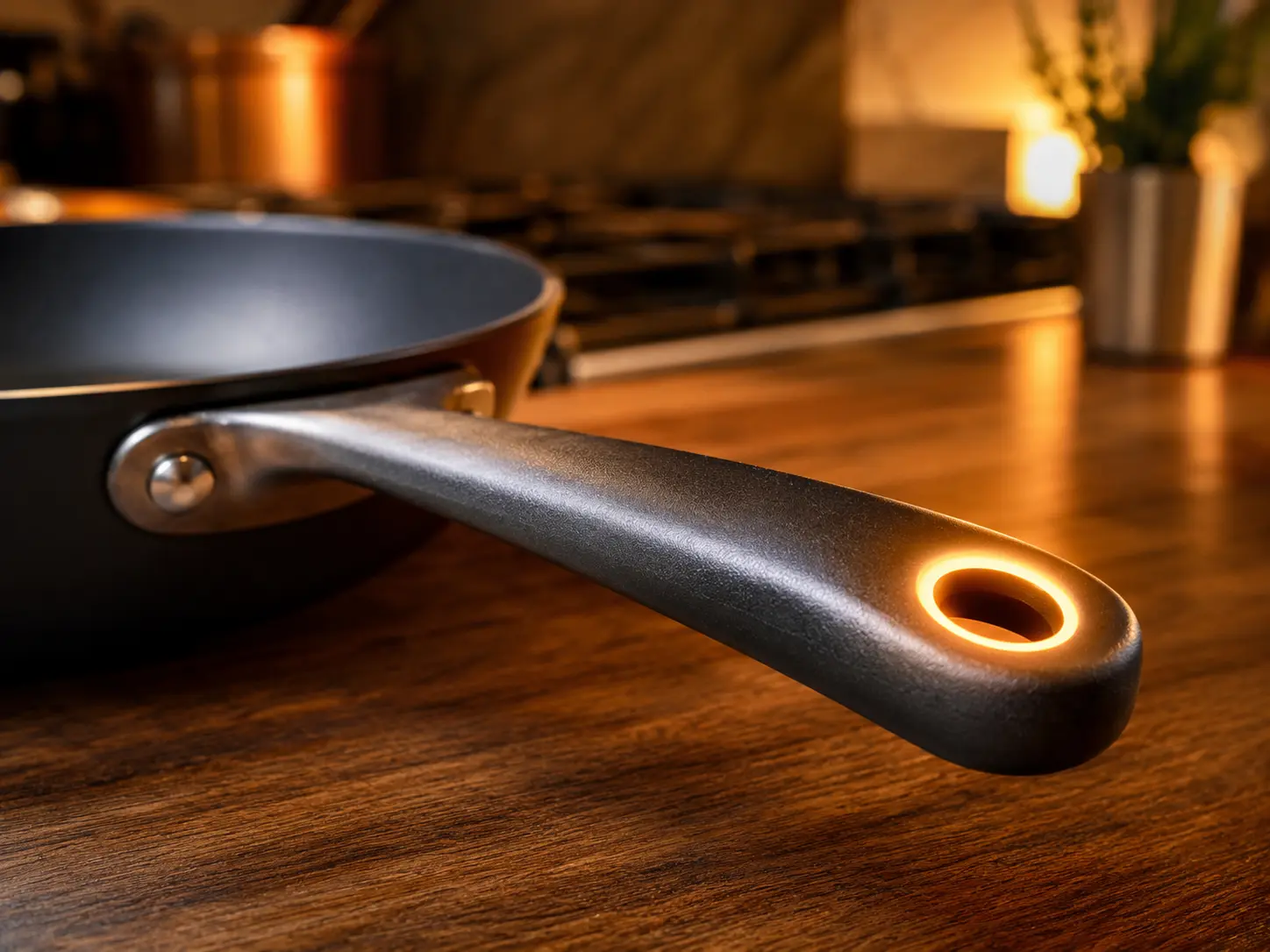
The hole in a pan handle looks like simple hanging storage. It can also hold a spoon or spatula while you cook, keeping the counter cleaner.

Quick answer

The official reason is hanging — you can put the pan on a hook or pot rack to save drawer space. That's real and works well. But there's a second function most people never use: rest the handle of your wooden spoon or spatula through the hole while you're cooking. The spoon sits angled over the pan with the bowl hovering above it. Nothing on the counter, no sauce dripping onto the stove, no balancing act. It works especially well with thin-handled wooden spoons.

A saucepan on a stove with a wooden spoon resting through the hole in the pan handle

Primary stated use

Hanging on hooks or racks

Hidden daily use

Utensil rest while cooking

Best utensil for it

Thin-handled wooden spoon

Works for all pans?

Depends on hole size and shape

Your pan already has a built-in spoon rest

The hanging use is the obvious one. Most kitchen packaging mentions it. It's genuinely useful for pot racks and pegboards.

The spoon rest use is the one nobody markets. Thread the end of a wooden spoon through the hole and angle it slightly downward. The bowl of the spoon hangs over the pan. Any sauce or drips fall back into the pot, not onto your stove or counter.

It works best with thin, straight-handled wooden spoons. Thick plastic handles or ladles with big bowl shapes often don't fit or balance well. If the spoon keeps sliding out, try threading it from the other direction.

Myth vs Reality

Myth

The hole is for hanging the pan. That's it.

That's what every product listing says. Most people use it exclusively for hanging and nothing else.

Reality

It was also designed as a utensil rest for active cooking.

In traditional European and Asian kitchens, cooks have used built-in pan features to hold tools for centuries. The handle hole is a modern continuation of that design. It just never got marketed as such.
Safety note

Watch out for hot metal handles

If your pan has an all-metal handle — especially if it's been in the oven — that handle will be scorching hot. Don't thread a utensil through a hot handle without checking first. Always use oven mitts with metal-handled cookware. Pans with silicone-wrapped or insulated handles are much safer for the spoon trick.

Quick answers

Common questions

What is the hole in a pan handle for?

Primarily for hanging the pan on hooks or a pot rack. Secondarily — and this is the less-known use — for resting a spoon or spatula through it while you're cooking.

How do I use the pan handle hole as a spoon rest?

Thread a thin spoon handle through the hole from above. Angle it slightly so the spoon bowl hovers over the pan. Drips go back into the pot, not onto the counter.

What type of spoon works best?

Thin-handled wooden spoons work best. Thick plastic handles or large ladles often don't fit or balance well in smaller holes.

Does this work on all pans?

Not always. Holes that are very small or sharp-edged are mainly for hanging. Elongated or oval holes are more likely to work as a utensil rest. Test with your fingers first — if it feels smooth and roomy enough, it probably works.

Is the spoon safe in a metal handle?

At stovetop temperatures over moderate heat, it's usually fine if the handle is long. But metal handles conduct heat — if your pan has been in the oven or on high heat, the handle will be very hot. Check before touching.

Why don't manufacturers mention the spoon trick?

It doesn't translate into marketing copy easily. A pan labeled 'nonstick, oven safe, built-in spoon holder' sounds odd. The feature is baked into the design without being advertised.