Everyday Science

Why Do Old Books Smell Good?

A perfume nobody designed, made by paper slowly falling apart. Open an old book and the smell arrives before the words - something warm, slightly sweet, faintly vanilla, carrying an air of accumulated time. This smell has its own devoted following. People describe it as comforting, intellectual, even romantic. It is also, in a purely chemical sense, the smell of slow decomposition. The answer involves lignin breakdown, volatile organic compounds, and the specific reason why old books smell pleasantly warm while new books smell sharply chemical.

Quick answer

Old books smell the way they do because paper is made from wood, which contains lignin and cellulose that slowly break down over time, releasing dozens of volatile organic compounds including vanillin, the same chemical found in vanilla extract, along with acids and alcohols that combine into the characteristic old-book aroma. Book conservators can use the smell of a book to assess its age and deterioration - a form of olfactory chemistry that has been used in libraries and archives to evaluate preservation needs.
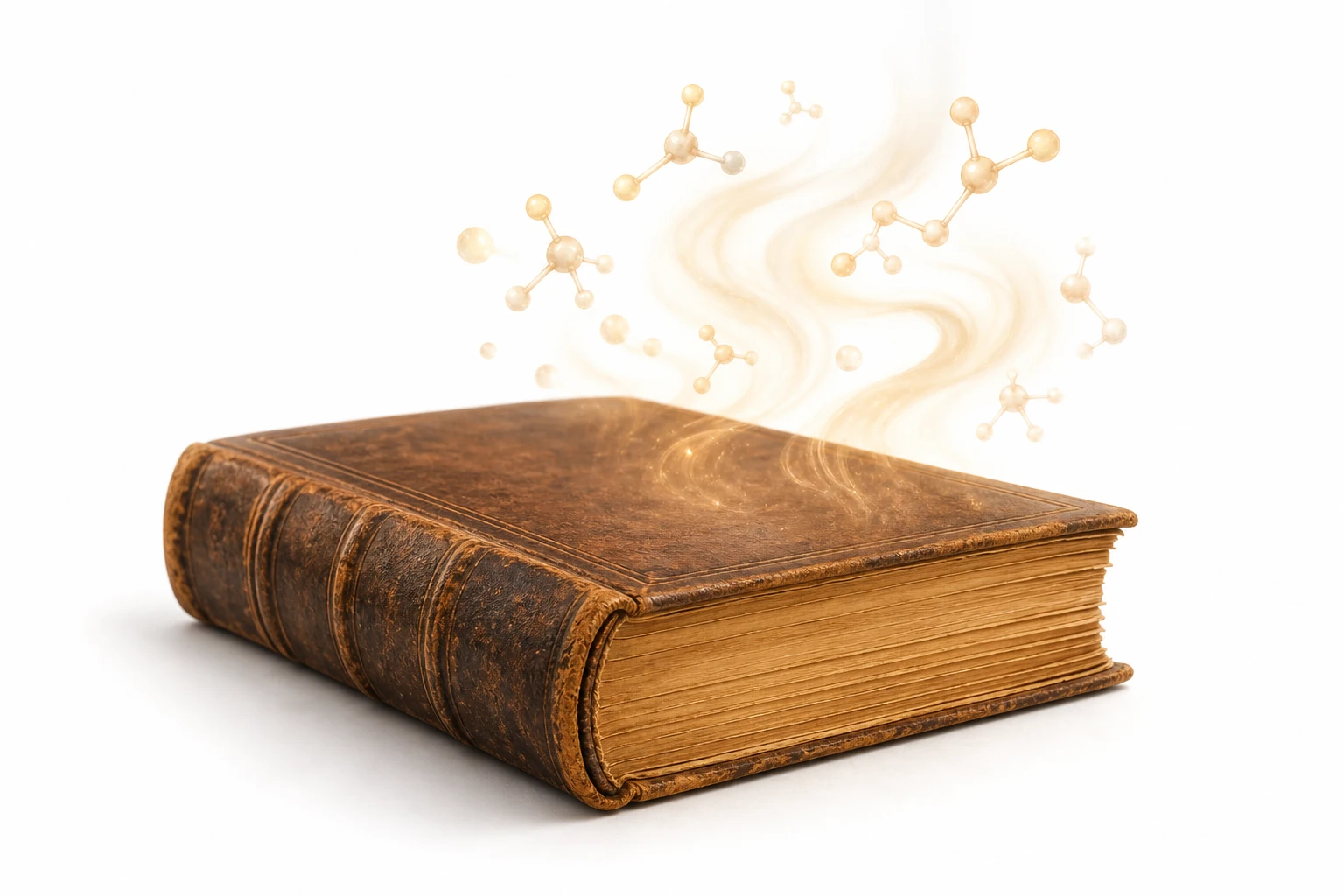
Why Do Old Books Smell Good? hero image

The mystery

The answer involves lignin breakdown, volatile organic compounds, and the specific reason why old books smell pleasantly warm while new books smell sharply chemical.

The short answer

Old books smell the way they do because paper is made from wood, which contains lignin and cellulose that slowly break down over time, releasing dozens of volatile organic compounds including vanillin, the same chemical found in vanilla extract, along with acids and alcohols that combine into the characteristic old-book aroma.

The twist

Book conservators can use the smell of a book to assess its age and deterioration - a form of olfactory chemistry that has been used in libraries and archives to evaluate preservation needs.

Common mistake

Many assume the smell comes primarily from old printing inks.

Paper is wood, and wood is slowly falling apart

The old-book smell begins with what paper is made of and what happens to those materials over decades.

Lignin breaks down into vanillin and other compounds

Paper made from wood pulp contains lignin, the same compound that gives wood its structure, which breaks down over time into vanillin and other aromatic compounds.

Vanillin is chemically identical to the primary flavor compound in vanilla beans, which is why old books have that distinctive warm, slightly sweet undertone.

Every old book is generating a small, slow, chemical impersonation of vanilla extract.

Cellulose produces acids and alcohols as it degrades

The cellulose fibers that make up paper also slowly oxidize and break down, releasing acetic acid, the main component of vinegar, as well as various alcohols and furfural, a compound with an almond-like smell.

The combination of all these breakdown products creates the complex, layered aroma associated with old books.

The complexity of old-book smell comes from paper's slow, multifaceted chemical surrender to time.

New books smell differently for opposite reasons

The sharp, slightly acrid smell of new books comes from modern paper manufacturing chemicals, printing inks, glues, and solvents that are still fresh rather than degraded.

Over time, as these compounds evaporate and the paper begins its own slow breakdown, the smell shifts from chemical toward the warmer, more complex old-book aroma.

A new book smells like manufacture. An old book smells like time.

From wood pulp to aromatic atmosphere

A short sequence explains the chemistry behind the beloved smell.

1

01. Wood is processed into paper containing lignin and cellulose

These plant-derived polymers are built into the paper's structure.

2

02. Oxygen and moisture slowly attack these polymers

Oxidation and hydrolysis begin breaking chemical bonds over years and decades.

3

03. Volatile breakdown compounds are released

Vanillin, acetic acid, furfural, and dozens of other compounds evaporate from the paper.

4

04. The mixture produces a recognizable composite aroma

The combination of all compounds creates the characteristic old-book smell.

How library conservators use smell professionally

A research group at University College London developed a 'Historic Book Odour Wheel' mapping the compounds associated with old books and their perceptual descriptors.

Conservators and archivists can use the intensity and character of a book's smell to make preliminary assessments of its age and state of preservation before conducting more invasive testing.

Surprising facts about book chemistry

High-acid paper from the 19th century degrades fastest
The shift to cheaper wood pulp paper in the 1800s produced highly acidic paper that degrades and smells more intensely than older rag-paper books.
Some book lovers have a name for the smell
The term 'bibliosmia' describes the appreciation for book smells, particularly of old volumes.
E-books obviously do not smell
The absence of old-book smell is frequently cited in studies as one of the most emotionally missed aspects of physical books by digital reading converts.

Is the old-book smell from the ink, not the paper?

Myth

Many assume the smell comes primarily from old printing inks.

Ink is visually the most prominent component of a book's interior, making it a natural first candidate.

Reality

The dominant contributors are paper's own lignin and cellulose degradation products; inks contribute but are secondary.

The dominant contributors are paper's own lignin and cellulose degradation products; inks contribute but are secondary.

Where similar lignin breakdown produces familiar smells

Vanilla extract
Vanillin, a lignin breakdown product, is also the primary flavor compound in vanilla, explaining the chemical similarity in smell.
Autumn leaves
Decaying plant material in autumn produces similar lignin-derived aromatic compounds, part of the characteristic seasonal smell.

Why this pleasantly morbid chemistry matters

The chemistry of paper degradation is directly relevant to book preservation, archival science, and materials conservation.

Understanding exactly which compounds indicate which stages of degradation helps conservators intervene before irreversible damage occurs.

Worth noting

Perfume made by time

Old books smell the way they do because paper is wood, wood contains lignin, and lignin, given enough time and oxygen, produces something remarkably close to vanilla. Every beloved old-book smell is simply the scent of slow, gentle, fragrant falling apart.

Quick answers

Common questions

Can old-book smell be replicated artificially?

Yes, several perfumers and novelty product companies have developed old-book-scented candles, sprays, and perfumes based on identified compounds.

Everyday Science

Related questions

New-book smell is associated with novelty and fresh manufacture, while old-book smell triggers associations with age, history, and accumulated knowledge.

The researchers who mapped the smell

Matija Strlič and Cecilia Bembibre

Researchers at University College London who analyzed the chemical compounds in old book smells and developed the Historic Book Odour Wheel.

Where similar lignin breakdown produces familiar smells

Vanilla extract

Vanillin, a lignin breakdown product, is also the primary flavor compound in vanilla, explaining the chemical similarity in smell.

Where similar lignin breakdown produces familiar smells

Autumn leaves

Decaying plant material in autumn produces similar lignin-derived aromatic compounds, part of the characteristic seasonal smell.

Is the old-book smell from the ink, not the paper?

The dominant contributors are paper's own lignin and cellulose degradation products; inks contribute but are secondary.

The dominant contributors are paper's own lignin and cellulose degradation products; inks contribute but are secondary.