1
01. Hinge surfaces dry out as lubricant evaporates or collects dirt
Direct metal contact replaces lubricated sliding.
Everyday Science
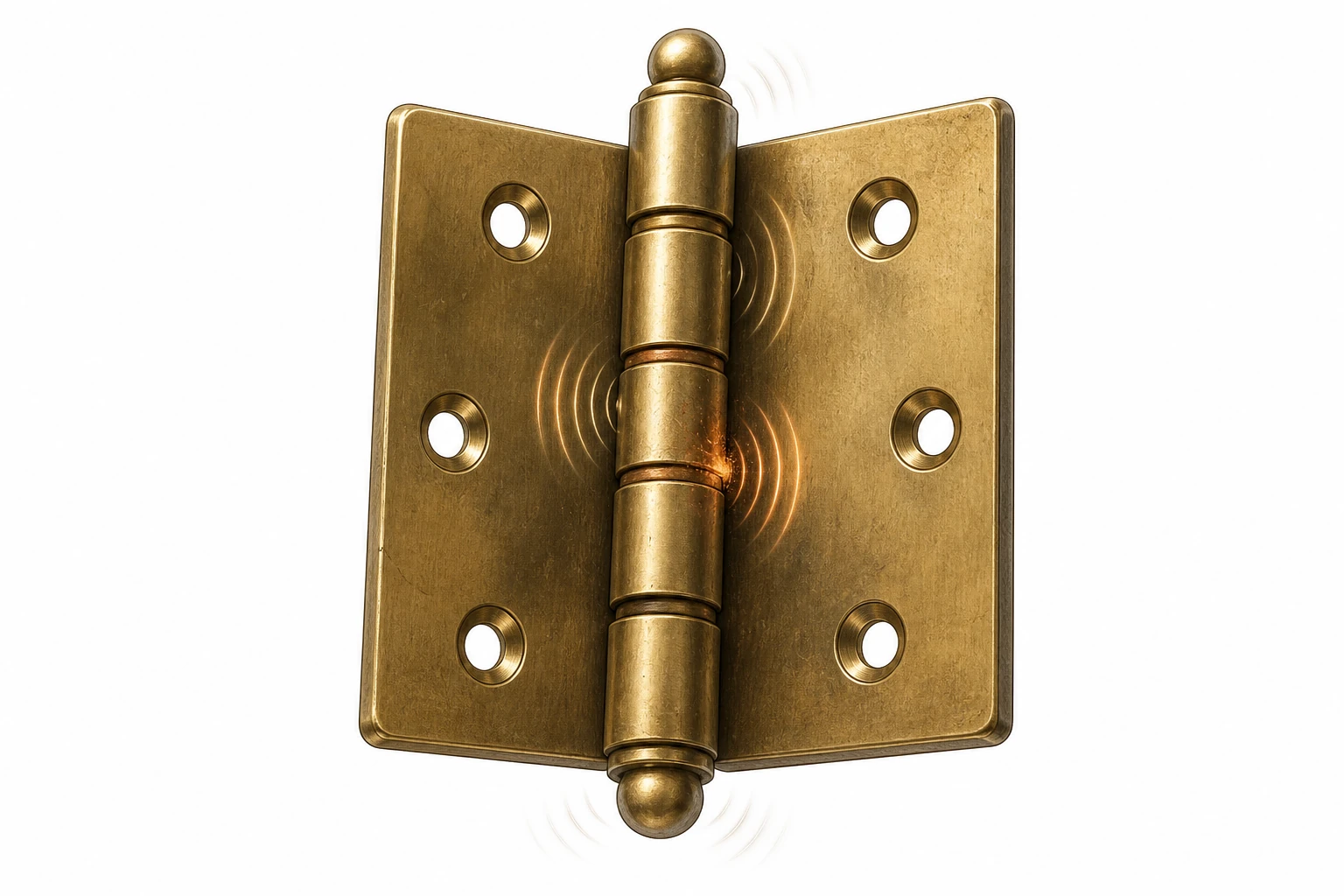
The sound of metal-on-metal contact happening at thousands of points simultaneously. A squeaky door is one of those domestic sounds that begins as a minor nuisance and gradually becomes, at 2am, a crisis. The squeak is not random. It is a consistent, physics-based phenomenon caused by something specific happening between two surfaces, and understanding it immediately makes fixing it obvious. The answer involves stick-slip friction, surface contact at a microscopic level, and why oiling a hinge works so immediately and so completely.
Quick answer
Hinges squeak because the metal-on-metal contact between the hinge pin and barrel produces stick-slip friction, a rapid cyclical alternation between static and kinetic friction as the surfaces catch and release repeatedly, generating the characteristic oscillating sound. Stick-slip friction is the same phenomenon responsible for the sound of a bow drawing across a violin string, the squeal of car brakes, and the chirp of a cricket. A squeaky hinge is, acoustically speaking, trying to play music.
The mystery
The answer involves stick-slip friction, surface contact at a microscopic level, and why oiling a hinge works so immediately and so completely.
The short answer
Hinges squeak because the metal-on-metal contact between the hinge pin and barrel produces stick-slip friction, a rapid cyclical alternation between static and kinetic friction as the surfaces catch and release repeatedly, generating the characteristic oscillating sound.
The twist
Stick-slip friction is the same phenomenon responsible for the sound of a bow drawing across a violin string, the squeal of car brakes, and the chirp of a cricket. A squeaky hinge is, acoustically speaking, trying to play music.
Common mistake
Many people assume a squeak means the hinge is broken or worn out.
Everyday Science
Light machine oil, petroleum jelly, or purpose-made silicone spray all eliminate the dry metal contact responsible for squeaking.
The tribologist who studied friction
Da Vinci conducted early systematic experiments on friction and correctly identified that friction force depends on load but not contact area - foundational observations for all subsequent friction science.
Where stick-slip friction causes familiar sounds
Car brakes squeal when brake pads and rotors undergo stick-slip at the wrong frequency, a major focus of automotive noise engineering.
Where stick-slip friction causes familiar sounds
The excruciating sound of chalk dragged at the wrong angle is a classic stick-slip oscillation on the blackboard's rough surface.
Is a squeaky hinge a sign of damage?
Squeaking indicates dry metal-on-metal contact, not damage. A dry but otherwise functional hinge squeaks; a lubricated but worn hinge may be silent.
Continue learning
Everyday Objects
Another familiar question explained by simple physics.

Everyday Science
Another familiar question explained by simple physics.
Everyday Engineering
Another design choice shaped by practical engineering.