1
01. Steps and handrail are driven by separate mechanisms
A friction drive connects the handrail to the main step drive but introduces independent variables.
Everyday Engineering
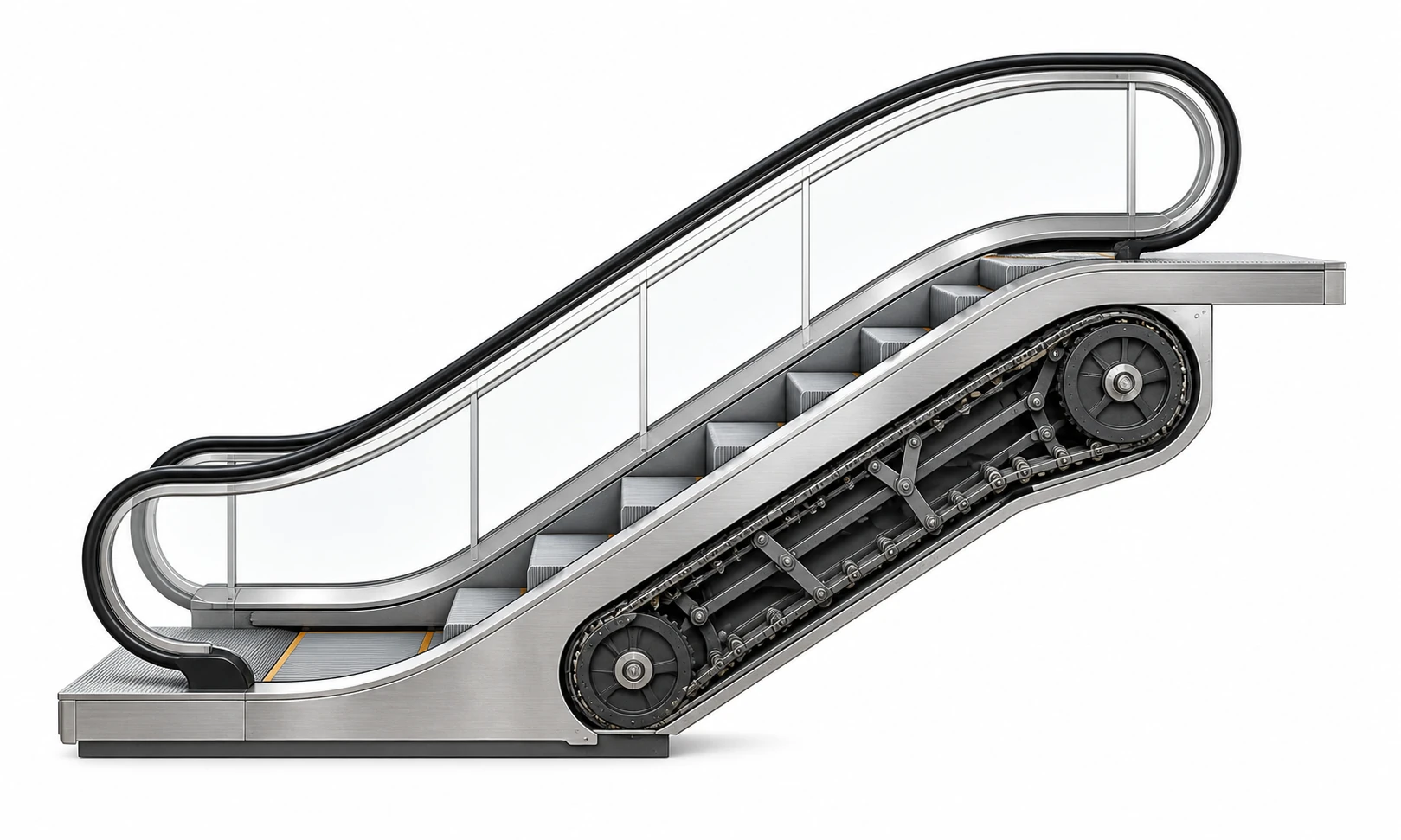
A machine that cannot quite synchronize its own parts, and has simply decided to live with it. Stand on an escalator and grip the handrail. Within a few steps, your hand has either rushed ahead or been left behind, requiring a subtle shuffle to return to where you started. This is not imagination. The handrail really does move at a slightly different speed, and the reason it does is deeply embedded in how escalators are built. The answer involves belt stretch, mechanical tolerance, and the genuinely difficult engineering problem of keeping two independently driven systems perfectly synchronized.
Quick answer
Escalator handrails move at a slightly different speed than the steps because handrails are driven by a separate mechanism with its own belt and friction drive, and the cumulative effects of belt stretch, wear, temperature, and manufacturing tolerance make perfect speed synchronization between the two systems extremely difficult to maintain in practice. Escalator standards actually specify that the handrail should move within 0 to 2 percent of step speed - faster is considered safer than slower, since a handrail moving slightly ahead discourages passengers from leaning backward.
The mystery
The answer involves belt stretch, mechanical tolerance, and the genuinely difficult engineering problem of keeping two independently driven systems perfectly synchronized.
The short answer
Escalator handrails move at a slightly different speed than the steps because handrails are driven by a separate mechanism with its own belt and friction drive, and the cumulative effects of belt stretch, wear, temperature, and manufacturing tolerance make perfect speed synchronization between the two systems extremely difficult to maintain in practice.
The twist
Escalator standards actually specify that the handrail should move within 0 to 2 percent of step speed - faster is considered safer than slower, since a handrail moving slightly ahead discourages passengers from leaning backward.
Common mistake
Many riders assume a noticeably different handrail speed indicates a broken or poorly maintained escalator.
Everyday Engineering
Regular maintenance, newer belts, and better mechanical condition all reduce step vibration and handrail speed discrepancy.
The first escalator engineer
The American engineer who patented the first moving stairway in 1892, installed as an amusement ride at Coney Island.
Where mechanical synchronization tolerance matters
Airport moving walkways face the same handrail speed challenge and typically handle it the same way.
Where mechanical synchronization tolerance matters
Multi-belt conveyor systems in manufacturing routinely specify acceptable speed tolerance ranges between connected belts.
Is it a malfunction when the handrail speed is noticeably different?
A minor speed discrepancy is within specification for nearly every operating escalator; only significant divergence suggests a maintenance issue.
Continue learning

Everyday Engineering
Another design choice shaped by practical engineering.
Everyday Engineering
Another design choice shaped by practical engineering.
Everyday Design
Another design choice shaped by practical engineering.