Myth vs Reality
Both terminals are equally necessary, the signs only indicate direction
Without both a positive and negative terminal completing the circuit, no current flows at all. The signs are navigation, not a power ranking.
Everyday Objects
Two tiny symbols stop your remote control from frying itself every time you change the batteries.
Quick answer
The plus (+) and minus (−) signs on a battery mark its positive and negative terminals. Electricity flows in a specific direction through a circuit, from the negative terminal, through the device, and back to the positive terminal. If you insert a battery the wrong way, current flows backwards. In most consumer electronics this simply means the device does not work. In some, reversed polarity can damage or destroy components. The symbols exist so you can match the battery's orientation to the markings inside the device's battery compartment, ensuring current always flows the right way.
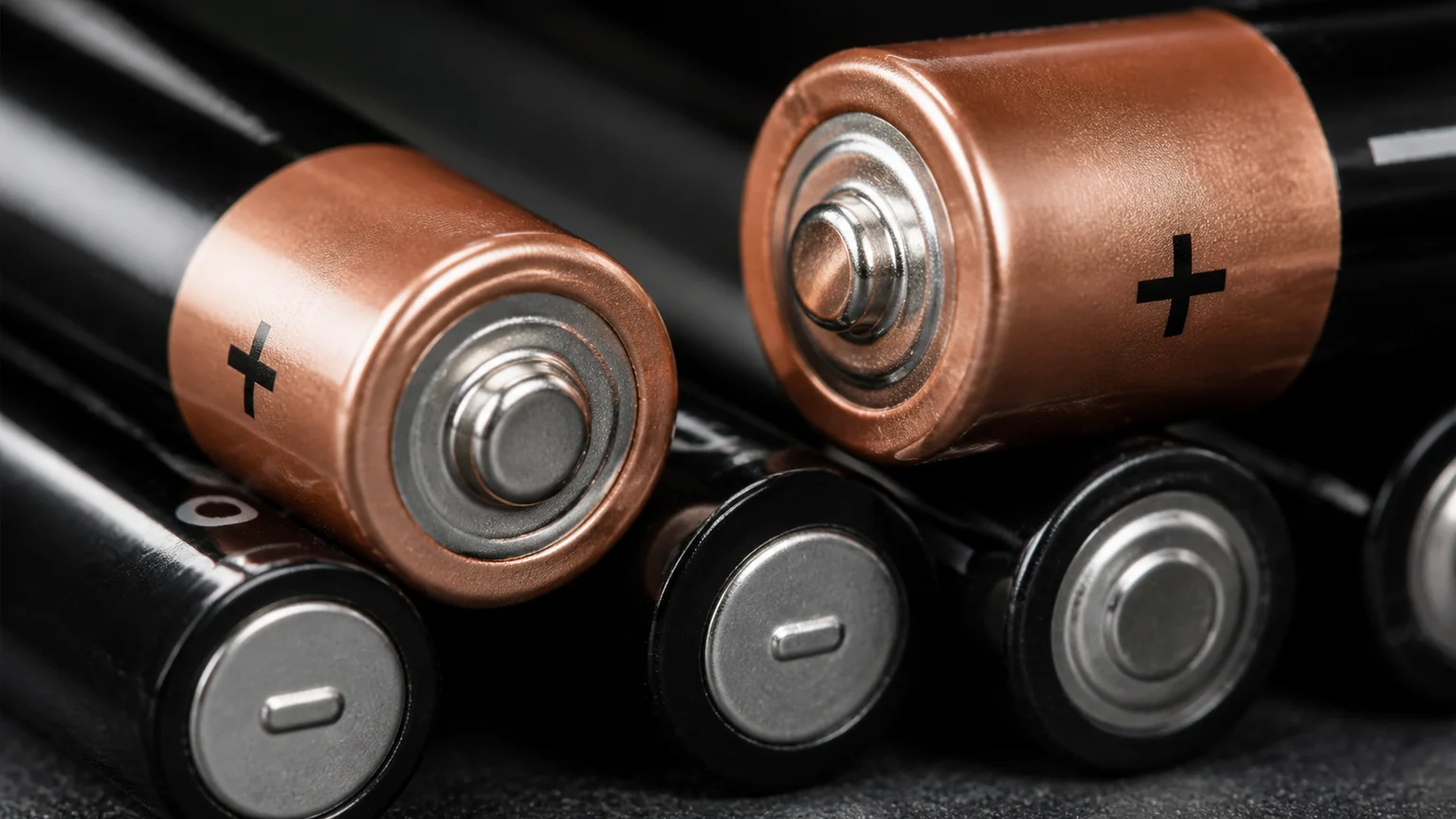
Plus is the positive terminal
Conventional current exits the battery from the positive terminal and travels through the external circuit.
Electrons actually flow the other way
Electrons move from the negative terminal, conventional current notation runs opposite to electron flow, a historical quirk.
Reversed polarity can cause damage
Some devices have protection circuits; others can be permanently damaged by a backwards battery.
Myth: plus means more powerful
The signs indicate direction of flow, not power level. Both terminals are required for any current to flow at all.
Everyday Objects
Many modern devices include a protection diode that prevents damage from reversed polarity. Cheaper or older devices may not. It is always worth checking orientation before closing the battery compartment.
Myth vs Reality
Without both a positive and negative terminal completing the circuit, no current flows at all. The signs are navigation, not a power ranking.
Continue learning

Everyday Objects
Another design choice shaped by practical engineering.
Everyday Objects
Another design choice shaped by practical engineering.

Everyday Objects
Another design choice shaped by practical engineering.