History Myths

Was Columbus Trying to Prove the Earth Was Round?

Columbus was not a brave visionary proving a flat-Earth wrong. He was a man with a math problem - and the math was wrong. The standard Columbus story says he sailed west while scholars feared he would fall off the edge of the world. Nearly every element is wrong. Everyone educated already knew Earth was round. His opponents objected because his distance calculations were bad. Columbus's real story is stranger: a voyage that succeeded because of a mistake.

Quick answer

No. Columbus was trying to find a western route to Asia. His opponents knew Earth was round and correctly argued he had underestimated its size. Columbus died believing he had reached Asia and never accepted that he had found a new continent.
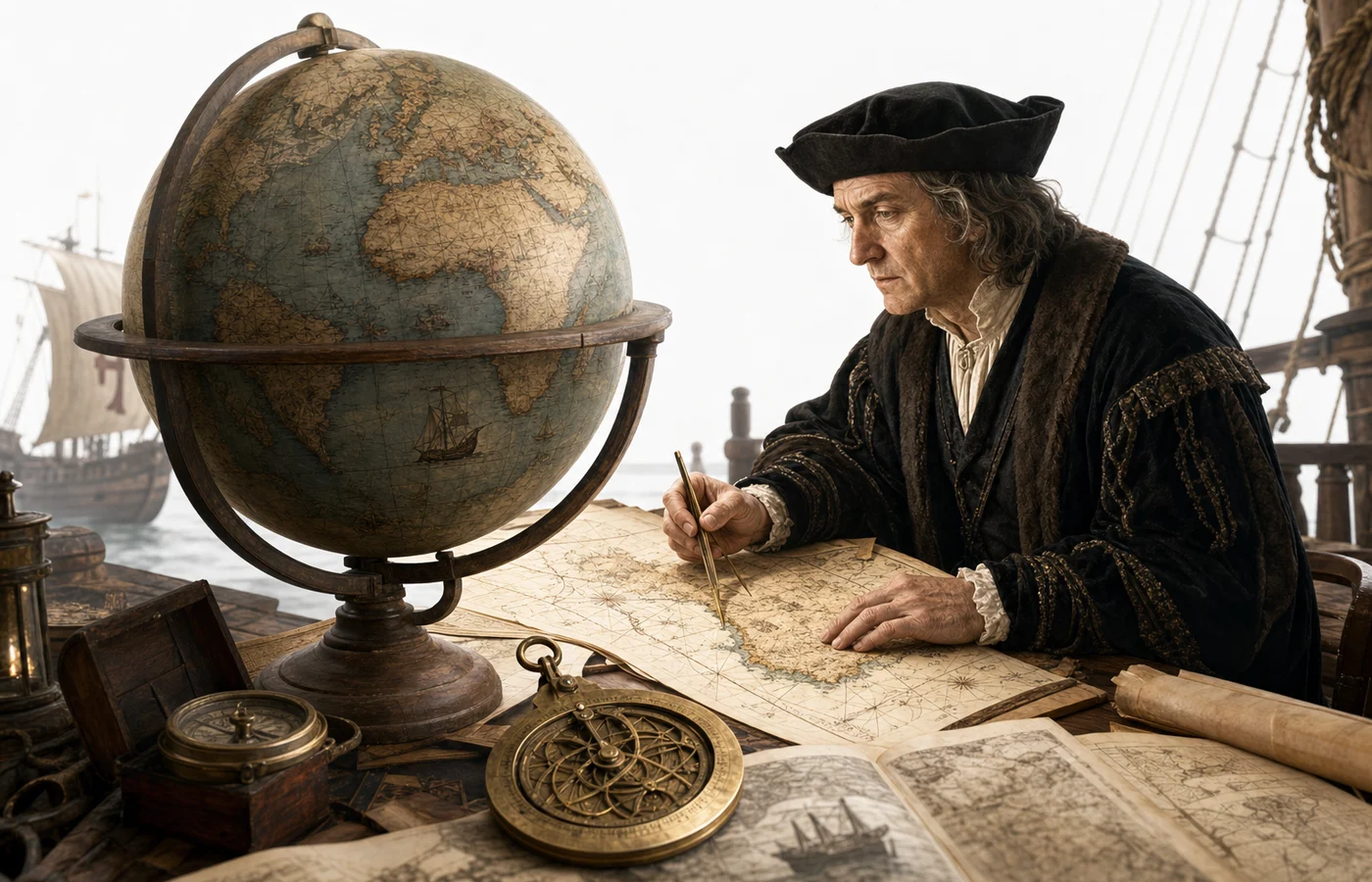
Was Columbus Trying to Prove the Earth Was Round? hero image

The mystery

Columbus's real story is stranger: a voyage that succeeded because of a mistake.

The short answer

No. Columbus was trying to find a western route to Asia. His opponents knew Earth was round and correctly argued he had underestimated its size.

The twist

Columbus died believing he had reached Asia and never accepted that he had found a new continent.

Common mistake

Even if the flat-Earth story is wrong, Columbus was a visionary sailing into the unknown.

What Columbus was actually trying to do

Portugal was exploring around Africa toward Asia. Columbus proposed a western shortcut based on a much too small Earth.

The calculation that was wrong

Columbus believed Japan was about 2,400 miles west of the Canary Islands. The actual westward distance is more than five times that.

Without the Americas, his ships likely would have run out of supplies.

Columbus's opponents had better math. He just did not know there was a continent in the middle.

Spain and the lucky gamble

Portugal rejected Columbus. Spain funded him after its own scholars also doubted the math, partly because the political moment changed.

The voyage was a gamble, not a victory over flat-Earth thinking.

Columbus was right about there being land to the west. He was wrong about almost everything else.

The continent he refused to acknowledge

Columbus made four voyages and still insisted he had reached Asia. Amerigo Vespucci recognized the land as a new continent.

That is why the continents are named America, not Columbia.

Columbus is one of the few discoverers in history who never acknowledged what he had discovered.

How the myth was built

The heroic Columbus myth was largely constructed later.

1

01. Washington Irving's fiction

Irving's 1828 biography popularized scenes of Columbus against ignorant flat-Earth scholars.

2

02. A useful American hero

The story fit a 19th-century ideal of individual courage against institutions.

3

03. Textbooks adopted it

Once repeated in education, the myth became a fact everyone knew.

What Columbus actually changed

Columbus was wrong about geography, distance, and what he found. But his voyages triggered the Columbian Exchange, one of the most transformative and devastating processes in world history.

The consequences were vast regardless of what he intended.

The voyage history textbooks do not mention

Norse settlers arrived earlier
L'Anse aux Meadows in Newfoundland predates Columbus by about 500 years.
Columbus was later arrested
He was sent back to Spain in chains after complaints about colonial administration.

Wasn't Columbus brave and visionary, at least?

Myth

Even if the flat-Earth story is wrong, Columbus was a visionary sailing into the unknown.

The heroic story needs ignorant opponents to make Columbus look clearer-sighted than he was.

Reality

His courage was real, but his confidence came from a calculation that was wrong.

His courage was real, but his confidence came from a calculation that was wrong.

Confident wrongness in the modern world

Productive error
History often turns on people acting confidently from mistaken assumptions.

The real lesson of 1492

Major events are often driven by error, accident, and unintended consequences rather than clear vision.

Columbus accidentally connected two halves of the world while looking for something else.

Worth noting

The wrong man who found the right world

Columbus found the Americas while looking for Asia, using math that was wrong, and never accepted what he had found. History is sometimes decided by people who have no idea what they are doing.

Quick answers

Common questions

Where did Columbus land in 1492?

On an island in the Bahamas, traditionally identified as San Salvador.

Was Columbus the first European in the Americas?

No. Norse explorers reached North America around 1000 AD.