History Myths

Did Nero Really Fiddle While Rome Burned?

The most famous image of a tyrant enjoying a catastrophe probably did not happen. Rome is burning. Nero, supposedly, sits with an instrument and serenades destruction. The image is vivid, famous, and wrong in almost every particular. Nero was likely outside Rome when the fire started. The fiddle did not exist. The sources hated him. The myth tells us less about Nero and more about how history gets written.

Quick answer

No. Nero almost certainly did not fiddle while Rome burned. He was reportedly in Antium, returned to Rome, and organized relief. The fiddle would not exist for more than a millennium. The plausible kernel is that Nero may have sung about the fall of Troy, later reframed as monstrous indifference.
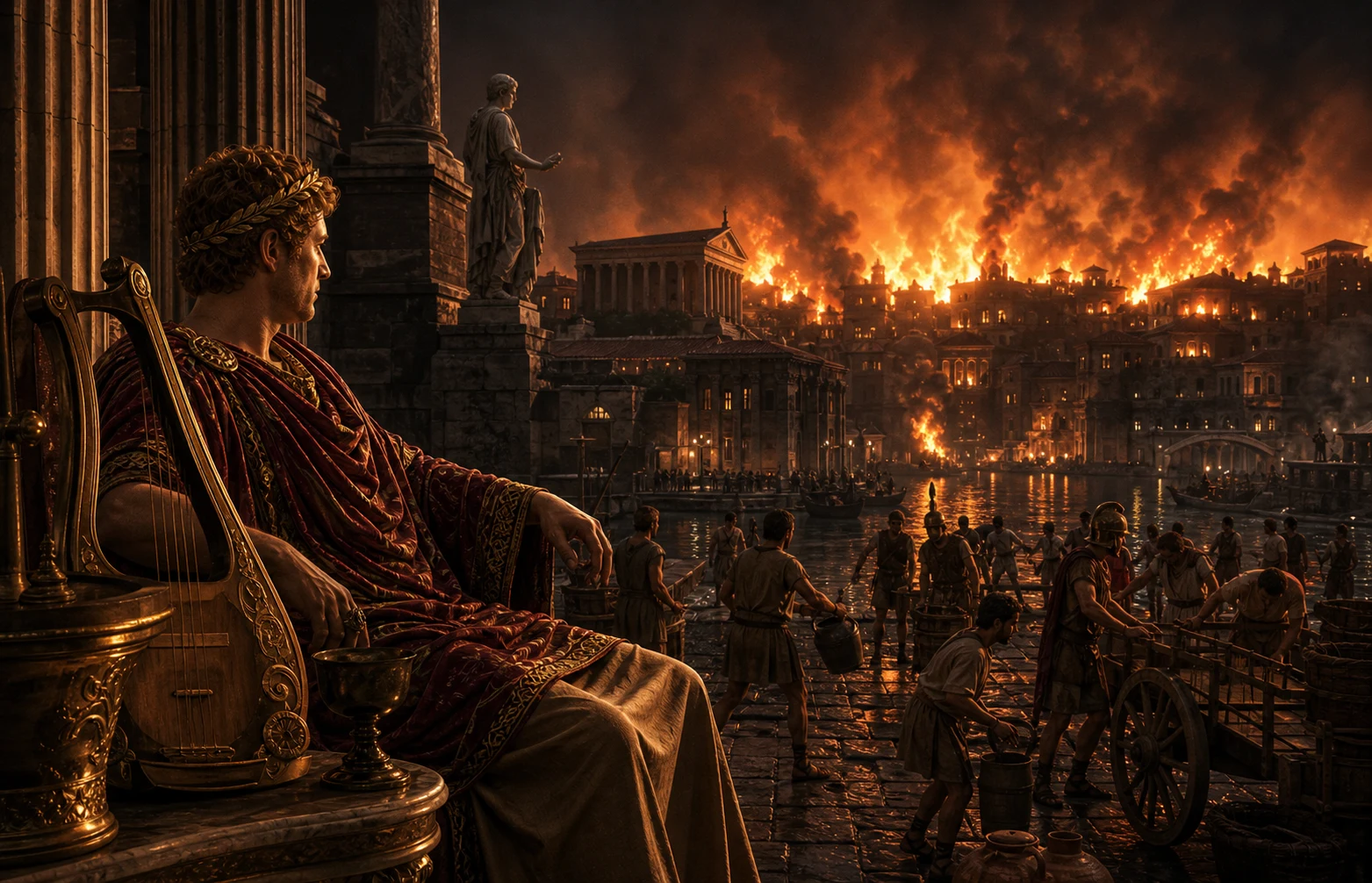
Did Nero Really Fiddle While Rome Burned? hero image

The mystery

The myth tells us less about Nero and more about how history gets written.

The short answer

No. Nero almost certainly did not fiddle while Rome burned. He was reportedly in Antium, returned to Rome, and organized relief. The fiddle would not exist for more than a millennium.

The twist

The plausible kernel is that Nero may have sung about the fall of Troy, later reframed as monstrous indifference.

Common mistake

Many believe Nero deliberately burned Rome to clear land for his palace.

Unpacking the myth

The Great Fire of Rome began in July 64 AD and devastated much of the city.

Where Nero actually was

Tacitus, hostile but careful, says Nero was at Antium when the fire began. He returned and opened public spaces as shelters, brought in food, and lowered grain prices.

Tacitus reports the performance story as rumor, not settled fact.

Even the historians who hated Nero recorded that he came back to Rome and organized the relief effort.

What Instrument Did Nero Play?

Ancient sources that mention Nero performing describe him playing the cithara, a Greek string instrument similar to a lyre. It fit his public image: theatrical, Hellenophile, and unusually serious about performance for a Roman emperor.

The modern violin-style fiddle would not be invented for more than a thousand years after Nero's death. Even if the story were true, Nero could not literally have been fiddling while Rome burned.

Nero could not have fiddled while Rome burned because the fiddle did not exist.

The poetry of Troy

Suetonius says Nero sang The Fall of Ilium while viewing fire damage. That may have been artistic framing, grotesque narcissism, or hostile exaggeration.

The later idiom flattened all ambiguity into one unforgettable accusation.

Nero's enemies made an artistic response to catastrophe sound like the behavior of a madman.

Where Did the Phrase "Fiddling While Rome Burns" Come From?

The phrase developed centuries after the Great Fire of Rome. Ancient Roman writers never described Nero playing a fiddle because the instrument did not exist at the time.

Over the centuries, stories about Nero performing music while Rome burned evolved into the modern expression that survives today.

The fiddle was a later translation of the myth, not a detail from ancient Rome.

What Does "Fiddling While Rome Burns" Mean?

Today, the phrase "fiddling while Rome burns" is used to describe someone who ignores a serious crisis while focusing on something trivial, unimportant, or self-indulgent.

It has become a popular metaphor for poor leadership, misplaced priorities, and inaction during emergencies.

The phrase survived because it names a kind of failure people still recognize.

How history gets distorted

The Nero story is a case study in reputation damage.

1

01. Sources written by enemies

Tacitus, Suetonius, and Cassius Dio wrote from elite traditions hostile to Nero.

2

02. Winners write the record

Nero's successors benefited from making him look uniquely monstrous.

3

03. A detail becomes a symbol

Music plus fire plus indifference made a perfect image of tyranny.

4

04. The anachronism stuck

The impossible fiddle survived because the story was too satisfying.

Why Nero needed to be a monster

Nero was complex: popular early, brutal later, theatrical, violent, and hated by the senatorial class.

Christians remembered his persecution, senators wrote the history, and successors needed a villain. The combination produced a monster.

What history got wrong about Nero

Nero may have been a serious musician
Sources describe intense training and genuine musical ambition.
He created the Neronia festival
A Greek-style festival of music, athletics, and racing in Rome.
He was remembered fondly in the East
False Neros later attracted support in eastern provinces.

Did Nero Start the Fire?

Myth

Many believe Nero deliberately burned Rome to clear land for his palace.

Some Romans accused Nero of starting the fire so he could rebuild parts of the city according to his own vision. Nero later built on fire-cleared land, which looks suspicious but proves little. Because the evidence is incomplete and often contradictory, historians remain uncertain about Nero's role.

Reality

Historians have never found convincing evidence that Nero ordered the fire. Ancient accounts contain rumors and accusations, but they also describe Nero organizing relief efforts and opening public spaces to people who had lost their homes.

Historians have never found convincing evidence that Nero ordered the fire. Ancient accounts contain rumors and accusations, but they also describe Nero organizing relief efforts and opening public spaces to people who had lost their homes.

Fiddling in the modern world

The idiom outlived the history
Fiddling while Rome burns now describes leaders ignoring a serious crisis while focusing on something trivial, unimportant, or self-indulgent.
Reputation shapes records
Richard III and other figures show the same pattern of hostile memory.

History and who gets to write it

Ancient sources are political texts, not neutral recordings.

Vivid anecdotes survive because they serve survivors.

Worth noting

The fire that keeps burning

The image won. The evidence lost. Nero became the tyrant playing music for disaster. Nero's greatest crime may have been dying before he could correct the record.

Quick answers

Common questions

If Nero did not burn Rome, who did?

Probably no one. Accidental fire is the most likely explanation.

How did Nero die?

He died by suicide in 68 AD after the army and senate turned against him.