SOCIAL PSYCHOLOGY

What Is Pluralistic Ignorance? Why Everyone Agrees but No One Believes

You are in a meeting. Everyone agrees. No one believes it. You stay silent. Pluralistic ignorance explains why.

Editorial illustration of a group of people all agreeing publicly but thinking privately
Creator Daniel Katz, Floyd AllportOrigin Social PsychologyYear 1930sCategory Psychology

QUICK ANSWER

Here is the idea in plain English.

Pluralistic ignorance is a social phenomenon where everyone privately disagrees but publicly agrees. It was identified by social psychologists in the 1930s. The phenomenon explains why people follow the crowd, why norms persist, and why you stay silent when you disagree. It is a powerful force in groups and society.

If you remember only a few things, remember these.

The basic move

Pluralistic ignorance is simple: everyone privately disagrees but publicly agrees. You think you are the only one who disagrees. You stay silent. Everyone else does the same.

Why it matters

The effect is driven by social pressure. You do not want to be the odd one out. You assume others know more than you.

Use it deliberately

When you disagree, speak up. You are not alone. Others share your doubts.

CORE IDEA

The concept in its simplest useful form.

What Does Pluralistic Ignorance Mean in Simple Terms?

Pluralistic ignorance is simple: everyone privately disagrees but publicly agrees. You think you are the only one who disagrees. You stay silent. Everyone else does the same.

The effect is driven by social pressure. You do not want to be the odd one out. You assume others know more than you.

The solution is to speak up. You are not alone. Others share your doubts.
The small mechanism underneath the big idea.

01

The Story Behind Pluralistic Ignorance

In the 1930s, social psychologists noticed a strange phenomenon. People often follow the crowd even when they do not agree. They assume others know something they do not.

The classic example is a meeting. Everyone agrees. No one believes it. Everyone assumes others agree. No one speaks up.

Today, pluralistic ignorance is a well-known concept in social psychology.

02

Why Pluralistic Ignorance Became Famous

Pluralistic ignorance became famous because it explains why people follow the crowd. It is a powerful force in groups.

The concept is widely used in social psychology and organizational behavior.

Today, pluralistic ignorance is a foundational concept in understanding conformity.

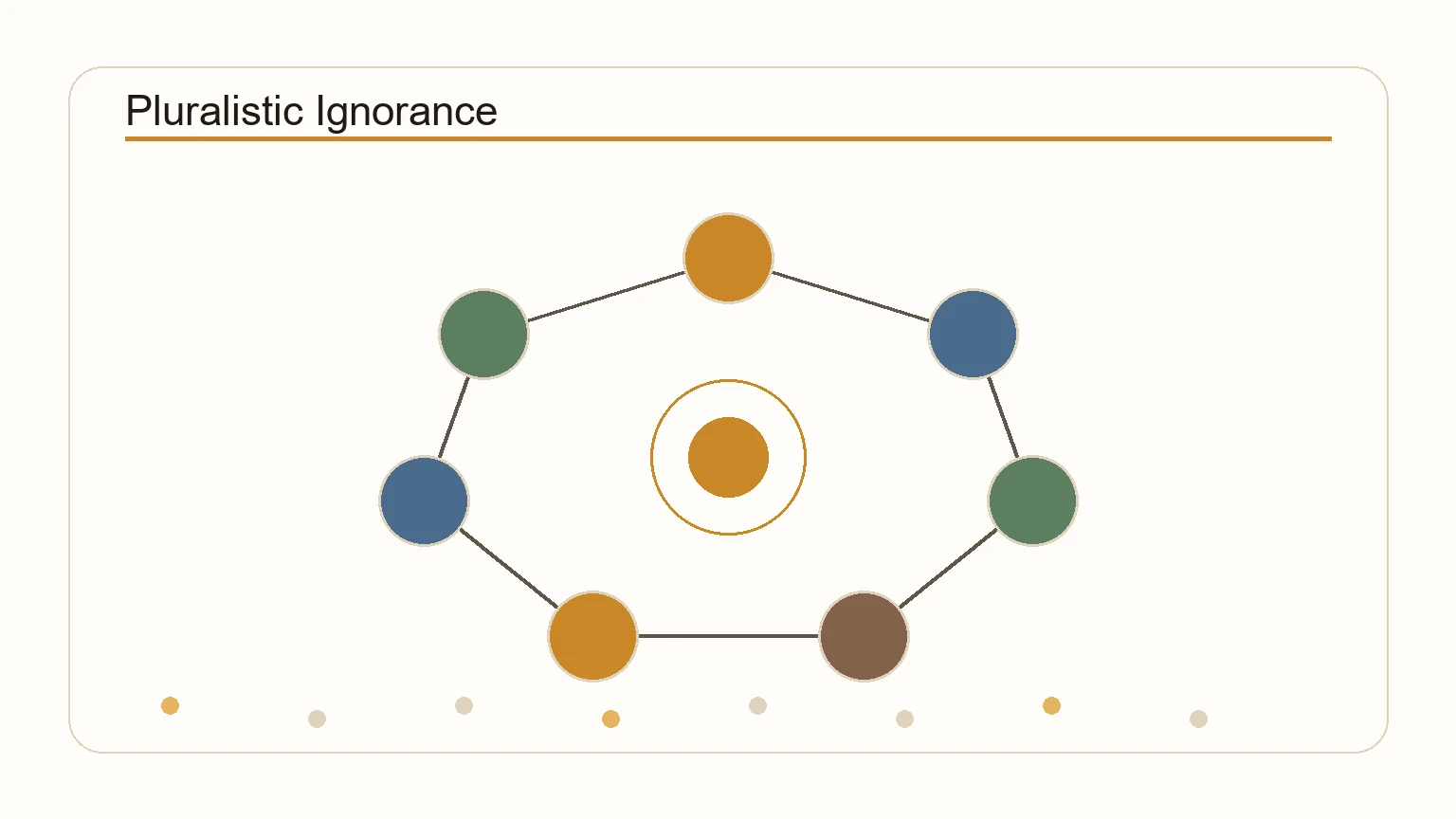
Diagram showing pluralistic ignorance and the gap between private and public opinion
A diagram showing how people privately disagree but publicly agree.

Where this idea shows up outside the textbook.

History

The emperor's new clothes is the classic example. Everyone sees the emperor is naked. No one says anything.

Meetings

Everyone agrees in a meeting. No one believes it. Everyone assumes others agree. Pluralistic ignorance is the cause.

Social Norms

People follow norms they do not believe in. They assume others believe. Pluralistic ignorance is the cause.

Everyday Life

You stay silent in a group. You think you are the only one who disagrees. You are not. Pluralistic ignorance is the cause.

CONCEPT MAP

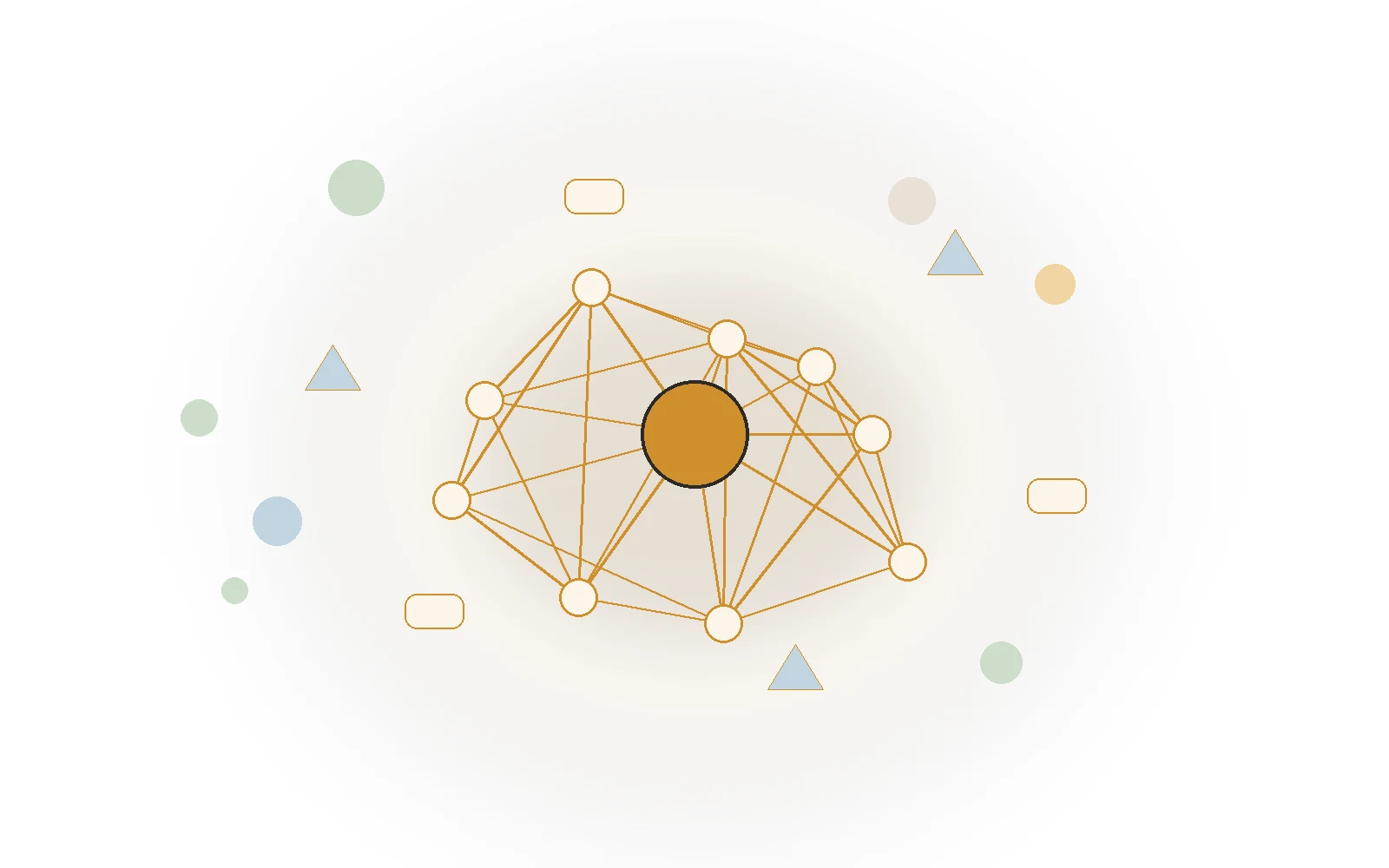
Every idea has neighbors. This is where the current concept sits in the TinyThat knowledge graph.

Current concept

Pluralistic Ignorance

Most people privately disagree but think everyone else agrees.

What people often get wrong about this idea.

Pluralistic ignorance means people are hypocrites.

No. It means people are social. They follow the crowd. They assume others know something they do not.

Pluralistic ignorance only applies to groups.

No. It applies to societies, cultures, and organizations. Anywhere there is social pressure.

You can eliminate pluralistic ignorance.

You cannot eliminate it. You can only speak up. The goal is to break the silence.

Three simple ways to apply the idea without turning it into a slogan.

1

When you disagree, speak up

When you disagree, speak up. You are not alone. Others share your doubts.

2

Create psychological safety

Create psychological safety. People need to feel safe to disagree.

3

Be aware of the bias in groups

Be aware of the bias in groups. Public agreement is not the same as private belief.

EXPLORE NEXT

The best next ideas to read after this one.

Quick answers to common questions.

What is pluralistic ignorance in simple terms?

Everyone privately disagrees but publicly agrees. You stay silent. Everyone else does the same.

What is an example of pluralistic ignorance?

A meeting where everyone agrees but no one believes it. That is pluralistic ignorance.

How do you avoid pluralistic ignorance?

Speak up. You are not alone. Others share your doubts. Break the silence.
Why is pluralistic ignorance a problem?

It prevents real discussion. Bad decisions are made. Norms persist that no one believes in.