COGNITIVE BIAS

What Is Authority Bias? Why We Trust People in Power

A man in a white coat tells you to take a pill. You take it. A stranger in casual clothes tells you the same thing. You hesitate. Authority bias is the cause.

Editorial illustration of a person in a white coat giving orders to someone
Creator Stanley MilgramOrigin PsychologyYear 1960sCategory Psychology

QUICK ANSWER

Here is the idea in plain English.

Authority bias is the tendency to attribute greater credibility to authority figures and follow their lead. It was identified by psychologist Stanley Milgram in his obedience experiments. The bias explains why people defer to experts, leaders, and people in uniform. It is a powerful force in decision making, but it can also lead to errors.

If you remember only a few things, remember these.

The basic move

Authority bias is simple: you trust authority figures. A doctor tells you something. You believe it. A stranger tells you the same thing. You doubt it. The authority makes the difference.

Why it matters

The bias is not about being stupid. It is about being efficient. Trusting authority is usually a good shortcut. But it can also lead to errors.

Use it deliberately

When evaluating a claim, ask: is this person an authority? What makes them an authority? Are they right?

CORE IDEA

The concept in its simplest useful form.

What Does Authority Bias Mean in Simple Terms?

Authority bias is simple: you trust authority figures. A doctor tells you something. You believe it. A stranger tells you the same thing. You doubt it. The authority makes the difference.

The bias is not about being stupid. It is about being efficient. Trusting authority is usually a good shortcut. But it can also lead to errors.

The problem is that authority is not always right. Experts can be wrong. Leaders can be bad. The bias makes you trust them anyway.
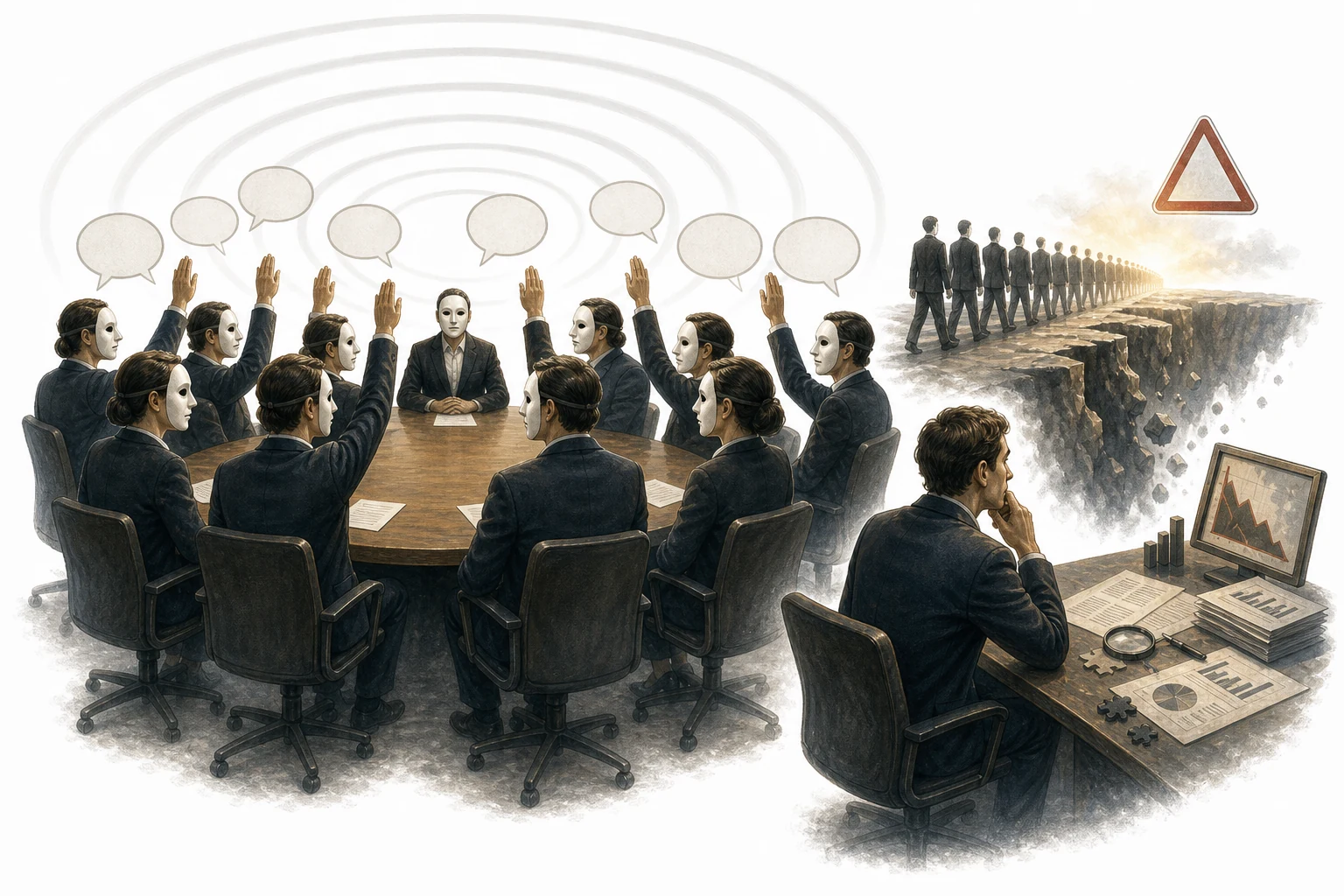
The small mechanism underneath the big idea.

01

The Story Behind Authority Bias

In the 1960s, Stanley Milgram conducted a famous experiment. He asked participants to administer electric shocks to a person in another room. The person was actually an actor. The shocks were fake. But the participants did not know that.

When an authority figure told them to continue, most participants continued. They obeyed authority, even when they thought they were harming someone. The experiment was shocking. It showed how powerful authority bias is.

Today, authority bias is a foundational concept in psychology. It explains why people follow orders, trust experts, and defer to leaders.

02

Why Authority Bias Became Famous

Authority bias became famous because of Milgram's experiments. The experiments showed how powerful obedience to authority can be. People will harm others if an authority tells them to.

The concept is widely used in psychology, marketing, and leadership.

Today, authority bias is a foundational concept in psychology.

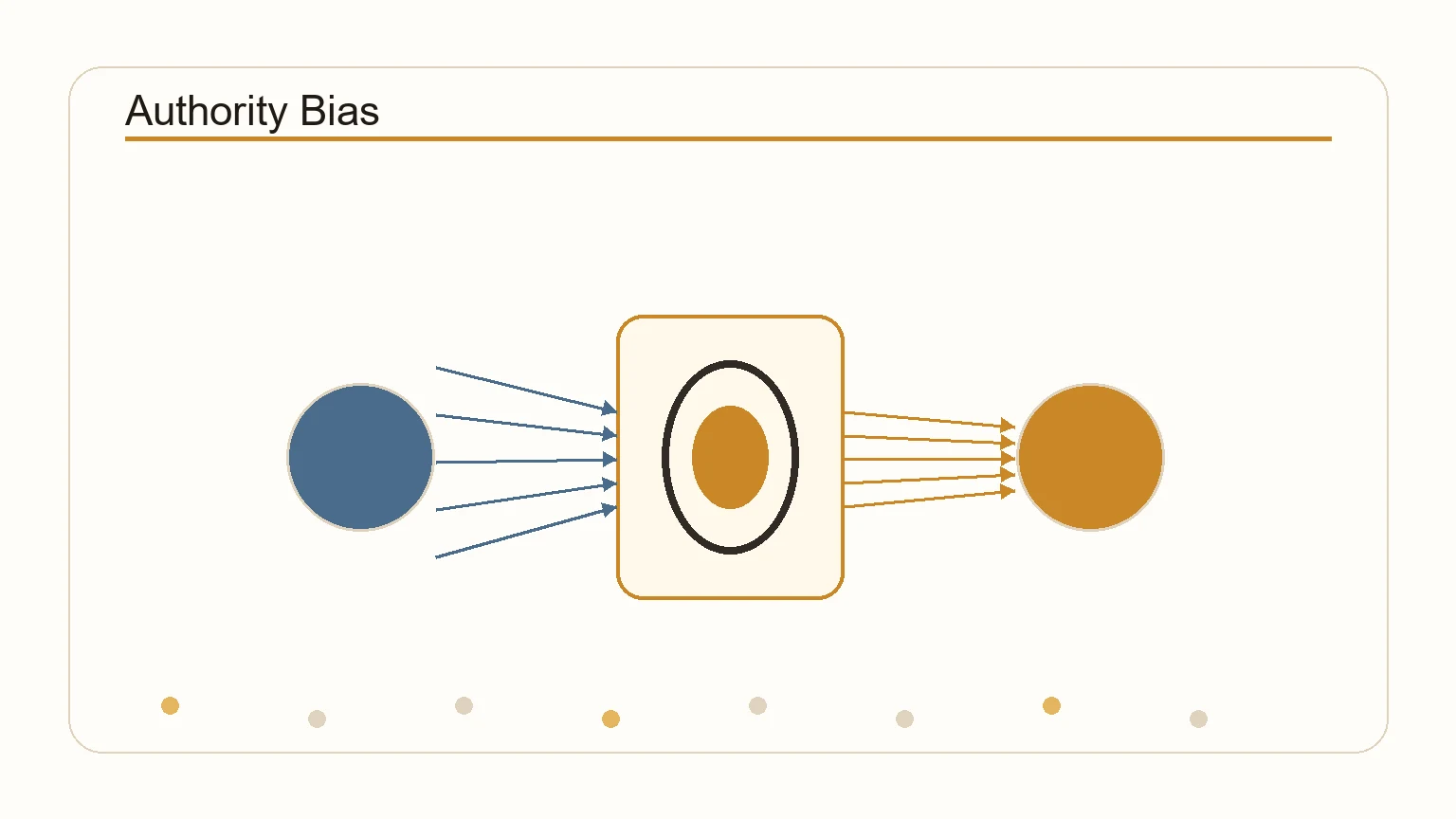
Diagram showing how authority figures influence decisions
A diagram showing how authority figures influence decisions and why we trust them.

Where this idea shows up outside the textbook.

History

Milgram's experiments are the classic example. Participants obeyed authority, even when they thought they were harming someone.

Medicine

You trust a doctor's advice without question. The authority bias is the cause.

Marketing

Advertisers use authority figures to sell products. A doctor recommends a toothpaste. You buy it.

Everyday Life

You trust a police officer. You follow their instructions. Authority bias is the cause.

CONCEPT MAP

Every idea has neighbors. This is where the current concept sits in the TinyThat knowledge graph.

Current concept

Authority Bias

People give extra weight to authority figures.

What people often get wrong about this idea.

Authority bias means people are sheep.

No. It means people are efficient. Trusting authority is usually a good shortcut. The problem is when authority is wrong.

Authority bias only applies to authority figures.

No. It applies to anyone with perceived authority. Experts, leaders, and people in uniform are all authority figures.

You can eliminate authority bias.

You cannot eliminate it. You can only recognize it. The goal is to be aware of the bias.

Three simple ways to apply the idea without turning it into a slogan.

1

When evaluating a claim, ask: is this person an authority? What makes them an authority? Are they right?

When evaluating a claim, ask: is this person an authority? What makes them an authority? Are they right?

2

Be skeptical of authority

Be skeptical of authority. Experts can be wrong. Leaders can be bad.

3

Consider the source

Consider the source. Authority is not always right.

EXPLORE NEXT

The best next ideas to read after this one.

Quick answers to common questions.

What is authority bias in simple terms?

You trust authority figures more than others. A doctor's advice is trusted more than a stranger's advice. The authority makes the difference.

What is an example of authority bias?

You trust a doctor's advice without question. A stranger tells you the same thing. You are less certain. That is authority bias.

How do you avoid authority bias?

Be skeptical of authority. Experts can be wrong. Leaders can be bad. Consider the source.

Why is authority bias a problem?

It can lead to errors. You trust authority even when they are wrong. The bias is a shortcut that can mislead.