The male larynx can grow so rapidly during puberty that the vocal cords lengthen by around sixty percent in a relatively short span, a major driver of voice cracking during this period.
Body & Brain
Why does the human voice crack?
Why Does Your Voice Crack?
Right in the middle of a sentence, a voice can suddenly jump, break, or squeak in a way the speaker never intended and usually can't control.
On this page
The short answer
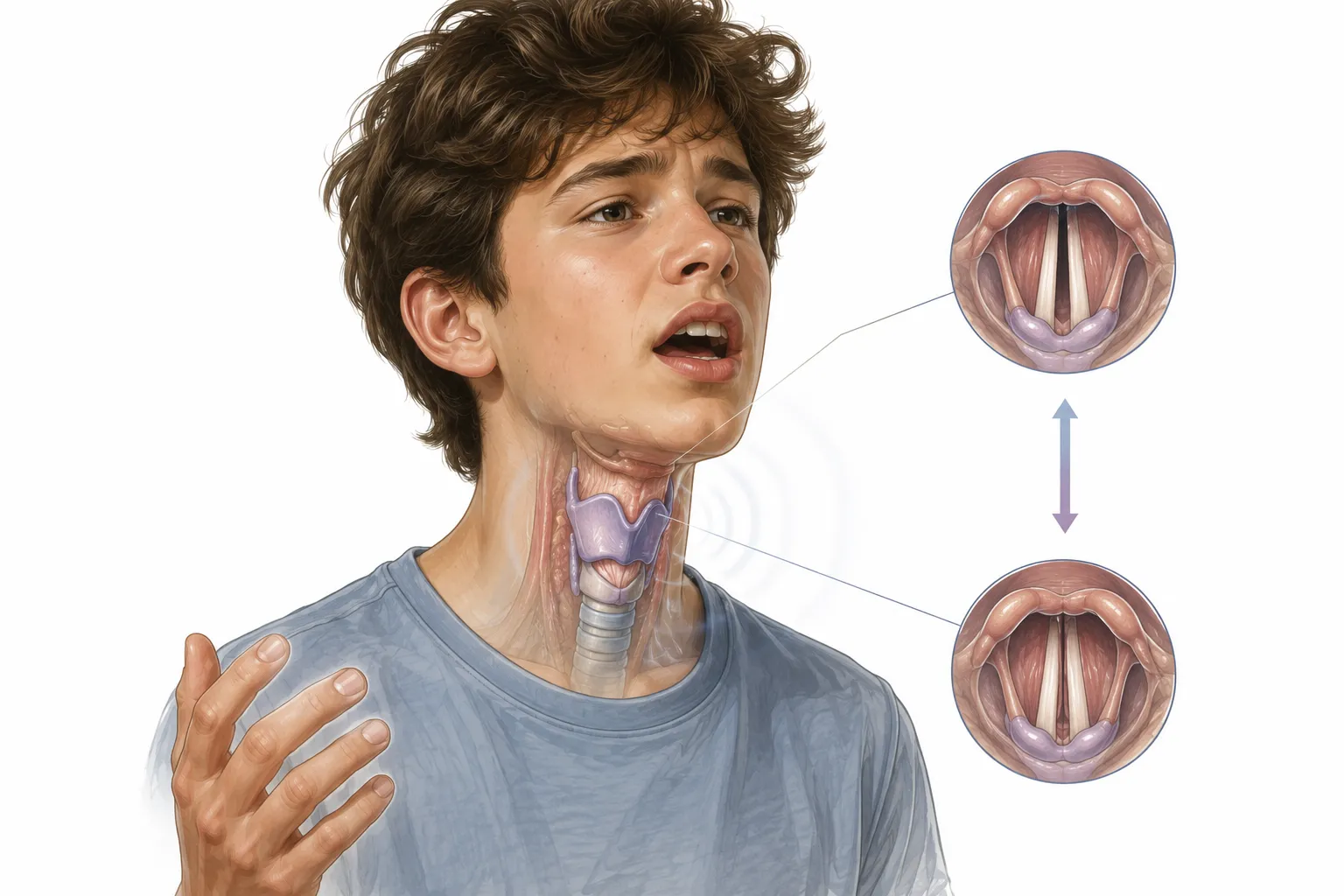
Voice cracks happen when the vocal cords abruptly and unevenly switch between two different modes of vibration, chest voice and head voice, usually triggered by rapid changes in vocal cord tension, length, or airflow, which is especially common during puberty when the vocal cords and surrounding cartilage are still growing.
The vocal cords can vibrate in at least two distinct patterns to produce sound: a fuller, thicker vibration commonly called chest voice, used for lower pitches, and a thinner, more stretched vibration called head voice or falsetto, used for higher pitches. Moving between these two registers requires precise, coordinated changes in the tension and length of the vocal cords, controlled by small laryngeal muscles. When that transition happens abruptly, unevenly, or with mismatched airflow, the vocal cords can briefly fail to vibrate consistently in either mode, producing the sudden pitch break heard as a crack. During puberty, rapid growth of the larynx and vocal cords, especially in males, makes this transition harder to control consistently, which is why voice cracking is strongly associated with adolescence, though it can happen at any age under vocal strain, illness, or fatigue.
At a glance
Chest voice relies on the full mass of the vocal cords engaging together.
A cracking voice means something is wrong with the vocal cords.
Professional singers deliberately train to control the exact same mechanical switch that causes an embarrassing crack, because the transition point is also the key to hitting certain high notes cleanly.
Picture a car briefly slipping between two gears during a shift, a momentary stutter in power delivery before it settles into the new gear. A voice crack is a similar kind of stutter between two vibration patterns in the vocal cords.
Diagram
Why Does Your Voice Crack: the idea in one diagram
Voice cracking occurs when the vocal cords fail to smoothly transition between chest voice and head voice vibration modes, most commonly due to rapid anatomical growth during puberty or momentary loss of muscular control.
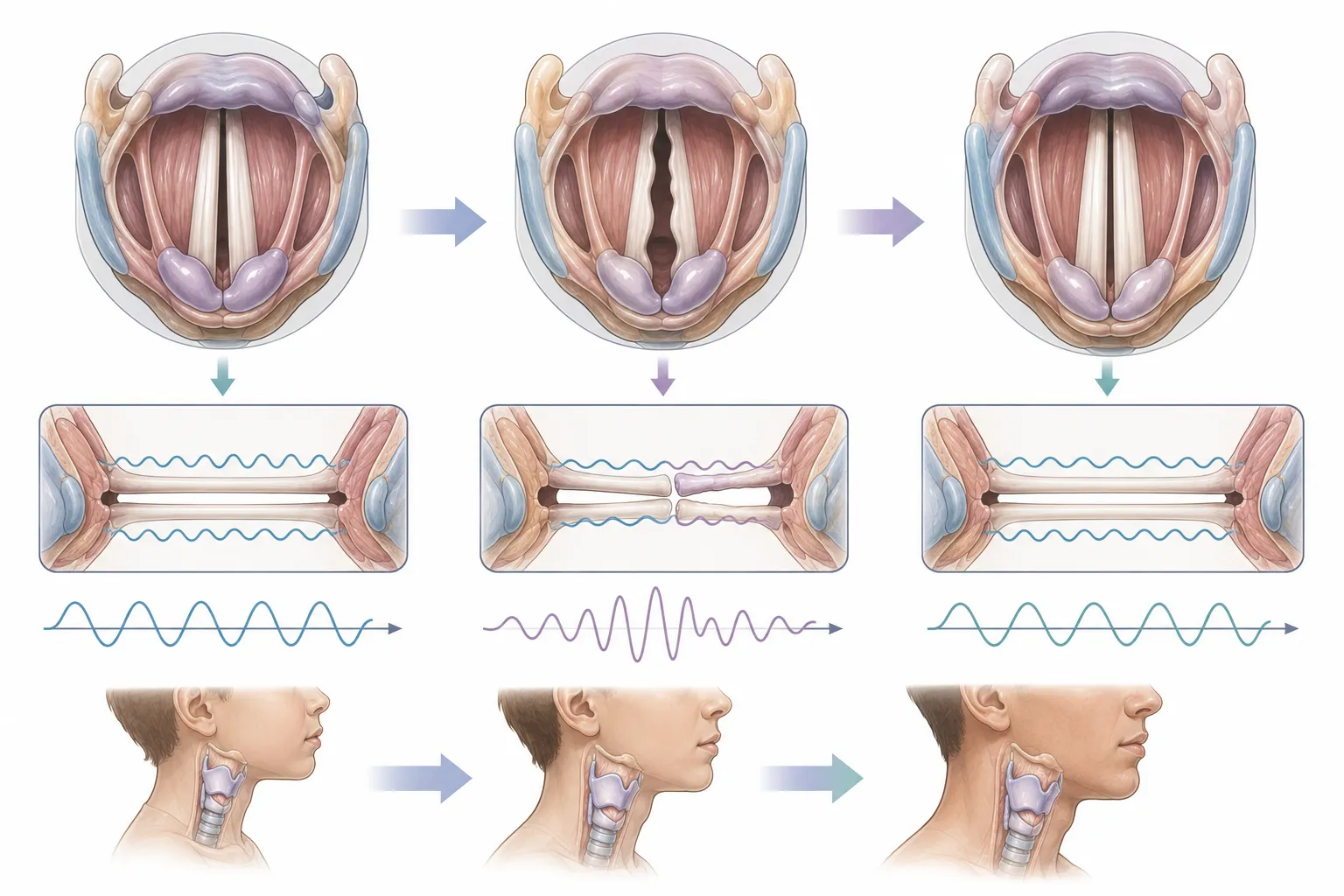
- 1Vocal cords vibrate in chest voice for lower pitches
Chest voice relies on the full mass of the vocal cords engaging together.
- 2Vocal cords shift to head voice for higher pitches
Head voice requires a different physical vibration pattern entirely, not just more effort.
- 3Small laryngeal muscles control the transition
The transition depends on delicate muscular timing that can easily be disrupted.
- 4A mismatch causes a brief break in vibration
The crack is a momentary mechanical gap, not a sign of vocal damage.
How it works
The mechanism
Voice cracking occurs when the vocal cords fail to smoothly transition between chest voice and head voice vibration modes, most commonly due to rapid anatomical growth during puberty or momentary loss of muscular control.
- Step 01
Vocal cords vibrate in chest voice for lower pitches
For lower-pitched speech and singing, the vocal cords vibrate along their full length and thickness, producing a fuller sound.
Like a thick guitar string vibrating for a deeper, fuller tone.
Chest voice relies on the full mass of the vocal cords engaging together.
- Step 02
Vocal cords shift to head voice for higher pitches
For higher pitches, the vocal cords stretch, thin, and vibrate along a smaller portion of their length, producing a lighter sound.
Like tightening a guitar string to raise its pitch, changing how it vibrates.
Head voice requires a different physical vibration pattern entirely, not just more effort.
- Step 03
Small laryngeal muscles control the transition
Precise, coordinated activity in small muscles within the larynx manages the shift in vocal cord tension and length needed to move smoothly between the two modes.
Like fine steering adjustments needed to merge smoothly onto a different lane of traffic.
The transition depends on delicate muscular timing that can easily be disrupted.
- Step 04
A mismatch causes a brief break in vibration
If the muscular coordination is off, due to rapid growth, tension, fatigue, or illness, the vocal cords can briefly fail to vibrate consistently in either mode, producing the audible crack.
Like a car briefly losing power mid-gear-shift before settling into the new gear.
The crack is a momentary mechanical gap, not a sign of vocal damage.
Surprises
Facts worth sitting with
The male larynx can grow so rapidly during puberty that the vocal cords lengthen by around sixty percent in a relatively short span, a major driver of voice cracking during this period.
Surprising facts
What seems backwards
Worth comparing
In everyday life
Easy to get wrong
Pressure points
Where the simple answer gets interesting
Why is voice cracking so much more noticeable in teenage boys?
Testosterone during male puberty drives rapid, substantial growth of the larynx and vocal cords, a much larger anatomical change than occurs in female puberty, which makes consistent muscular control over pitch transitions significantly harder to maintain during that period.
The same hormone responsible for the deeper adult male voice is also responsible for making the transition to get there so unpredictable.
Can adults still experience voice cracking?
Yes, adults can crack their voice under vocal fatigue, illness, dehydration, nervousness, or when singing or speaking near the extreme edges of their vocal range, since the same chest-to-head voice transition mechanism remains active throughout life.
The mechanism never goes away, it just becomes easier to control with practice and stable anatomy.
Why do singers deliberately train the same mechanism that causes cracking?
Because the transition between chest and head voice is unavoidable when singing across a wide vocal range, singers train to control it smoothly rather than avoid it, turning what causes an amateur's crack into a controlled, sometimes stylistic tool.
The exact glitch most people try to hide becomes, with training, a deliberate skill.
Behind the science
The story behind it
Vocal coaches training singers through the passaggio
Vocal instructors specifically train singers to navigate the transition zone between chest and head voice, often called the passaggio, to avoid audible cracks during performance.
This demonstrates that the mechanism behind everyday voice cracking is a well-studied, trainable part of professional vocal technique.
What looks like an uncontrollable glitch can, with the right training, become a controllable skill.
Laryngoscopic studies of vocal cord behavior during pitch breaks
Researchers used imaging to observe vocal cord movement in real time during voice cracks, capturing the moment vibration mode switches abruptly.
The imaging confirmed that cracks correspond to a genuine, visible shift in vocal cord vibration pattern, not merely a perceived change in pitch.
Clarify
Myth and reality
Myth
A cracking voice means something is wrong with the vocal cords.
Reality
In the vast majority of cases, voice cracking is a normal mechanical event caused by rapid growth, tension, or fatigue, not an indication of vocal cord damage.
Evidence
Laryngoscopic studies consistently show cracking corresponds to a temporary shift in vibration mode rather than any structural abnormality.
Looking closer
The deeper pattern
A voice crack exposes the moment control briefly slips between two competing systems trying to do the same job.
One way to think about it
Transitions, whether in a voice, a skill, or a system, are almost always the most unstable and revealing points, since that's exactly where old and new methods have to hand off control to each other.
The weak point in most systems isn't the extremes, it's the transition between them.
Limits
Where the explanation bends
Vocal cord illness or inflammation, such as laryngitis.
Swelling or irritation of the vocal cords can make the transition between vibration modes considerably harder to control, increasing the likelihood of cracking even in adults with typically stable voices.
The same mechanism that trips up teenagers can resurface temporarily in anyone whose vocal cords are compromised.
In daily life
What this helps you notice
Understanding voice cracking as a normal developmental and mechanical process can reduce embarrassment, particularly for teenagers going through puberty.
Speech and vocal coaches often reassure students that occasional cracking, especially during vocal range extremes, is a normal and manageable part of vocal development.
Remember
Key takeaways
- 1
Voice cracks happen when the vocal cords abruptly switch between chest voice and head voice vibration modes.
- 2
Rapid larynx growth during male puberty makes this transition especially hard to control consistently.
- 3
Adults can also crack their voice under fatigue, illness, tension, or extreme vocal range.
- 4
Trained singers deliberately practice controlling the same transition mechanism responsible for cracking.
- 5
Voice cracking is a normal mechanical event, not typically a sign of vocal cord damage.
A voice crack isn't your voice failing, it's two entirely different vibration systems briefly colliding at the exact seam where they're supposed to hand off control to each other.
The same mechanical hiccup that makes a teenager wince mid-sentence is, with enough practice, the very tool a trained singer uses to hit their most impressive high notes.
Read around the idea
More questions with the same curious pull
Nearby doors from the TinyThat archive, chosen by topic, intent, and reader curiosity.
Body & Brain
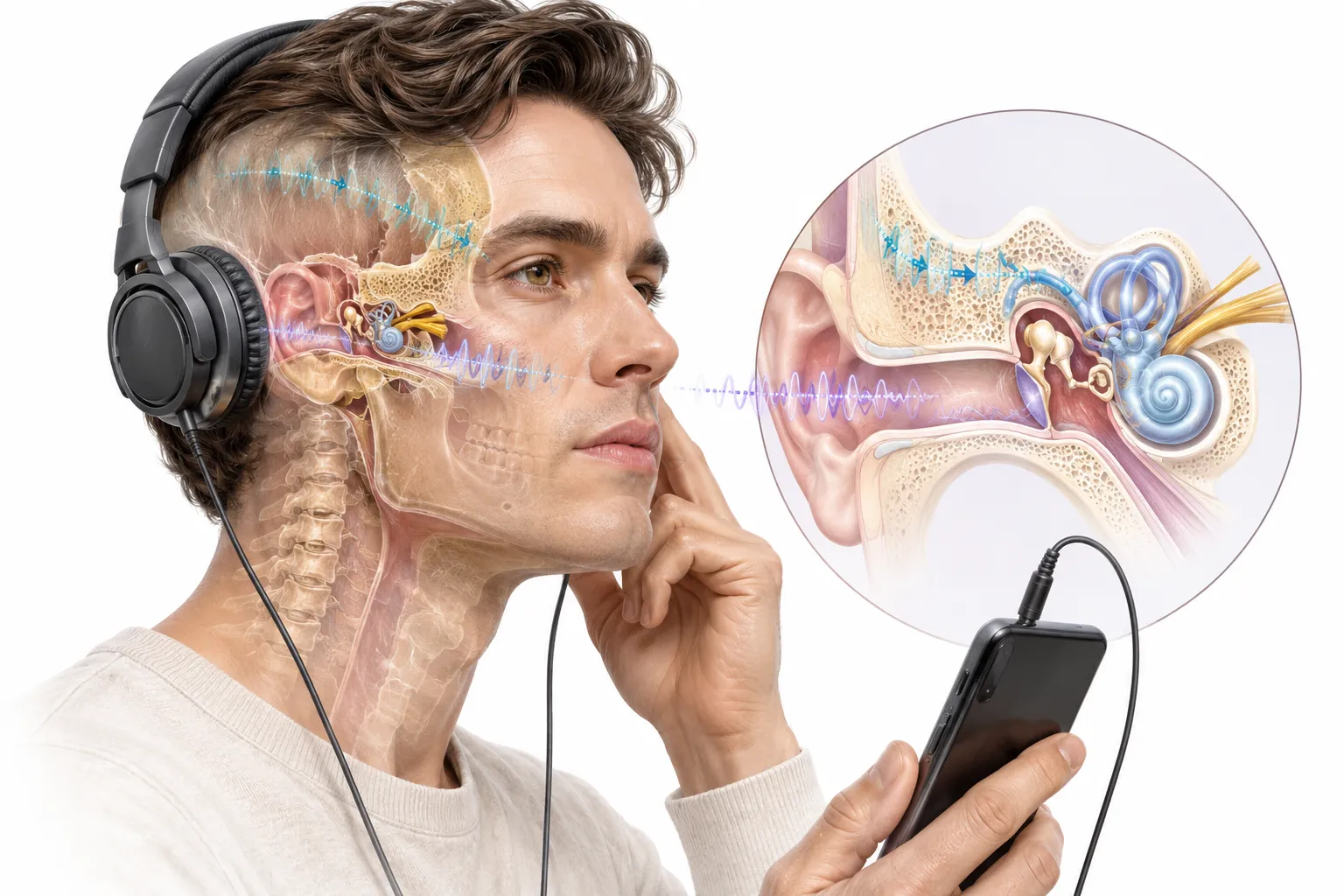
Why Does Your Voice Sound Different on a Recording?
Normal voice perception blends air-conducted and bone-conducted sound, while recordings capture only the air-conducte...
Body & Brain
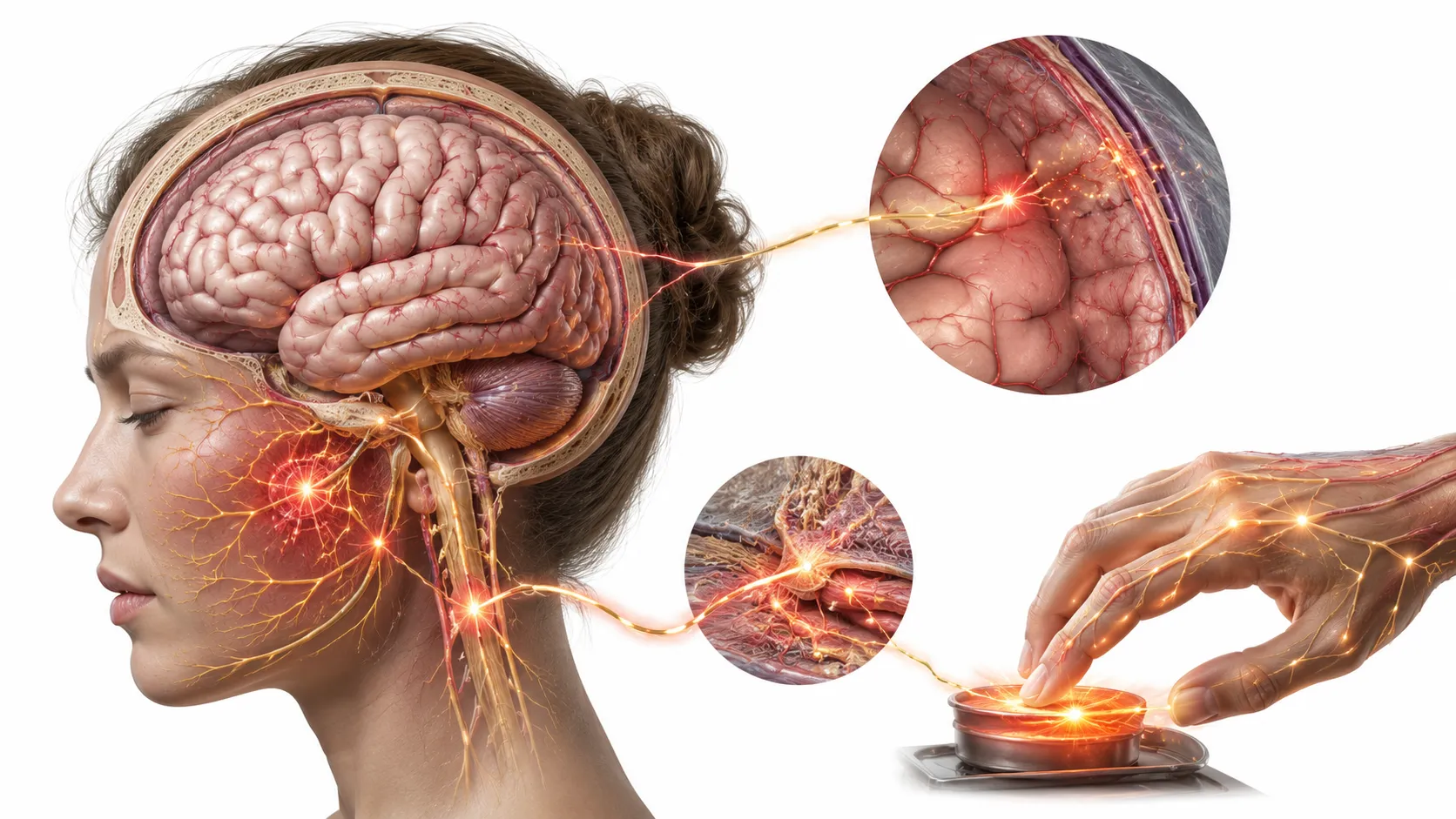
Can the Brain Feel Pain?
The brain controls all pain in your body, yet it cannot feel pain itself. Discover why, and what this strange fact re...

Body & Brain
Does Your Brain Eat Itself?
Your brain really does consume parts of itself. Learn about autophagy, synaptic pruning, and why self-consumption is...