Neuroinflammation can occur without any obvious fever or physical symptoms.
Body & Brain
What causes brain fog?
Why Does Brain Fog Happen?
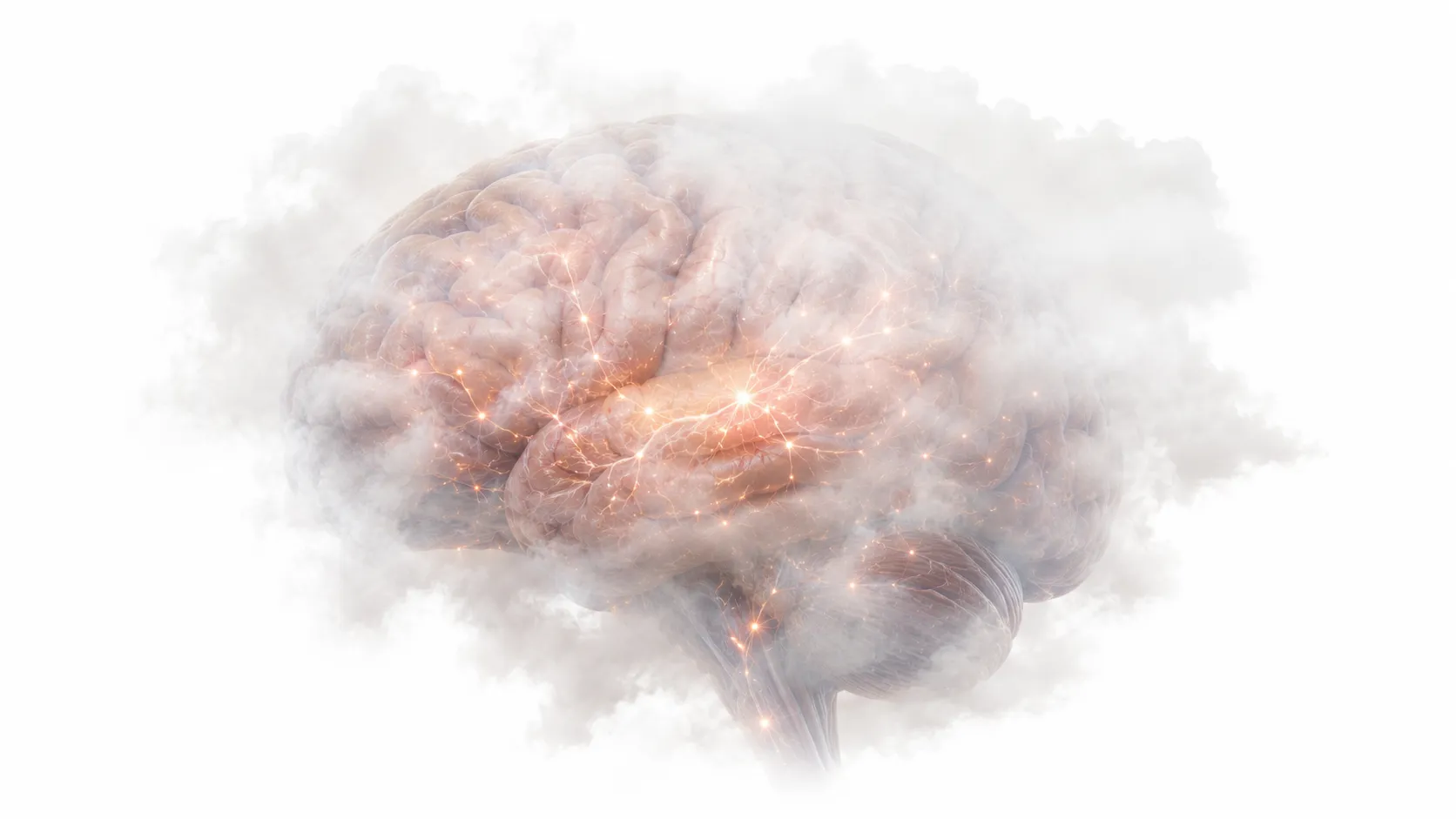
You know exactly what the word for it is but you cannot find it. You reread the same sentence four times and still have no idea what it said. Your thoughts feel like they are arriving through wet cotton.
On this page
The short answer
Brain fog is caused by neuroinflammation, impaired neural signaling, hormonal disruption, or deficiencies in the chemical systems that allow neurons to communicate quickly and clearly.
The brain depends on a precise chemical environment to function at speed. When inflammation, poor sleep, hormonal shifts, metabolic disruption, or immune system activation disturb that environment, neural communication slows and becomes less reliable. The result is the subjective experience of fogginess: slow recall, poor concentration, difficulty forming sentences, and a general sense that the mental machinery is grinding rather than running.
At a glance
Fog can be an immune-system effect.
Brain fog means you just need more sleep.
Brain fog became one of the most-discussed neurological symptoms of the 21st century through COVID-19, which left millions of previously sharp-minded people suddenly unable to concentrate for months.
Imagine your thoughts as cars on a motorway. Brain fog is not a crash. It is inexplicably reduced speed limits across the entire network with no explanation posted.
Behind the science
The story behind it
The Long COVID Fog Epidemic
Following the 2020 pandemic, clinics worldwide began seeing patients who had recovered from acute COVID-19 infection but remained cognitively impaired for months.
Brain fog moved from a vague lay complaint to a subject of major neurological research almost overnight.
It sometimes takes a mass event to compel medicine to look carefully at what it had been dismissing.
Wiehler et al., glutamate accumulation and cognitive fatigue, 2022
Participants performing demanding cognitive tasks for hours showed measurable glutamate buildup in prefrontal synapses.
The brain was chemically saturated in a specific region, and the desire to stop working was a biochemically accurate response.
Diagram
Why Does Brain Fog Happen: the idea in one diagram
Brain fog appears when the systems that let neurons communicate quickly are slowed by inflammation, chemistry, blood flow, sleep loss, hormones, or metabolic strain.
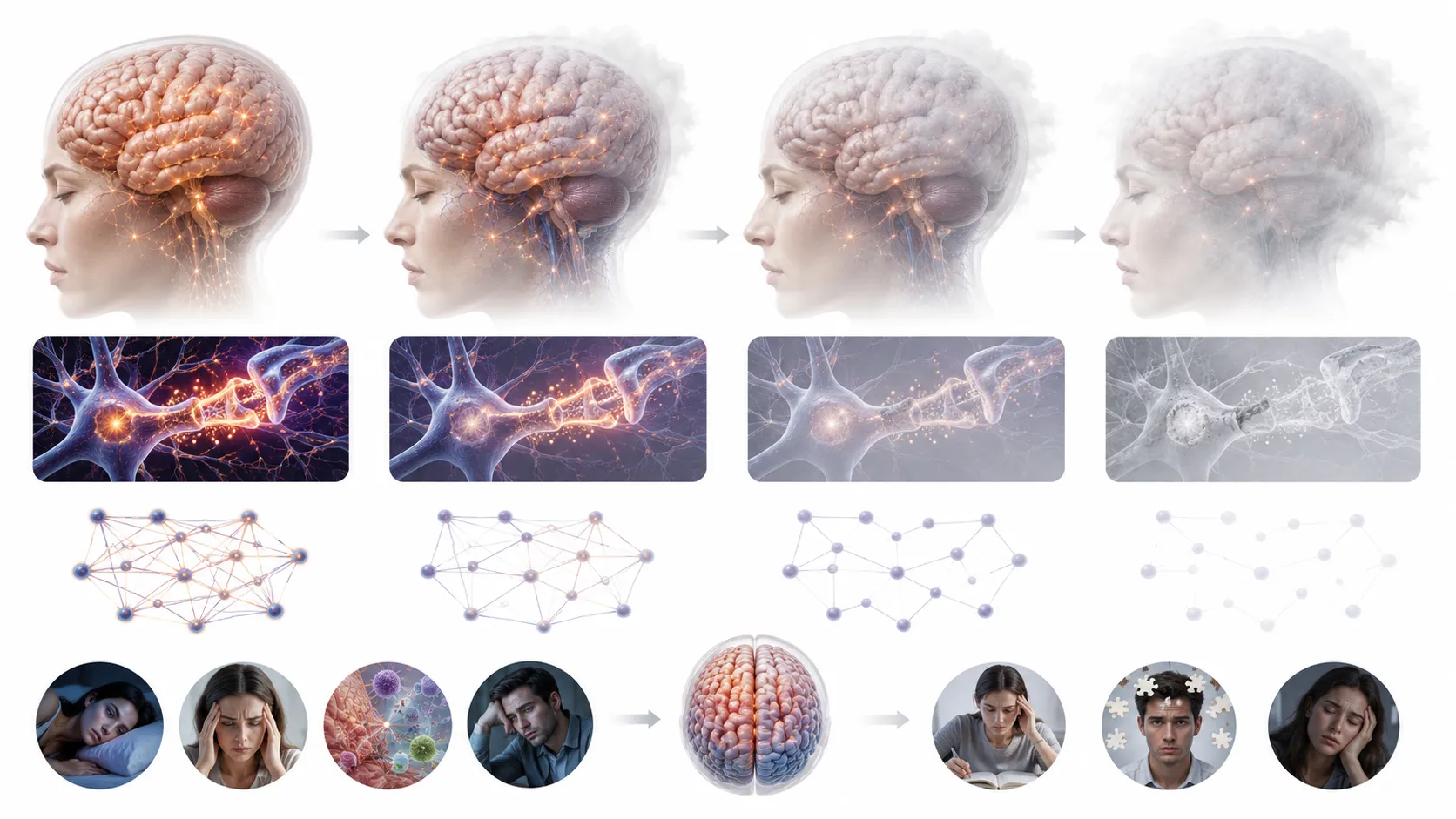
- 1Inflammation changes the signal environment
Fog can be an immune-system effect.
- 2The prefrontal cortex slows down
The fog often hits executive function first.
- 3Sleep, gut, and hormones change brain chemistry
Many body systems can produce cognitive symptoms.
How it works
The mechanism
Brain fog appears when the systems that let neurons communicate quickly are slowed by inflammation, chemistry, blood flow, sleep loss, hormones, or metabolic strain.
- Step 01
Inflammation changes the signal environment
Immune molecules can alter how neurons communicate, slowing processing and memory retrieval.
Rust on a precision instrument.
Fog can be an immune-system effect.
- Step 02
The prefrontal cortex slows down
Planning, working memory, word finding, and focus depend heavily on prefrontal circuits.
Reduced speed limits across the mental motorway.
The fog often hits executive function first.
- Step 03
Sleep, gut, and hormones change brain chemistry
Poor sleep, gut dysbiosis, thyroid changes, and metabolic swings can all disturb the chemical balance required for clear thinking.
A control room receiving noisy data from every sensor.
Many body systems can produce cognitive symptoms.
Clarify
Myth and reality
Myth
Brain fog means you just need more sleep.
Reality
Sleep deprivation is one cause, but brain fog can persist despite adequate sleep when driven by inflammation, hormonal imbalance, thyroid dysfunction, or post-viral immune activation.
Evidence
Long COVID fog has persisted in patients who sleep well and exercise regularly, pointing to mechanisms beyond simple fatigue.
Myth
Powering through brain fog trains the brain to be more resilient.
Reality
Attempting cognitively demanding work during neuroinflammation may extend impairment rather than building tolerance.
Evidence
Animal studies show that overworking an inflamed brain can extend the duration and severity of cognitive impairment.
Surprises
Facts worth sitting with
Neuroinflammation can occur without any obvious fever or physical symptoms.
Surprising facts
What seems backwards
Worth comparing
In everyday life
Easy to get wrong
Pressure points
Where the simple answer gets interesting
Why did COVID-19 cause brain fog in so many people?
Research has pointed to several mechanisms: microclots reducing cerebral blood flow, persistent immune activation causing neuroinflammation, reactivation of latent viruses, and possible direct effects on brain cells.
Long COVID fog was the first time tens of millions of people simultaneously experienced a phenomenon that had previously been poorly documented and widely dismissed.
Can mental exhaustion literally deplete the brain?
Yes, in a specific chemical sense. Intensive cognitive work can cause glutamate to accumulate in prefrontal cortex synapses, which the brain then suppresses to prevent toxicity.
The feeling of being mentally wiped out is not weakness. It is the brain detecting that its signaling chemistry is off-balance.
Does the gut actually affect brain clarity?
The gut-brain axis is now well-established. The gut communicates with the brain via the vagus nerve, and dysbiosis can produce inflammatory compounds that impair cognition.
Brain fog following antibiotic use or dietary changes now has a plausible cellular explanation.
Looking closer
The deeper pattern
Brain fog is often the brain enforcing a rest it cannot impose through normal fatigue signals.
One way to think about it
Cultures that treat cognitive performance as pure willpower systematically produce the neurochemical conditions that cause fog.
The fog is frequently a message. Ignoring it tends to make it permanent.
Limits
Where the explanation bends
Chemotherapy-related cognitive impairment, sometimes called chemo brain.
Patients undergoing chemotherapy frequently report severe brain fog lasting months or years after treatment ends.
Chemo brain was dismissed for years as anxiety or depression, but neuroimaging studies have confirmed measurable changes.
In daily life
What this helps you notice
Diet directly affects brain clarity through inflammatory pathways, making food choices a neurological decision as much as a metabolic one.
Diets high in ultra-processed food consistently show associations with worse cognitive performance and higher rates of depression.
Recognizing brain fog as a biological signal changes the response from willpower to investigation.
Persistent brain fog unresolved by sleep and lifestyle changes warrants screening for thyroid dysfunction, sleep disorders, and nutritional deficiencies.
Remember
Key takeaways
- 1
Brain fog is a measurable neurological symptom, not a vague complaint.
- 2
Neuroinflammation, glutamate buildup, poor sleep, and gut dysbiosis are among its main causes.
- 3
Long COVID demonstrated that brain fog can persist for months with detectable changes in brain structure.
- 4
Cognitive fatigue involves real chemical saturation in the prefrontal cortex, not just willpower failure.
- 5
Persistent brain fog warrants investigation for treatable underlying causes.
Brain fog is often the brain doing exactly what it was designed to do: slow itself down before it breaks.
The fog is not a failure of effort. It is a chemical bulletin from a brain under strain, written in the only language it has available when you refuse to read the earlier, quieter ones.
Read around the idea
More questions with the same curious pull
Nearby doors from the TinyThat archive, chosen by topic, intent, and reader curiosity.
Body & Brain
Does Your Brain Eat Itself?
Yes, through autophagy and synaptic pruning.
Body & Brain
Can the Brain Feel Pain?
The brain controls all pain in your body, yet it cannot feel pain itself. Discover why, and what this strange fact re...
Body & Brain
Why Do Fish Sleep?
Fish do sleep, but not the way you'd expect. Learn how fish rest without eyelids, what sleep looks like underwater, a...