Visual answer
Why One Leg May Be Better Than Two
The posture reduces heat loss while taking advantage of specialized leg anatomy.
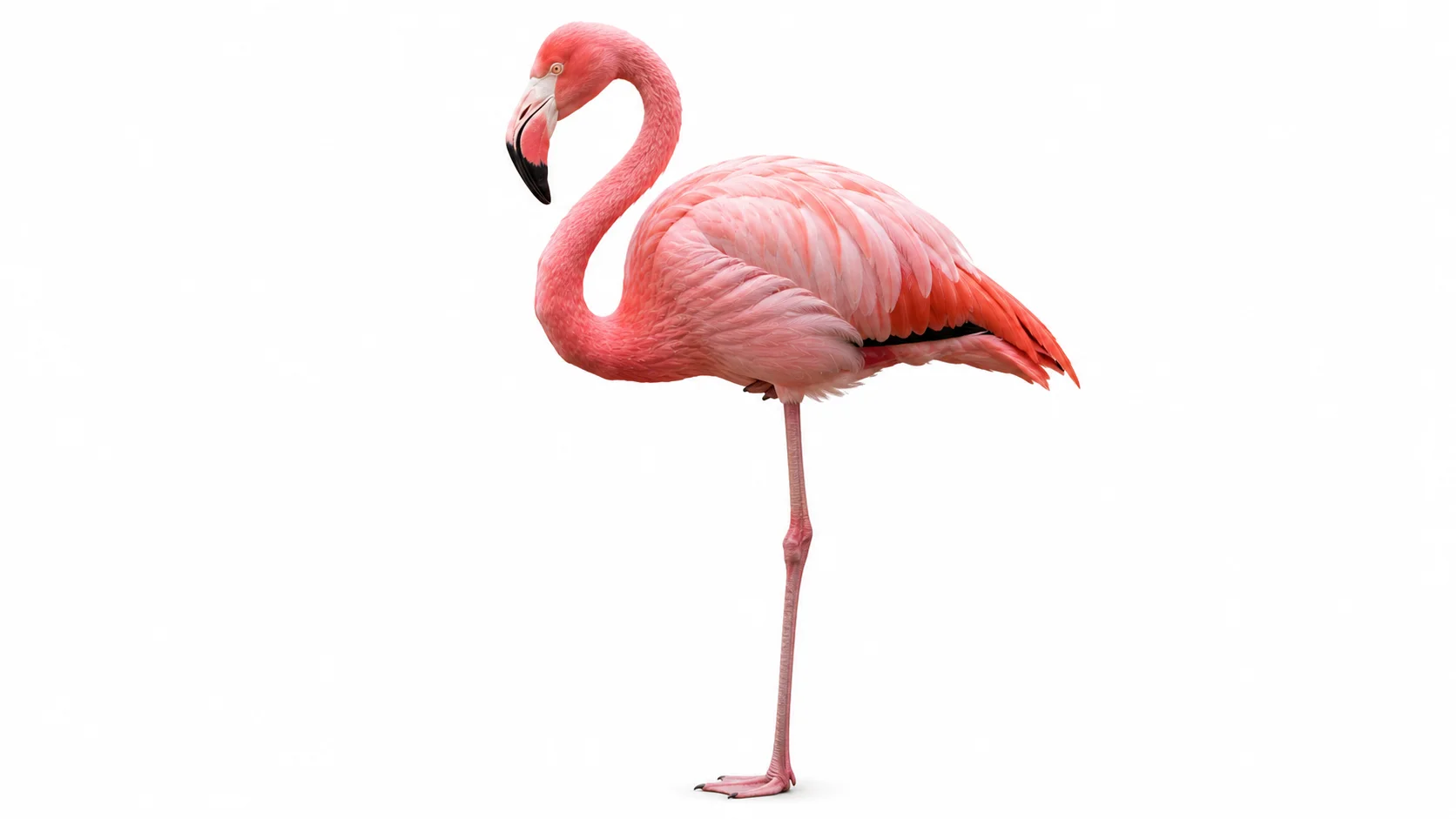
One leg tucked
The hidden leg stays close to the warm body rather than remaining exposed.
Less heat loss
Reducing exposed surface area helps conserve body heat.
Joint locking system
The leg can support the bird with surprisingly little muscular effort.
Long-term stability
The flamingo can remain balanced for extended periods.
The mystery
The Posture Seems Backward
Most animals become more stable by increasing the number of points touching the ground.
A table with four legs is more stable than a table with three.
A person standing on two feet is more stable than a person standing on one.
Flamingos appear to ignore this rule completely.
They voluntarily remove one leg from the equation and somehow remain balanced for hours.
The behavior seems so inefficient that scientists spent decades trying to understand why it exists.
Heat conservation
Cold Water Creates a Problem
Many flamingos spend large amounts of time standing in water.
Water removes heat from the body much faster than air.
Their long legs are useful for feeding, but they also create a challenge.
Every inch of exposed skin becomes a potential route for heat loss.
By lifting one leg and tucking it into the feathers, the bird reduces the amount of body surface exposed to the environment.
In effect, the flamingo temporarily hides half of its heat-loss problem.
The leg lock
The Bird Is Not Working as Hard as It Looks
If humans tried this posture for hours, our muscles would quickly become exhausted.
Flamingos have an advantage we do not.
Their joints and tendons can align in a way that creates remarkable passive stability.
Once the bird settles into the correct position, relatively little muscular effort is required.
The flamingo is not constantly fighting gravity.
Instead, its anatomy does much of the work.
What looks like athletic skill is partly clever engineering.
While sleeping
They Even Do It While Asleep
Perhaps the strongest clue comes from sleeping flamingos.
Many birds stand on one leg while resting or sleeping.
That would be a strange choice if the posture required constant concentration.
Instead, it suggests the position is comfortable and energy-efficient.
The bird can remain stable without devoting much attention to balance.
For a sleeping animal, that is an enormous advantage.
Not just flamingos
Flamingos Are Not Alone
Although flamingos are the most famous examples, they are not the only birds that do this.
Herons, storks, ducks, geese, and several other water birds also spend time standing on one leg.
The exact balance between heat conservation and energy savings may vary by species.
But the pattern appears often enough to suggest a genuine biological benefit.
Nature rarely preserves a behavior this widespread without a good reason.
One-legged standing looks strange because humans cannot do it easily. To many birds, it is perfectly normal.
Myth vs reality
Myth vs Reality
What people think
Flamingos stand on one leg because the other leg gets tired
Many people assume the bird simply alternates legs the way a person might shift weight while standing.
What actually happens
The posture appears to conserve heat and energy
Research suggests the behavior reduces heat loss and takes advantage of specialized leg anatomy that allows stable standing with minimal effort.
Quick answers
Common questions
Do flamingos switch legs? +
Yes. Flamingos commonly alternate which leg is tucked against the body.
Can flamingos sleep standing on one leg? +
Yes. Many flamingos sleep in this position, suggesting it is comfortable and energy-efficient.
Is the posture mainly for warmth? +
Heat conservation is currently one of the strongest explanations, although energy efficiency and biomechanics also appear important.
Do other birds stand on one leg too? +
Yes. Herons, storks, ducks, geese, and several other water birds have been observed using similar postures.