Visual answer
How escalator side brushes protect feet
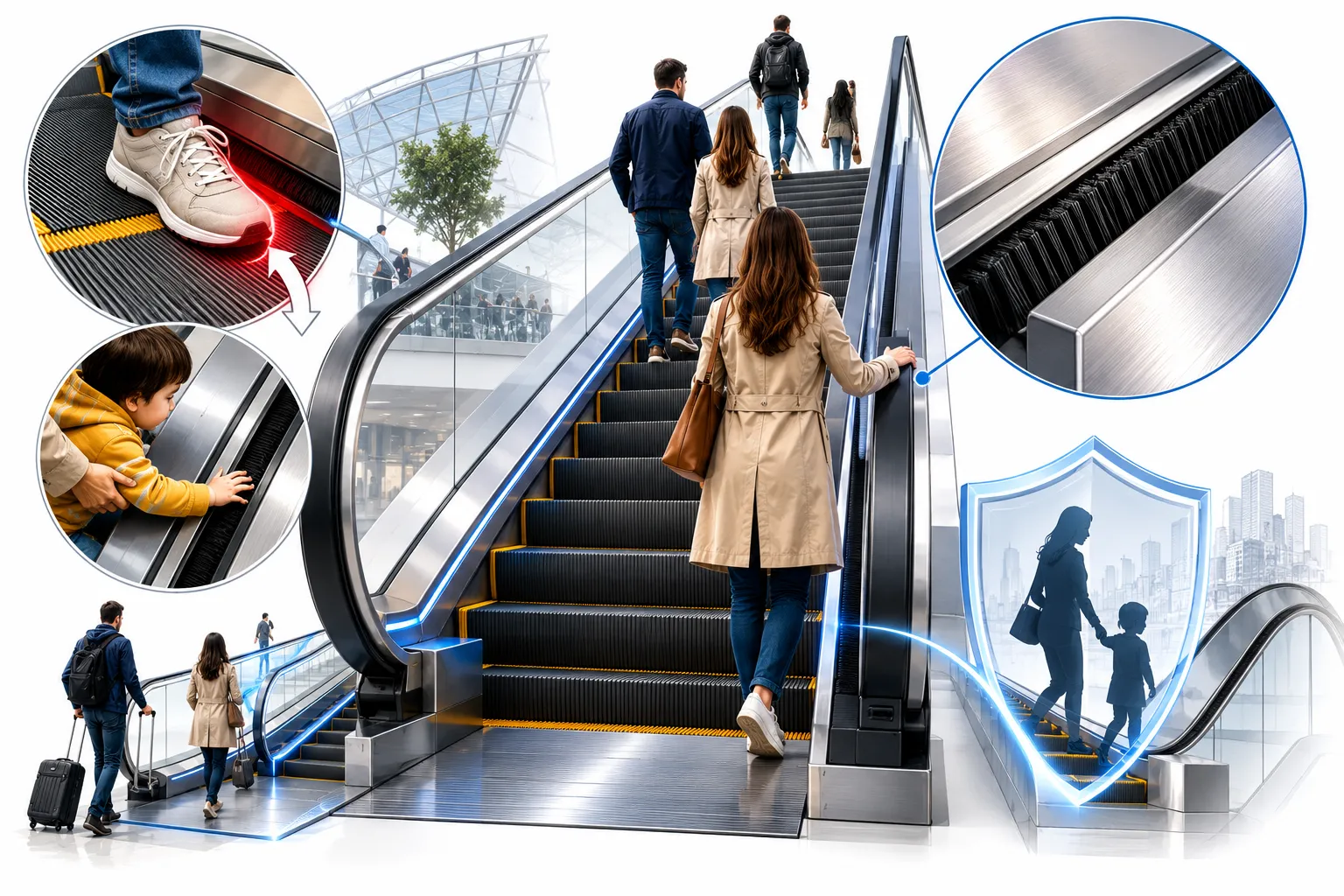
The diagram highlights the skirt gap, the moving step, and the brush line that nudges shoes and clothing away before they can be trapped.
Moving step
The escalator step moves past a fixed side panel with only a small clearance.
Skirt gap
This narrow gap can trap soft shoes, loose fabric, or bag straps.
Brush warning
The bristles create a harmless tactile warning that pushes people away from the edge.
The Safety Story
The Gap That Can Trap a Shoe
Current state
The gap between an escalator step and the side panel (called the skirt) is deliberately engineered to be as small as possible, but it can never be zero. Machinery needs some clearance to move. That gap is typically only a few millimetres wide, but the mechanical forces involved are enormous. If soft material, a shoe, a trouser cuff, a bag strap, gets caught in that gap, it gets pulled in with considerable force.
What supports this
Escalator entrapment injuries, while relatively rare, are well-documented and usually involve soft, flexible footwear like Crocs, jelly shoes and flip-flops. The bristle brushes address the problem by creating a no-go zone along the skirt. Anyone standing too close to the edge will feel the brushes tickling their shoe or ankle before they get close enough for the gap to be a danger. The sensation is harmless but noticeable, it's essentially a tactile warning system built into the machine.
What could change this
Modern escalator designs increasingly combine the brush skirt with sensors that detect entrapment and cut power to the escalator within milliseconds. The brushes remain because passive safety systems that require no electricity or sensors to function are considered more reliable than electronic ones.
Why It Works
Think of It Like a Rumble Strip
The familiar part
The textured strips on the edge of motorways, the ones that make your car vibrate and rumble when you drift too close to the lane edge, are not there to stop your car. They're there to warn you before something worse happens.
How it applies
The escalator brushes work the same way. They don't physically block your shoe from reaching the gap. They create an early-warning sensation that prompts you to move away before the gap becomes a problem.
Where the analogy breaks
Young children and people wearing very soft or loose footwear may not notice the brush sensation in time, or may not understand what it means. Which is why escalator safety signs often specifically warn about soft-soled shoes, the brushes are the first line of defence, not the only one.
Final insight
The Safest Design Is Often the Simplest
There's something quietly brilliant about solving a dangerous mechanical problem with a row of nylon bristles. No sensors, no electricity, no software. Just a physical nudge that says: step back a little. It costs almost nothing and prevents injuries that would otherwise require the machine to be redesigned entirely.
Quick answers
Common questions
Are the brushes for cleaning the escalator? +
No, this is the most common misconception. They do pick up a small amount of dust, but their purpose is entirely safety-related. They're deflectors, not cleaners.
Can escalators actually trap shoes? +
Yes. Soft shoes, Crocs in particular, have been involved in many documented entrapment incidents. The machinery involved exerts far more force than the material of the shoe can resist, which is why the injuries can be significant.