1
24-72 hours: plaque forms
Bacterial biofilm establishes on tooth surfaces and can begin mineralizing into tartar, which brushing cannot remove. Tartar requires professional scaling.
Body & Brain
This one starts in your mouth. It does not stay there. At any moment, hundreds of bacterial species live in your mouth. Most are harmless or useful, but a few can produce acids that dissolve enamel, inflame gums, and eventually reach the bloodstream. Brushing is physical disruption of organized bacterial communities before they mature. Poor oral hygiene's effects extend beyond teeth. Gum-disease bacteria have been found in cardiovascular plaques, inflamed joints, and brain tissue in Alzheimer's research.
Quick answer
Without brushing, plaque accumulates within 24-72 hours. Within weeks, gums inflame. Within months to years, cavities deepen, periodontitis can destroy supporting bone, teeth can loosen, and oral bacteria can repeatedly enter the bloodstream through inflamed gums. Porphyromonas gingivalis, a key gum-disease bacterium, has been found more often in brain tissue from Alzheimer's patients than controls in some studies.
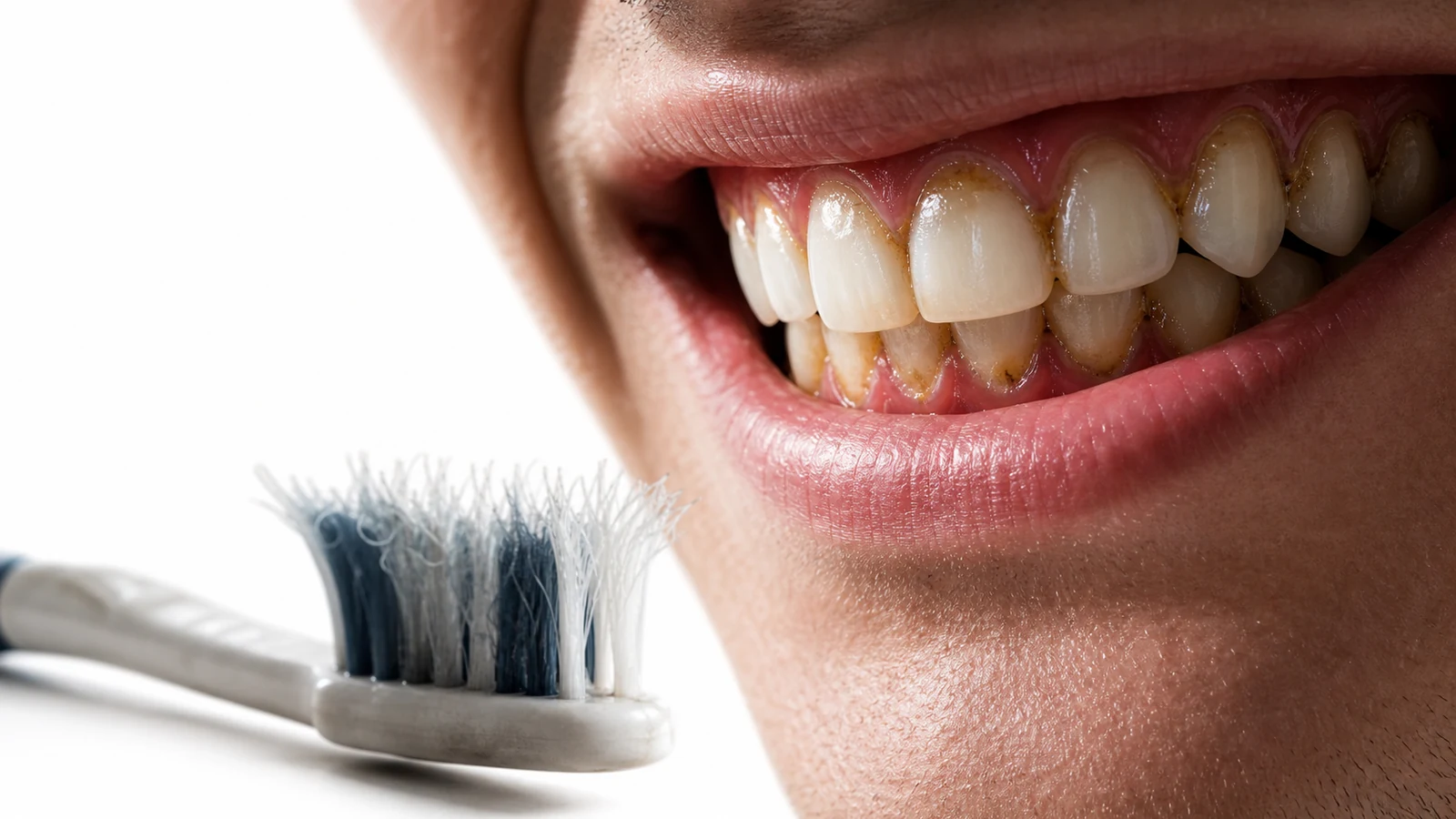
The short answer
Without brushing, plaque accumulates within 24-72 hours.
24-72 hours: plaque forms
Bacterial biofilm establishes on tooth surfaces and can begin mineralizing into tartar, which brushing cannot remove.
Curiosity twist
Porphyromonas gingivalis, a key gum-disease bacterium, has been found more often in brain tissue from Alzheimer's patients than controls in some studies.
Common mistake
Cavities and gum disease are mostly about sugar, so reducing sugar means brushing matters less.
Body & Brain
The usual professional recommendation is twice daily for two minutes with fluoride toothpaste, with bedtime brushing especially important.
Oral health and global inequality
Dental caries affects billions globally and is strongly linked to poverty, access to care, fluoride exposure, school attendance, nutrition, and pain.
Isn't sugar the main problem?
Sugar drives acid production and cavities, but gum disease is mainly about plaque accumulation. Mechanical plaque removal is central for both cavities and gum health. Why people think this: The anti-sugar message is memorable, but it can crowd out the importance of removing plaque.