Quick Facts
Quick Facts
Armstrong's famous first words were supposed to be 'That's one small step for a man.' He said 'for man' instead, changing the meaning.
The decision for Armstrong to go first was made by NASA managers, not the astronauts.
Aldrin was disappointed but accepted the decision professionally.
The lunar module was running low on fuel during landing. Armstrong had to take manual control to avoid a crash.
The astronauts left a plaque on the moon: 'We came in peace for all mankind.'
Visual answer
Who Went First and Why
The decision making behind the first step.
The Hatch
The hatch opened inward. Armstrong was positioned closer to it. Aldrin would have had to climb over Armstrong to go first.
Commander's Prerogative
Armstrong was the mission commander. It was traditional for the commander to go first.
NASA's Decision
NASA managers decided that Armstrong would be first, citing the symbolic importance of the commander.
The Result
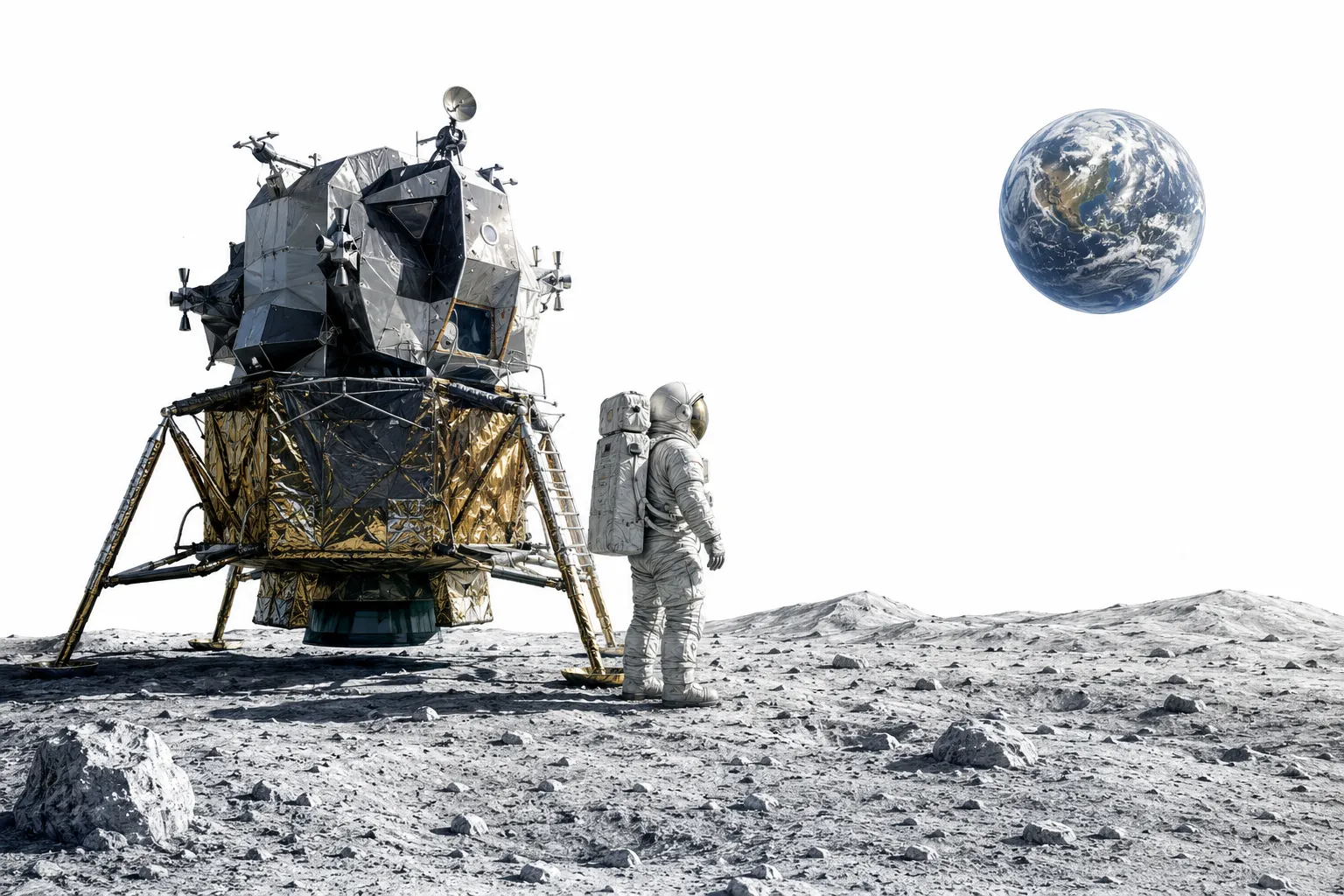
Armstrong stepped onto the moon at 02:56 UTC on July 21, 1969. Aldrin followed 20 minutes later.
Story in brief
Story in Brief
July 16, 1969
Apollo 11 launches from Kennedy Space Center.
July 20, 1969
The lunar module Eagle separates from the command module Columbia.
Armstrong and Aldrin descend to the surface. Collins remains in orbit.
July 20, 4:17 PM ET
The Eagle lands. 'Houston, Tranquility Base here. The Eagle has landed.'
July 20, 10:56 PM ET
Neil Armstrong steps onto the moon.
He becomes the first human to walk on another world.
July 21, 1969
Aldrin joins Armstrong on the surface. They collect samples, plant a flag, and take photos.
July 24, 1969
Apollo 11 splashes down in the Pacific Ocean. The astronauts are quarantined for 21 days.
The mission is a success. The Space Race is over.
The Story
Why Armstrong, Not Aldrin
When the Apollo 11 astronauts trained for the moon landing, the original plan had Buzz Aldrin exiting the lunar module first. Aldrin was the lunar module pilot. It made sense for him to go first.
But the design of the lunar module changed the plan. The hatch opened inward and was located on the left side of the cabin. Armstrong, in the left seat, was closer. For Aldrin to go first, he would have to climb over Armstrong. It was awkward. It was risky.
NASA also decided that the mission commander should have the honor. Armstrong was the commander. He would go first. Aldrin accepted the decision professionally, but he later admitted he was disappointed. The two men never fully reconciled. Armstrong became the symbol of the moon landing. Aldrin became the second man. That difference haunted their relationship for decades.
Famous Quote
"That's one small step for man, one giant leap for mankind."
, Neil Armstrong
He intended to say 'one small step for a man.' The 'a' was lost in transmission or forgotten. The meaning changed from a single person to all of humanity. The mistake made the quote better.
Evidence
Who Was First
Neil Armstrong stepped onto the moon at 02:56 UTC on July 21, 1969.
StrongBuzz Aldrin followed about 20 minutes later.
StrongMichael Collins remained in orbit and never landed.
StrongNo other humans have landed on the moon before or since the Apollo missions.
StrongKey Points
Key Points So Far
Neil Armstrong was the first human to walk on the moon, on July 21, 1969.
Buzz Aldrin followed about 20 minutes later.
The decision for Armstrong to go first was based on the hatch design and his role as commander.
Michael Collins remained in orbit aboard the command module.
Analogy
Like the Tip of an Iceberg
The familiar part
Imagine an iceberg. The tip is visible. The rest is underwater.
How it applies
Neil Armstrong was the tip of a very large iceberg. He got the glory. But thousands of engineers, scientists, and workers made it possible. He was the symbol. They were the substance.
Where the analogy breaks
Icebergs are cold. The moon landing was hot. But the analogy works.
Curiosity Notes
Details Most People Miss
Why this still matters
Why This Still Matters
Neil Armstrong's first step was a moment of human triumph. It proved that we could leave our planet and visit another world. It inspired generations of scientists, engineers, and dreamers. The moon landing was not just an American achievement. It was a human achievement. Armstrong was the symbol. But the achievement belonged to everyone.
Key Findings
- ✓Core findingNeil Armstrong was the first human to walk on the moon, on July 21, 1969.
- ✓Strong evidenceBuzz Aldrin followed about 20 minutes later.
- ⚠Main consequenceThe decision for Armstrong to go first was based on the hatch design and his role as commander.
- ✓Wider legacyMichael Collins remained in orbit.
- ★Bottom lineNo human has returned to the moon since 1972.
Final insight
A Last Thought
Neil Armstrong was the first man on the moon. Buzz Aldrin was the second. Michael Collins was the third, but he never landed. He orbited. Of the three, Collins had the loneliest job. He was alone in the command module while Armstrong and Aldrin walked on the surface. He later wrote: 'I am alone now, truly alone, and absolutely isolated from any known life.' He was the most isolated human in history. And no one remembers him. Armstrong got the glory. Aldrin got the second place. Collins got the loneliness. That is the hierarchy of space exploration. It is not fair. But it is true.
Quick answers
Common questions
Did Buzz Aldrin want to go first? +
Yes, he was disappointed. But he accepted the decision professionally. The two men had a complicated relationship afterward, but Aldrin never publicly criticized Armstrong.
Why has no one been back to the moon? +
Cost. The Apollo program was incredibly expensive. The political will for lunar exploration faded after the Space Race was won. NASA shifted its focus to the Space Shuttle and the International Space Station.