Quick Facts
Quick Facts
Bark protects the living layers inside a tree.
Outer bark is mostly dead cells that form a tough shield.
Inner bark includes phloem, which carries sugars made by leaves.
Bark helps reduce water loss and temperature stress.
As a tree grows wider, older bark cracks and stretches.
Visual answer
How Bark Protects a Tree
The bark layer works like a living shield around the trunk.
Pest Barrier
Tough outer bark makes it harder for insects and fungi to reach living tissue.
Weather Shield
Bark insulates the trunk from heat, cold, and sun damage.
Water Control
The outer layer slows water loss from the trunk.
Impact Protection
Bark absorbs scratches, bumps, and small wounds before they reach the cambium.
Story in brief
Story in Brief
Early land plants
Plants begin evolving tougher outer tissues to survive drying and damage on land.
Trees evolve
Woody trunks need long-lasting protection as stems grow taller and wider.
A durable outer covering helps trees live for decades or centuries.
Modern forests
Different trees evolve different bark textures and thicknesses.
Bark reflects each tree's climate, fire risk, pests, and growth strategy.
The Story
Bark Is Protection, Not Decoration
The outside of a tree has a hard job. It faces insects, fungi, sun, freezing nights, dry air, wind, and animals. The tree cannot run from any of it.
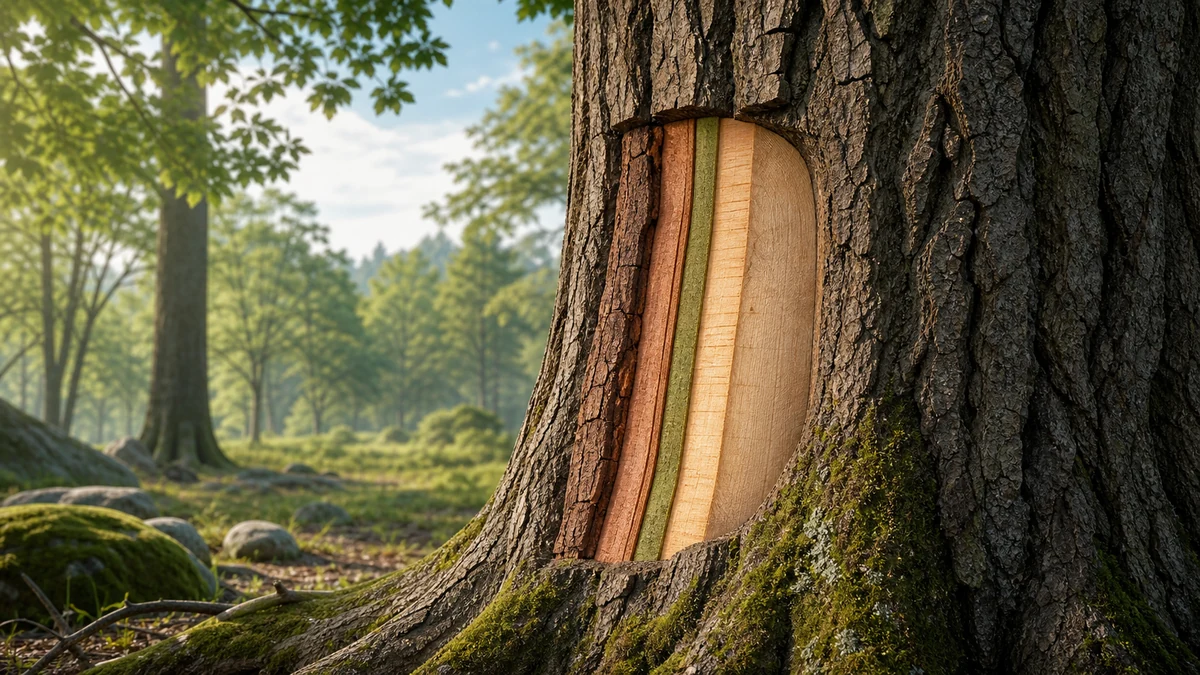
Bark protects the delicate layers beneath it. Just under the bark is the cambium, a thin living layer that makes new wood and new inner bark. If that layer is badly damaged all the way around the trunk, the tree can die.
The outer bark is made mostly of dead cells. That sounds useless, but it is exactly why it works. Dead, corky cells can become tough, dry, and resistant. They form a shield around the living parts.
As the trunk gets wider, old bark cannot simply stretch forever. It cracks, flakes, plates, or peels depending on the species. That is why bark patterns are so different from tree to tree.
Evidence
What Bark Does
Outer bark protects against physical injury and pests.
StrongInner bark moves sugars from leaves to the rest of the tree.
StrongThick bark can help some trees survive heat and low-intensity fire.
StrongBark texture changes as trunks expand and old outer layers split.
StrongKey Points
Key Points So Far
Bark protects the living layers inside the trunk.
Outer bark is mostly dead cells that form a tough shield.
Inner bark helps move food through the tree.
Bark cracks and changes as the tree grows wider.
Analogy
Like Skin With Armor
The familiar part
Human skin protects the body but can heal, shed, and respond to the outside world.
How it applies
Tree bark protects the trunk, sheds old outer layers, and guards the living tissues underneath.
Where the analogy breaks
Human skin is living at the surface. Much of outer bark is dead, which makes it tougher and drier.
Curiosity Notes
Details Most People Miss
Why this still matters
Why This Still Matters
Understanding bark helps explain why trees can live so long and why careless cuts, stripped bark, or repeated damage can seriously harm them.
Key Findings
- ✓Core findingTrees have bark mainly for protection.
- ✓Strong evidenceOuter bark shields against pests, weather, water loss, and injury.
- ⚠Main consequenceInner bark helps transport sugars through the tree.
- ✓Wider legacyBark patterns form as trunks grow and old outer layers split.
Final insight
A Last Thought
Bark is the reason a tree can stand still in a rough world. It is not decoration. It is defense, transport, insulation, and history wrapped around a living trunk.
Quick answers
Common questions
Is tree bark alive? +
Outer bark is mostly dead protective tissue. Inner bark contains living tissue, including phloem, which helps move sugars through the tree.
Can a tree survive without bark? +
A tree can survive small patches of missing bark, but if bark is removed in a full ring around the trunk, the tree may die because food transport is cut off.