Quick Facts
Quick Facts
Some flowers smell like rotting meat to attract flies.
The corpse flower is the most famous stinky flower.
Bees are attracted to sweet, floral scents.
Moths are attracted to flowers that open at night.
The scent of a flower is a mixture of volatile organic compounds.
Visual answer
How Flower Scent Works
The chemical communication of flowers.
Scent Production
Flowers produce volatile organic compounds.
Chemical Signal
The scent is a chemical message.
Pollinator Attraction
Bees, flies, and other insects are drawn to the scent.
Pollination
The pollinator carries pollen to the next flower.
Story in brief
Story in Brief
Ancient Times
People notice that flowers smell good and use them for perfume.
1600s
Scientists begin studying how flowers produce scent.
The chemical basis of fragrance is explored.
1800s
The link between scent and pollination is established.
The evolutionary purpose of flower scent is understood.
Today
We know that flower scent is a complex chemical signal.
The science of plant communication is expanding.
The Story
Why Flowers Sell Themselves
A flower is a reproductive organ. It is the sex organ of the plant. And it has a problem: it cannot move. It cannot walk over to another plant and say, 'Hey, want to trade pollen?' It needs a messenger.
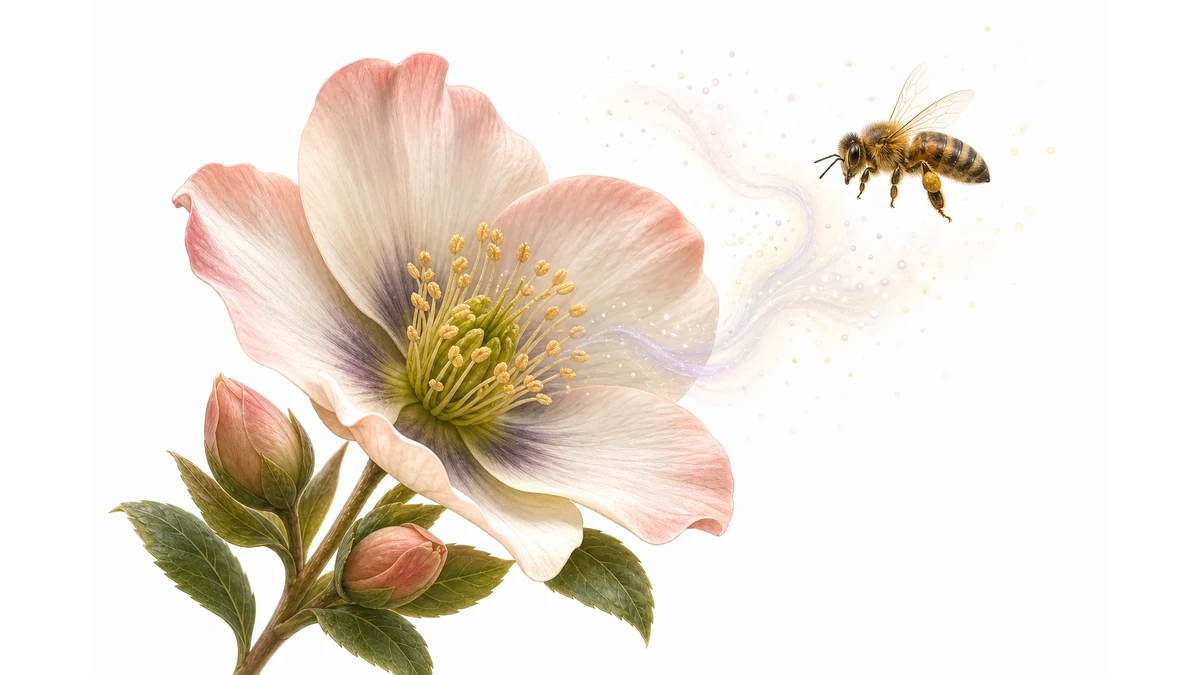
That messenger is a pollinator. A bee, a butterfly, a fly, a bat. And to attract that messenger, the flower produces a scent. It is a chemical signal. It says: 'Come here. There is food. There is nectar. And while you are here, take some pollen with you.'
The scent is not for us. It is for the insect. We just happen to enjoy it. Sometimes. Some flowers smell like rotting meat. They are not trying to attract bees. They are trying to attract flies. And flies love the smell of death.
So the next time you smell a flower, remember: you are smelling a marketing campaign. The target is not you. But you are welcome to enjoy it anyway.
Famous Quote
"A flower's scent is a language. It is a message. And the message is: come closer."
, Unknown
The scent is communication, not decoration.
Evidence
Why Flowers Smell the Way They Do
Sweet scents attract bees and butterflies.
StrongRotten scents attract flies and beetles.
StrongScent molecules are volatile organic compounds.
StrongDifferent pollinators are attracted to different scents.
StrongKey Points
Key Points So Far
Flowers produce scents to attract pollinators.
Different pollinators are attracted to different scents.
Sweet scents attract bees; rotten scents attract flies.
The scent is a chemical signal, not a decoration.
Analogy
Like Perfume Ads
The familiar part
Imagine a perfume ad. It is designed to attract a specific audience. The scent is the product. The ad is the delivery.
How it applies
A flower is the perfume ad. The scent is the product. The pollinator is the audience. The pollen is the sale.
Where the analogy breaks
Perfume ads do not help plants reproduce. Flowers do.
Curiosity Notes
Details Most People Miss
Why this still matters
Why This Still Matters
The scent of flowers is a reminder that the world is not designed for us. It is designed for survival. We are just lucky enough to enjoy the side effects.
Key Findings
- ✓Core findingFlowers produce scents to attract pollinators.
- ✓Strong evidenceSweet scents attract bees; rotten scents attract flies.
- ⚠Main consequenceThe scent is a chemical signal, not a decoration.
- ✓Wider legacyWe are not the intended audience for the scent.
Final insight
A Last Thought
The smell of a flower is not for us. It is a love letter to a bee. And we are just reading it over the bee's shoulder. That is the secret of flowers. They do not care if we like them. They care if the bee likes them. And that is the whole point.
Quick answers
Common questions
Why do some flowers smell bad? +
They are trying to attract flies and beetles. These insects are drawn to the smell of rotting meat.
Do all flowers have a scent? +
No. Some flowers rely on color instead of scent. Others rely on both. It depends on the pollinator.