Quick Facts
Quick Facts
Plants lack a central nervous system, which is required for pain perception.
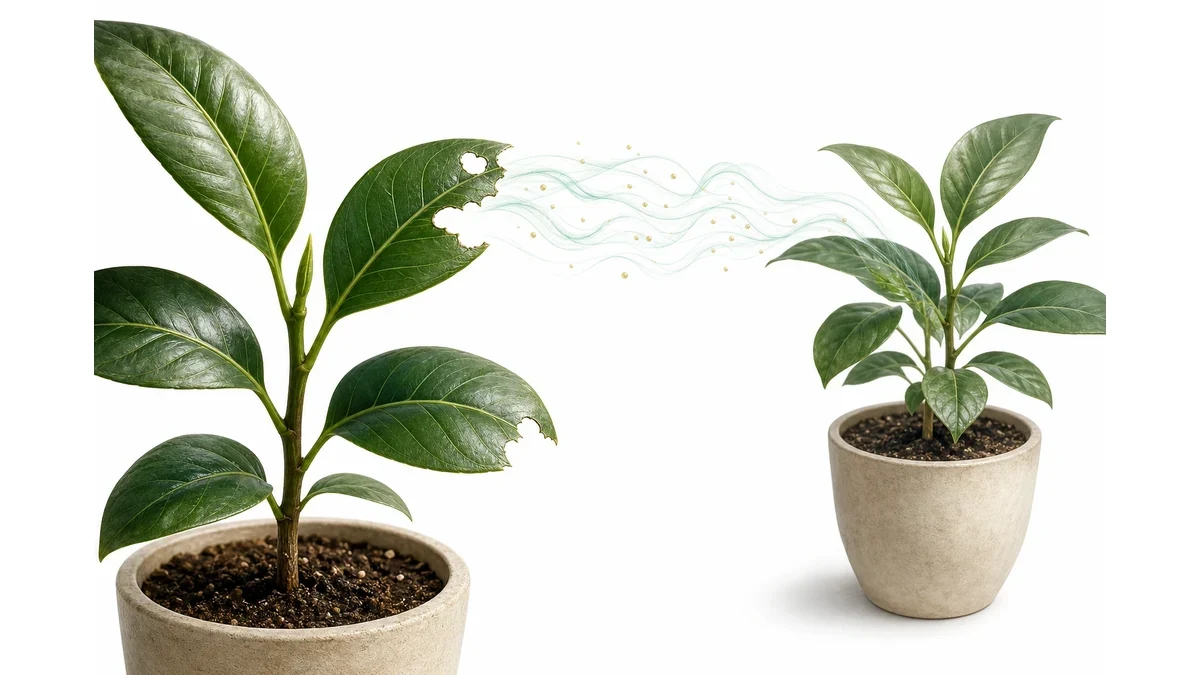
When damaged, plants release volatile organic compounds that can warn nearby plants.
Some plants produce bitter chemicals to deter herbivores after being attacked.
The 'pain' response in plants is more like an immune response than suffering.
Tomato plants can produce electrical signals when their leaves are bitten.
Visual answer
How Plants Respond to Damage
The plant's alarm system explained.
Damage Occurs
A herbivore bites a leaf or stem.
Chemical Release
The plant releases volatile organic compounds.
Warning Signal
Nearby plants receive the signal and prepare defenses.
Defensive Response
Plants produce bitter compounds to deter further feeding.
Story in brief
Story in Brief
Ancient Times
Philosophers debate whether plants have souls.
1970s
Scientists discover that plants release chemical signals when damaged.
The idea that plants can 'communicate' is born.
2000s
Research shows that plants respond to sound and touch.
The question of plant consciousness enters mainstream science.
Today
Scientists agree that plants respond to stimuli but do not feel pain.
The distinction between response and suffering is clarified.
The Story
Why Plants Are Not in Pain
Imagine for a moment that you are a carrot. You are sitting in the ground, minding your own business, when suddenly someone grabs you by the leaves and yanks you out of the earth. You are peeled, chopped, and boiled. Were you in pain?
The answer, as far as science can tell, is no. Pain is a subjective experience. It requires a brain. It requires consciousness. It requires the capacity to suffer. Plants have none of these things.
But that does not mean plants are passive. When a leaf is bitten, the plant releases chemicals that signal distress. These chemicals can warn neighboring plants. They can attract predators that eat the herbivore. They can even alter the plant's own growth patterns to compensate for the damage.
So plants do not feel pain. But they are not indifferent to it either. They are responding. They are fighting. They are just not suffering.
Famous Quote
"The difference between pain and damage is the difference between suffering and response. Plants respond. They do not suffer."
, Daniel Chamovitz, What a Plant Knows
The author of the book argues that plants are more aware than we think, but they are not conscious.
Evidence
What Science Says
Plants lack a brain and central nervous system.
StrongPain requires consciousness, which plants do not possess.
StrongPlants respond to damage through chemical signals.
StrongThese responses are similar to immune responses, not pain.
StrongKey Points
Key Points So Far
Plants do not have brains or nerves, so they cannot feel pain.
They do respond to damage through chemical signals.
This response is more like an immune system than suffering.
The distinction between response and suffering is crucial.
Analogy
Like a Medieval Castle
The familiar part
Imagine a medieval castle. It does not feel pain when attacked. But it has walls, guards, and an alarm system.
How it applies
A plant is that castle. It has defenses. It has chemical alarms. It knows when it is under attack. It responds. But it does not suffer.
Where the analogy breaks
Castles do not grow back. Plants do.
Curiosity Notes
Details Most People Miss
Why this still matters
Why This Still Matters
The question of plant pain matters because it touches on how we treat the world around us. If plants could feel pain, everything changes. But they do not. They respond. They communicate. They do not suffer. That is the line. And it is an important one.
Key Findings
- ✓Core findingPlants cannot feel pain because they lack a brain and nervous system.
- ✓Strong evidencePlants do respond to damage through chemical signals.
- ⚠Main consequenceThis response is not suffering—it is a defense mechanism.
- ✓Wider legacyThe distinction between response and pain is crucial for ethics and science.
Final insight
A Last Thought
Plants are not philosophers. They are not in pain. But they are not indifferent either. They are responders. They are communicators. They are alive in ways we are only beginning to understand. They just do not suffer. That is not a weakness. It is a different kind of existence.
Quick answers
Common questions
Can plants feel pain when you cut them? +
No. They respond to damage chemically, but they do not feel pain because they do not have a brain or nervous system.
Do plants scream when cut? +
No. They do not have vocal cords or lungs. Some plants release chemicals that can be detected by other plants, but that is not screaming.