Everyday Life

Why Does the Remote Control Always Disappear?

A small object, a large couch, and a fundamental mismatch between how humans pay attention and how remotes move. You set the remote down. You know you set it down. You have not left the room, no one else is home, and five minutes later it has completely vanished. This is not a mystery. It is simply the predictable result of what happens when a small object meets human attention at its least engaged. The answer involves how human memory encodes locations, why routine actions are never actually remembered, and the specific role furniture upholstery plays in the disappearance of small objects.

Quick answer

Remote controls disappear because they are set down during moments of divided attention, when the brain records the action as automatic rather than explicitly, meaning no reliable memory of the location is formed - while the remote's small size, neutral coloring, and tendency to slide under cushions further reduces the chance of immediate visual rediscovery. You almost certainly will find it in the same four or five places every time - because divided attention produces consistent patterns of unconscious placement.
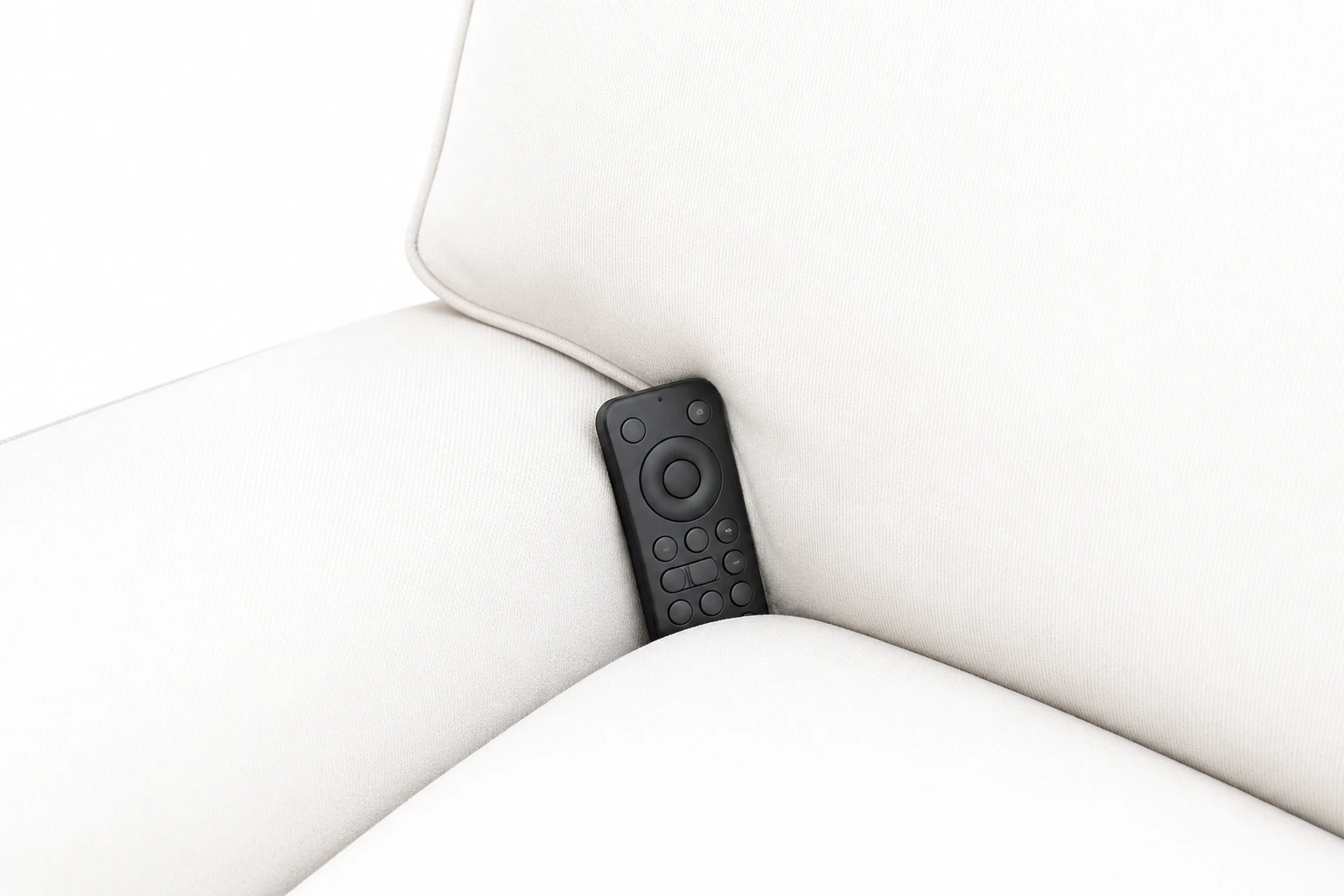
Why Does the Remote Control Always Disappear? hero image

The mystery

The answer involves how human memory encodes locations, why routine actions are never actually remembered, and the specific role furniture upholstery plays in the disappearance of small objects.

The short answer

Remote controls disappear because they are set down during moments of divided attention, when the brain records the action as automatic rather than explicitly, meaning no reliable memory of the location is formed - while the remote's small size, neutral coloring, and tendency to slide under cushions further reduces the chance of immediate visual rediscovery.

The twist

You almost certainly will find it in the same four or five places every time - because divided attention produces consistent patterns of unconscious placement.

Common mistake

It is extremely tempting to blame other household members for remote relocations.

The brain was busy doing something else at the time

Remote controls disappear because humans never paid attention to where they put them in the first place.

Routine actions bypass deliberate memory formation

When setting down a remote while also watching a screen, answering a question, or reaching for a snack, the brain classifies the placement as a routine, automatic action and does not encode a retrievable location memory.

This is efficient most of the time and catastrophically unhelpful when you need to find the object ten minutes later.

The remote disappears at the moment you set it down, not in the minutes after - because that was when you stopped paying attention.

Sofas are engineered to swallow small objects

Cushions, gaps between cushions, and the slight angle of most sofa designs create reliable pathways for small, flat objects to slide out of sight.

A remote placed on a cushion that is then sat on will typically migrate under or behind the cushion with no one noticing.

The modern sofa is, from a small object's perspective, a very effective disappearing machine.

The search recreates the original divided-attention problem

Searching for the remote while also worrying about missing the program makes the search itself another divided-attention task, reducing the chance of spotting something that requires careful visual scanning.

This is why remotes found calmly the next morning seem impossibly obvious compared to the frantic search the night before.

You cannot find the remote while also being anxious about finding the remote - the anxiety uses exactly the attention the search needs.

The disappearance in four stages

A reliable sequence explains why remote controls follow such consistent patterns.

1

01. Remote is set down during divided attention

The brain processes the placement as automatic, forming no explicit memory.

2

02. Physical displacement occurs unnoticed

Cushion compression, casual movement, or a pet moves the remote out of sight.

3

03. Search begins with no memory cue to guide it

Without a stored location, the search relies entirely on visual scanning.

4

04. Anxiety reduces visual scanning effectiveness

Stress about missing content narrows attention further, making the search harder.

What the remote reveals about human memory

The experience of a lost remote is a vivid, reliably repeatable demonstration that human memory is highly selective and context-dependent.

Declarative memory, the kind that lets you recall where you put something, requires deliberate attention at the time of the event. Without that attention, the location simply does not enter retrievable memory regardless of how obvious it seemed at the time.

Surprising facts about lost objects

Most lost objects are found in a small number of locations
Studies suggest people consistently misplace objects in the same habitual spots, since automatic behavior follows consistent patterns.
Stress measurably impairs search effectiveness
Elevated stress hormones narrow attentional focus, reducing the peripheral awareness needed to spot a nearby but overlooked object.
Naming an object's location out loud significantly improves retrieval
Verbalizing 'I am putting the remote on the arm of the chair' encodes the location into explicit memory far more reliably than the silent act alone.

Does someone else always move the remote?

Myth

It is extremely tempting to blame other household members for remote relocations.

Attributing the disappearance to another person is more satisfying than accepting that one's own brain simply did not bother to record the information.

Reality

In single-person households, remotes disappear just as reliably, confirming that the lost-remote phenomenon is a feature of individual human attention patterns rather than a social problem.

In single-person households, remotes disappear just as reliably, confirming that the lost-remote phenomenon is a feature of individual human attention patterns rather than a social problem.

Where divided attention causes similar problems

Lost keys
Keys placed down while opening a door and carrying bags disappear for identical divided-attention reasons.
Forgotten glasses
Eyeglasses removed without deliberate attention produce the same retrievable-memory failure as a placed-down remote.

Why this tiny frustration is worth understanding

The lost-remote phenomenon is one of the most democratically shared small miseries in modern domestic life, and understanding its cause suggests practical solutions.

Developing a deliberate habit of verbally noting object placements, or designating a specific physical home for high-value objects, dramatically reduces the problem.

Worth noting

A domestic mystery with a psychological explanation

The remote did not move by itself. It simply went to the exact location where your undivided attention was not. The remote is always exactly where you put it. The problem is that you were not paying attention when you put it there.

Quick answers

Common questions

Why does the remote seem obvious once found?

Calm, focused attention during the eventual discovery is far more effective for visual scanning than the anxious, divided search was.

Do smart-home voice assistants solve this?

Partially, since controlling devices by voice eliminates the need for a physical remote, though it introduces its own entirely different set of frustrations.

Everyday Life

Related questions

Because you stop looking once you find it - a joke that is also technically true by definition.

The psychologist who studied everyday forgetting

Ulric Neisser

A pioneering cognitive psychologist whose work on everyday memory failures helped establish that attention, not storage capacity, is the primary limiting factor in human memory.

Related questions

Does a designated spot for the remote actually work?

Yes, consistently returning objects to a fixed location bypasses the divided-attention encoding problem entirely.

Where divided attention causes similar problems

Lost keys

Keys placed down while opening a door and carrying bags disappear for identical divided-attention reasons.

Where divided attention causes similar problems

Forgotten glasses

Eyeglasses removed without deliberate attention produce the same retrievable-memory failure as a placed-down remote.

Does someone else always move the remote?

In single-person households, remotes disappear just as reliably, confirming that the lost-remote phenomenon is a feature of individual human attention patterns rather than a social problem.

In single-person households, remotes disappear just as reliably, confirming that the lost-remote phenomenon is a feature of individual human attention patterns rather than a social problem.