Everyday Science

Why Does a Vacuum Cleaner Suck?

A machine that doesn't actually pull anything - it simply gets out of the way of air pressure. A vacuum cleaner seems to reach out and grab dirt off the floor, pulling it inside with what feels like an invisible hand. In truth, the vacuum cleaner is not pulling anything at all. It is the ordinary air pressure already surrounding you that is doing all the work. The answer involves spinning fans, low-pressure zones, and the surprisingly large, constant force of atmospheric pressure that is pressing on you right now.

Quick answer

A vacuum cleaner sucks because a motor-driven fan removes air from inside the machine, creating a region of lower air pressure, and the higher-pressure air outside rushes in to fill that gap, carrying dust and debris along with it. Despite its name, a vacuum cleaner never actually creates a true vacuum - it only creates a relatively small, localized drop in air pressure compared to the air around it.
Why Does a Vacuum Cleaner Suck? hero image

The mystery

The answer involves spinning fans, low-pressure zones, and the surprisingly large, constant force of atmospheric pressure that is pressing on you right now.

The short answer

A vacuum cleaner sucks because a motor-driven fan removes air from inside the machine, creating a region of lower air pressure, and the higher-pressure air outside rushes in to fill that gap, carrying dust and debris along with it.

The twist

Despite its name, a vacuum cleaner never actually creates a true vacuum - it only creates a relatively small, localized drop in air pressure compared to the air around it.

Common mistake

A common assumption is that a vacuum cleaner actively pulls or attracts dirt directly toward the machine.

It's air pressure doing the pulling, not the machine

A vacuum cleaner's apparent suction is really just a clever way of letting normal atmospheric pressure do the heavy lifting.

The fan removes air, not dirt

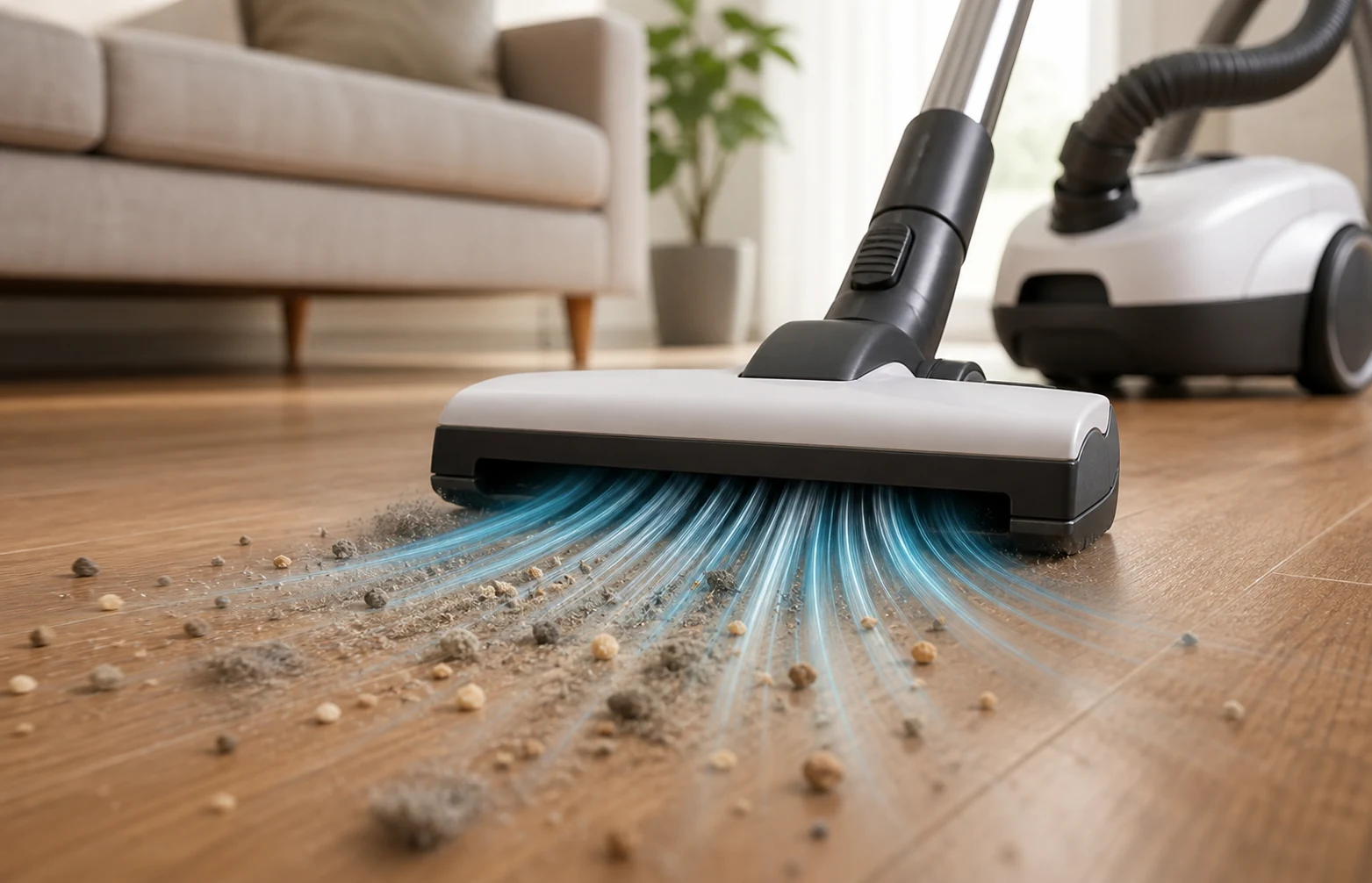
Inside a vacuum cleaner, a motor spins a fan that pushes air out of the machine, lowering the air pressure inside the vacuum's chamber and hose.

The fan never directly grabs dust or debris; its entire job is simply to move air.

A vacuum's fan never touches a single speck of dust - its only job is to thin out the air.

Higher outside pressure rushes in to balance things out

Air naturally moves from areas of high pressure to areas of low pressure, so the relatively higher-pressure air outside the vacuum rushes in through the nozzle to fill the lower-pressure space created inside.

As that air rushes in, it physically carries loose dirt and dust particles along with it.

Dust does not get sucked in so much as it gets swept along for the ride by air trying to even things out.

Filters separate dirt from the moving air

Once dust-laden air enters the vacuum, it passes through a filter or bag that traps solid particles while allowing the air itself to continue through and exit the machine.

This filtration step is what keeps the collected dirt inside the vacuum rather than blowing right back out.

A vacuum's filter is the quiet bouncer making sure only air, not dirt, gets to leave the party.

From switch flip to clean floor

A short sequence explains exactly how flipping a switch results in a tidier carpet.

1

01. The motor spins the internal fan

Electrical power drives the fan blades to begin moving air rapidly.

2

02. Air pressure drops inside the vacuum

The fan expels air from the chamber, lowering pressure relative to the surrounding atmosphere.

3

03. Outside air rushes in through the nozzle

Higher atmospheric pressure pushes air, along with dirt and dust, into the lower-pressure opening.

4

04. A filter captures debris as air passes through

Solid particles are trapped while clean air exits the machine, completing the cycle.

Why this is really about atmospheric pressure

Atmospheric pressure is constantly pressing on everything around us with significant force, roughly 14.7 pounds per square inch at sea level, even though we rarely notice it because it pushes evenly in all directions.

A vacuum cleaner works by creating a deliberate, localized imbalance in that otherwise invisible pressure, briefly making the surrounding air's constant push suddenly very noticeable.

Surprising vacuum and pressure facts

True vacuums are extremely difficult to create
A genuine vacuum, with no air at all, requires specialized scientific equipment far beyond what a household appliance can achieve.
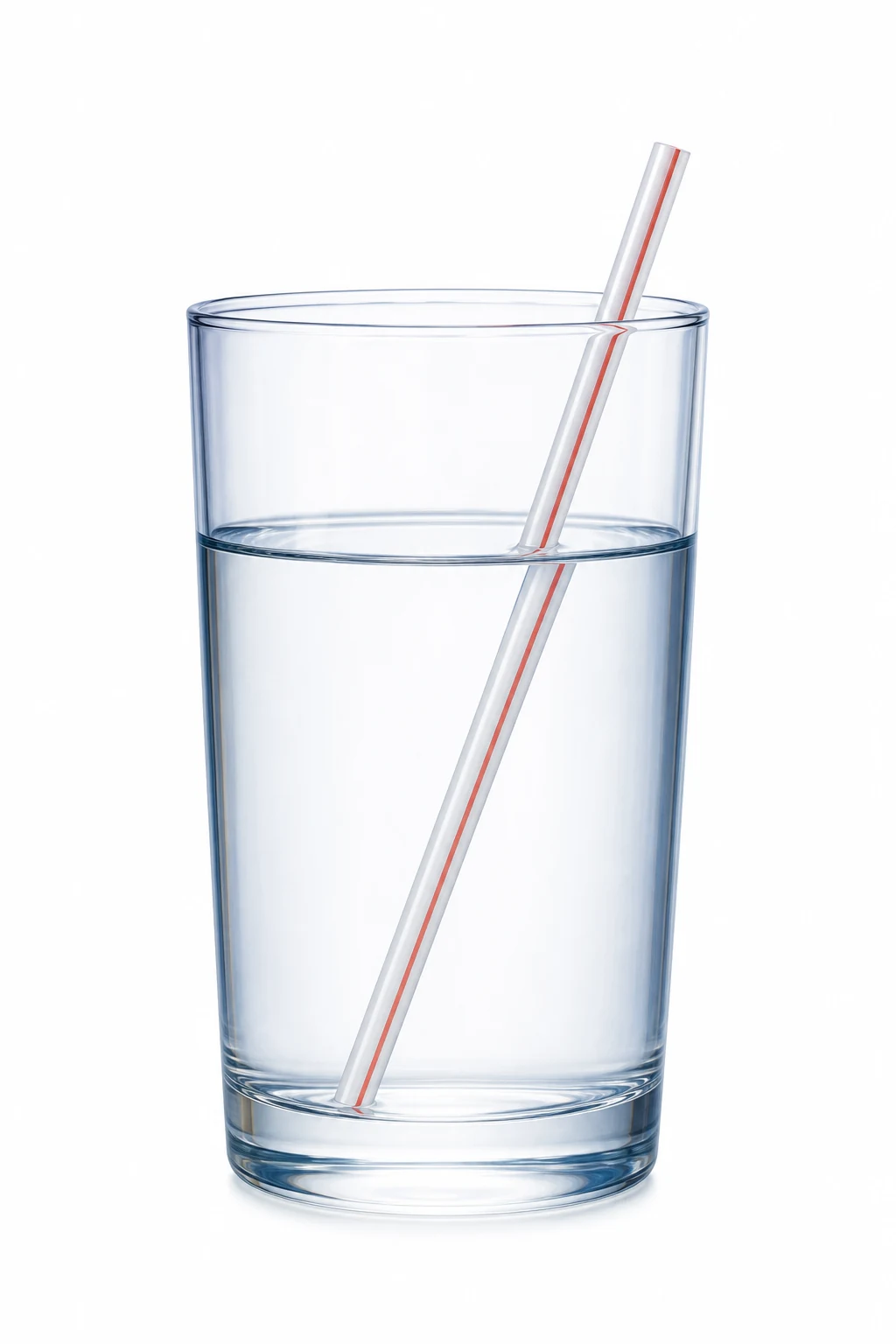
Drinking straws work the same basic way
Sipping a straw lowers pressure inside it, allowing outside atmospheric pressure to push liquid upward.
HEPA filters trap astonishingly small particles
High-efficiency filters used in many vacuums can capture particles as small as 0.3 micrometers, far smaller than visible dust.

Doesn't the vacuum actually pull the dirt toward it?

Myth

A common assumption is that a vacuum cleaner actively pulls or attracts dirt directly toward the machine.

The visible motion of dirt moving toward the nozzle creates the strong impression of an active pulling force.

Reality

The vacuum itself exerts no pulling force at all; surrounding air pressure pushes air and debris into the lower-pressure space the machine creates.

The vacuum itself exerts no pulling force at all; surrounding air pressure pushes air and debris into the lower-pressure space the machine creates.

Where similar pressure-driven mechanics apply

Drinking straws
Sipping creates lower pressure inside the straw, allowing outside atmospheric pressure to push liquid upward into your mouth.
Suction cups
Pressing out trapped air creates a low-pressure pocket, and outside air pressure holds the cup firmly in place.

Why understanding suction matters

Recognizing that pressure differences, not pulling forces, drive suction explains the operation of countless everyday and industrial devices.

This same principle underlies medical suction devices, industrial vacuum systems, and many manufacturing processes.

Worth noting

A machine that works by getting out of the way

A vacuum cleaner's apparent strength comes not from pulling anything, but from cleverly stepping aside and letting ordinary air pressure do work it has been doing all along. The most hardworking part of your vacuum cleaner might just be the air in the room you're standing in.

Quick answers

Common questions

Why does a vacuum lose suction when its bag is full?

A full bag or clogged filter restricts airflow, reducing how effectively the machine can maintain a low-pressure zone.

Does altitude affect how well a vacuum cleaner works?

Yes, since atmospheric pressure is lower at high altitudes, the relative pressure difference a vacuum can create is somewhat reduced.

Everyday Science

Related questions

Sipping lowers pressure inside the straw, allowing outside atmospheric pressure to push the liquid up.

The inventor who reimagined household cleaning

Hubert Cecil Booth

A British engineer who developed one of the first powered vacuum cleaners in 1901, after reportedly testing the suction principle by sucking dust through a handkerchief.

Related questions

Can a vacuum cleaner ever create a true vacuum?

No, household vacuums only create a modest pressure difference, far from the near-total emptiness of a true vacuum.

Where similar pressure-driven mechanics apply

Drinking straws

Sipping creates lower pressure inside the straw, allowing outside atmospheric pressure to push liquid upward into your mouth.

Where similar pressure-driven mechanics apply

Suction cups

Pressing out trapped air creates a low-pressure pocket, and outside air pressure holds the cup firmly in place.

Doesn't the vacuum actually pull the dirt toward it?

The vacuum itself exerts no pulling force at all; surrounding air pressure pushes air and debris into the lower-pressure space the machine creates.

The vacuum itself exerts no pulling force at all; surrounding air pressure pushes air and debris into the lower-pressure space the machine creates.