Everyday Objects
Why Are Ties Shaped Like Arrows?
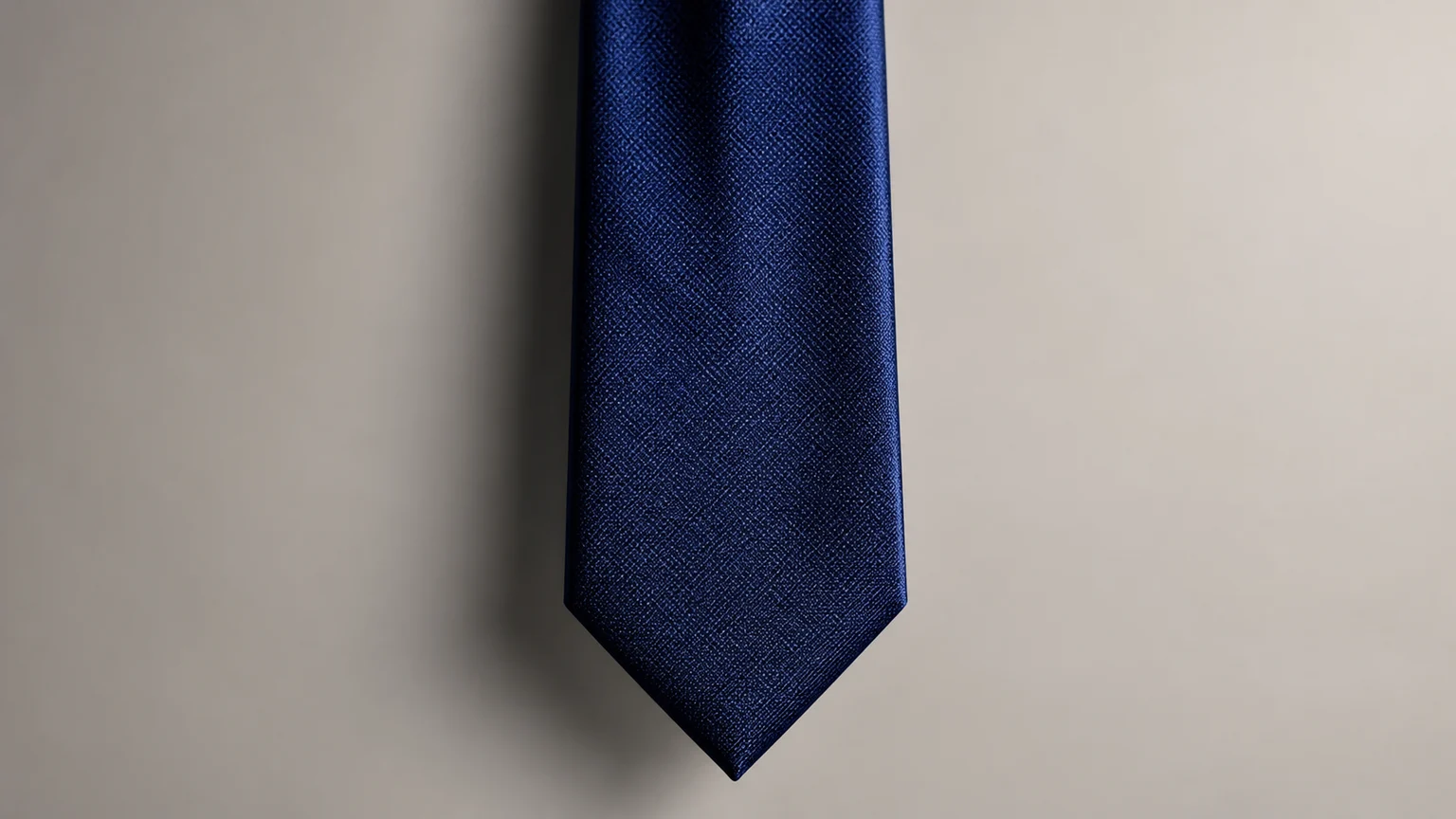
The pointed shape of a necktie is not a style choice — it is the direct result of how the fabric is cut, and it is the reason the tie hangs and knots the way it does.
Quick answer
Neckties are cut on the bias — diagonally across the grain of the woven fabric rather than straight along it. This diagonal cut is what gives ties their characteristic taper and pointed end. Bias-cut fabric behaves differently from straight-cut fabric. It stretches slightly, has natural elasticity, and drapes in a smooth curve rather than hanging stiffly. These properties are exactly what a tie needs: it must hold a knot snugly without bunching, spring back to shape after being tied and untied repeatedly, and hang in a clean line down the chest. The wider end (the blade) holds the knot and provides the visual front of the tie. The narrower end (the tail) sits behind the collar and under the blade. The point at the bottom is simply where the bias-cut shape terminates.

Ties are cut on the bias
Diagonal cutting across the fabric grain gives the tie its elasticity, drape, and ability to hold a knot.
The point is a result of the cut, not a design goal
The tapering arrow shape is a natural consequence of the bias cut. The point is where the angled shape ends.
Bias cut allows repeated knotting
Straight-cut fabric would bunch, crease permanently, and lose shape after a few knots. Bias-cut fabric recovers.
Myth: the arrow shape is purely stylistic
The shape is structurally required by the cutting method that makes ties functional. Aesthetics follow from engineering.
Next tiny mystery