Science & Discovery

How Did Vaccines Transform Human History?

Smallpox killed three hundred million people in the twentieth century alone. Vaccines made it extinct. In 1980, smallpox was not merely reduced. It was declared eradicated from nature.

Quick answer

Vaccines transformed history by training immune memory before disease arrived. They turned the immune system from a reactive defense into a prepared one. Vaccines did not invent immune memory. They learned how to trigger it safely.
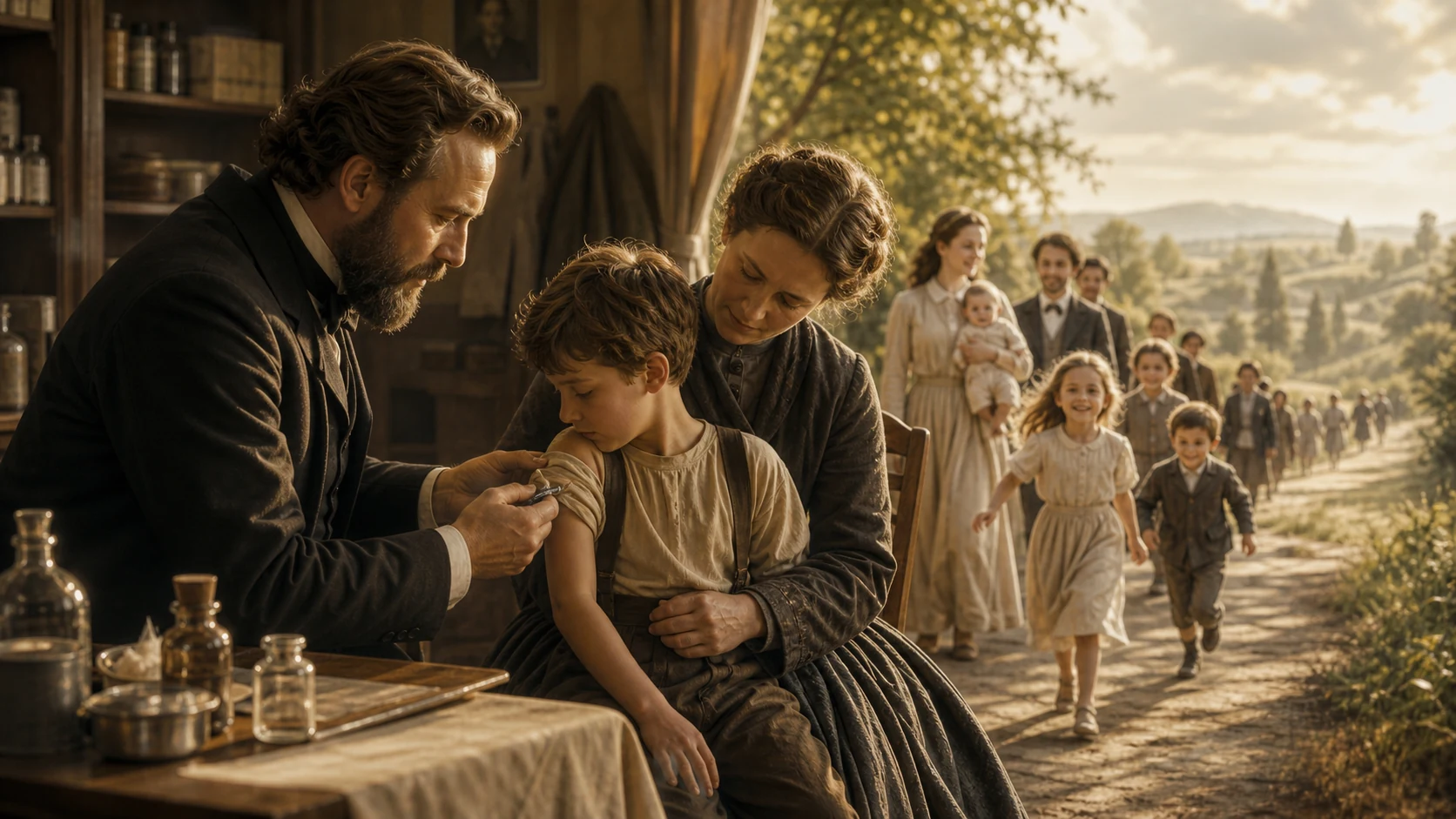
How Did Vaccines Transform Human History? hero image

The hook

Vaccines work through adaptive immune memory.

The hidden mechanism

Jenner's cowpox work made smallpox prevention safer than variolation.

The twist

Herd immunity protects people who cannot be vaccinated.

Common mistake

Natural infection can be immunizing, but it carries the disease's full cost.

What Vaccines Are Actually Doing

The adaptive immune system learns specific pathogens and creates memory cells. The first encounter can be slow and dangerous; later encounters can be defeated quickly.

Vaccination gives the immune system a safe preview: a weakened pathogen, killed pathogen, fragment, or genetic instruction for a harmless piece of it.

The Discovery That Changed the Stakes

Edward Jenner tested the folk observation that milkmaids who caught cowpox seemed protected from smallpox. His 1796 experiment showed that a mild related infection could train protection against a deadly one.

The word vaccine comes from vacca, Latin for cow, because one of medicine's great revolutions began in dairy country.

How Herd Immunity Changes Everything

Vaccines protect individuals, then change the environment the pathogen has to move through.

1

Each immune person becomes harder to infect

The pathogen has fewer successful hosts.

2

Enough dead ends break transmission

If each case produces less than one new case on average, outbreaks fade.

3

The vulnerable gain indirect protection

Newborns and immunocompromised people are safer when the pathogen cannot easily reach them.

The Deeper Reason: Vaccines Work With Biology

Many medicines fight disease from outside. Vaccines train the body's own evolved defenses.

That is why prevention can outperform treatment at population scale: it changes the odds before illness begins.

The Common Misunderstanding

Myth

Natural infection is simply better than vaccination.

It is an easy explanation because it makes the story simpler than it really was.

Reality

Natural infection can produce immunity, but vaccination aims for immune learning without paying the disease's price.

The real explanation is more interesting because it shows the system, pressure, and tradeoffs behind the event.

Why It Mattered

Immediate effect
Smallpox eradication proved humans could remove a disease from nature.
Long-term effect
Vaccines reduced death from measles, polio, diphtheria, tetanus, and more.
Modern echo
HPV vaccination is now preventing cancers caused by infection.
Best way to remember it
Vaccines changed history by teaching the immune system to remember diseases people never had to suffer.

Worth noting

Key Takeaway

Vaccines changed history by teaching the immune system to remember diseases people never had to suffer.

Quick answers

Common questions

Why do some vaccines need boosters?

Some immune responses fade or pathogens change, so boosters restimulate protection.

Could another disease be eradicated?

Polio is close in many regions, but eradication requires high global coverage and no major animal reservoir.