Quick Facts
Quick Facts
The Art of War is composed of 13 chapters.
The text emphasizes deception, flexibility, and knowing the enemy.
It has been translated into many languages and is still studied by militaries worldwide.
Business leaders and sports coaches also study The Art of War.
A 1972 archaeological discovery confirmed the text's antiquity but not its author.
Visual answer
The Mystery of Sun Tzu
What we know, and what we do not know.
~500 BC (Traditional)
Sun Tzu supposedly lives and writes The Art of War. No contemporary records exist.
~100 BC
Historian Sima Qian writes about Sun Tzu in his Records of the Grand Historian. This is the first mention of Sun Tzu by name.
1972
Bamboo slip versions of The Art of War are discovered in a tomb in Shandong, China. They date to the 2nd century BC, confirming the text existed earlier than previously known.
Today
Most scholars believe The Art of War was compiled over time. 'Sun Tzu' may represent a school of thought, not a single person.
Story in brief
Story in Brief
~500 BC (traditional)
Sun Tzu supposedly serves the King of Wu and writes The Art of War.
~100 BC
Sima Qian writes about Sun Tzu in his history. He includes a story about Sun Tzu training the king's concubines and beheading two of them for disobedience.
This is the earliest source for Sun Tzu's life. It was written 400 years after he supposedly lived.
1972
Bamboo slip manuscripts of The Art of War are discovered in a tomb near Linyi, China.
The manuscripts date to the 2nd century BC, making them older than any previously known version.
1970s-present
Scholars debate the authorship. Many conclude that 'Sun Tzu' may be a legendary figure and that the text was compiled over time.
The Story
The Problem with Sun Tzu
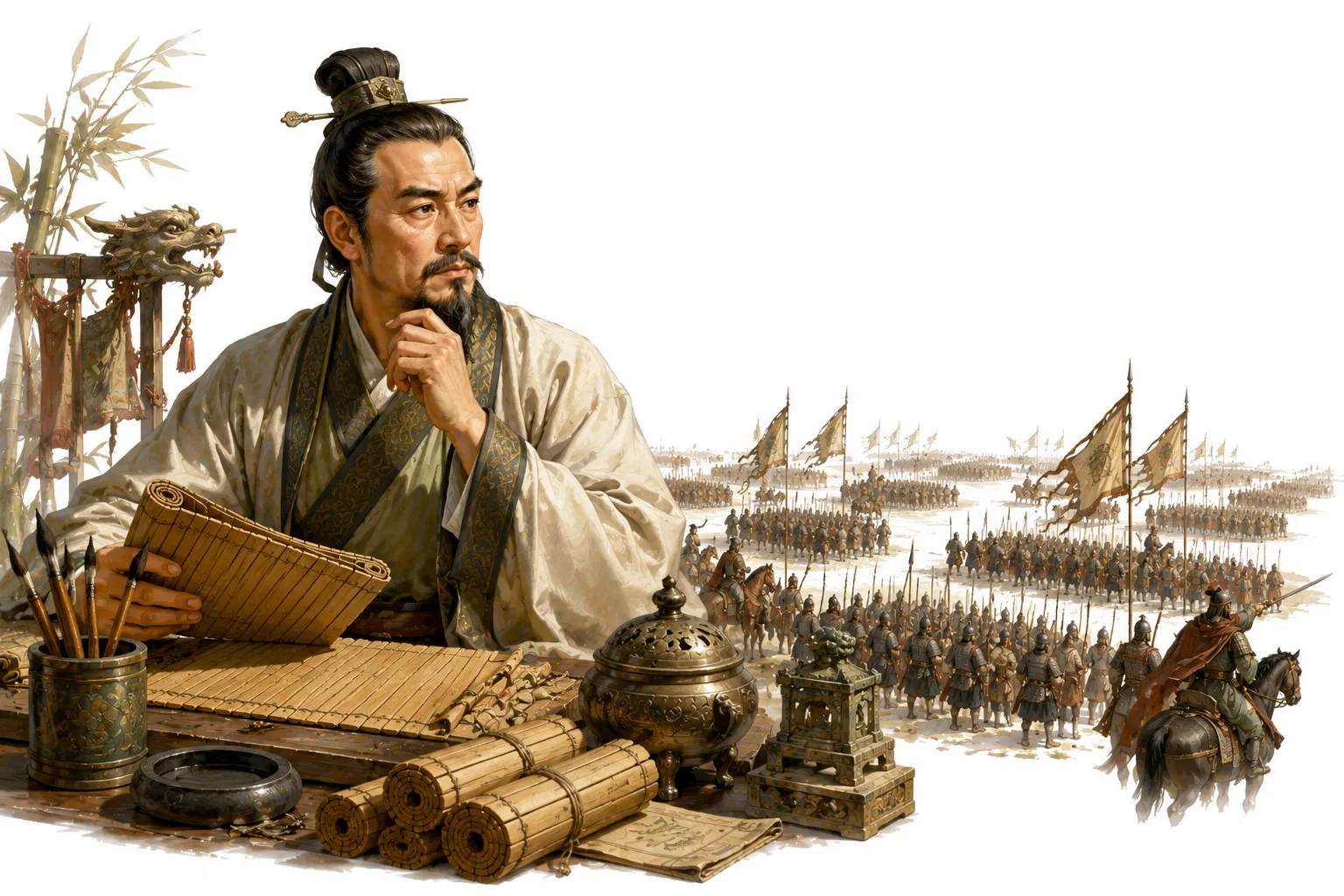
The story of Sun Tzu comes from Sima Qian, a historian who lived around 100 BC. He wrote that Sun Tzu was a general from the state of Qi who served the King of Wu. He included a colorful anecdote: Sun Tzu trained the king's 180 concubines to be soldiers. When they laughed at his commands, he beheaded the two leaders. The rest obeyed. The king was horrified. Sun Tzu said, 'The general is in command while he is on the field.' The king kept him.
The problem is that Sima Qian was writing 400 years after Sun Tzu supposedly lived. That is like us writing a biography of a general from the 1600s using only oral traditions. The story is probably legend, not history.
The text of The Art of War itself is also problematic. The writing style suggests it was composed over time, not by a single author. The earliest manuscripts, discovered in 1972, are similar to the received text but do not mention Sun Tzu by name. The mystery remains.
Famous Quote
"Know your enemy and know yourself, and you can fight a hundred battles without disaster."
, The Art of War
This is the most famous line from the text. It does not matter who wrote it. The advice is timeless.
Evidence
The Case For and Against Sun Tzu
Sima Qian mentions Sun Tzu in his history (1st century BC).
CircumstantialThe text's style suggests multiple authors over time.
ModerateThe 1972 bamboo slips confirm the text's antiquity.
StrongNo contemporary records mention Sun Tzu.
StrongKey Points
Key Points So Far
The traditional author of The Art of War is Sun Tzu, a general from around 500 BC.
The earliest historical mention of Sun Tzu comes from Sima Qian, writing 400 years later.
No contemporary records confirm Sun Tzu's existence.
The text may have been compiled over time by multiple authors.
The 1972 bamboo slip discovery confirmed the text's antiquity but not its author.
Analogy
Like the Homer Problem
The familiar part
The Iliad and the Odyssey are attributed to Homer. But no one knows if Homer existed. The poems may have been composed by multiple people over time.
How it applies
The same is true of The Art of War. 'Sun Tzu' may be a name attached to a body of knowledge, not a real person. It does not matter. The text stands on its own.
Where the analogy breaks
Homer's works are epic poems. The Art of War is a practical manual. But the authorship problem is the same.
Curiosity Notes
Details Most People Miss
Why this still matters
Why This Still Matters
The Art of War is still read because it contains universal truths. 'Know your enemy and know yourself.' 'The supreme art of war is to subdue the enemy without fighting.' These insights apply to any competitive situation. The author is a mystery. The text is a treasure. That is enough.
Key Findings
- ✓Core findingThe traditional author of The Art of War is Sun Tzu, a general from around 500 BC.
- ✓Strong evidenceThe earliest historical mention of Sun Tzu comes from Sima Qian, writing 400 years later.
- ⚠Main consequenceNo contemporary records confirm Sun Tzu's existence.
- ✓Wider legacyThe text may have been compiled over time by multiple authors.
- ★Bottom lineThe 1972 bamboo slip discovery confirmed the text's antiquity but not its author.
Final insight
A Last Thought
Did Sun Tzu write The Art of War? We will never know. The evidence is too thin. The legends are too old. The text itself is too anonymous. But here is the thing: it does not matter. The Art of War is a masterpiece regardless of its author. It has been read for centuries. It will be read for centuries more. The mystery of Sun Tzu is not a problem. It is a gift. It makes the text more interesting. We do not know who wrote it. That is okay. Some mysteries should remain unsolved.
Quick answers
Common questions
Is Sun Tzu a real historical figure? +
Probably not. Or at least, not entirely. The stories about him are legends. The historical evidence is thin. He may represent a school of thought, not a single person.
When was The Art of War written? +
The core of the text probably dates to the 4th or 5th century BC. But it was compiled over time. The version we have today was likely finalized during the Han Dynasty (206 BC-220 AD).