COGNITIVE BIAS

What Is the Sunk Cost Fallacy? Why You Can't Let Go

You have already spent the money. You have already invested the time. You cannot get it back. But you keep going anyway. The sunk cost fallacy explains why.

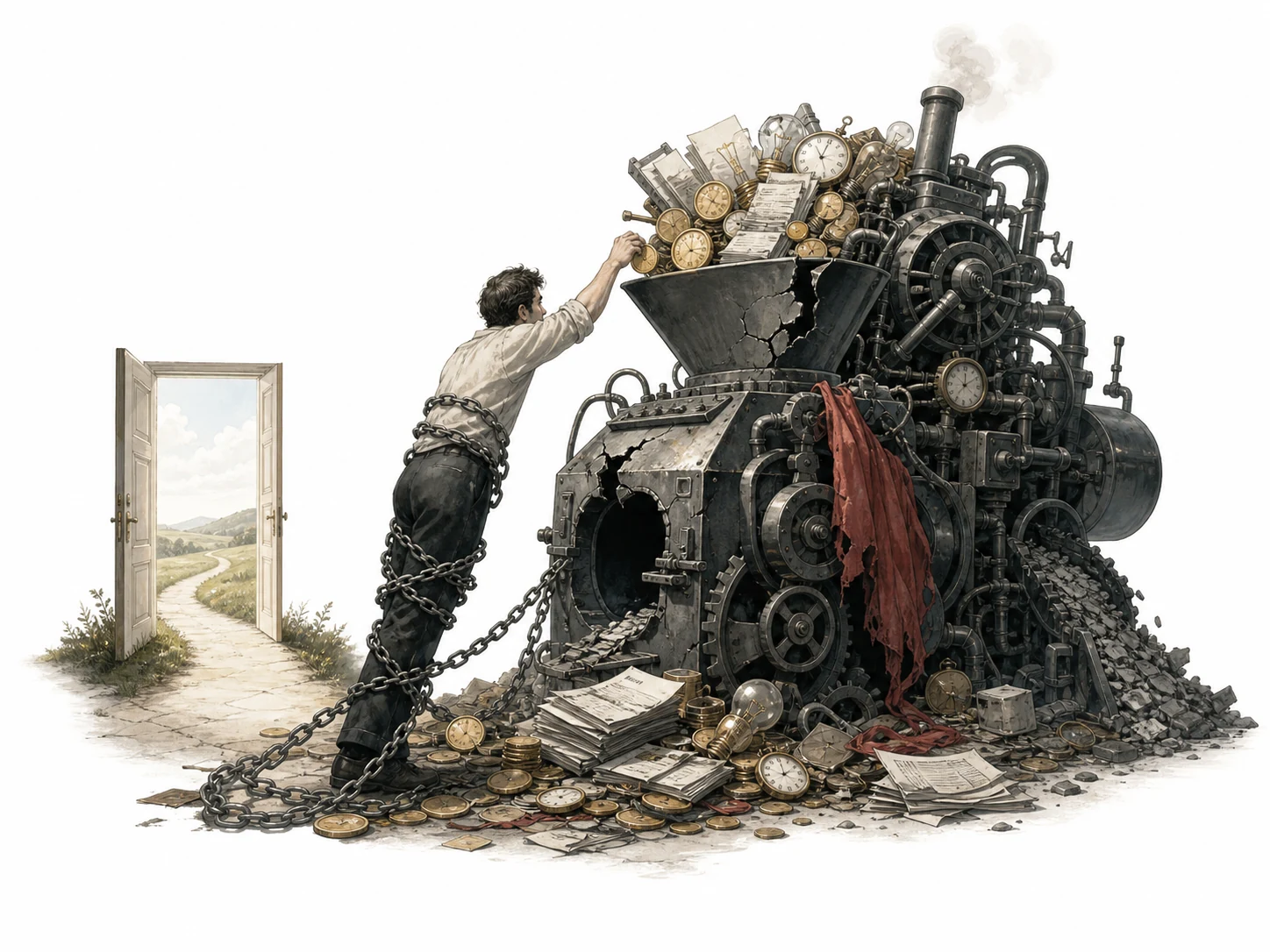
Editorial illustration of a person throwing good money after bad into a hole
Creator Richard Thaler (popularized the term)Origin Behavioral EconomicsYear 1980sCategory Cognitive Bias, Economics

QUICK ANSWER

Here is the idea in plain English.

The sunk cost fallacy is the tendency to continue investing in something because of past investment, even when the future costs outweigh the future benefits. It is a cognitive bias that leads to bad decisions in business, relationships, and everyday life. The correct decision should be based on future costs and benefits, not past investments. But human beings are terrible at this.

If you remember only a few things, remember these.

The basic move

The sunk cost fallacy is simple: you keep doing something because you have already invested in it, even when it is clearly not working. The money, time, or effort you have already spent is gone. It is sunk. It should not matter. But it does matter to you.

Why it matters

The correct decision is based on the future. Is it worth continuing? What will it cost going forward? What will it yield going forward? The past is irrelevant. But humans are not rational. The past feels relevant. The past feels like a reason to continue.

Use it deliberately

Ask: what would I do if I had not already invested? If the answer is different, the sunk cost is clouding your judgment.

CORE IDEA

The concept in its simplest useful form.

What Does the Sunk Cost Fallacy Mean in Simple Terms?

The sunk cost fallacy is simple: you keep doing something because you have already invested in it, even when it is clearly not working. The money, time, or effort you have already spent is gone. It is sunk. It should not matter. But it does matter to you.

The correct decision is based on the future. Is it worth continuing? What will it cost going forward? What will it yield going forward? The past is irrelevant. But humans are not rational. The past feels relevant. The past feels like a reason to continue.

The sunk cost fallacy is why people stay in bad relationships, keep failing businesses, and finish boring movies. They cannot let go of the past.
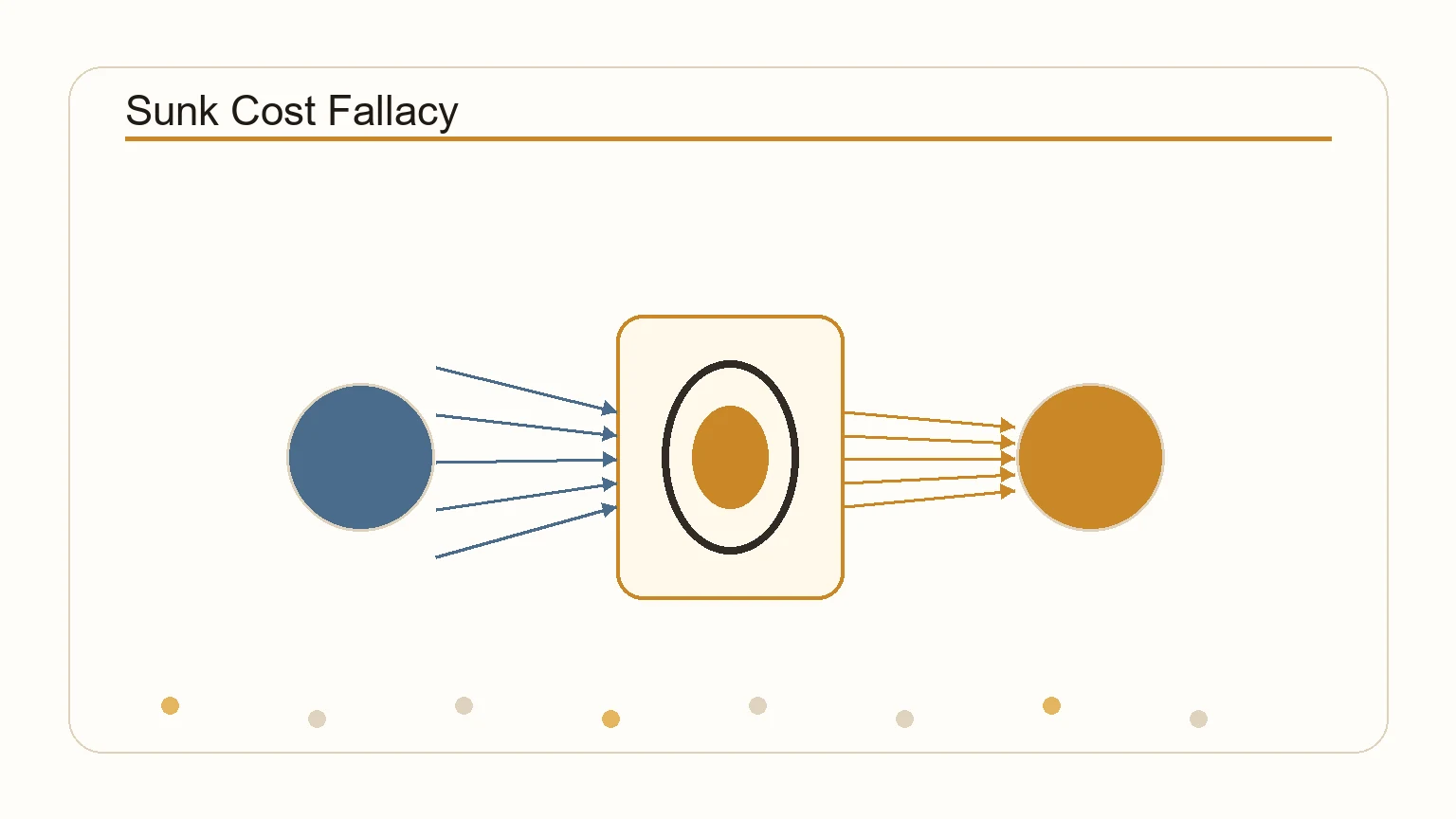

The small mechanism underneath the big idea.

01

The Story Behind the Sunk Cost Fallacy

The classic example of the sunk cost fallacy is the Concorde. The British and French governments spent billions developing the supersonic jet. When it became clear the project was economically unviable, they kept going. They had already spent too much to stop. The project was a financial disaster. The Concorde fallacy became another name for the sunk cost fallacy.

Richard Thaler, a pioneer of behavioral economics, popularized the concept. He showed that human beings systematically ignore the rule that only future costs and benefits matter. We are trapped by our past investments.

The sunk cost fallacy is everywhere. You stay in a bad relationship because you have invested years. You keep reading a boring book because you have already read 100 pages. You continue a failed project because you have already spent money. The logic is always the same: I have already invested, so I cannot stop.

02

Why the Sunk Cost Fallacy Became Famous

The sunk cost fallacy became famous because it explains one of the most common irrational behaviors: escalating commitment. People keep investing in failing projects. They throw good money after bad. They cannot admit they were wrong.

The concept was popularized by behavioral economists like Richard Thaler. Thaler showed that sunk costs are a systematic error in human decision making. We are not rational economic actors. We are trapped by our past.

Today, the sunk cost fallacy is a foundational concept in behavioral economics. It is taught in business schools, economics classes, and psychology courses. It is one of the most useful mental models for avoiding bad decisions.

Diagram showing a person trapped by past investment, continuing to walk forward despite a dead end
A diagram showing a person continuing to walk into a dead end because they have already walked too far. The past path is irrelevant. The future is the only thing that matters.

Where this idea shows up outside the textbook.

History

The Concorde project is the classic example. The British and French governments spent billions. They could not stop. The project was a financial disaster. The sunk cost fallacy killed it.

Business

A company invests millions in a failing project. They keep investing. They cannot admit they were wrong. The project fails. The company loses more money. The sunk cost fallacy is the cause.

Everyday Life

You stay in a bad relationship because you have invested years. You think: I cannot leave now. I have invested too much. You are wrong. The past is gone. The future is all that matters.

Internet Culture

You start watching a series on Netflix. It is terrible. You keep watching. You have already invested 4 hours. You think: I have to finish it. The sunk cost fallacy is why you waste your time.

CONCEPT MAP

Every idea has neighbors. This is where the current concept sits in the TinyThat knowledge graph.

Current concept

Sunk Cost Fallacy

You keep investing because you already invested.

Commonly confused with

Loss Aversion

What people often get wrong about this idea.

The sunk cost fallacy is about wasting money.

It is about wasting money, time, and effort. The principle is the same. The past is gone. It should not influence your decisions.

Sunk costs are always irrational.

Sometimes sunk costs matter strategically. Commitment can be a signal. But in most cases, they are irrational. The fallacy is the default.

You can avoid the sunk cost fallacy by ignoring the past.

You can try. It is hard. The past feels relevant. It is not. The effort is worth it. The reward is better decisions.

Useful ideas become dangerous when they are stretched too far.

Criticisms and Limitations of the Sunk Cost Fallacy

The sunk cost fallacy is a powerful model, but it has limitations. Sometimes sunk costs matter strategically. Commitment can be a signal. Staying in a project can be valuable.

The fallacy is not always a fallacy. Sometimes the past matters because it signals commitment. The challenge is knowing when the past matters and when it does not.

The sunk cost fallacy is often used to dismiss legitimate investments. Not every continued investment is a fallacy. Sometimes continuing is the right decision.

Three simple ways to apply the idea without turning it into a slogan.

1

Ask: what would I do if I had not already invested? If the answer is different, the sunk cost is clouding your judgment

Ask: what would I do if I had not already invested? If the answer is different, the sunk cost is clouding your judgment.

2

Focus on future costs and benefits

Focus on future costs and benefits. The past is irrelevant. The only question is: is it worth continuing?

3

Be willing to admit you were wrong

Be willing to admit you were wrong. It is not a failure. It is a learning opportunity.

EXPLORE NEXT

The best next ideas to read after this one.

Quick answers to common questions.

What is the sunk cost fallacy in simple terms?

You keep doing something because you already invested in it, even when it is clearly not working. The past investment is gone. It should not matter. But it does.

What is an example of the sunk cost fallacy?

You buy a movie ticket. The movie is terrible. You stay because you paid for it. The money is gone. You are wasting your time.

How do you avoid the sunk cost fallacy?

Ask: what would I do if I had not already invested? If the answer is different, the sunk cost is clouding your judgment. Focus on the future.

Why is the sunk cost fallacy a problem?

It leads to bad decisions. You keep investing in failing projects. You waste time, money, and effort. You cannot let go of the past.