COGNITIVE BIAS

What Is Confirmation Bias? Why You Believe What You Want to Believe

You are not as objective as you think. Confirmation bias makes you seek evidence that supports your beliefs and ignore evidence that challenges them.

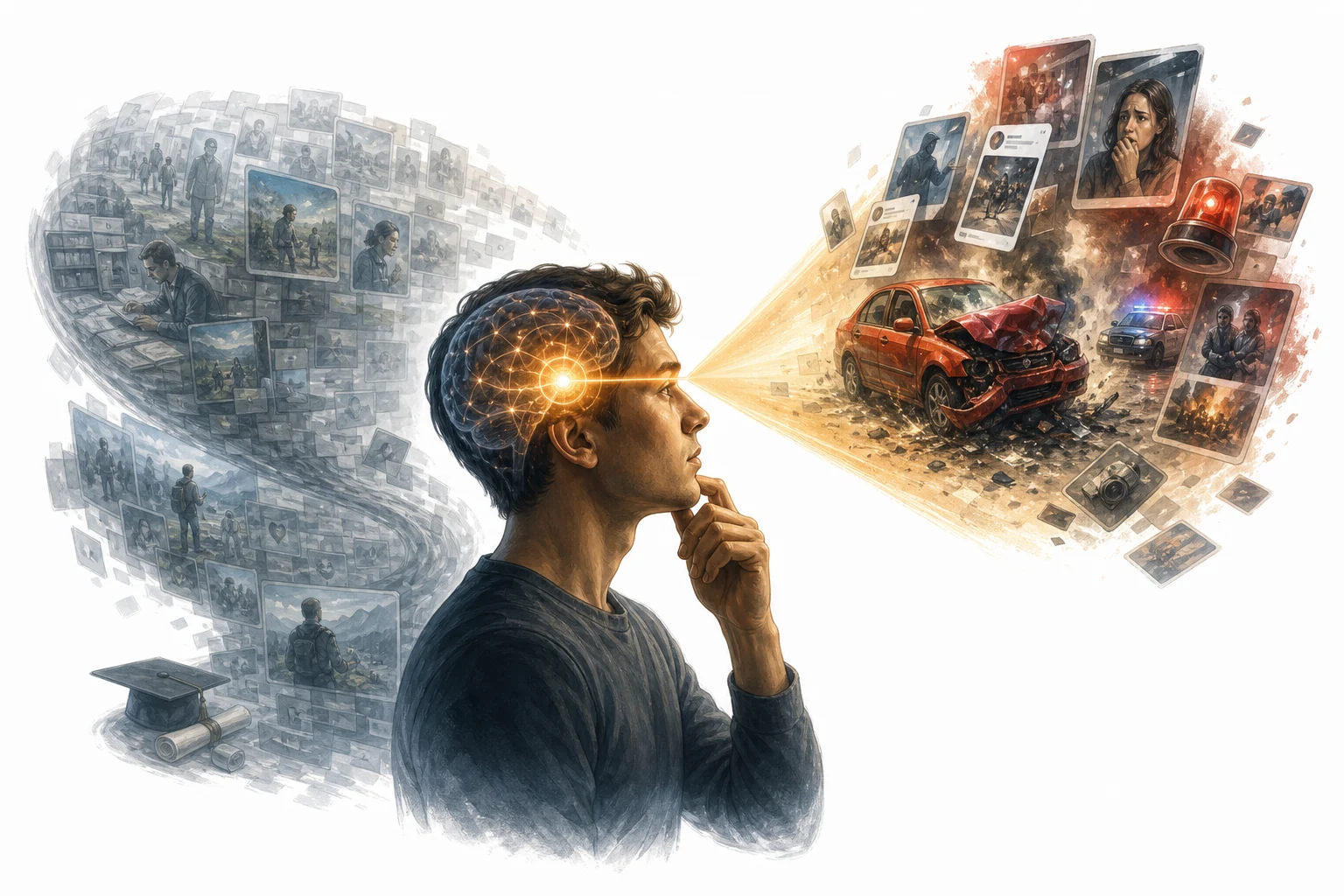
Editorial illustration of a person looking at evidence through a colored lens that filters out conflicting information
Creator Peter Wason (coined the term)Origin Cognitive PsychologyYear 1960Category Cognitive Bias

QUICK ANSWER

Here is the idea in plain English.

Confirmation bias is the tendency to search for, interpret, favor, and recall information that confirms or supports your prior beliefs. It is one of the most pervasive and powerful cognitive biases. People on both sides of any debate will find evidence that supports their side and dismiss evidence that contradicts it. This is why rational arguments often fail to change minds.

If you remember only a few things, remember these.

The basic move

Confirmation bias is the tendency to favor information that confirms your existing beliefs. If you think something is true, you will notice evidence that supports it. You will ignore or dismiss evidence that contradicts it.

Why it matters

This is not about being stupid. It is about being efficient. The brain is lazy. It prefers to process information that fits what it already knows. Challenging beliefs is mentally expensive. Confirmation is cheap.

Use it deliberately

Actively seek disconfirming evidence. Ask: what would prove me wrong?

CORE IDEA

The concept in its simplest useful form.

What Does Confirmation Bias Mean in Simple Terms?

Confirmation bias is the tendency to favor information that confirms your existing beliefs. If you think something is true, you will notice evidence that supports it. You will ignore or dismiss evidence that contradicts it.

This is not about being stupid. It is about being efficient. The brain is lazy. It prefers to process information that fits what it already knows. Challenging beliefs is mentally expensive. Confirmation is cheap.

The bias applies to everything. Politics, religion, relationships, and business. You see what you want to see. You hear what you want to hear. You remember what you want to remember.
The small mechanism underneath the big idea.

01

The Story Behind Confirmation Bias

Peter Wason was a psychologist who studied how people reason. In 1960, he designed an experiment called the '2-4-6 task.' He gave participants a sequence of three numbers (2, 4, 6) and asked them to figure out the rule. Participants could test their own sequences and Wason would tell them if it fit the rule.

Most participants tested sequences that confirmed their hypothesis. They tried 4, 6, 8. Then 10, 12, 14. They concluded the rule was 'even numbers.' The real rule was 'any three ascending numbers.' They never tested a sequence like 3, 5, 7 or 10, 20, 30.

Wason's experiment revealed something fundamental about human reasoning: people seek confirmation, not contradiction. They want to prove their beliefs right, not test if they are wrong. This is confirmation bias.

02

Why Confirmation Bias Became Famous

Confirmation bias became famous because it explains why people do not change their minds. You show someone evidence. They ignore it. You show them more evidence. They dismiss it. You wonder: why are they so stubborn? The answer is confirmation bias.

The concept spread through psychology, economics, and public discourse. It explains political polarization, bad investment decisions, and failed relationships.

Today, confirmation bias is one of the most widely recognized cognitive biases. It is a foundational concept in behavioral economics, behavioral psychology, and critical thinking.

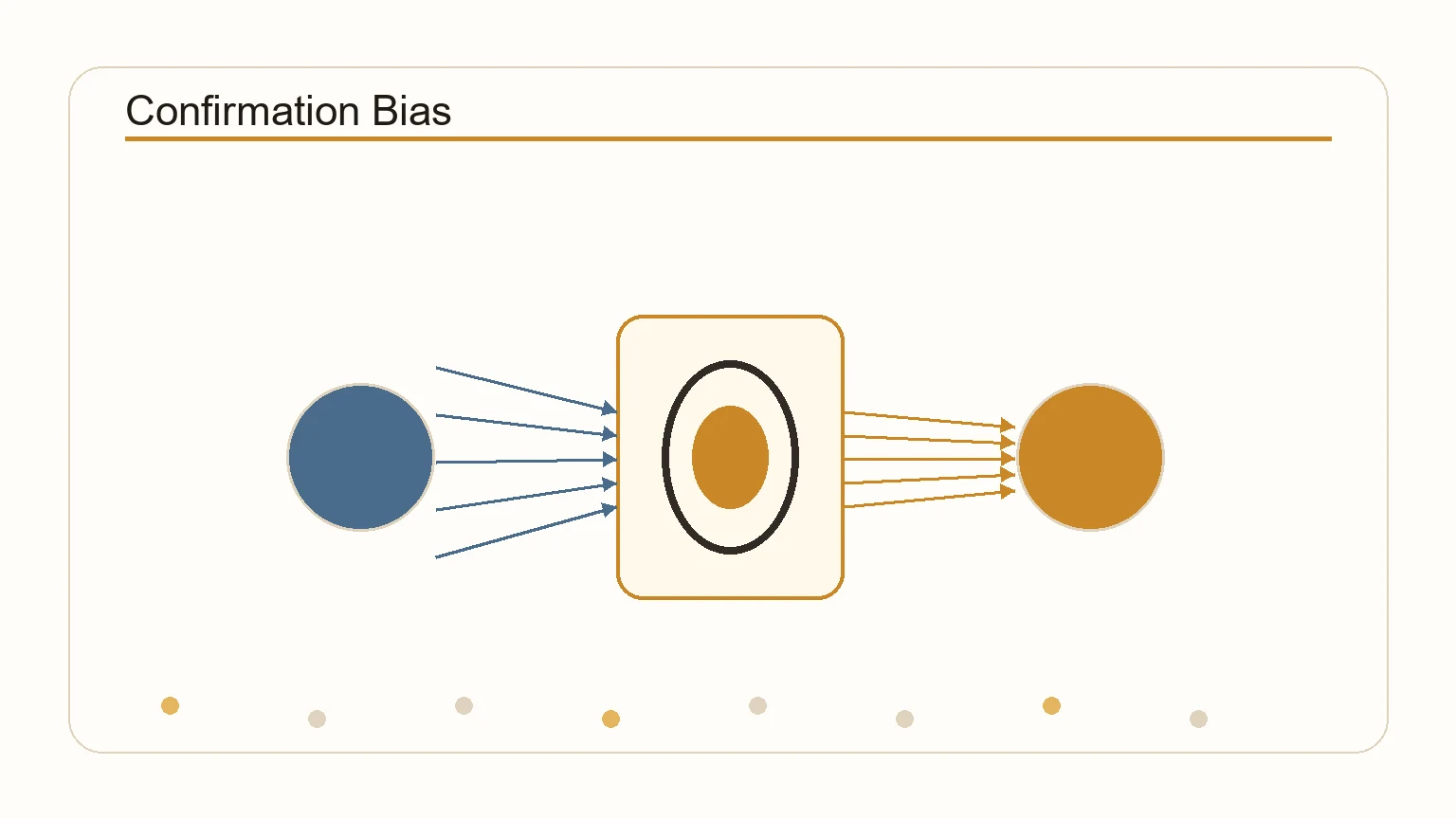
Diagram showing how people filter evidence to confirm existing beliefs
A diagram showing two people looking at the same evidence through different colored lenses. Each sees evidence that supports their existing belief.

Where this idea shows up outside the textbook.

History

Peter Wason's 2-4-6 experiment showed that people seek confirmation, not contradiction. They test hypotheses that support their beliefs, not hypotheses that challenge them.

Politics

People watch news channels that confirm their political views. They follow social media accounts that share their opinions. They are not seeking the truth. They are seeking confirmation.

Everyday Life

You believe a colleague is incompetent. You notice every mistake they make. You ignore every success. You are not being objective. You are confirming your belief.

Internet Culture

Social media algorithms are confirmation bias machines. They show you content you already agree with. They reinforce your beliefs. They do not challenge them.

CONCEPT MAP

Every idea has neighbors. This is where the current concept sits in the TinyThat knowledge graph.

Current concept

Confirmation Bias

People notice and trust evidence that supports what they already believe.

Commonly confused with

Motivated Reasoning

What people often get wrong about this idea.

Confirmation bias means people are stupid.

No. Confirmation bias is a feature of how the brain works. Even smart people are vulnerable. In fact, smart people are often more vulnerable because they are better at rationalizing.

You can eliminate confirmation bias.

No. You can only manage it. The brain is wired for confirmation. It is a feature, not a bug. The goal is awareness, not elimination.

Confirmation bias only applies to politics.

It applies to everything. Business, relationships, health, and self-perception. You see what you want to see in every domain.

Useful ideas become dangerous when they are stretched too far.

Criticisms and Limitations of Confirmation Bias

Confirmation bias is a powerful model, but it is not the only bias. People also have other biases: availability, anchoring, framing, and more. Confirmation bias is one of many.

The bias can be overstated. Sometimes people do change their minds. Sometimes they seek contradictory evidence. The bias is a tendency, not a rule.

Confirmation bias is often used as a dismissal. People accuse others of confirmation bias without examining their own. The bias applies to everyone, including the person pointing it out.

Three simple ways to apply the idea without turning it into a slogan.

1

Actively seek disconfirming evidence

Actively seek disconfirming evidence. Ask: what would prove me wrong?

2

Listen to people who disagree with you

Listen to people who disagree with you. They might be right. At the very least, they will challenge your assumptions.

3

Be skeptical of your own memory

Be skeptical of your own memory. You remember what confirms your beliefs. You forget what challenges them.

EXPLORE NEXT

The best next ideas to read after this one.

Quick answers to common questions.

What is confirmation bias in simple terms?

You find evidence that supports what you already believe. You ignore evidence that contradicts it. You think you are objective. You are not.

What is an example of confirmation bias?

You believe a political candidate is corrupt. You notice every story about their corruption. You ignore every story about their integrity. You are confirming your belief.

How do you overcome confirmation bias?

Actively seek disconfirming evidence. Ask: what would prove me wrong? Listen to people who disagree with you.

Why is confirmation bias a problem?

It prevents you from seeing the truth. It makes you think you are right when you are wrong. It is the enemy of learning.