DECISION MAKING

What Is Second-Order Thinking? Why You Must Think Beyond the First Effect

You make a decision. You see the immediate result. You think you understand the consequences. You do not. Second-order thinking is about the consequences of consequences.

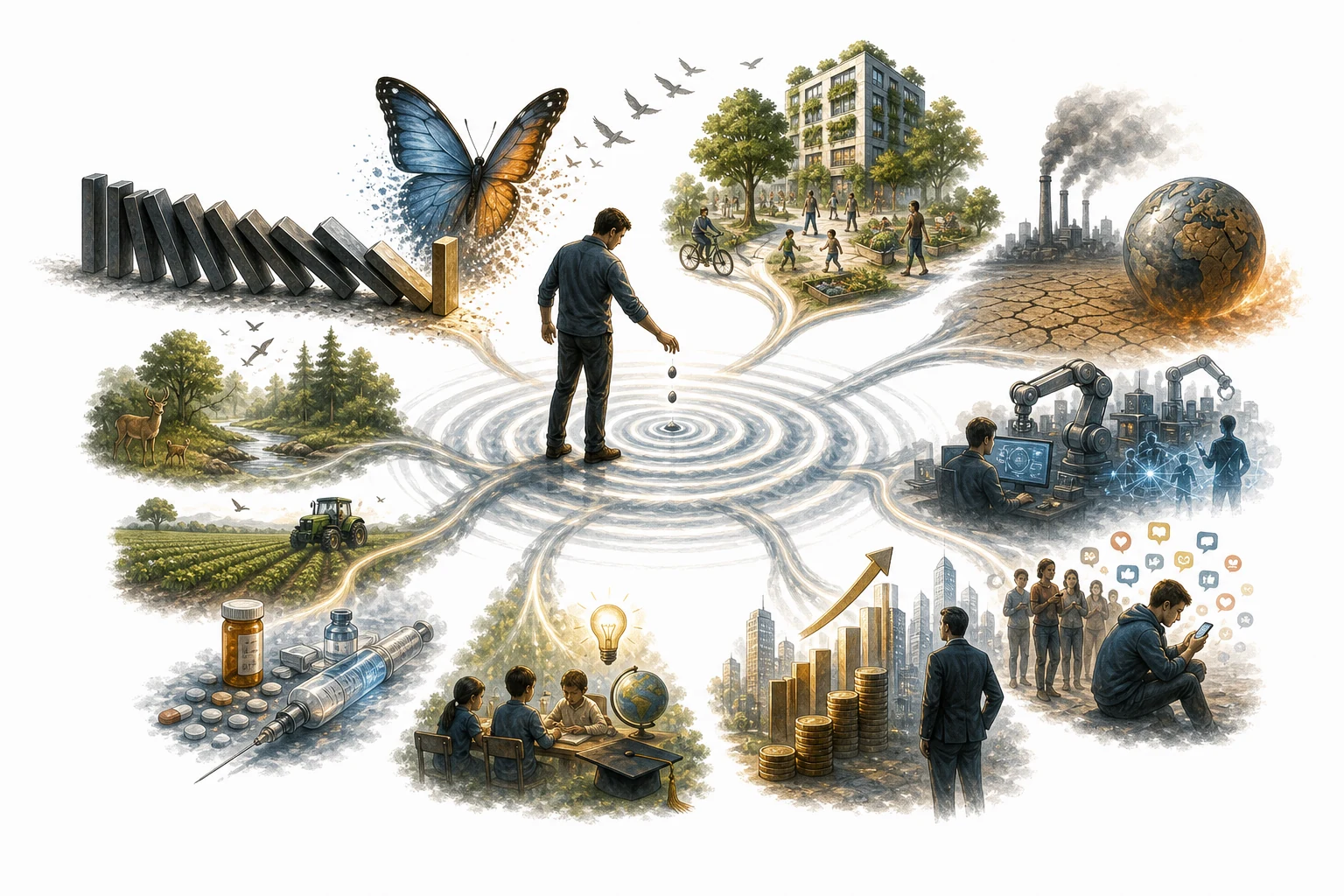
Editorial illustration of a person seeing the second and third consequences of a decision
Creator Unknown (popularized by Shane Parrish)Origin Decision MakingYear UnknownCategory Decision Making, Strategy

QUICK ANSWER

Here is the idea in plain English.

Second-order thinking is the practice of considering the consequences of consequences. First-order thinking is about the immediate effect. Second-order thinking is about what happens next. It is a tool for better decision making. It helps you avoid unintended consequences, anticipate problems, and make smarter choices. The concept is essential for strategy, investing, and life.

If you remember only a few things, remember these.

The basic move

Second-order thinking is simple: think beyond the first effect. You make a decision. The first effect is obvious. The second effect is what happens next. The third effect is what happens after that.

Why it matters

First-order thinking is about the immediate result. Second-order thinking is about the consequences of the consequences. It is about thinking in systems.

Use it deliberately

When making a decision, ask: what happens next? And then what happens after that?

CORE IDEA

The concept in its simplest useful form.

What Does Second-Order Thinking Mean in Simple Terms?

Second-order thinking is simple: think beyond the first effect. You make a decision. The first effect is obvious. The second effect is what happens next. The third effect is what happens after that.

First-order thinking is about the immediate result. Second-order thinking is about the consequences of the consequences. It is about thinking in systems.

Second-order thinking helps you avoid unintended consequences. It helps you make better decisions. It helps you think like a strategist.
The small mechanism underneath the big idea.

01

The Story Behind Second-Order Thinking

Second-order thinking has been practiced by strategists for centuries. The concept was popularized by Shane Parrish of Farnam Street. He argued that most people think only about the first-order effects of their decisions. They do not think about what happens next.

The concept is central to systems thinking and game theory. It is about anticipating the unintended consequences of your actions.

Second-order thinking is a tool for better decision making. It helps you see beyond the obvious. It helps you avoid traps.

02

Why Second-Order Thinking Became Famous

Second-order thinking became famous because it is a practical tool for better decisions. It helps you avoid the trap of first-order thinking. It helps you see the big picture.

The concept is popular in business, investing, and strategy. It is used by successful people to anticipate problems and make smarter choices.

Today, second-order thinking is a foundational concept in decision making. It is taught in business schools and applied in practice.

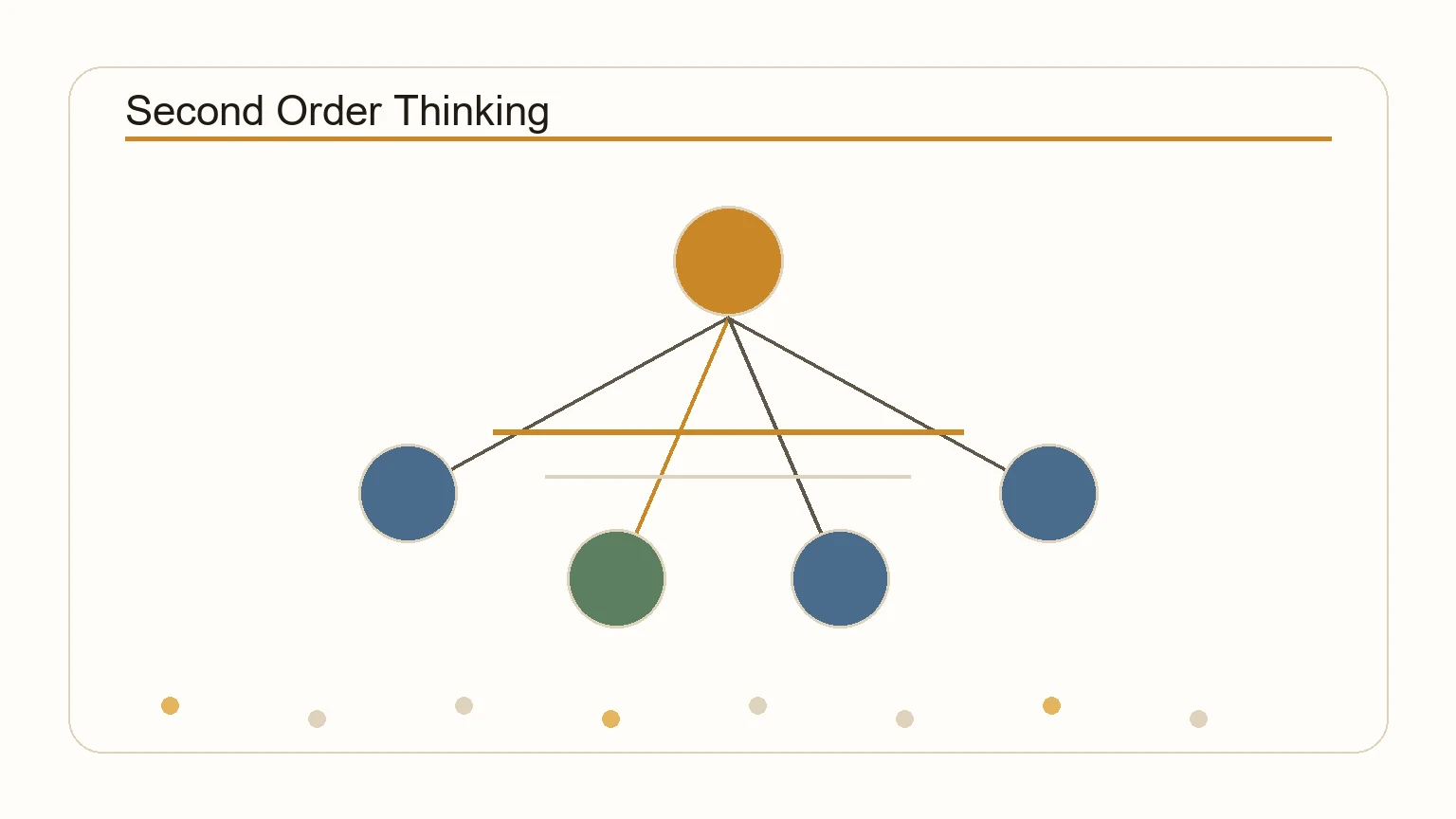
Diagram showing the chain of consequences: first-order, second-order, and third-order effects
A diagram showing the chain of consequences from a decision: first-order, second-order, and third-order effects.

Where this idea shows up outside the textbook.

History

The law of unintended consequences is a classic example of second-order thinking. Many policies have backfired because leaders did not think beyond the first effect.

Business

A company cuts costs. The first-order effect is higher profits. The second-order effect is lower quality. The third-order effect is lost customers.

Everyday Life

You eat a donut. The first-order effect is pleasure. The second-order effect is a sugar crash. The third-order effect is weight gain.

Internet Culture

An influencer posts something controversial. The first-order effect is attention. The second-order effect is backlash. The third-order effect is lost followers.

CONCEPT MAP

Every idea has neighbors. This is where the current concept sits in the TinyThat knowledge graph.

Current concept

Second-Order Thinking

Second-order thinking is the practice of considering the consequences of consequences. First-order thinking is about the immediate effect. Second-order thinking is about what happens next. It is a tool for better decision making. It helps you avoid unintended consequences, anticipate problems, and make smarter choices. The concept is essential for strategy, investing, and life.

What people often get wrong about this idea.

Second-order thinking is about predicting the future.

No. It is about anticipating consequences. You cannot predict everything. You can think about what happens next.

Second-order thinking is only for experts.

No. It is for everyone. Anyone can learn to think beyond the first effect.

Second-order thinking means you should never make decisions.

No. It means you should make better decisions. Think before you act.

Useful ideas become dangerous when they are stretched too far.

Criticisms and Limitations of Second-Order Thinking

Second-order thinking is a powerful concept, but it has limitations. You cannot predict everything. The future is uncertain.

The concept can lead to paralysis. If you think too much, you may not act. The goal is balance: think, then act.

The concept is subjective. What counts as first-order or second-order is not always clear. The concept is a guide, not a rule.

Three simple ways to apply the idea without turning it into a slogan.

1

When making a decision, ask: what happens next? And then what happens after that?

When making a decision, ask: what happens next? And then what happens after that?

2

Think about the chain of consequences

Think about the chain of consequences. Do not stop at the first effect.

3

Consider the unintended consequences

Consider the unintended consequences. They are often the most important.

EXPLORE NEXT

The best next ideas to read after this one.

Quick answers to common questions.

What is second-order thinking in simple terms?

Thinking about the consequences of consequences. The first effect is never the whole story.

What is an example of second-order thinking?

A company cuts costs. The first effect is higher profits. The second effect is lower quality. The third effect is lost customers.

How do you use second-order thinking?

When making a decision, ask: what happens next? And then what happens after that?

Why is second-order thinking a problem?

It is hard. Most people stop at the first effect. They do not think about what happens next.