Word Origins

Why Do We Call Independent People 'Mavericks'?

It sounds like it should mean someone brave and rebellious by nature. The original maverick was just a guy who couldn't be bothered to brand his cows.

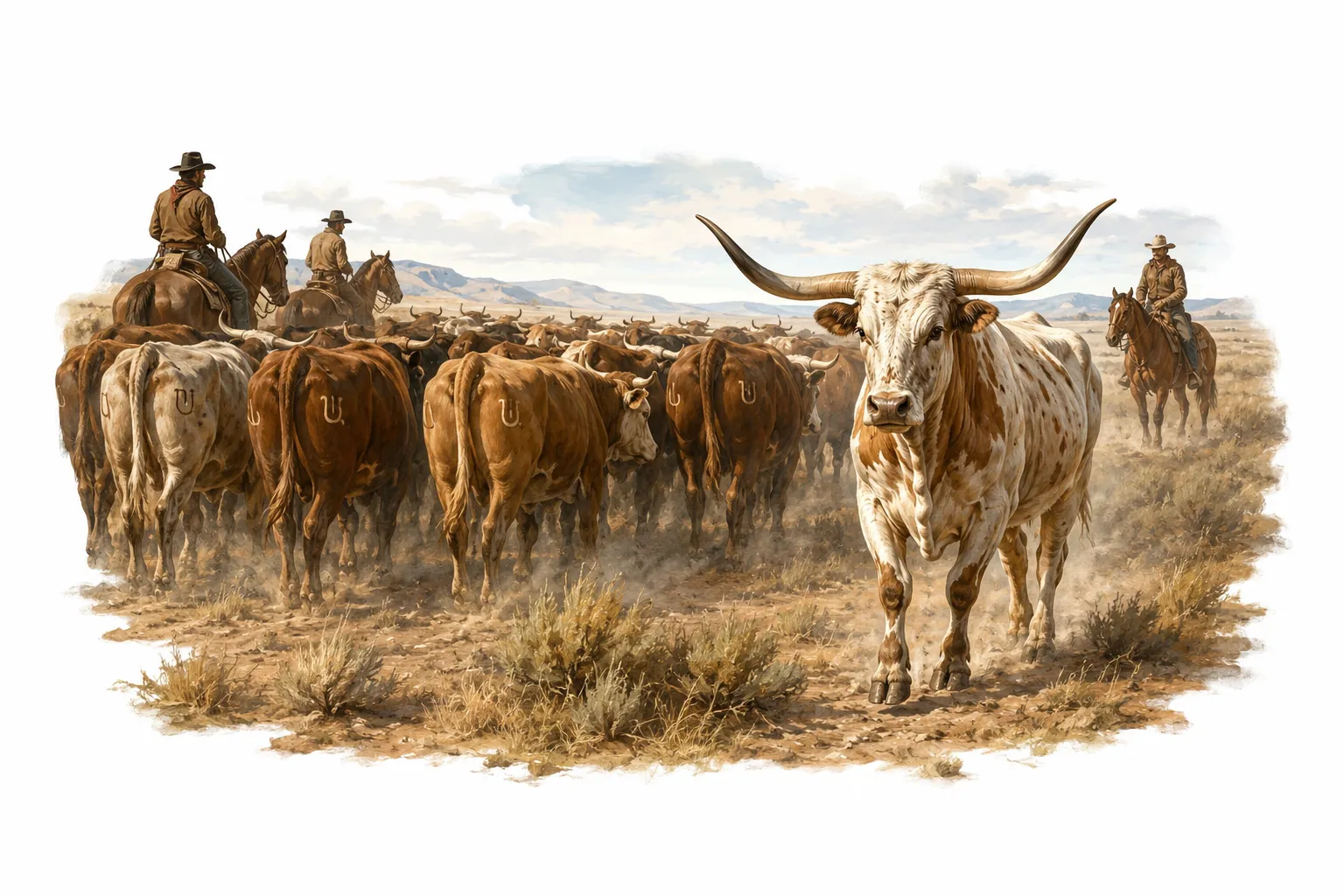
An unbranded longhorn steer standing alone on open Texas rangeland
Named after Samuel Augustus Maverick (1803–1870)Original meaning An unbranded stray cowLocation Texas, mid-1800sFigurative meaning emerged Late 1800s

QUICK ANSWER

Here is the idea in plain English.

'Maverick' comes from Samuel Augustus Maverick, a 19th-century Texas lawyer and rancher who famously left his cattle unbranded. Because unbranded strays got assumed to be his, any unbranded stray cow became known as 'a maverick' — and the word later broadened to mean any independent-minded person who won't follow the herd.

If you remember only a few things, remember these.

The basic move

Strip away the cattle and the concept is simple: a maverick is anything that exists outside the marking system everyone else uses to sort and claim. On the range, that system was a branding iron. In a company, a political party, or a family, the 'brand' is the expected behavior, the group loyalty, the agreed-upon way of doing things.

Why it matters

A maverick, then and now, isn't necessarily rebellious on purpose — they're just legible as unclaimed. The word migrated from livestock to people in the late 1800s specifically because the pattern matched: someone who doesn't carry the group's mark, moving independently through a system built to sort everyone into herds.

Use it deliberately

Reserve 'maverick' for someone who acts independently of group norms or expectations — not simply someone who's contrarian for its own sake. The original sense implies unaffiliated, not oppositional; a maverick doesn't necessarily fight the herd, they're just not part of it.

CORE IDEA

The concept in its simplest useful form.

The Word for 'Doesn't Belong to the System'

Strip away the cattle and the concept is simple: a maverick is anything that exists outside the marking system everyone else uses to sort and claim. On the range, that system was a branding iron. In a company, a political party, or a family, the 'brand' is the expected behavior, the group loyalty, the agreed-upon way of doing things.

A maverick, then and now, isn't necessarily rebellious on purpose — they're just legible as unclaimed. The word migrated from livestock to people in the late 1800s specifically because the pattern matched: someone who doesn't carry the group's mark, moving independently through a system built to sort everyone into herds.

The small mechanism underneath the big idea.

01

The Rancher Who Didn't Act Like One

Samuel Maverick was a lawyer, land speculator, and politician — not really a cattleman at heart. Around 1845, he acquired a small herd of cattle, reportedly as payment for a debt, and left it in the care of an employee on his land near the Texas coast, then largely ignored it.

Every other rancher in the region branded calves methodically each year to mark ownership. Maverick's cattle went unbranded for years — accounts differ on whether this was neglect, a dislike of the practice, or simple disinterest in ranching. Either way, his herd multiplied, unmarked, and started wandering.

Neighboring ranchers developed a simple shorthand: any stray calf without a brand, wandering loose on the range, was probably one of Maverick's. They started calling such animals 'mavericks' — and then, inevitably, claiming plenty of unbranded cattle that weren't his at all, simply because unbranded meant fair game.

02

From Cattle Slang to National Vocabulary

The ranching sense of 'maverick' stayed fairly regional to Texas cattle country through the mid-1800s. Its jump to a general figurative meaning — an independent person who doesn't align with any group or party — took hold by the 1880s and accelerated through American politics in the 20th century, where 'maverick politician' became a durable label for anyone who broke from their party line.

The word got another huge cultural boost from film and television using 'Maverick' as a character name synonymous with charm and independence, cementing the figurative sense in pop culture well beyond its ranching roots.

Illustration of a branded cattle herd with one unbranded animal standing apart
An illustration of a cattle herd, every animal marked with an identical brand symbol, except for one unmarked animal standing slightly apart from the group.

Where this idea shows up outside the textbook.

In politics

A legislator who regularly votes against their own party's official position.

In business

A founder who deliberately ignores conventional industry practice to build something different.

In its literal, original sense

Ranchers still occasionally use 'maverick' for an unbranded stray animal today.

In pop culture

Used as a callsign or nickname specifically to signal a character who breaks rules and acts alone.

CONCEPT MAP

Every idea has neighbors. This is where the current concept sits in the TinyThat knowledge graph.

Current concept

Why Do We Call Independent People 'Mavericks'

'Maverick' comes from Samuel Augustus Maverick, a 19th-century Texas lawyer and rancher who famously left his cattle unbranded. Because unbranded strays got assumed to be his, any unbranded stray cow became known as 'a maverick' — and the word later broadened to mean any independent-minded person who won't follow the herd.

What people often get wrong about this idea.

Maverick was a rebellious cattleman who refused to brand cattle on principle.

Historical accounts suggest he simply wasn't an active or engaged rancher — the lack of branding was neglect or practicality, not ideology.

All his cattle were truly his.

Because unbranded strays got assumed to be his by default, neighboring ranchers likely claimed plenty of genuinely ownerless cattle under his name too.

Three simple ways to apply the idea without turning it into a slogan.

1

Reserve 'maverick' for someone who acts independently of group norms or expectations — not simply someone who's contrarian for its own sake

Reserve 'maverick' for someone who acts independently of group norms or expectations — not simply someone who's contrarian for its own sake. The original sense implies unaffiliated, not oppositional; a maverick doesn't necessarily fight the herd, they're just not part of it.

Quick answers to common questions.

Was Samuel Maverick actually a cowboy?

Not really — he was primarily a lawyer, land speculator, and Texas political figure; ranching was a minor part of his career.

Did Maverick refuse to brand cattle on purpose?

Accounts vary, but most historical sources suggest disinterest or neglect rather than a deliberate protest against branding.

When did 'maverick' start meaning an independent person, not just a cow?

The figurative sense emerged by the 1880s, spreading from Texas ranching slang into general American English.