Word Origins

Why Is It Called a Boycott?

It sounds like an old legal term, something with Latin roots. It's actually named after one very unpopular Englishman in County Mayo, and it's barely older than the lightbulb.

A 19th-century Irish farmland estate with an empty harvest field
Year 1880Location County Mayo, IrelandTarget Captain Charles Cunningham BoycottOrganized by The Irish Land League

QUICK ANSWER

Here is the idea in plain English.

'Boycott' comes from Captain Charles Cunningham Boycott, a land agent in County Mayo, Ireland, who in 1880 was subjected to a coordinated campaign of social and economic isolation by his tenants and neighbors — organized by the Irish Land League — after he refused to lower rents. His name became a verb almost immediately.

If you remember only a few things, remember these.

The basic move

A boycott's power isn't drama, it's math. One neighbor refusing to sell you milk is a grudge. An entire community refusing, simultaneously and for the same reason, becomes a siege you can't fight back against — there's no single target to confront.

Why it matters

That's the mechanism the Land League discovered almost by accident: coordinated withdrawal of ordinary, everyday cooperation is far more devastating than a riot, and much harder to prosecute, because refusing to serve someone isn't illegal.

Use it deliberately

A boycott is specifically a coordinated refusal to engage economically or socially, usually to pressure a change in behavior or policy. It's distinct from a simple protest — the withholding of cooperation is the entire mechanism, not a side effect.

CORE IDEA

The concept in its simplest useful form.

A Weapon That Works Because It's Boring

A boycott's power isn't drama, it's math. One neighbor refusing to sell you milk is a grudge. An entire community refusing, simultaneously and for the same reason, becomes a siege you can't fight back against — there's no single target to confront.

That's the mechanism the Land League discovered almost by accident: coordinated withdrawal of ordinary, everyday cooperation is far more devastating than a riot, and much harder to prosecute, because refusing to serve someone isn't illegal.

The small mechanism underneath the big idea.

01

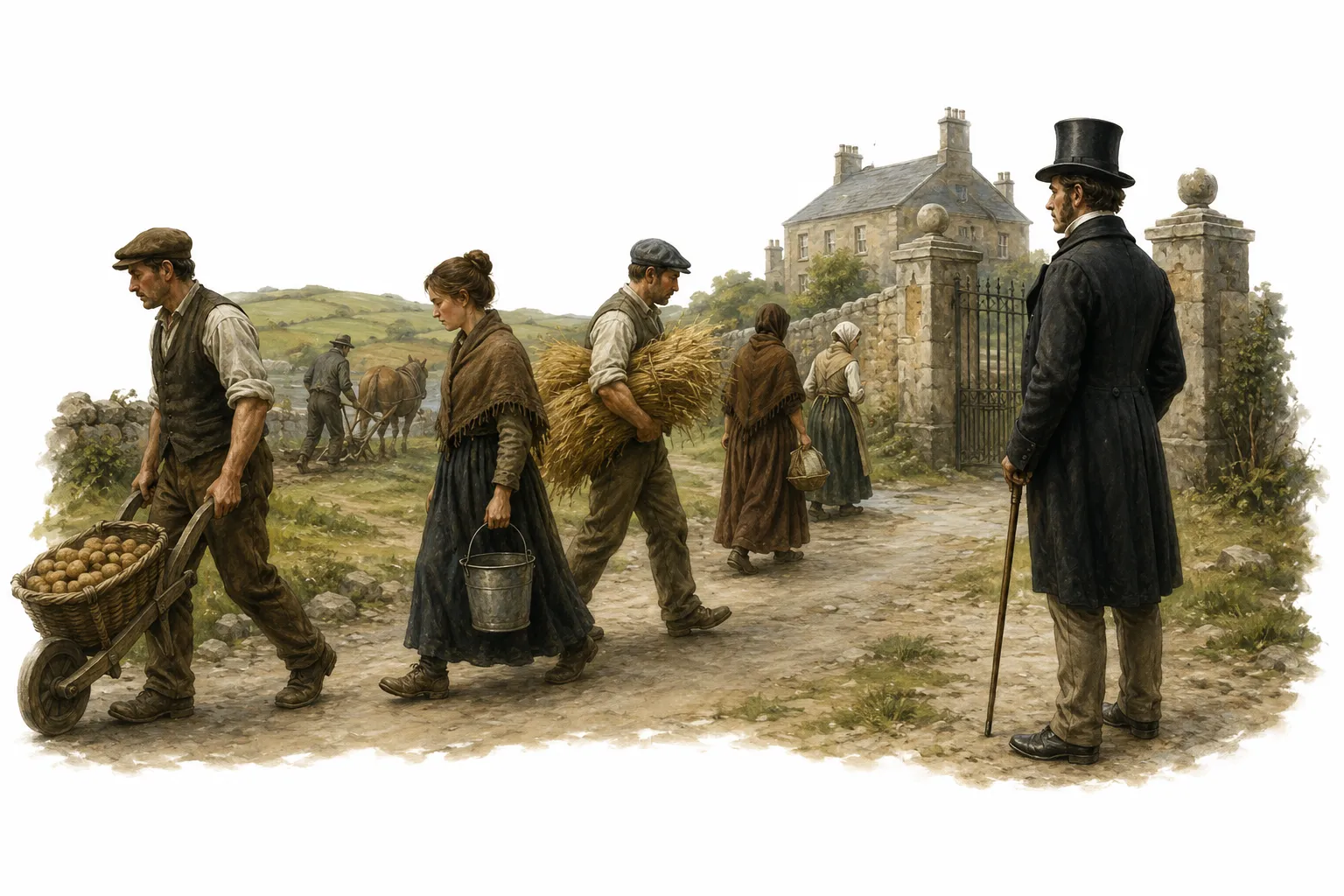
The Harvest Nobody Would Bring In

Charles Boycott managed the Mayo estate of Lord Erne, collecting rents from tenant farmers during a brutal agricultural depression. When tenants asked for a rent reduction in 1880 and Boycott refused, the newly formed Irish Land League — led politically by Charles Stewart Parnell — didn't call for violence. They called for something quieter and, it turned out, far more effective.

Parnell had just given a speech suggesting that instead of attacking anyone who took over an evicted tenant's farm, communities should simply refuse to deal with that person at all — no labor, no service, no conversation, total social exile. Boycott's own laborers walked off. Local shops wouldn't sell to him. His mail carrier stopped delivering. His crops sat in the fields, unharvested, because nobody would touch them for pay.

The story made international news — reporters loved the sheer theater of it — and within weeks, newspapers were using 'to boycott' as a ready-made verb for the tactic, because English didn't have a clean word for organized social exclusion yet.
02

A Word That Traveled Faster Than the News Usually Did

What's genuinely remarkable is the speed. Within about a year of the events in Mayo, 'boycott' had been absorbed into French (boycottage), German (boykottieren), and several other European languages — an unusually fast international adoption for a word tied to one specific, small-scale local dispute.

Boycott himself left Ireland not long after, his name having outgrown him entirely; he became, against his will, a permanent noun.

Diagram showing multiple community connections to a single figure all severing at once
A simple network diagram showing one central figure connected to a dozen surrounding nodes (shopkeeper, laborer, postman, neighbor), each connection shown breaking simultaneously.

Where this idea shows up outside the textbook.

In civil rights history

The 1955–56 Montgomery Bus Boycott, sustained refusal to ride segregated buses following Rosa Parks's arrest.

In consumer activism

Modern brand boycotts organized entirely online, coordinated through hashtags rather than town meetings.

In international relations

Olympic boycotts, like the US-led boycott of the 1980 Moscow Games.

In labor disputes

Union-organized boycotts of a company's products during a strike.

CONCEPT MAP

Every idea has neighbors. This is where the current concept sits in the TinyThat knowledge graph.

Current concept

Why Is It Called a Boycott

'Boycott' comes from Captain Charles Cunningham Boycott, a land agent in County Mayo, Ireland, who in 1880 was subjected to a coordinated campaign of social and economic isolation by his tenants and neighbors — organized by the Irish Land League — after he refused to lower rents. His name became a verb almost immediately.

What people often get wrong about this idea.

Boycott was a violent mob target.

The Land League's stated strategy was explicitly nonviolent social and economic isolation, not physical attack.

The word existed before 1880 and Boycott just made it famous.

The verb was coined specifically from his name in the immediate aftermath of the campaign against him — there's no earlier recorded use.

Three simple ways to apply the idea without turning it into a slogan.

1

A boycott is specifically a coordinated refusal to engage economically or socially, usually to pressure a change in behavior or policy

A boycott is specifically a coordinated refusal to engage economically or socially, usually to pressure a change in behavior or policy. It's distinct from a simple protest — the withholding of cooperation is the entire mechanism, not a side effect.

Quick answers to common questions.

Was Captain Boycott a real person?

Yes — Charles Cunningham Boycott was a British estate manager working in County Mayo, Ireland, and the 1880 campaign against him is well documented in contemporary newspapers.

Did the boycott work?

It successfully isolated Boycott, though his harvest was ultimately brought in by outside laborers escorted by police and soldiers, at enormous cost relative to the crop's value — a symbolic loss for his side either way.

Who organized the original boycott?

The Irish Land League, following a strategy publicly suggested by Charles Stewart Parnell just weeks earlier.