The stomach itself moves only a small amount during a rollercoaster drop, the dramatic sensation comes more from pressure and positional changes relative to surrounding tissue than from large-scale organ movement.
Body & Brain
Why does your stomach feel like it drops on a rollercoaster?
Why Does Your Stomach Drop on a Rollercoaster?
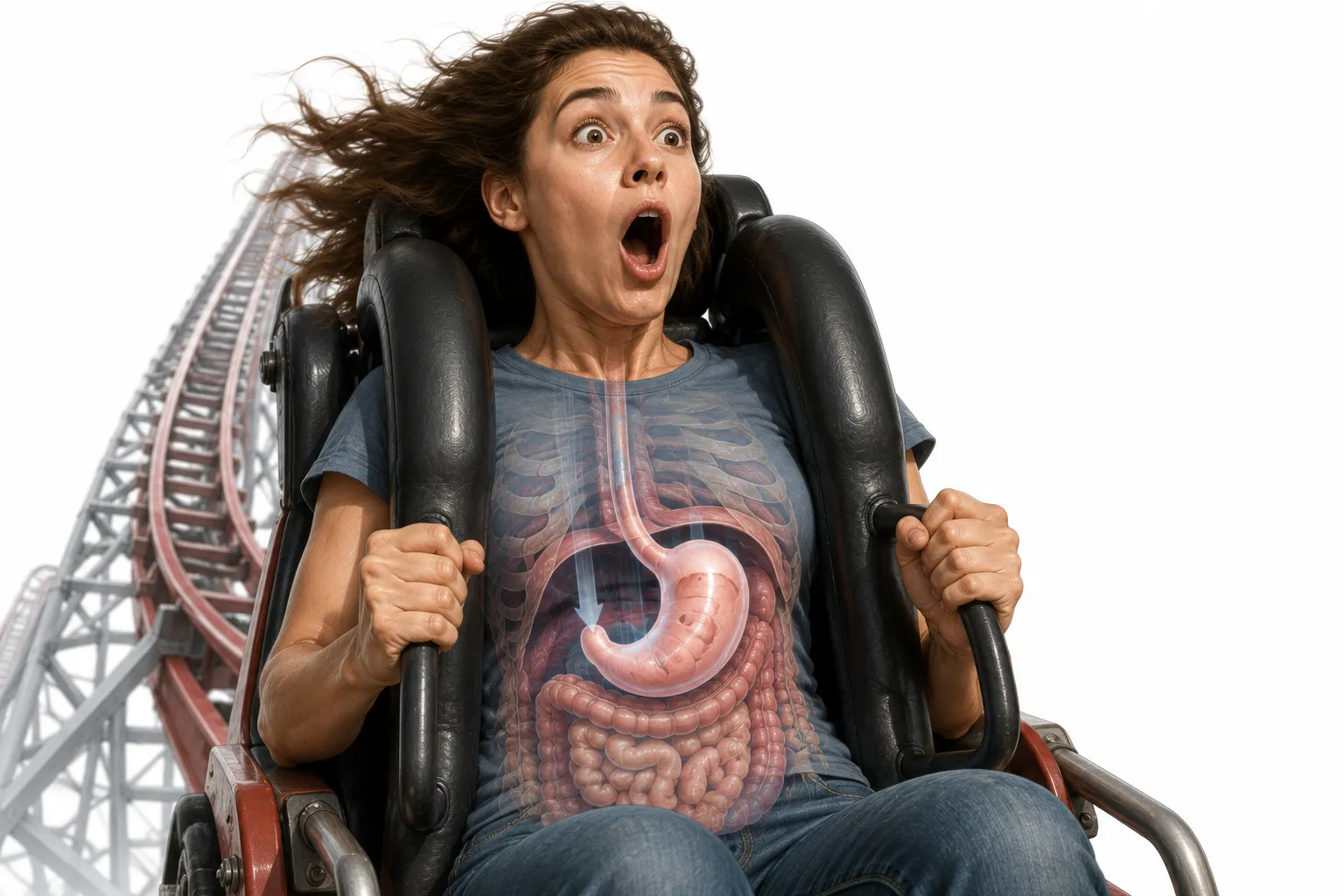
At the top of a rollercoaster drop, for one brief, lurching second, it genuinely feels like your stomach has been left behind.
On this page
The short answer
The stomach-drop feeling happens because your internal organs, including your stomach, are held in place by relatively loose connective tissue, and during the sudden downward acceleration of a rollercoaster drop, your body falls slightly faster than those organs settle, creating a brief sensation of internal floating and pressure change that the brain interprets as your stomach dropping.
Unlike bones, the stomach and other abdominal organs are held in place primarily by ligaments, connective tissue, and surrounding organs rather than being rigidly fixed to the skeleton. During normal standing or sitting, gravity constantly pulls down on these organs while surrounding tissue and muscle tone provide steady counter-support, producing the ordinary sensation of everything being settled comfortably in place. When a rollercoaster suddenly accelerates downward, especially during a steep drop that approaches or briefly exceeds the sensation of freefall, your entire body, including the abdominal organs, briefly experiences a sharp reduction in the support forces that normally hold everything steady. Because organs like the stomach are more loosely tethered than bone, they shift slightly relative to the surrounding structures during this instant, briefly pressing differently against nerves and tissue in the abdominal cavity. This registers as a distinct falling or dropping sensation. At the same time, the inner ear's vestibular system detects the sudden change in vertical acceleration, reinforcing the overall sensation of falling that the brain integrates alongside the physical shift happening inside the abdomen.
At a glance
This flexible support is what makes organ movement during sudden acceleration changes possible at all.
Your stomach actually moves a significant distance inside your body during a rollercoaster drop.
During freefall, your body and everything inside it, including your stomach, are accelerating downward at the same rate, briefly removing the normal support forces that keep your organs feeling settled in place.
Picture the contents of a car's glove compartment briefly floating upward the instant the car goes over a sudden dip at high speed, not because anything pushed them up, but because the support beneath them momentarily vanished.
Diagram
Why Does Your Stomach Drop on a Rollercoaster: the idea in one diagram
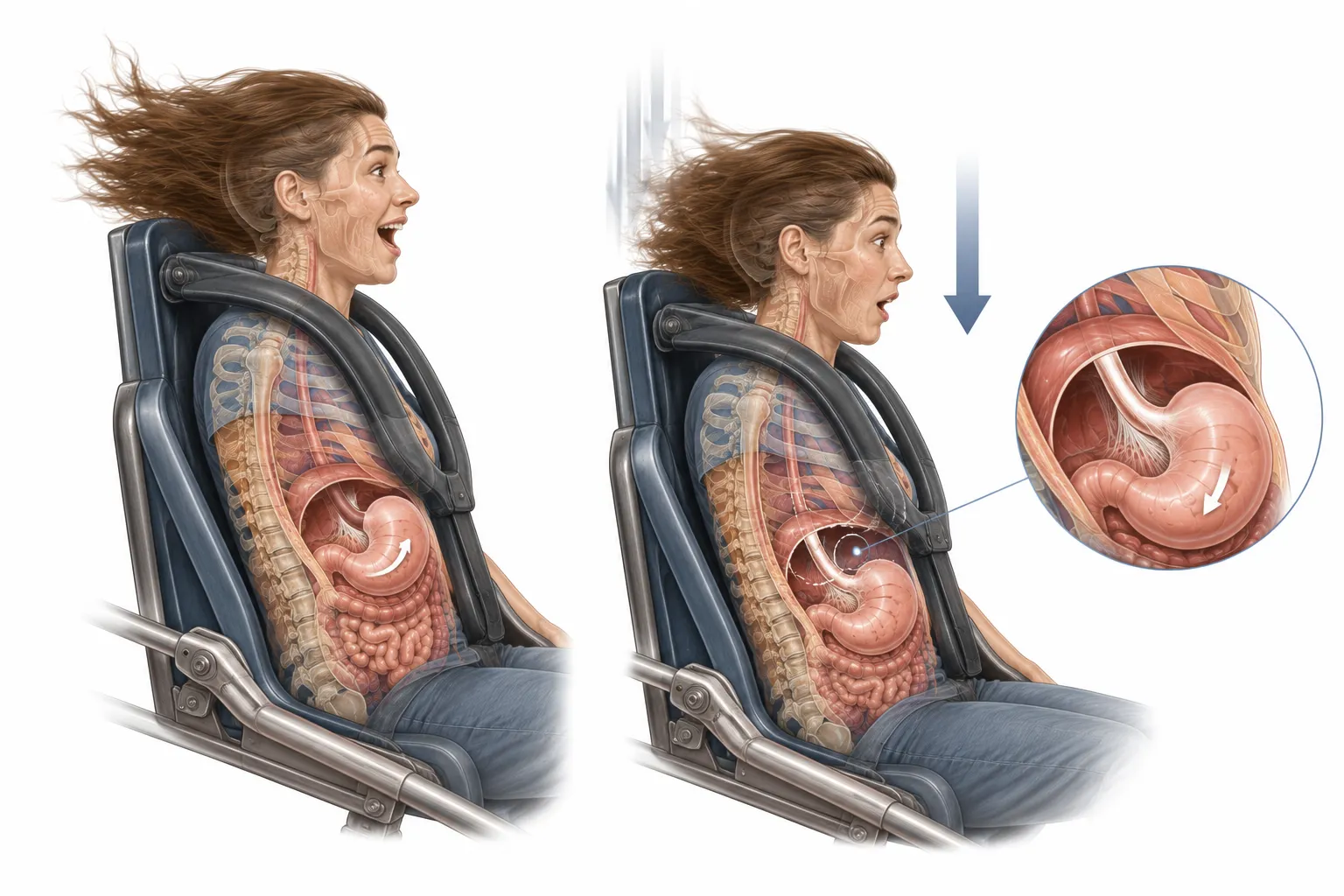
During a sudden rollercoaster drop, loosely anchored abdominal organs briefly shift relative to surrounding tissue as gravity's normal support forces are reduced, while the inner ear simultaneously signals the sudden change in acceleration, together producing the falling stomach sensation.
- 1Abdominal organs are held by flexible connective tissue
This flexible support is what makes organ movement during sudden acceleration changes possible at all.
- 2A sudden drop reduces normal support forces
This support reduction, not organ relocation, is the root physical cause of the sensation.
- 3Organs shift slightly relative to surrounding tissue
This relative shift, however small, is enough to trigger a strong, unmistakable sensory signal.
- 4The inner ear reinforces the falling sensation
The full sensation is a combined product of physical organ shift and inner ear signaling working together.
How it works
The mechanism
During a sudden rollercoaster drop, loosely anchored abdominal organs briefly shift relative to surrounding tissue as gravity's normal support forces are reduced, while the inner ear simultaneously signals the sudden change in acceleration, together producing the falling stomach sensation.
- Step 01
Abdominal organs are held by flexible connective tissue
Unlike bones, organs including the stomach are supported by ligaments and connective tissue that allow some natural range of movement within the abdominal cavity.
Like items hung from elastic straps inside a moving vehicle, able to shift slightly rather than being rigidly bolted in place.
This flexible support is what makes organ movement during sudden acceleration changes possible at all.
- Step 02
A sudden drop reduces normal support forces
As the rollercoaster suddenly accelerates downward, the usual counter-support that keeps organs feeling settled briefly weakens, since the body and its contents are all accelerating downward together.
Like the felt weight of everything inside an elevator briefly lightening the instant it begins a fast descent.
This support reduction, not organ relocation, is the root physical cause of the sensation.
- Step 03
Organs shift slightly relative to surrounding tissue
During this brief window, the stomach and nearby organs shift position relative to the abdominal wall and surrounding structures, pressing against nerves in a way that feels distinctly different from normal.
Like loose cargo in a truck bed shifting position the instant the truck suddenly accelerates.
This relative shift, however small, is enough to trigger a strong, unmistakable sensory signal.
- Step 04
The inner ear reinforces the falling sensation
At the same time, the vestibular system in the inner ear detects the rapid change in vertical acceleration and sends its own strong falling signal to the brain, compounding the overall stomach-drop experience.
Like two separate alarm systems both going off simultaneously in response to the same sudden event.
The full sensation is a combined product of physical organ shift and inner ear signaling working together.
Surprises
Facts worth sitting with
The stomach itself moves only a small amount during a rollercoaster drop, the dramatic sensation comes more from pressure and positional changes relative to surrounding tissue than from large-scale organ movement.
Surprising facts
What seems backwards
Worth comparing
In everyday life
Easy to get wrong
Pressure points
Where the simple answer gets interesting
Why are abdominal organs so loosely anchored compared to bones?
Abdominal organs need some freedom of movement to accommodate digestion, breathing, posture changes, and growth, so they're supported by flexible connective tissue and ligaments rather than being rigidly fixed like bone.
The very flexibility that lets your body function normally day to day is exactly what produces that dramatic falling sensation on a rollercoaster.
Why does the inner ear play a role in the stomach-drop feeling?
The vestibular system in the inner ear detects changes in acceleration and head position, and during a sudden drop it sends strong signals of falling to the brain that combine with the physical organ-shift sensation to intensify the overall feeling.
A structure most people associate purely with balance also plays a starring role in one of the most memorable physical sensations at an amusement park.
Why does the sensation fade quickly even during a long drop?
Once the body and its organs reach a steady rate of acceleration, the relative shifting largely stops, and the nervous system also begins adapting to the new sensory input, both of which cause the intense initial sensation to fade.
The body's ability to quickly adapt to intense new sensations means even a thrilling drop can start to feel routine within seconds.
Behind the science
The story behind it
Rollercoaster engineering focused on near-zero gravity drops
Amusement ride engineers have specifically designed certain drop sequences to approach near-zero gravity conditions for a brief window, deliberately maximizing the stomach-drop sensation.
This demonstrates how a specific physiological quirk has directly shaped the engineering priorities of an entire entertainment industry.
Understanding the precise physiology behind a sensation can allow that sensation to be deliberately engineered and amplified.
Parabolic flight studies of brief weightlessness
Researchers studied physiological responses during brief periods of near-weightlessness produced by aircraft flying steep parabolic paths.
Subjects consistently reported internal floating sensations closely resembling the rollercoaster stomach drop, confirming the shared underlying mechanism.
Clarify
Myth and reality
Myth
Your stomach actually moves a significant distance inside your body during a rollercoaster drop.
Reality
The stomach shifts only slightly relative to surrounding tissue; the dramatic sensation comes primarily from pressure changes and inner ear signals rather than large-scale physical displacement.
Evidence
Medical imaging studies of organ position during rapid acceleration changes show only modest, brief positional shifts rather than dramatic movement.
Looking closer
The deeper pattern
The stomach-drop sensation reveals just how much of what we feel as a stable, settled body is actually the constant, active work of support forces we never consciously notice.
One way to think about it
Stability often isn't a fixed state but an ongoing, active balance of forces, and removing even one supporting force briefly, even for a fraction of a second, can produce a dramatic and immediately noticeable effect.
What feels solid and stable is frequently the product of continuous, invisible support, and its sudden absence is often more noticeable than its constant presence.
Limits
Where the explanation bends
People who experience an unusually intense or prolonged stomach-drop sensation.
Individual sensitivity to the sensation varies significantly, and some people report a much stronger or longer-lasting reaction, possibly linked to differences in vestibular system sensitivity or general motion sensitivity.
The exact same physical drop can produce a dramatically different subjective experience from one person to the next.
In daily life
What this helps you notice
Understanding the stomach-drop sensation explains why similar, milder feelings occur on fast elevators or during turbulence, not just on rollercoasters.
Many people notice a small version of the same sensation on a rapidly descending elevator, especially in very tall buildings.
Remember
Key takeaways
- 1
Abdominal organs including the stomach are held in place by flexible connective tissue rather than being rigidly fixed.
- 2
A sudden rollercoaster drop briefly reduces the normal support forces acting on these organs.
- 3
This causes organs to shift slightly relative to surrounding tissue, producing a distinct falling sensation.
- 4
The inner ear's vestibular system simultaneously detects the rapid acceleration change, reinforcing the feeling.
- 5
The sensation resembles the internal floating feeling reported during brief periods of true weightlessness.
That unmistakable stomach-drop feeling isn't your stomach going anywhere dramatic, it's a brief, honest report from your own body about just how loosely everything inside you is actually held together.
Every rollercoaster drop is a small, thrilling reminder that the settled feeling of everyday gravity is doing more quiet work than most people ever stop to notice.
Read around the idea
More questions with the same curious pull
Nearby doors from the TinyThat archive, chosen by topic, intent, and reader curiosity.
Body & Brain
Why Do We Get Motion Sickness?
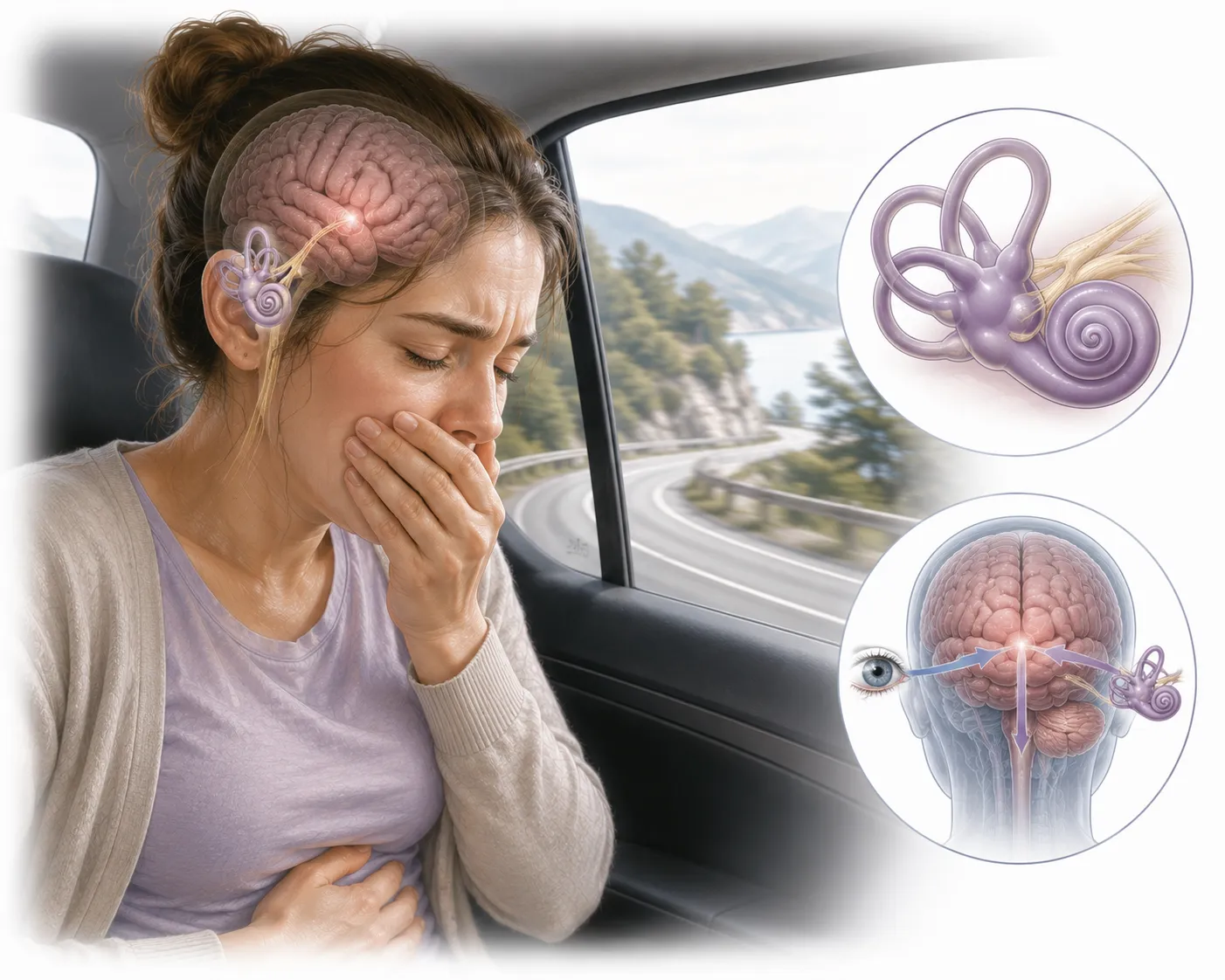
Motion sickness arises when the inner ear, eyes, and body send the brain conflicting signals about movement.
Body & Brain
Why Does Holding Your Breath Make You Pass Out?
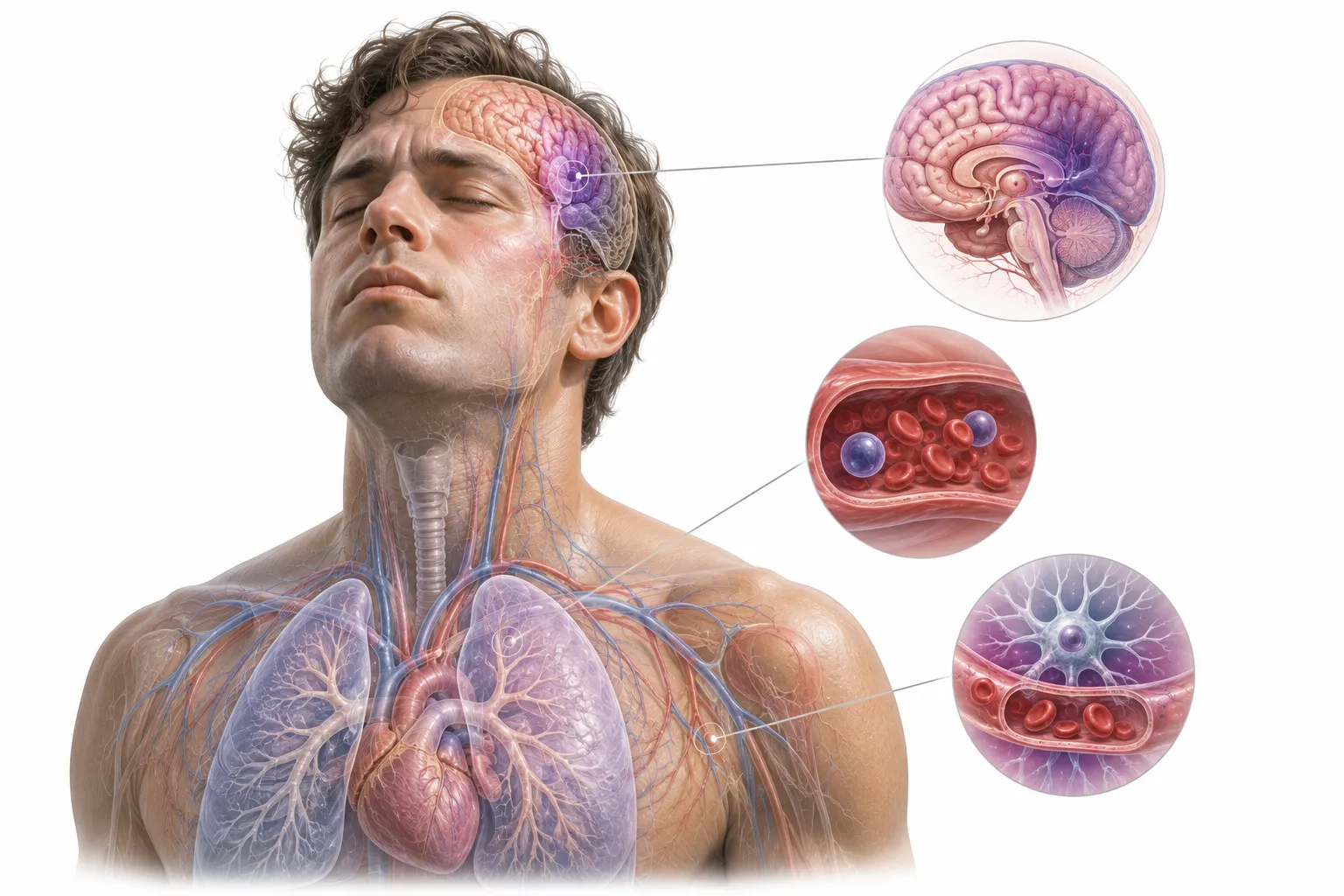
Prolonged breath-holding causes oxygen levels to fall low enough to trigger a protective loss of consciousness.
Body & Brain
Can the Brain Feel Pain?
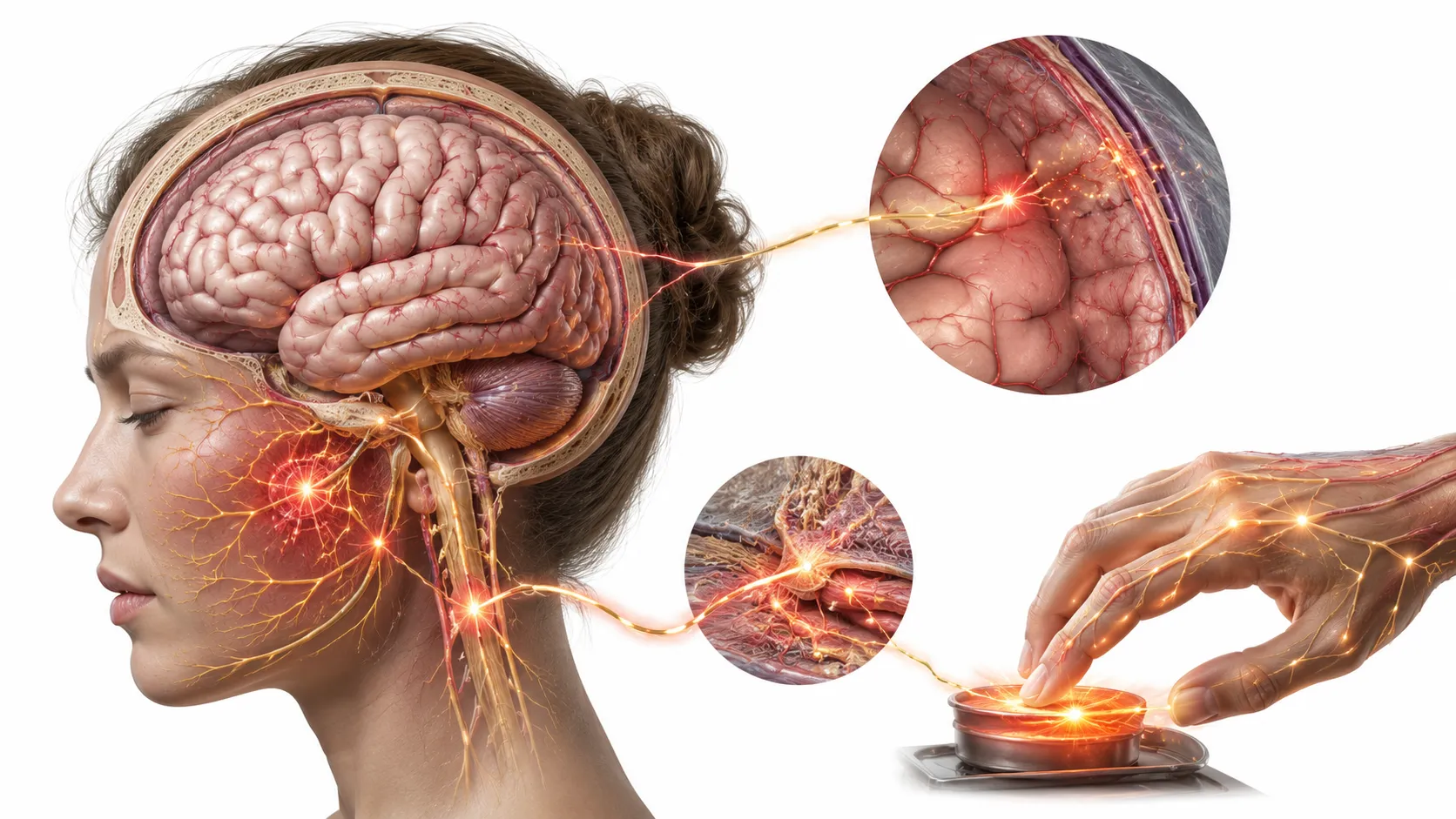
The brain controls all pain in your body, yet it cannot feel pain itself. Discover why, and what this strange fact re...