Hyperventilating before a breath-hold, taking several rapid, deep breaths, can dangerously delay the natural urge to breathe by artificially lowering carbon dioxide levels, without correspondingly increasing the body's actual oxygen reserves.
Body & Brain
Why can holding your breath too long cause you to pass out?
Why Does Holding Your Breath Make You Pass Out?
Push a breath-hold far enough, and the body doesn't gently give up, it forcibly shuts consciousness down without asking permission.
On this page
The short answer
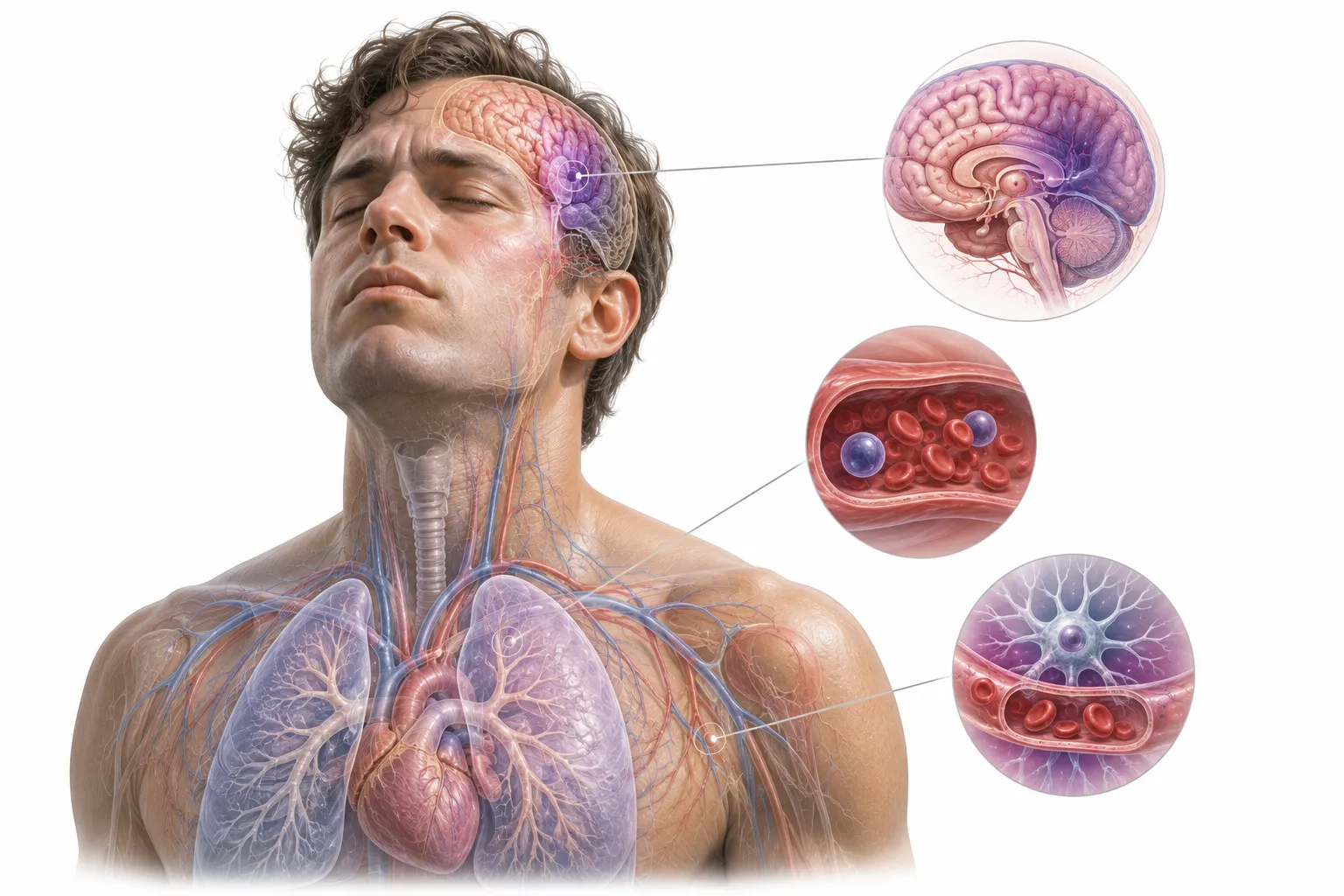
Holding your breath too long can cause you to pass out because the brain, sensing critically low oxygen levels, triggers a protective loss of consciousness to force the body to resume automatic breathing, since a person's voluntary control over breathing can otherwise override the body's normal urge to breathe for longer than is safe.
Under normal conditions, the urge to breathe is triggered primarily by rising levels of carbon dioxide in the blood rather than by falling oxygen levels, since carbon dioxide buildup is a faster, more sensitive signal of the need to exhale and take another breath. During a voluntary breath-hold, this rising carbon dioxide creates an increasingly uncomfortable urge to breathe, but because breathing is under some conscious control, a person can choose to suppress that urge for a period of time. If the breath-hold continues long enough, particularly if the person has hyperventilated beforehand to artificially lower carbon dioxide levels and delay the urge to breathe, oxygen levels in the blood can drop to a genuinely dangerous point without triggering the same urgent warning signal that carbon dioxide buildup normally provides. Once oxygen levels fall low enough to threaten the brain's function, a survival mechanism kicks in and forces a sudden loss of consciousness. This blackout removes voluntary control over breathing entirely, allowing the body's automatic, involuntary breathing reflexes to take back over immediately, which is exactly what allows breathing to resume without conscious effort.
At a glance
This rising carbon dioxide is the body's primary early warning system during a breath-hold.
Taking several deep breaths before holding your breath underwater is a safe way to extend your time and improve safety.
The urge to breathe that builds during a breath-hold is triggered mainly by rising carbon dioxide, not falling oxygen, which means a person can suppress that urge just long enough for oxygen levels to drop to a point where the brain forces the issue through unconsciousness instead.
Picture a building's emergency power system automatically shutting down non-essential systems the instant its main power supply drops to a critical, unsafe level, not as a failure, but as a deliberate protective measure.
Diagram
Why Does Holding Your Breath Make You Pass Out: the idea in one diagram
During a breath-hold, rising carbon dioxide creates the urge to breathe, but suppressing that urge, especially after hyperventilating, allows oxygen levels to drop dangerously low, triggering a protective loss of consciousness that restores automatic breathing.
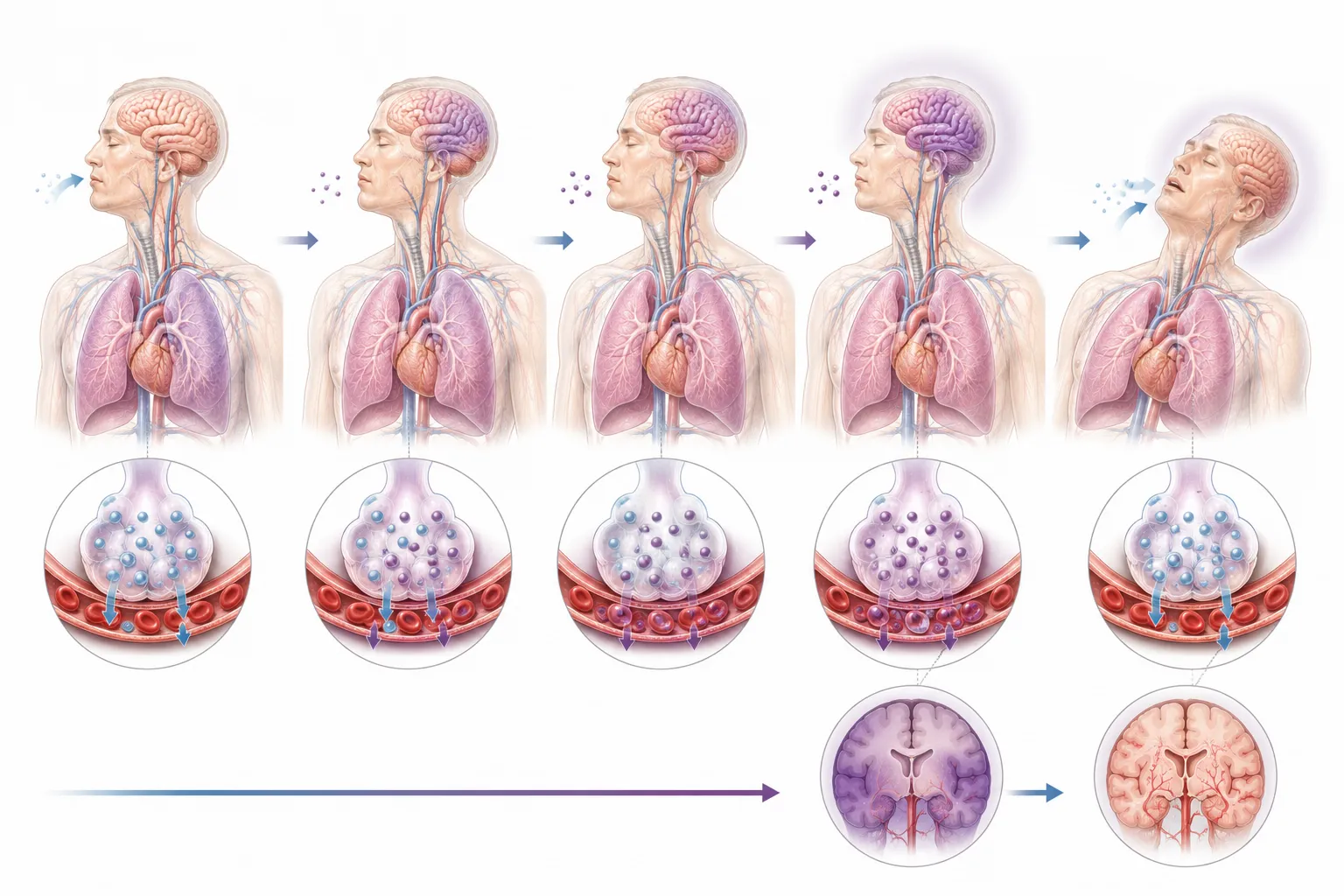
- 1Carbon dioxide builds up during a breath-hold
This rising carbon dioxide is the body's primary early warning system during a breath-hold.
- 2Conscious control can suppress this urge
This voluntary override is exactly what allows a breath-hold to be extended beyond the point of initial discomfort.
- 3Oxygen levels continue dropping in the background
This is the genuinely dangerous part of an extended breath-hold, happening with comparatively little conscious warning.
- 4Critically low oxygen triggers protective unconsciousness
This blackout is a deliberate protective response, not a random failure of the body.
How it works
The mechanism
During a breath-hold, rising carbon dioxide creates the urge to breathe, but suppressing that urge, especially after hyperventilating, allows oxygen levels to drop dangerously low, triggering a protective loss of consciousness that restores automatic breathing.
- Step 01
Carbon dioxide builds up during a breath-hold
As breathing stops, carbon dioxide produced by normal metabolism accumulates in the blood, detected by sensitive chemoreceptors that signal a growing urge to breathe.
Like a pressure gauge rising steadily and triggering an increasingly urgent warning light.
This rising carbon dioxide is the body's primary early warning system during a breath-hold.
- Step 02
Conscious control can suppress this urge
Because breathing is partly under voluntary control, a person can choose to continue holding their breath despite the increasingly strong urge triggered by rising carbon dioxide.
Like manually overriding an alarm system that's trying to alert you to a growing problem.
This voluntary override is exactly what allows a breath-hold to be extended beyond the point of initial discomfort.
- Step 03
Oxygen levels continue dropping in the background
While carbon dioxide is driving the conscious urge to breathe, oxygen levels are separately and steadily declining, especially if the initial urge has been delayed by hyperventilating beforehand.
Like a fuel gauge quietly running toward empty while attention stays focused on a different warning light entirely.
This is the genuinely dangerous part of an extended breath-hold, happening with comparatively little conscious warning.
- Step 04
Critically low oxygen triggers protective unconsciousness
Once oxygen levels fall low enough to threaten brain function, the brain triggers a sudden loss of consciousness, removing voluntary control and allowing the body's automatic breathing reflexes to immediately resume.
Like an emergency shutdown system forcibly cutting power the instant a critical safety threshold is crossed.
This blackout is a deliberate protective response, not a random failure of the body.
Surprises
Facts worth sitting with
Hyperventilating before a breath-hold, taking several rapid, deep breaths, can dangerously delay the natural urge to breathe by artificially lowering carbon dioxide levels, without correspondingly increasing the body's actual oxygen reserves.
Surprising facts
What seems backwards
Worth comparing
In everyday life
Easy to get wrong
Pressure points
Where the simple answer gets interesting
Why does the body respond more strongly to carbon dioxide than to low oxygen during a breath-hold?
Carbon dioxide levels rise quickly and predictably during a breath-hold and are detected by highly sensitive chemoreceptors, making it a faster, more reliable early warning signal than directly monitoring oxygen levels.
The body's alarm system is tuned to a different, earlier signal than the one that eventually becomes truly life-threatening.
Why is hyperventilating before a breath-hold particularly dangerous?
Hyperventilating lowers carbon dioxide levels without increasing the body's actual oxygen reserves, delaying the natural urge to breathe and allowing oxygen levels to drop to a dangerous point with little to no warning.
A technique that feels like it should help extend a breath-hold safely actually removes one of the body's most important protective warning signals.
Why does the brain specifically force unconsciousness rather than some other protective response?
Losing consciousness removes voluntary control over breathing entirely, allowing the brainstem's automatic, involuntary breathing reflexes to immediately take over and resume normal breathing without requiring any conscious decision.
The very mechanism that seems like a dramatic failure is actually the fastest, most reliable way for the body to regain control of breathing.
Behind the science
The story behind it
Water safety research on shallow water blackout
Aquatic safety researchers and organizations have extensively studied and publicized shallow water blackout, particularly among competitive swimmers and free divers, to raise awareness of its dangers.
This research led to specific safety guidelines strongly discouraging hyperventilation before underwater breath-holding activities.
Understanding the precise physiological mechanism behind a danger can directly translate into practical, life-saving safety guidance.
Controlled studies of hyperventilation and breath-hold duration
Researchers measured breath-hold duration and blood oxygen and carbon dioxide levels in subjects who hyperventilated beforehand compared to those who did not.
Hyperventilation significantly extended breath-hold duration without providing additional oxygen reserves, confirming the mechanism behind shallow water blackout risk.
Clarify
Myth and reality
Myth
Taking several deep breaths before holding your breath underwater is a safe way to extend your time and improve safety.
Reality
Hyperventilating before a breath-hold significantly increases the risk of a dangerous, sudden blackout by delaying the natural warning signal without adding real oxygen reserves.
Evidence
Water safety research and documented shallow water blackout incidents consistently link this practice to a substantially increased drowning risk.
Looking closer
The deeper pattern
The body sometimes protects itself by overriding conscious control entirely, recognizing that voluntary decision-making can occasionally become the greater danger.
One way to think about it
Well-designed safety systems often include a final override specifically built to bypass conscious control the moment that control itself becomes the primary risk.
Sometimes the most effective safeguard against a dangerous decision isn't persuasion, it's simply removing the ability to keep making that decision at all.
Limits
Where the explanation bends
Elite free divers who train extensively to extend breath-hold duration.
Trained free divers develop a higher tolerance for rising carbon dioxide discomfort and often practice specific safety protocols, such as always diving with a partner, precisely because the underlying blackout risk from low oxygen never fully disappears with training.
Even extensive training can improve comfort with one part of the system while leaving the underlying danger from the other part essentially unchanged.
In daily life
What this helps you notice
Understanding this mechanism explains why water safety organizations strongly advise against breath-holding contests and hyperventilation-assisted diving, especially without direct supervision.
Many pool safety guidelines now specifically warn against extended underwater breath-holding games due to documented shallow water blackout risks.
Remember
Key takeaways
- 1
The urge to breathe during a breath-hold is triggered mainly by rising carbon dioxide, not falling oxygen.
- 2
Voluntary control can suppress this urge for a period of time, allowing oxygen levels to keep dropping.
- 3
Hyperventilating beforehand delays the urge to breathe without increasing actual oxygen reserves, increasing danger.
- 4
Critically low oxygen levels trigger a protective loss of consciousness to force breathing to resume.
- 5
This blackout mechanism is a leading cause of shallow water blackout and drowning risk among swimmers and divers.
Passing out from holding your breath isn't your body giving up, it's your brain taking the decision out of your hands the instant it decides you can no longer be trusted with it.
A breath-hold blackout is the body's ultimate override switch, quietly standing by the entire time, ready to seize back control the moment things get genuinely dangerous.
Read around the idea
More questions with the same curious pull
Nearby doors from the TinyThat archive, chosen by topic, intent, and reader curiosity.
Body & Brain
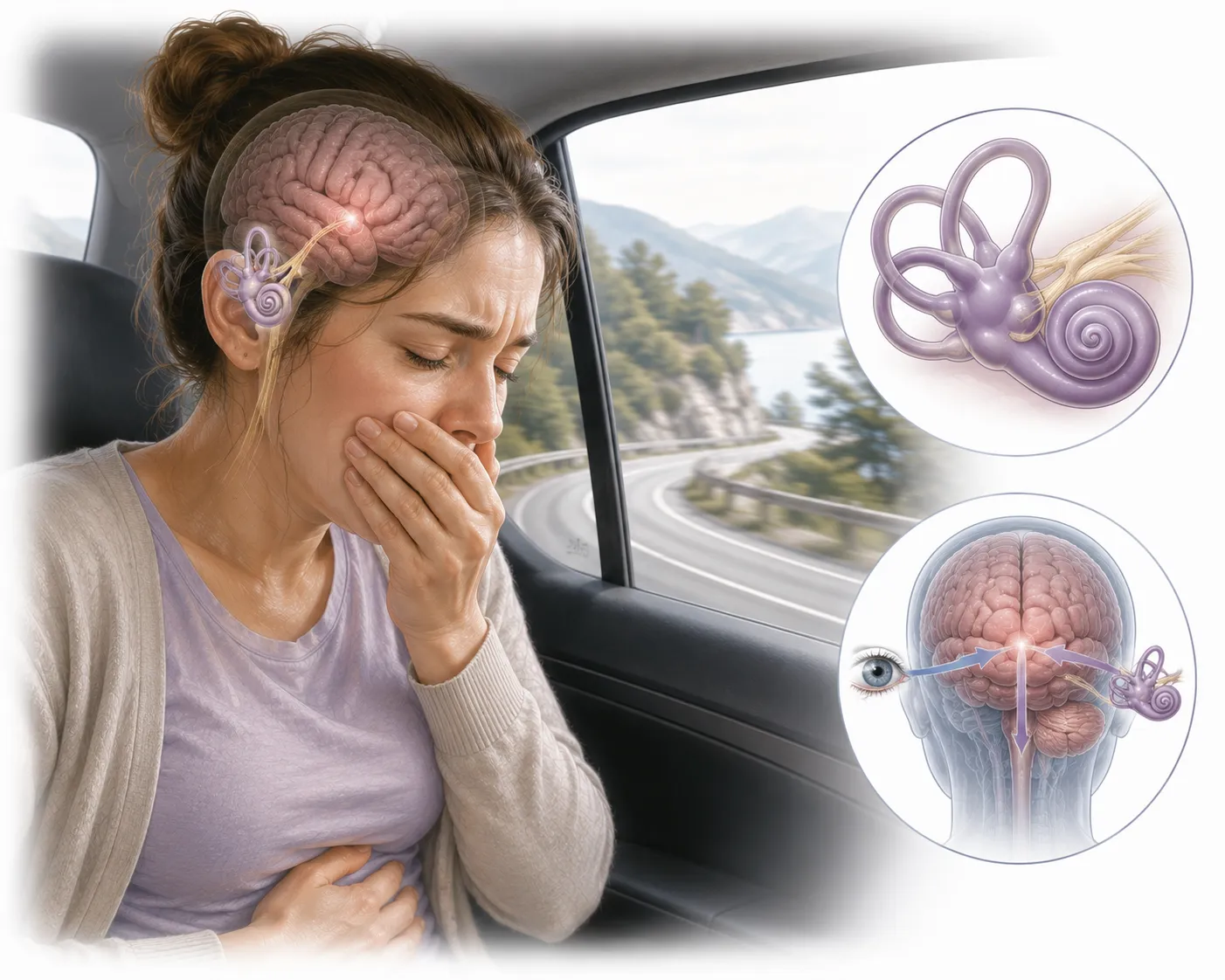
Why Do We Get Motion Sickness?
Motion sickness arises when the inner ear, eyes, and body send the brain conflicting signals about movement.

Body & Brain
Why Do We Have a Gag Reflex?
The gag reflex protects the airway by triggering a strong muscular response when something touches sensitive areas at...

Body & Brain
Can the Brain Feel Pain?
The brain controls all pain in your body, yet it cannot feel pain itself. Discover why, and what this strange fact re...