Motion sickness can occur even without any real physical motion at all, such as during immersive virtual reality experiences, since visual movement alone can create the same underlying sensory conflict.
Body & Brain
Why do humans experience motion sickness?
Why Do We Get Motion Sickness?
Reading a book in a moving car, staring at a phone on a boat, or sitting below deck during rough seas can all trigger the same unpleasant wave of nausea.
On this page
The short answer
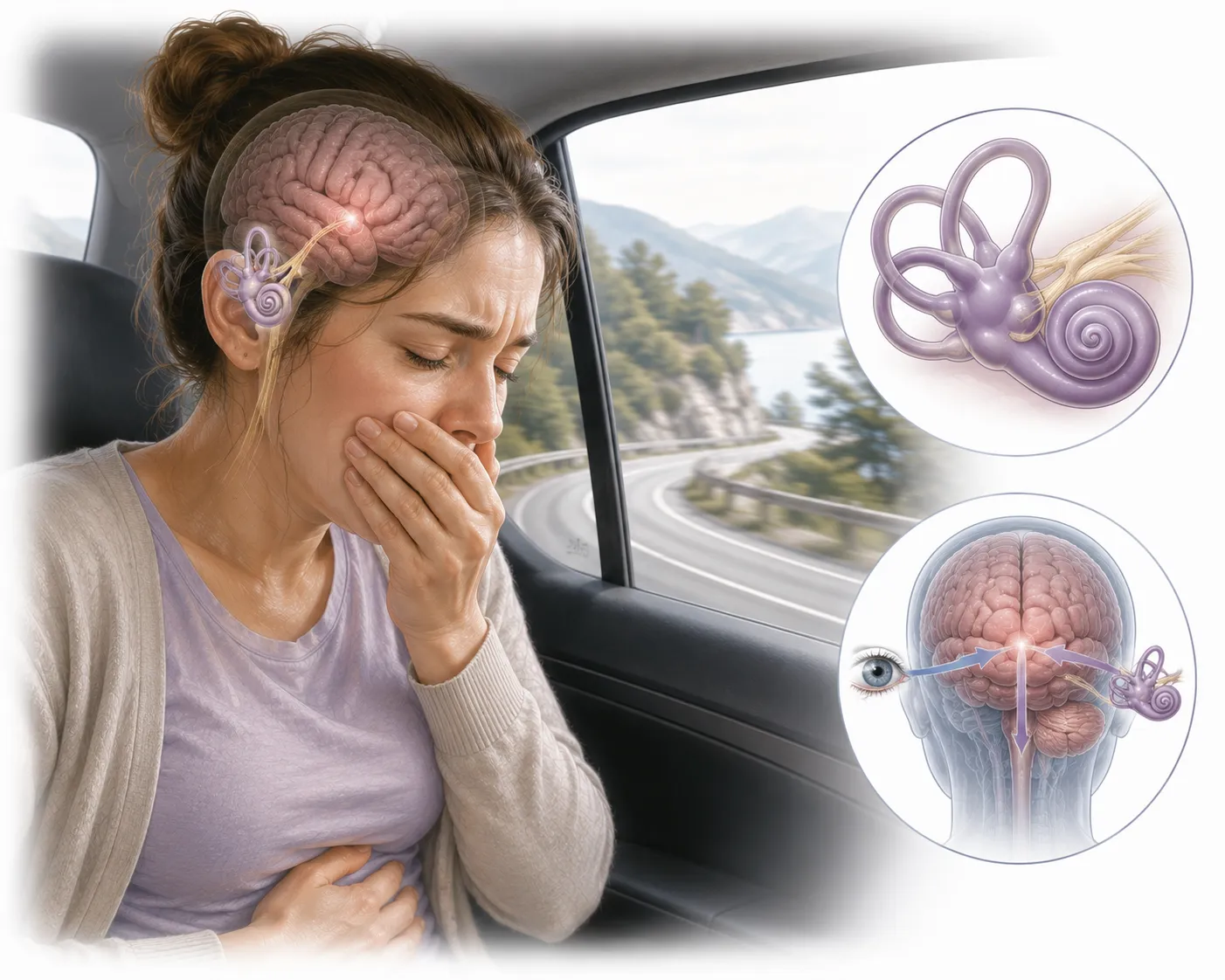
Motion sickness happens when the brain receives conflicting signals about movement from the inner ear's balance system, the eyes, and the body's other sensory receptors, a mismatch that, according to the leading sensory conflict theory, the brain may interpret as a sign of ingested neurotoxins, triggering nausea as a protective, if usually inaccurate, defensive response.
The body relies on three main sensory systems to maintain balance and awareness of movement: the vestibular system in the inner ear, which detects motion and orientation; the eyes, which visually track movement in the environment; and proprioceptive receptors throughout the body, which sense the position and movement of muscles and joints. Under normal conditions, these systems agree closely with each other. But in situations like reading in a moving car, the inner ear detects motion while the eyes, focused on a stationary page, report no movement at all, creating a significant mismatch. According to the widely supported sensory conflict theory, evolutionary history shaped the brain to interpret this kind of persistent sensory disagreement as a possible sign of ingested toxins, since certain neurotoxins are known to disrupt sensory processing in similar ways, triggering nausea and vomiting as a defensive response intended to expel a potential poison, even when no actual poison is present.
At a glance
This system typically provides an accurate, real-time readout of actual motion.
Motion sickness happens simply because a person's body isn't used to a particular type of movement.
According to this theory, motion sickness may be an overreaction of an ancient defense system, one that evolved to protect against ingested toxins, misfiring because it can't tell the difference between poisoning and sensory mismatch.
Picture a smoke detector so sensitive it also goes off from burnt toast; motion sickness may be a similarly oversensitive alarm system, triggered by a signal it was never quite precise enough to fully distinguish.
Diagram
Why Do We Get Motion Sickness: the idea in one diagram
Motion sickness arises from a mismatch between signals from the inner ear's vestibular system, the eyes, and the body's proprioceptive senses, which the brain, according to the leading theory, may misinterpret as a sign of ingested toxins.
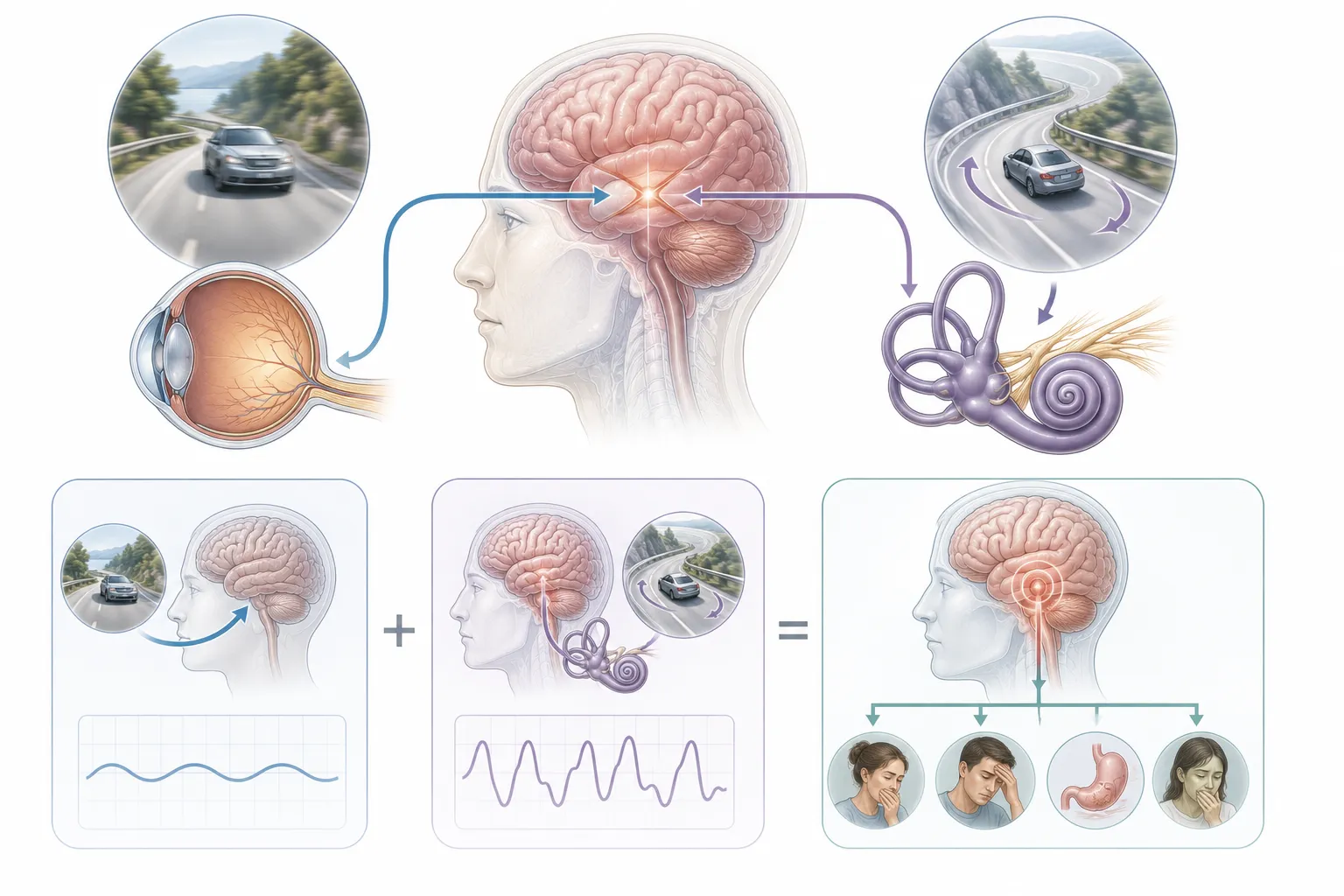
- 1The vestibular system detects actual motion
This system typically provides an accurate, real-time readout of actual motion.
- 2The eyes report a different, conflicting picture
This mismatch between visual and vestibular input is the core trigger of motion sickness.
- 3The brain interprets the conflict as a possible danger
The response is a defensive overreaction rather than an accurate diagnosis of the actual situation.
- 4The body triggers a protective nausea response
The unpleasant symptoms of motion sickness are the visible cost of an overly cautious protective system.
How it works
The mechanism
Motion sickness arises from a mismatch between signals from the inner ear's vestibular system, the eyes, and the body's proprioceptive senses, which the brain, according to the leading theory, may misinterpret as a sign of ingested toxins.
- Step 01
The vestibular system detects actual motion
Fluid and sensory structures in the inner ear detect real physical movement of the head and body, sending motion signals to the brain.
Like a ship's instruments accurately reporting the vessel's true movement.
This system typically provides an accurate, real-time readout of actual motion.
- Step 02
The eyes report a different, conflicting picture
In situations like reading in a moving vehicle, the eyes focus on a relatively stationary object, reporting little to no visual motion, despite the inner ear detecting real movement.
Like a second set of instruments giving a contradictory reading from the first.
This mismatch between visual and vestibular input is the core trigger of motion sickness.
- Step 03
The brain interprets the conflict as a possible danger
According to sensory conflict theory, the brain, unable to distinguish this specific mismatch from certain patterns caused by ingested neurotoxins, treats the conflict as a potential poisoning event.
Like an alarm system unable to fully distinguish between a real threat and a false trigger with a similar signature.
The response is a defensive overreaction rather than an accurate diagnosis of the actual situation.
- Step 04
The body triggers a protective nausea response
As a precaution against a suspected toxin, the brain activates nausea and, in more severe cases, vomiting, intended to expel a potential poison even though none is actually present.
Like a fire suppression system activating in response to smoke that turns out to be harmless.
The unpleasant symptoms of motion sickness are the visible cost of an overly cautious protective system.
Surprises
Facts worth sitting with
Motion sickness can occur even without any real physical motion at all, such as during immersive virtual reality experiences, since visual movement alone can create the same underlying sensory conflict.
Surprising facts
What seems backwards
Worth comparing
In everyday life
Easy to get wrong
Pressure points
Where the simple answer gets interesting
Why does looking at the horizon reduce motion sickness in a moving vehicle?
Fixing your gaze on a distant, stable point like the horizon helps better align what your eyes are reporting with what your inner ear is sensing about motion, reducing the sensory mismatch that triggers motion sickness.
A simple visual trick can directly quiet the same sensory conflict that causes nausea in the first place.
Why does virtual reality sometimes cause motion sickness without any real movement?
In virtual reality, the eyes perceive visual motion while the inner ear, since the body isn't actually moving, reports no corresponding movement, creating the same type of sensory conflict responsible for traditional motion sickness.
Your body can be tricked into feeling sick from a mismatch that exists entirely inside a headset.
Is the poison-defense explanation for motion sickness proven, or still a theory?
The sensory conflict theory linking motion sickness to an evolved toxin-detection response is the most widely supported explanation among researchers, but it remains a scientific theory rather than a definitively proven mechanism, and some aspects continue to be studied and debated.
Even one of the most commonly cited explanations for a nearly universal experience is still technically an evolving scientific hypothesis.
Behind the science
The story behind it
Rising research interest in virtual reality-induced motion sickness
As virtual reality technology has become more widespread, researchers have increasingly studied cybersickness, applying and testing sensory conflict theory in this new context.
This ongoing research has helped confirm and refine understanding of the sensory conflict mechanism outside of traditional vehicle-based settings.
New technology can provide fresh, unexpected opportunities to test and validate long-standing scientific theories.
Studies on rodent vomiting reflex and motion sickness susceptibility
Researchers studying species like rats, which lack a typical vomiting reflex, examined whether these animals also showed reduced signs of motion sickness.
The apparent connection between the absence of a vomiting reflex and reduced motion sickness responses in these species offered indirect support for the toxin-defense explanation of motion sickness.
Clarify
Myth and reality
Myth
Motion sickness happens simply because a person's body isn't used to a particular type of movement.
Reality
Motion sickness results specifically from conflicting signals between the inner ear, eyes, and body's other senses, which the brain, according to the leading theory, may misinterpret as a sign of toxin ingestion.
Evidence
The sensory conflict theory is supported by observations across vehicle-based motion sickness, virtual reality-induced sickness, and studies of vestibular-damaged individuals.
Looking closer
The deeper pattern
Motion sickness reveals a defense system reacting to a pattern that resembles danger, even when no actual danger is present.
One way to think about it
Protective systems, whether biological or otherwise, are often built with a bias toward caution, triggering in response to any signal resembling a known threat, even at the cost of frequent false alarms.
A system built to protect against a rare but serious danger will often accept a higher rate of false alarms as an acceptable tradeoff.
Limits
Where the explanation bends
People with significant inner ear damage or vestibular disorders.
Some individuals with certain types of vestibular damage report reduced or absent motion sickness, since the conflicting vestibular signal that normally contributes to the sensory mismatch is diminished or missing entirely.
Losing part of the very system responsible for detecting motion can, in some cases, make a person less prone to motion sickness rather than more.
In daily life
What this helps you notice
Understanding the sensory conflict mechanism behind motion sickness explains why looking at a stable horizon, rather than a phone or book, can meaningfully reduce symptoms during travel.
Many travelers are advised to sit in the front seat of a car or on the deck of a boat, facing forward, specifically to minimize the visual and vestibular mismatch responsible for motion sickness.
Remember
Key takeaways
- 1
Motion sickness arises from conflicting signals between the inner ear, eyes, and body's proprioceptive senses.
- 2
The leading sensory conflict theory suggests the brain may misinterpret this mismatch as a sign of ingested toxins.
- 3
Nausea and vomiting are triggered as a defensive, if usually inaccurate, protective response to this perceived threat.
- 4
Virtual reality can trigger a very similar sensory conflict, producing motion sickness without any real physical movement.
- 5
Focusing on a stable visual point like the horizon can reduce motion sickness by better aligning visual and vestibular signals.
Motion sickness likely isn't your body malfunctioning at all, it may be an ancient poison-defense system doing exactly its job, just reacting to a modern situation, like reading in a moving car, that its evolutionary design never anticipated.
The next wave of nausea on a winding road isn't really about the road at all, it's a very old internal alarm system, still faithfully scanning for a threat that, this time, was never actually there.
Read around the idea
More questions with the same curious pull
Nearby doors from the TinyThat archive, chosen by topic, intent, and reader curiosity.
Body & Brain
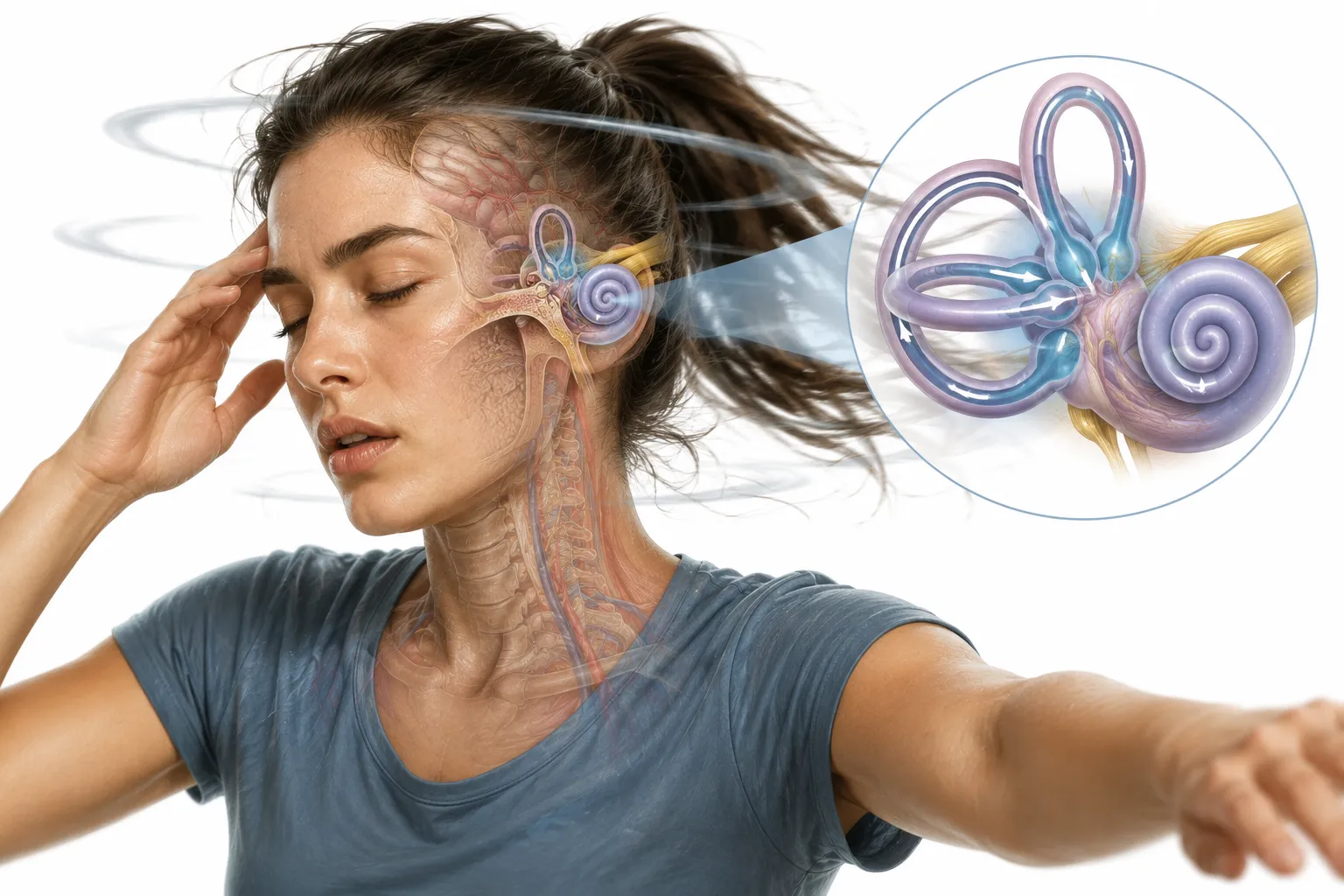
Why Do We Get Dizzy When Spinning?
Fluid in the inner ear's semicircular canals continues moving briefly after the body stops, creating a false rotation...

Body & Brain
Why Does Your Stomach Drop on a Rollercoaster?
Sudden drops cause internal organs to briefly lag behind the body's motion under reduced gravity, producing the falli...
Body & Brain
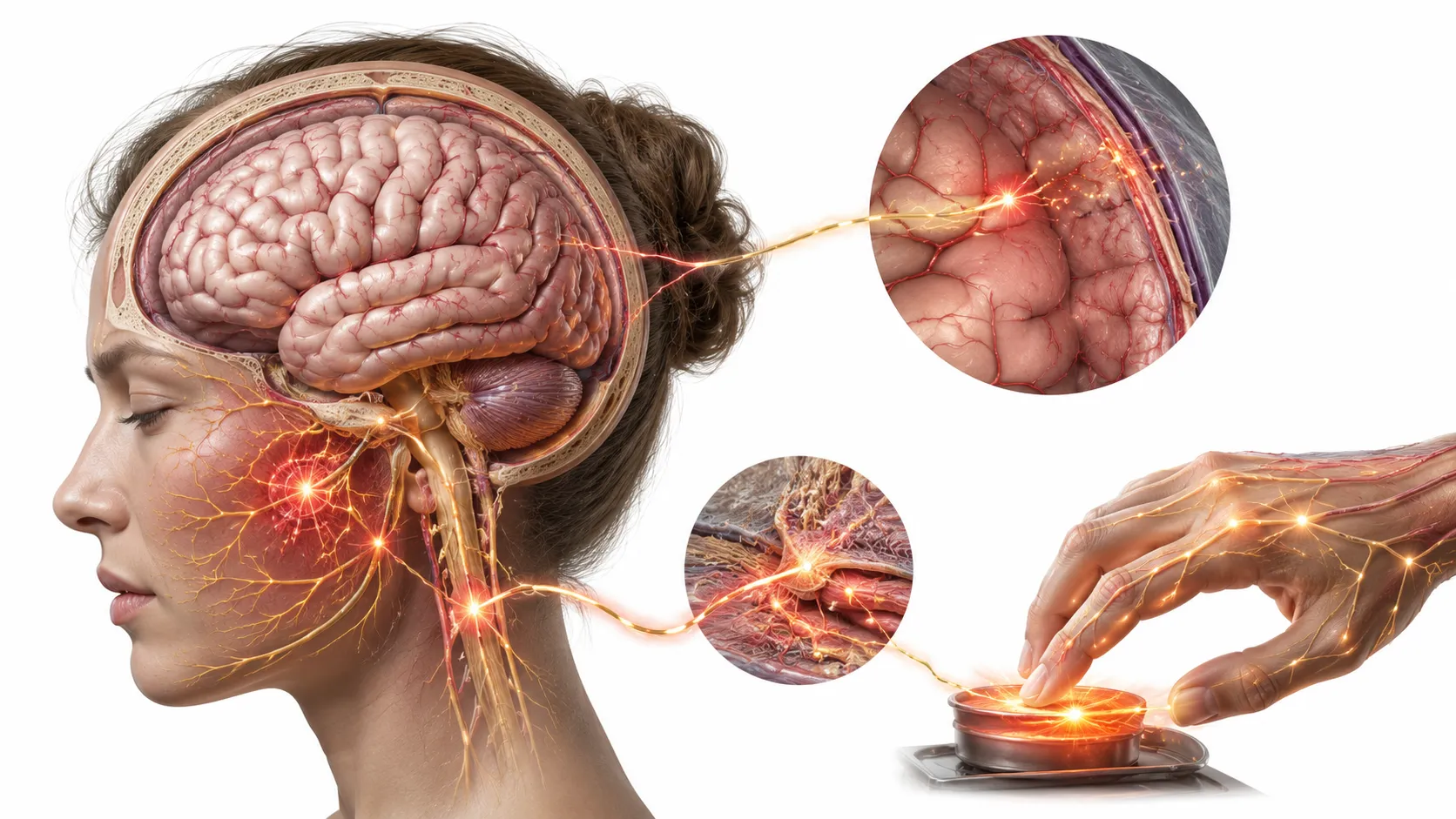
Can the Brain Feel Pain?
The brain controls all pain in your body, yet it cannot feel pain itself. Discover why, and what this strange fact re...