The photic sneeze reflex is strongly hereditary, and researchers have identified it as following an autosomal dominant inheritance pattern in many affected families.
Body & Brain
Why does bright sunlight make some people sneeze?
Why Do We Sneeze in the Sun?
Step out of a dim building into bright sunlight, and for roughly one in four people, a sneeze follows almost immediately.
On this page
The short answer
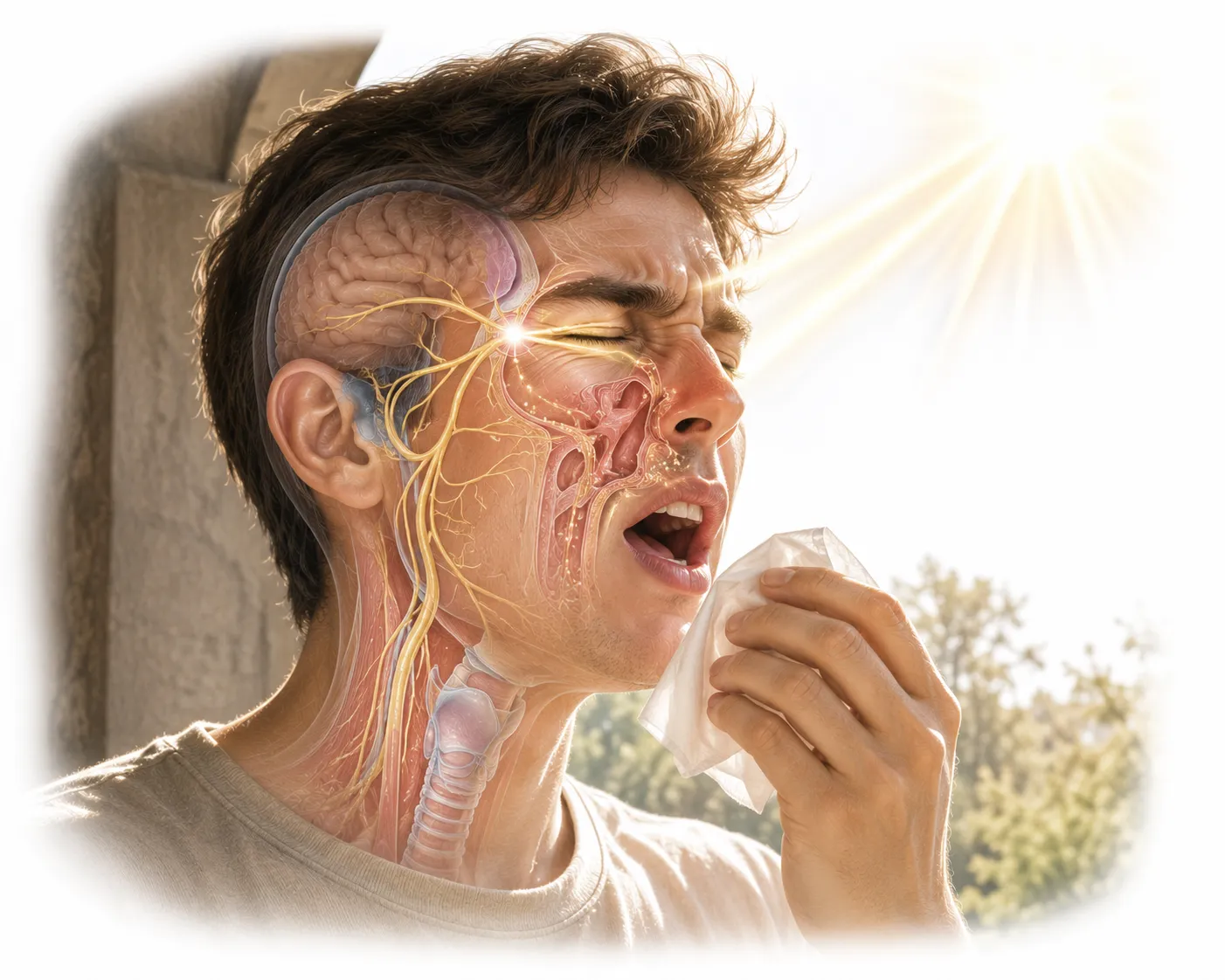
Sneezing in bright sunlight, known as the photic sneeze reflex, happens in genetically predisposed people because the trigeminal nerve, which controls sneezing, runs close enough to the nerve pathways responding to bright light that a signal meant to constrict the pupils appears to cross over and also trigger a sneeze.
The photic sneeze reflex, sometimes informally called ACHOO syndrome, affects an estimated eighteen to thirty-five percent of people worldwide and is strongly hereditary, running in families as a dominant genetic trait. When eyes suddenly encounter bright light, the optic nerve sends signals that trigger the pupils to constrict, protecting the retina from overexposure. Researchers believe that in people with the photic sneeze reflex, this light-triggered nerve signal partially overlaps with or spills over into the trigeminal nerve, the same nerve responsible for detecting irritants in the nose and initiating a sneeze. As a result, a burst of bright light is misinterpreted, in part, as a nasal irritant, and the brain triggers a sneeze response even though nothing has actually entered or irritated the nasal passages. The exact neurological wiring responsible for this crossover isn't fully mapped, but the pattern is well documented and consistently reproducible in affected individuals.
At a glance
The reflex begins with a normal, universal light-detection response.
Sneezing in the sun means you have some kind of allergy or sensitivity to sunlight.
The nerve pathway controlling pupil constriction in bright light runs surprisingly close to the nerve pathway that triggers a sneeze, and in some people signals from one appear to spill over into the other.
Picture two phone lines bundled so closely together that a call meant for one occasionally rings the other by mistake.
Diagram
Why Do We Sneeze in the Sun: the idea in one diagram
Bright light triggers pupil-constricting nerve signals that, in genetically predisposed people, partially overlap with the trigeminal nerve pathway responsible for sneezing, causing a sneeze without any actual nasal irritation.
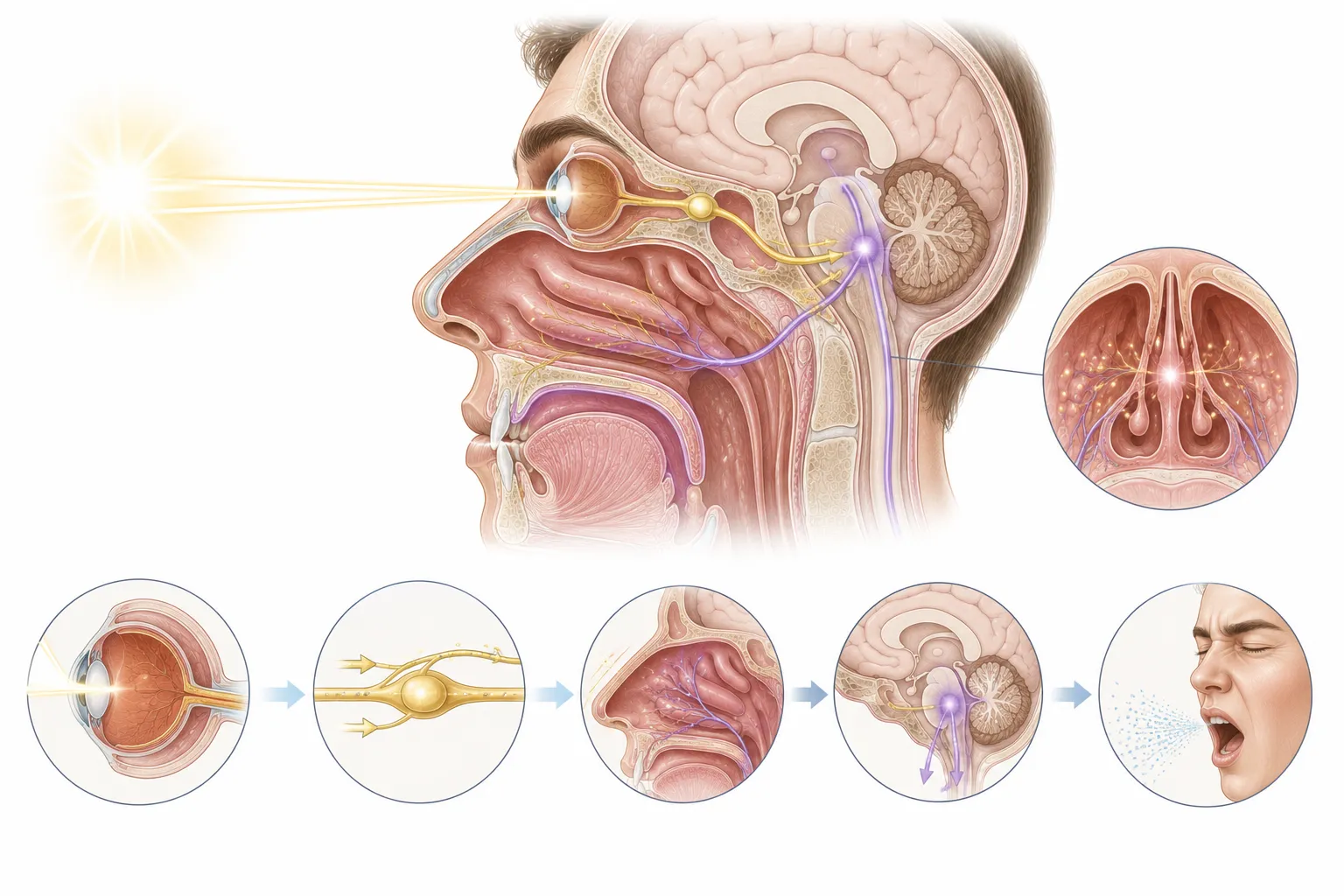
- 1Eyes detect a sudden increase in light
The reflex begins with a normal, universal light-detection response.
- 2The brain triggers pupil constriction
This constriction response is a normal protective reflex shared by virtually everyone.
- 3The signal crosses over into the trigeminal nerve
This crossover is the specific point where light exposure gets mistaken for nasal stimulation.
- 4The trigeminal nerve triggers a sneeze
The resulting sneeze is a real, complete reflex, just set off by an unusual and unrelated trigger.
How it works
The mechanism
Bright light triggers pupil-constricting nerve signals that, in genetically predisposed people, partially overlap with the trigeminal nerve pathway responsible for sneezing, causing a sneeze without any actual nasal irritation.
- Step 01
Eyes detect a sudden increase in light
When eyes move from a dim environment into bright light, the optic nerve rapidly signals the brain about the sudden change in light intensity.
Like a light sensor immediately flagging a sudden change in brightness to a connected control system.
The reflex begins with a normal, universal light-detection response.
- Step 02
The brain triggers pupil constriction
In response to the light signal, the brain sends a nerve signal that causes the pupils to constrict, reducing the amount of light reaching the sensitive retina.
Like a camera's aperture automatically narrowing when exposed to a bright light source.
This constriction response is a normal protective reflex shared by virtually everyone.
- Step 03
The signal crosses over into the trigeminal nerve
In genetically predisposed individuals, the nerve pathway responsible for the light response runs close enough to the trigeminal nerve, which detects nasal irritation, that the light signal appears to partially activate it as well.
Like two closely bundled wires where a surge in one occasionally triggers a response in the other.
This crossover is the specific point where light exposure gets mistaken for nasal stimulation.
- Step 04
The trigeminal nerve triggers a sneeze
Once activated, the trigeminal nerve initiates the same sneeze reflex it would normally trigger in response to an actual nasal irritant, producing a genuine sneeze despite no irritant being present.
Like a fire alarm going off after being triggered by steam instead of actual smoke.
The resulting sneeze is a real, complete reflex, just set off by an unusual and unrelated trigger.
Surprises
Facts worth sitting with
The photic sneeze reflex is strongly hereditary, and researchers have identified it as following an autosomal dominant inheritance pattern in many affected families.
Surprising facts
What seems backwards
Worth comparing
In everyday life
Easy to get wrong
Pressure points
Where the simple answer gets interesting
Why does only a portion of the population experience the photic sneeze reflex?
Because the crossover between the light-response nerve pathway and the sneeze-triggering trigeminal nerve pathway appears to be a genetically inherited trait, only individuals who carry the relevant genetic predisposition experience the reflex.
A quirky, seemingly random reflex turns out to be a heritable trait passed down through families like eye color.
Is the photic sneeze reflex the only light-triggered reflex of its kind?
It's the best documented example, but researchers have also studied related phenomena, such as sneezing triggered by suddenly filling the stomach, which similarly appears to involve overlapping nerve signals rather than true nasal irritation.
The body has more than one example of nerve signals from unrelated triggers accidentally overlapping into a shared reflex.
Could the photic sneeze reflex be dangerous in any situations?
In most everyday contexts it's harmless, but it has been flagged as a genuine safety consideration for pilots and drivers, since an involuntary sneeze triggered by sudden bright light could momentarily distract or impair someone during a critical task.
An odd, mostly amusing bodily quirk turns out to have real practical implications in certain high-stakes professions.
Behind the science
The story behind it
Aviation safety discussions around photic sneezing
Aviation medicine research and training materials have specifically discussed the photic sneeze reflex as a factor pilots should be aware of when transitioning between dim cockpits and bright sunlight.
This highlighted a real-world, practical safety implication for an otherwise minor and often amusing physiological quirk.
Even small, seemingly trivial reflexes can carry meaningful consequences in specific high-stakes contexts.
Family inheritance pattern studies of light-induced sneezing
Researchers tracked the presence of the photic sneeze reflex across multiple generations within families to determine its inheritance pattern.
The reflex was found to follow a classic autosomal dominant inheritance pattern, meaning a single copy of the relevant gene variant from one parent is enough to produce the trait.
Clarify
Myth and reality
Myth
Sneezing in the sun means you have some kind of allergy or sensitivity to sunlight.
Reality
The photic sneeze reflex is unrelated to allergies or photosensitivity; it's a harmless, hereditary nerve crossover response to a rapid change in light exposure.
Evidence
Studies mapping the reflex to genetic inheritance patterns found no connection to allergic or immune-related mechanisms.
Looking closer
The deeper pattern
The photic sneeze reflex reveals that the nervous system's wiring isn't always perfectly isolated between unrelated functions.
One way to think about it
Complex systems built from densely packed, closely routed components will occasionally produce unexpected crossover effects, and those effects can persist and even become heritable traits rather than simple malfunctions.
Proximity between systems, even unrelated ones, can create unexpected interactions that end up becoming a permanent, stable feature rather than a rare glitch.
Limits
Where the explanation bends
People who sneeze from suddenly filling their stomach rather than from light.
A separate but related reflex causes some people to sneeze immediately after eating a large meal, believed to involve a similar kind of nerve signal crossover rather than sunlight.
The trigeminal nerve's sneeze trigger appears vulnerable to more than one type of unrelated nerve signal crossover.
In daily life
What this helps you notice
Recognizing the photic sneeze reflex as harmless can prevent unnecessary concern about allergies or illness when sneezing consistently follows sun exposure.
People with the reflex often learn to anticipate a sneeze whenever stepping outside into strong sunlight after being indoors.
Remember
Key takeaways
- 1
The photic sneeze reflex causes some people to sneeze when exposed to sudden bright light.
- 2
It affects an estimated eighteen to thirty-five percent of people and is strongly hereditary.
- 3
The reflex is caused by a crossover between the nerve pathway controlling pupil constriction and the trigeminal nerve that triggers sneezing.
- 4
No actual nasal irritation occurs, despite the sneeze feeling identical to a typical one.
- 5
The reflex has practical safety implications noted in fields like aviation.
A sneeze triggered by sunlight isn't your nose reacting to anything at all, it's your eyes and nose briefly getting their wires crossed in a way that happens to run in the family.
The next sun-triggered sneeze is a small, inherited quirk of nerve wiring on full display, passed down quietly through generations without most people ever realizing it.
Read around the idea
More questions with the same curious pull
Nearby doors from the TinyThat archive, chosen by topic, intent, and reader curiosity.
Body & Brain
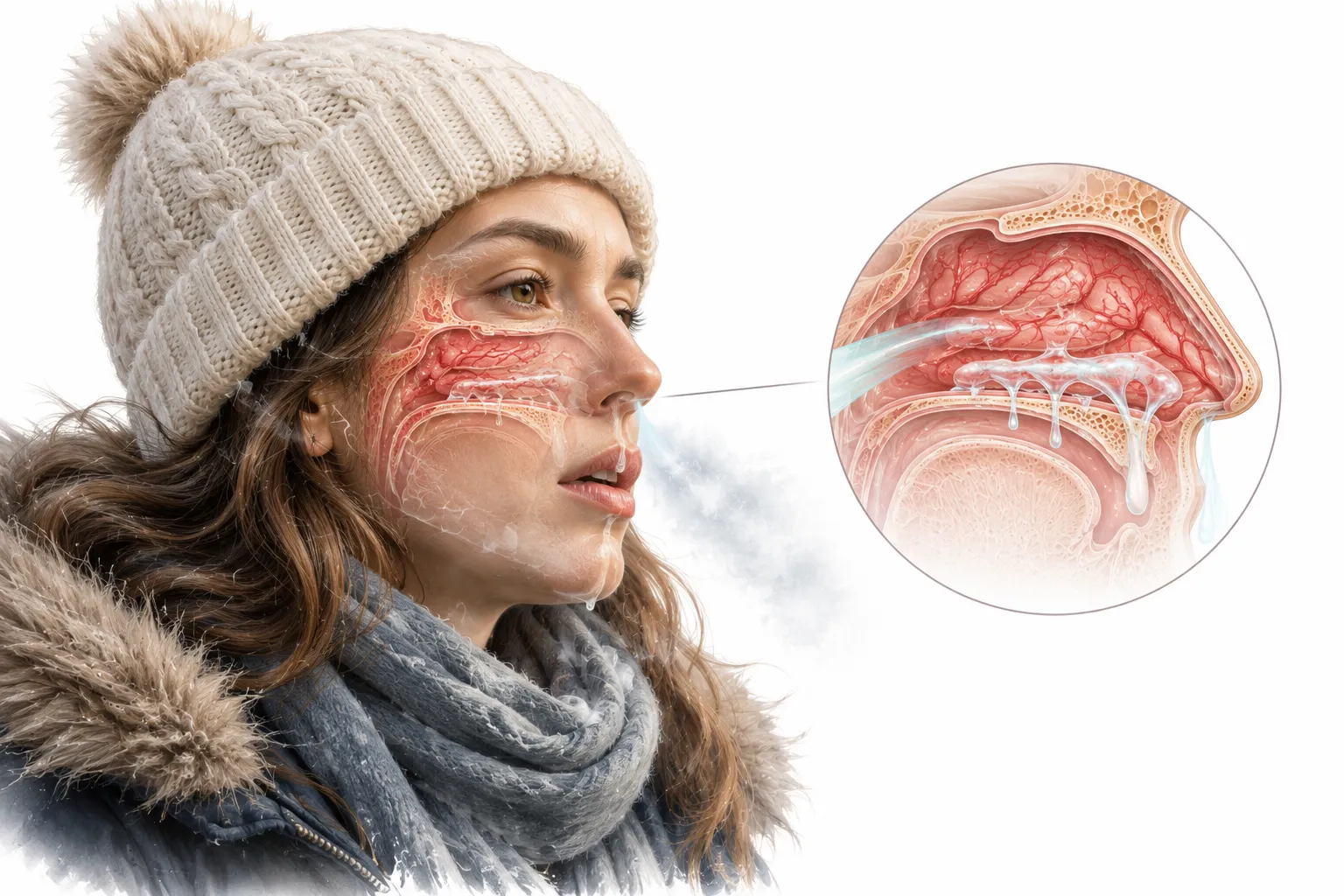
Why Does Your Nose Run When It's Cold?
Cold air triggers increased blood flow and mucus production in the nose to warm and humidify incoming air, causing a...
Body & Brain
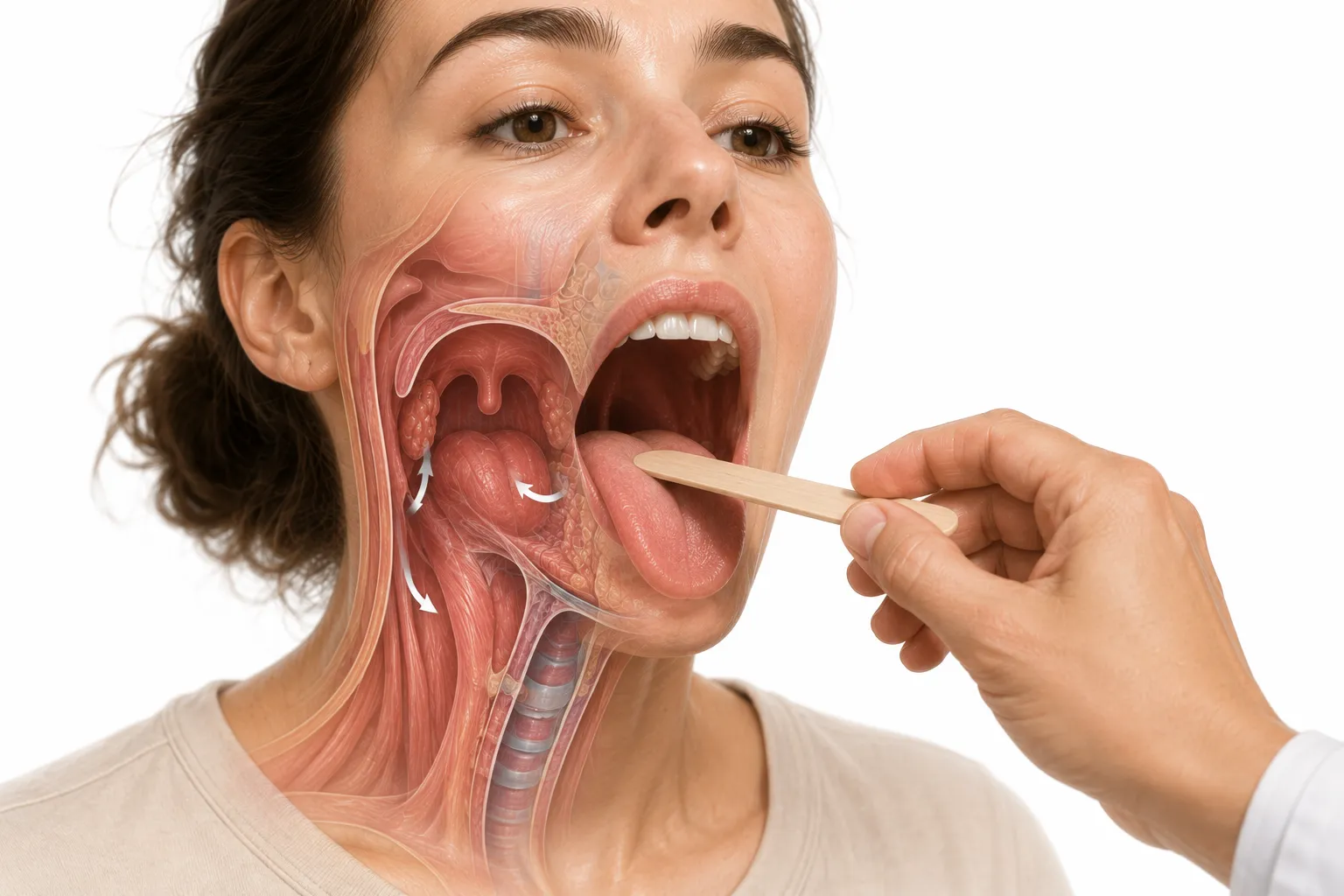
Why Do We Have a Gag Reflex?
The gag reflex protects the airway by triggering a strong muscular response when something touches sensitive areas at...
Body & Brain
Can the Brain Feel Pain?
The brain controls all pain in your body, yet it cannot feel pain itself. Discover why, and what this strange fact re...