Side stitches occur far more frequently during high-impact activities like running than during lower-impact activities like cycling or swimming, supporting the friction-based explanation over older muscle cramp theories.
Body & Brain
Why do we get a sharp stitch in our side while running?
Why Do We Get a Stitch in Our Side?
Halfway through a run, a sharp, specific pain suddenly grabs your side, forcing you to slow down or stop entirely.
On this page
The short answer
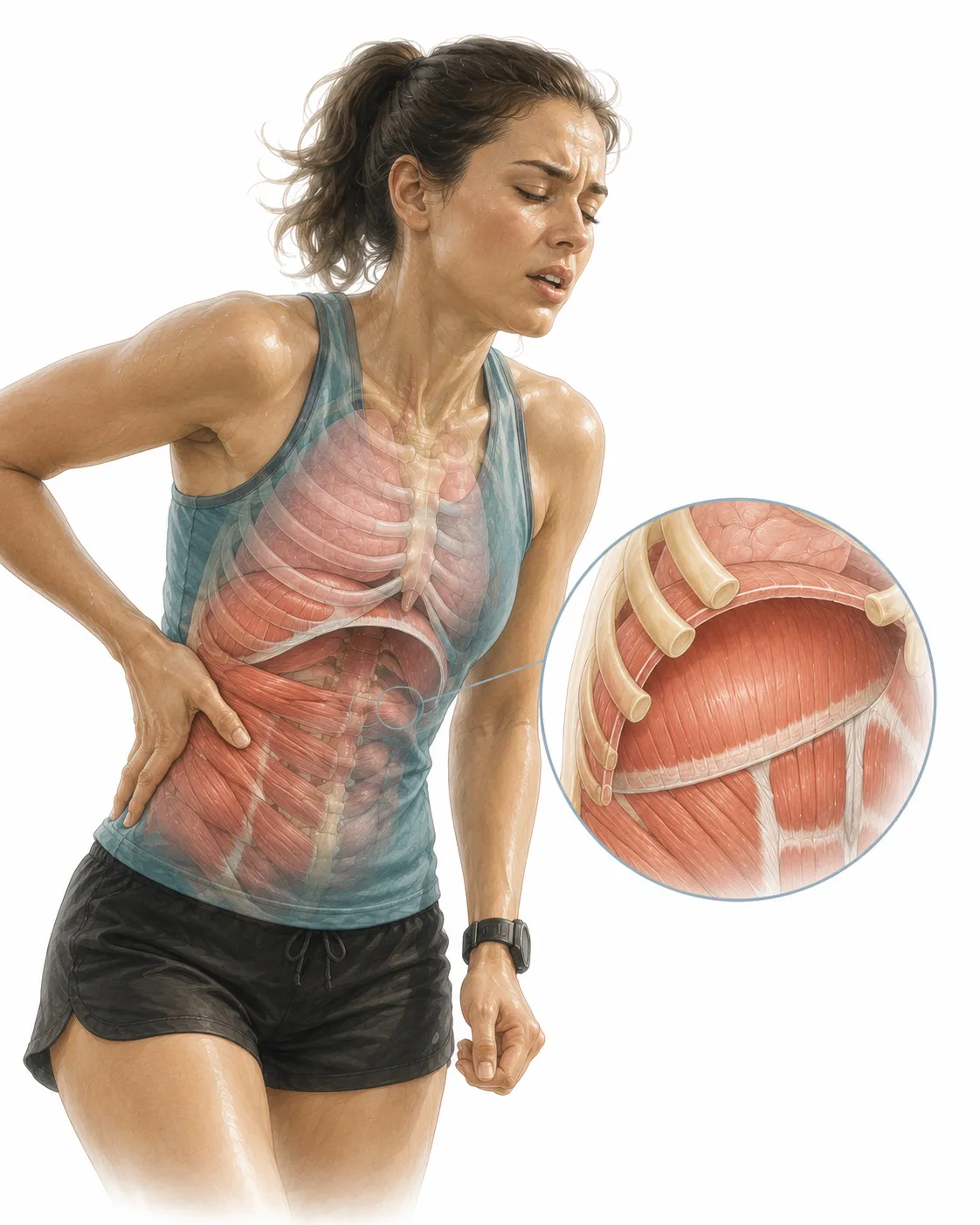
A side stitch, medically known as exercise-related transient abdominal pain, is most likely caused by irritation of the peritoneum, the membrane lining the abdominal cavity, as it's repeatedly stretched and rubbed by the movement of organs like the stomach and liver during running, particularly when the stomach is fuller than usual.
For much of the twentieth century, a stitch was widely assumed to be caused by a cramp in the diaphragm, the muscle involved in breathing, or by reduced blood flow and oxygen to abdominal muscles during exercise. More recent research has shifted toward a different explanation centered on the peritoneum, the smooth membrane that lines the abdominal cavity and covers the surface of internal organs. During running, particularly with a full stomach or after drinking a large volume of liquid, abdominal organs shift and jostle with each stride, tugging and creating friction against the peritoneum, which is richly supplied with sensory nerves that are highly sensitive to stretching and irritation, unlike the organs themselves, which have relatively few pain receptors. This friction and repeated stretching is now considered the leading candidate for the sharp, localized pain of a classic side stitch. This explanation is supported by observations that stitches occur more frequently after eating or drinking close to exercise, are more common in high-impact activities like running compared to low-impact activities like cycling, and tend to resolve relatively quickly once the irritating movement stops or slows.
At a glance
This membrane, not the organs it covers, is the likely true source of stitch pain.
A side stitch is caused by a lack of oxygen reaching the abdominal muscles during exercise.
The peritoneum, a smooth membrane lining the abdominal organs and cavity wall, is packed with sensory nerves and appears to be irritated by the repetitive friction and jostling of running, especially soon after eating or drinking.
Picture a tightly stretched sheet inside a moving suitcase, rubbing slightly against its contents with every bump on the road until the friction itself becomes the problem.
Diagram
Why Do We Get a Stitch in Our Side: the idea in one diagram
During running, especially with a fuller stomach, abdominal organs shift and jostle with each stride, repeatedly stretching and creating friction against the sensitive, nerve-rich peritoneal membrane, producing the sharp pain of a side stitch.
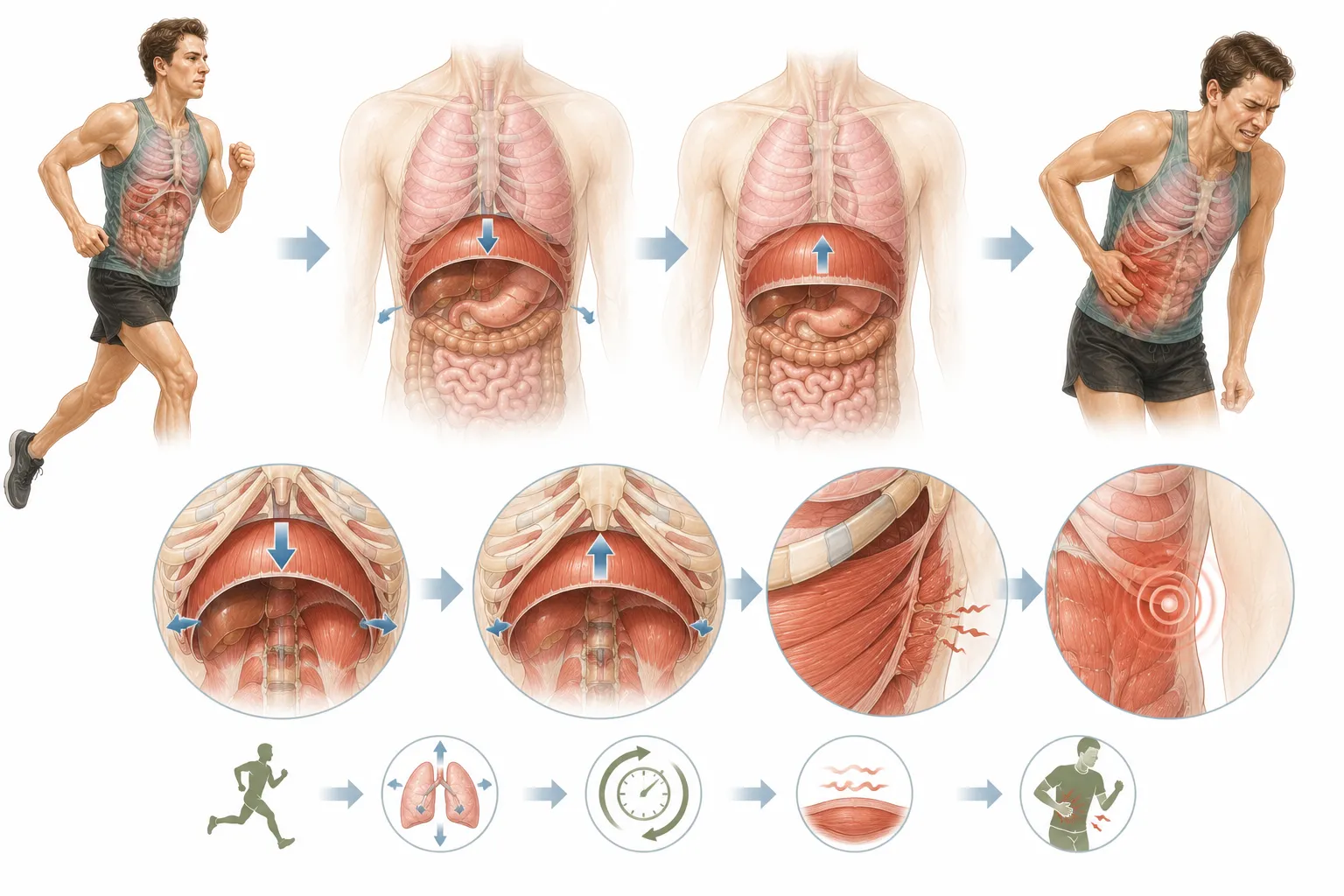
- 1The peritoneum lines the abdominal cavity
This membrane, not the organs it covers, is the likely true source of stitch pain.
- 2Running causes abdominal organs to shift and jostle
This repetitive movement is amplified by the high-impact nature of running specifically.
- 3This movement creates friction and stretching on the peritoneum
The sharp pain of a stitch appears to originate from this membrane irritation rather than the organs themselves.
- 4A fuller stomach increases the effect
This explains why a full stomach is a well-documented risk factor for developing a stitch.
How it works
The mechanism
During running, especially with a fuller stomach, abdominal organs shift and jostle with each stride, repeatedly stretching and creating friction against the sensitive, nerve-rich peritoneal membrane, producing the sharp pain of a side stitch.
- Step 01
The peritoneum lines the abdominal cavity
A smooth membrane called the peritoneum covers the abdominal organs and lines the inner wall of the abdominal cavity, and it's richly supplied with sensory nerves.
Like a thin, sensitive lining fitted snugly around the contents of a suitcase and its interior walls.
This membrane, not the organs it covers, is the likely true source of stitch pain.
- Step 02
Running causes abdominal organs to shift and jostle
Each running stride produces repeated vertical movement that causes organs like the stomach and liver to shift position slightly within the abdominal cavity.
Like loose items in a suitcase shifting and bumping with every jolt of a bumpy road.
This repetitive movement is amplified by the high-impact nature of running specifically.
- Step 03
This movement creates friction and stretching on the peritoneum
As organs shift with each stride, the peritoneum is repeatedly stretched and rubbed, and this mechanical irritation directly stimulates its dense network of sensory nerves.
Like a stretched sheet rubbing repeatedly against its contents until the friction itself becomes noticeably uncomfortable.
The sharp pain of a stitch appears to originate from this membrane irritation rather than the organs themselves.
- Step 04
A fuller stomach increases the effect
Eating or drinking before exercise adds extra weight and volume to the stomach, increasing the force of its movement with each stride and intensifying the resulting irritation.
Like a heavier, more loosely packed suitcase shifting and jostling more forcefully on the same bumpy road.
This explains why a full stomach is a well-documented risk factor for developing a stitch.
Surprises
Facts worth sitting with
Side stitches occur far more frequently during high-impact activities like running than during lower-impact activities like cycling or swimming, supporting the friction-based explanation over older muscle cramp theories.
Surprising facts
What seems backwards
Worth comparing
In everyday life
Easy to get wrong
Pressure points
Where the simple answer gets interesting
Why does eating or drinking before exercise increase stitch risk?
A fuller stomach adds extra weight and volume that shifts and jostles more forcefully with each stride, increasing the friction and stretching applied to the sensitive peritoneal membrane during running.
Something as ordinary as the timing of a pre-run snack turns out to directly influence a specific mechanical process happening deep inside the abdomen.
Why are stitches more common in running than cycling?
Running involves significantly more vertical, jarring movement of the torso and abdominal organs with each stride compared to the smoother, more seated motion of cycling, producing more mechanical irritation of the peritoneum.
The specific type of movement, not just exercise intensity overall, plays a major role in triggering the pain.
Why did the muscle cramp explanation for stitches persist for so long?
Before more targeted research directly studied the peritoneum's role, cramping muscle or oxygen deprivation were reasonable, intuitive assumptions based on how other exercise-related pains are typically caused, and they simply hadn't yet been specifically tested against alternative explanations.
Even a very common, everyday pain experienced by millions of people can go scientifically under-examined for a surprisingly long time.
Behind the science
The story behind it
Sports medicine research revisiting the cause of side stitches
Exercise physiology researchers have specifically studied exercise-related transient abdominal pain across different sports and conditions to test long-standing assumptions about its cause.
This research shifted the leading explanation away from muscle cramping and toward peritoneal membrane irritation as the more likely mechanism.
Revisiting long-accepted assumptions with targeted research can meaningfully update our understanding of even very common, everyday experiences.
Comparative studies of stitch frequency across different sports
Researchers surveyed athletes across running, cycling, swimming, and other sports to compare how often each group experienced a side stitch.
Runners reported stitches significantly more often than cyclists and swimmers, supporting the idea that high-impact, jostling movement plays a central role.
Clarify
Myth and reality
Myth
A side stitch is caused by a lack of oxygen reaching the abdominal muscles during exercise.
Reality
Current research points more strongly toward mechanical irritation of the peritoneal membrane from organ movement rather than oxygen deprivation as the likely primary cause.
Evidence
Comparative studies show stitch frequency correlates more closely with high-impact movement and stomach fullness than with measures of muscular oxygen supply.
Looking closer
The deeper pattern
The most obvious, intuitive explanation for a common problem isn't always the correct one, and sometimes the real cause hides in an overlooked structural detail.
One way to think about it
Long-standing assumptions, especially ones that sound intuitively reasonable, can persist for a surprisingly long time before being carefully tested and potentially overturned by more targeted investigation.
Familiarity with an explanation is not the same as evidence for it, and sometimes the real answer is hiding in a structure nobody thought to examine closely first.
Limits
Where the explanation bends
People who experience frequent, severe, or unusually located abdominal pain during exercise.
While a typical stitch is harmless and resolves quickly, persistent, severe, or unusually located abdominal pain during exercise can occasionally signal an unrelated underlying medical issue that warrants evaluation.
A near-universal, usually harmless sensation shares some surface similarity with rarer, more serious causes of abdominal pain during exertion.
In daily life
What this helps you notice
Understanding the likely cause of a stitch supports practical prevention strategies, such as avoiding large meals or drinks shortly before high-impact exercise.
Many runners and coaches now specifically recommend a gap of one to two hours between eating and running to help reduce stitch frequency.
Remember
Key takeaways
- 1
A side stitch is medically known as exercise-related transient abdominal pain.
- 2
Current research points to irritation of the peritoneum, the membrane lining the abdominal cavity, as the likely main cause.
- 3
Running causes more organ jostling than lower-impact activities, explaining why stitches are more common in runners.
- 4
Eating or drinking a large amount before exercise increases stitch risk by adding extra movement and weight.
- 5
Older explanations blaming muscle cramping or oxygen deprivation are increasingly being reconsidered in light of newer research.
One of running's most familiar pains may not be coming from a muscle at all, but from a thin, sensitive membrane quietly rubbing against your own organs with every single stride.
The next stitch that interrupts a run is a small, sharp reminder that even the most common physical sensations can take science a surprisingly long time to fully explain.
Read around the idea
More questions with the same curious pull
Nearby doors from the TinyThat archive, chosen by topic, intent, and reader curiosity.
Body & Brain
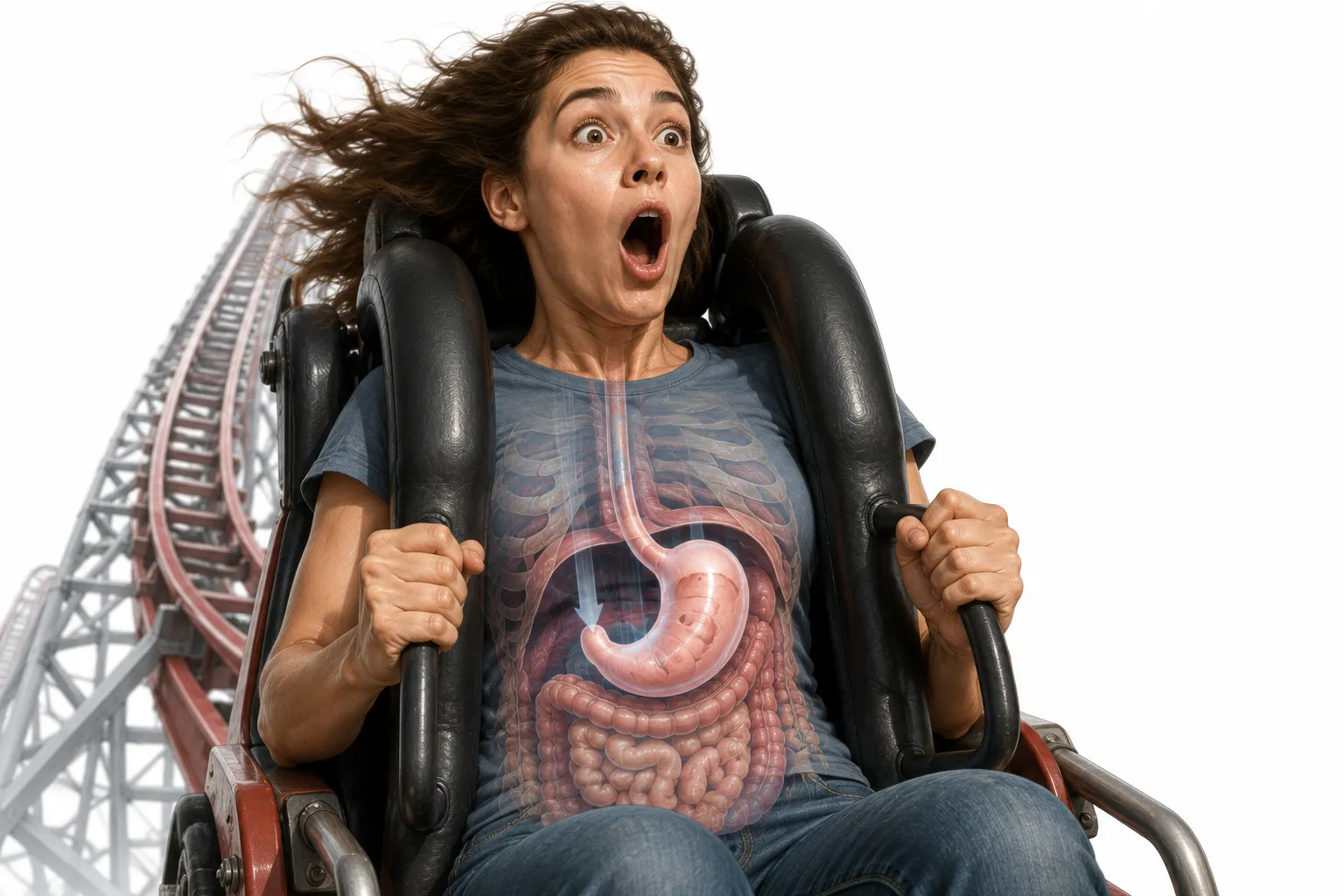
Why Does Your Stomach Drop on a Rollercoaster?
Loosely anchored abdominal organs briefly shift relative to surrounding tissue during sudden downward acceleration, p...
Body & Brain
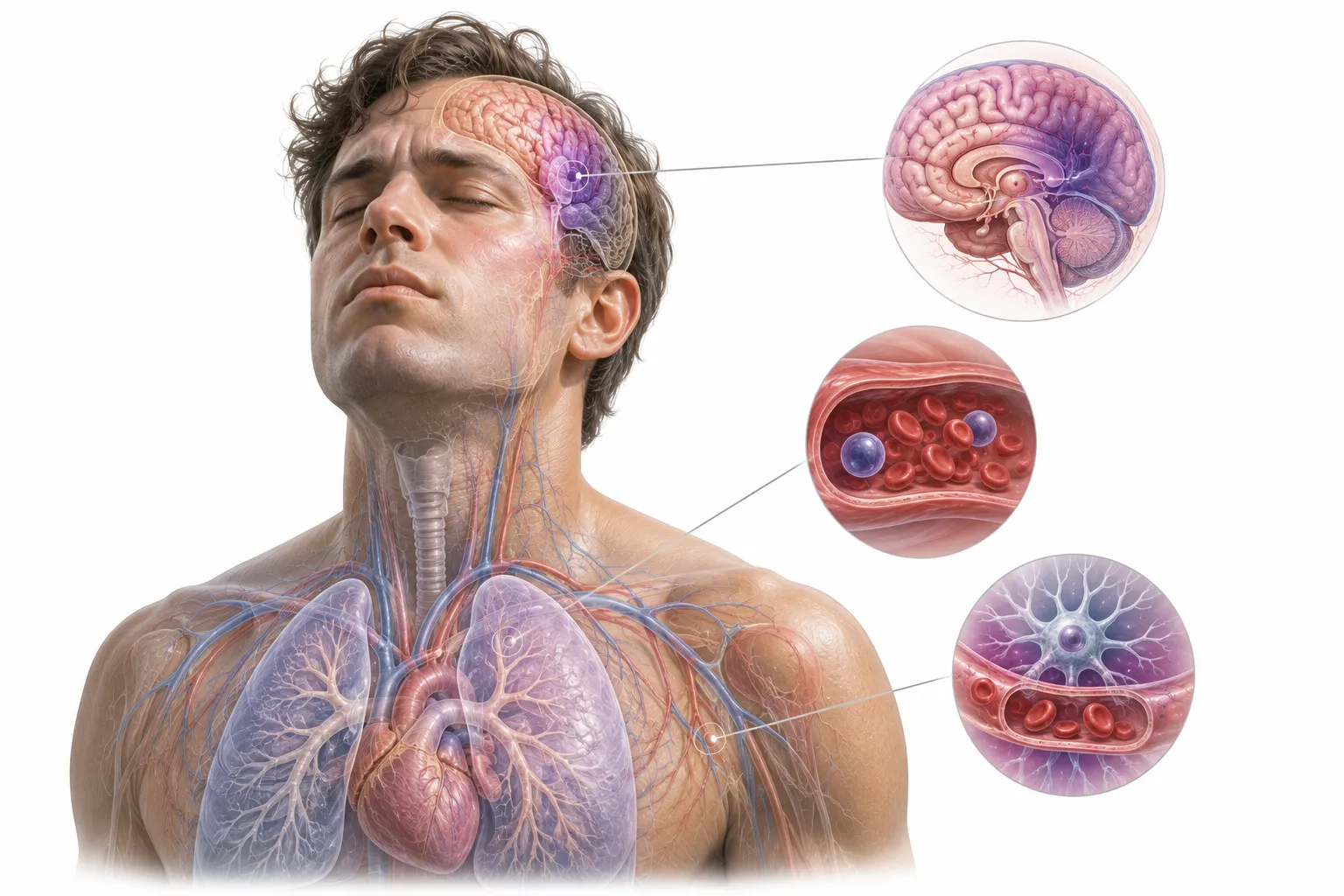
Why Does Holding Your Breath Make You Pass Out?
Prolonged breath-holding causes oxygen levels to fall low enough to trigger a protective loss of consciousness.
Body & Brain
Can the Brain Feel Pain?
The brain controls all pain in your body, yet it cannot feel pain itself. Discover why, and what this strange fact re...